On This Page
Description
If you ask, she must answer. A steerswoman's knowledge is shared with any who request it; no steerswoman may refuse a question, and no steerswoman may answer with anything but the truth. And if she asks, you must answer. It is the other side of tradition's contract -- and if you refuse the question, or lie, no steerswoman will ever again answer even your most casual question. And so, the steerswomen - always seeking, always investigating - have gathered more and more knowledge about the show more world they traveled, and they share that knowledge freely. Until the day that the steerswoman Rowan begins asking innocent questions about one small, lovely, inexplicable object… Her discoveries grow stranger and deeper, and more dangerous, until suddenly she finds she must flee or fight for her life. Or worse -- lie. Because one kind of knowledge has always been denied the steerswomen: Magic. show lessTags
Recommendations


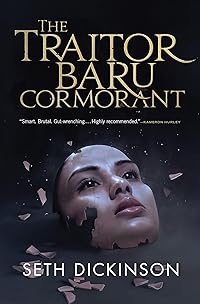
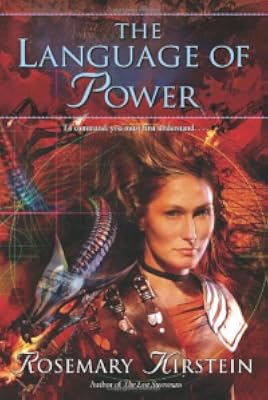
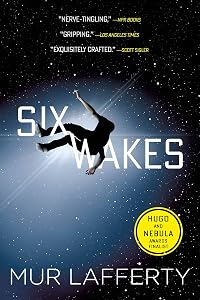
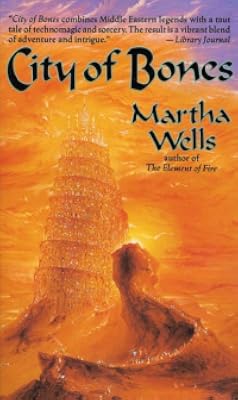


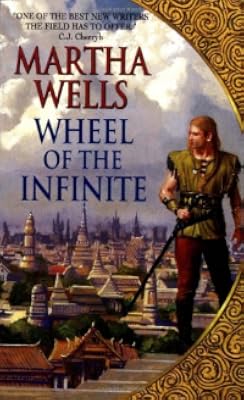

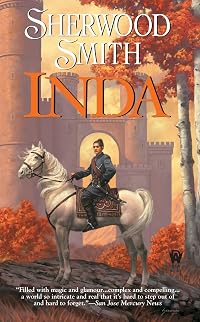
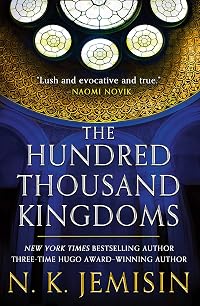
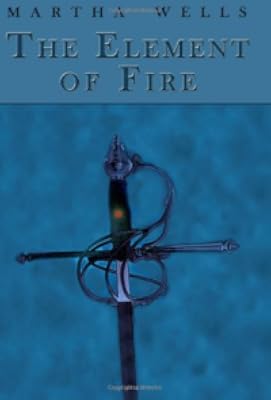

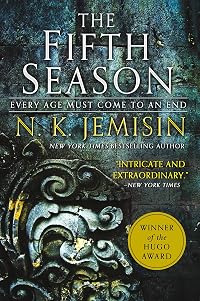
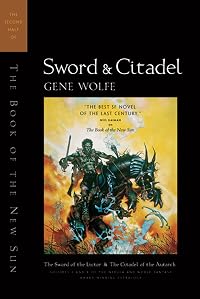

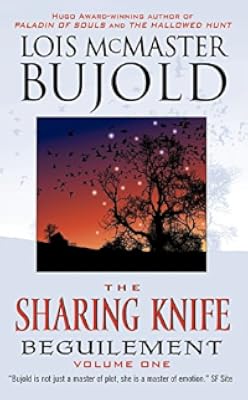


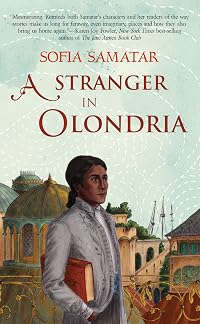




Member Recommendations
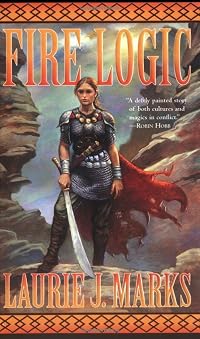
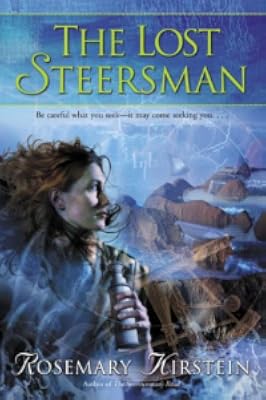
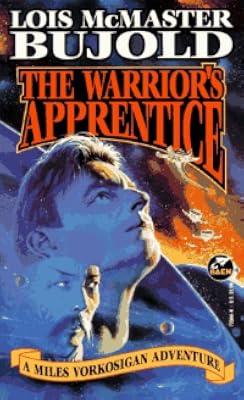
sandstone78 Like The Steerswoman, Jane Fletcher's Celaeno series is set in a fantasy world that is not quite what it seems, with truths that are gradually revealed. However, the Celaeno series is less rigorously scientific, including more science fantasy tropes like psychic powers, and the discovery is not the main point of the plot. Temple at Landfall centers around Lynn, who is isolated from the world by the priestesshood because of her particular rare powers, and what happens when she leaves the Temple and encounters a group of heretics who claim they know the truth about her world.
20

sandstone78 Both of these stories deal with a seemingly fantasy setting that turns out to be something else, and the tension between a small group that knows the secrets, a majority that doesn't, and a person from that majority that questions the order.
In The Steerswoman, the protagonist is a traveling scholar/scientist whose investigations draw the interest of the wizards who rule the known world; in Children of the Star, the protagonist questions the traditional religion and the priveleged class of scholars and technicians in society. Rowan's investigations are for her own curiosity and to record the truth for her Order, while Noren's story ends up on the other side of the divide, exploring the rationale, justifications, and rightness of the many keeping things from the few.
The Steerswoman series is ongoing, with the overall story unresolved and individual volumes reaching their own conclusions, but Children of the Star is a completed trilogy.

superant Both have scholar heroes. Both have heroes and heroines traveling the land confronting villains.
Member Reviews
This book has many trappings of fantasy (starts in a tavern, people with swords, wizards and dragons) but really, it is a love note to science. Hard scifi often focuses on the outcome of the scientific process, often with long infodumps on how exactly that FTL drive works, but in this book the outcomes are all things the reader might take for granted and the focus is on how a group of people with a roughly medieval understanding of science might come to understand those things--I gather that understanding what's going on so far ahead of the protagonist drives some people reviewing this book crazy, so if you're not interested in the process of coming to understand this book may not be for you.
Take this example: at some point, Rowan is show more explaining to Bel how things fall in an arc, with diagrams. They start wondering what happens if you throw something so far that you have to take into account the curvature of the earth, and the diagrams make it look like if you throw something hard enough it will never come back down--as a reader, we know that's true, but Rowan thinks that can't be right, but the math all checks out. Some time later she shows her diagrams to a collegue, who also says that can't be right, check your assumptions, but they don't get anywhere that way either. So they think, is there anything that can be explained if this is true that was previously inexplicable? YES! And together everyone comes to have a more complete understanding of the world. Yay, science.
And now I've made it sound really dry, but it isn't. All of the characters are wonderful, complex, well-rounded people, and there's some truly amazing world building (though more so in books 2 and 3). show less
Take this example: at some point, Rowan is show more explaining to Bel how things fall in an arc, with diagrams. They start wondering what happens if you throw something so far that you have to take into account the curvature of the earth, and the diagrams make it look like if you throw something hard enough it will never come back down--as a reader, we know that's true, but Rowan thinks that can't be right, but the math all checks out. Some time later she shows her diagrams to a collegue, who also says that can't be right, check your assumptions, but they don't get anywhere that way either. So they think, is there anything that can be explained if this is true that was previously inexplicable? YES! And together everyone comes to have a more complete understanding of the world. Yay, science.
And now I've made it sound really dry, but it isn't. All of the characters are wonderful, complex, well-rounded people, and there's some truly amazing world building (though more so in books 2 and 3). show less
I love it when you pick up a book with neutral expectations and within a single chapter, find yourself looking for extra reading time in the day so that you can stay in the flow of the story.
"The Steerswoman" gave that to me on the morning I opened it. It was an intriguing blend of the familiar (sword and sorcery setting with a hint of a high tech past, a search for a kind of gem that may not be a gem, a coaching inn filled with pilgrims, red-coated soldiers in service to a mage and a band of barbarian Outskirters with stories of night fights with heat-seeking goblin in the wild lands) and the new (Steerswomen - who travel the land asking and answering questions, building maps and curating knowledge).
The writing was like good show more camerawork, moving swiftly and lightly, coaching your eye to capture everything that was important without labouring any point.
There were no big info-dumps. No cliché-ridden D&D-based scene setting. The Steerswoman at the heart of the story was neither warrior nor princess, neither beauty nor freak. She was a little prickly, liked to travel alone and had an insatiable curiosity. She was self-aware enough to be likeable and curmudgeonly enough to be believable.
By the time she was ready to leave the inn the next morning, it is her curiosity and her openness to new things that I was most engaged with. I wanted to go where she went, see what she saw and put the puzzle pieces together alongside her.
Now THAT'S how you start a sword and sorcery series.
Except, I discovered slightly further into the book, that this isn't a sword and sorcery series. It has swords and sorcerers in it but it is really a book about rational thinking and science.
The tone of the book was neither full-on adult fantasy nor typical emotion-laden conflict-ridden YA fiction. What it most reminded me of was Le Guin’s Earthsea series only told by a scientist, not a mage.
Beneath its skin, this is a story of earth where most knowledge of technology has been lost and two groups are in the process of recovering or rediscovering it, the Mages and the Steerswomen.
The Mages are a breed apart, guarding their knowledge fiercely from everyone, especially each other, and using it to acquire and keep wealth and territorial dominion. They hoard knowledge, brand it as magic and attribute their mastery of it to their superior breeding..
The Steerswomen are collectors of information and curators and disseminators of knowledge. They give honest, accurate answers to any question asked, to the best of their knowledge and abilities in return for getting answers to their own questions. In a world that has magic but not science, they are the rational pattern makers. The people who shape and reshape the world into new patterns as more data and more links between data are discovered. The Steerswomen place everything in the public domain and keep it open to challenge and change.
The blind spot that Mages and Steerswomen share is that neither will talk to the other.
It's easy to see the Steerswomen as heroes and the Mages as baddies but the book is more complicated than that. Rowan, the Steerswoman at the heart of the story, is not an easy person to like. She is dispassionate and solitary, Her analytical mind and her insatiable curiosity distance her from the day to day life around her. She catalogues it but doesn't necessarily feel any empathy with it. She is honourable, according to her lights, but is capable of being ruthless. At first, it seems that she will only kill when attacked but, as the book progresses and the stakes increase, she is willing to use torture and to bring wide-scale destruction and death.
I rather liked the idea that the people who live by sharing knowledge are just as tough and can be just as ruthless as those who hold power by hoarding it. It seemed more realistic to me.
As a story, "The Steerswoman" was an interesting puzzle with a few unique twists. As an exploration of what science is and how our knowledge of it grows, it is extraordinary. It was written thirty years ago but in this time when science is under attack, experts are branded as just another opinion and demagogs feed us "alternative facts" to make their case, I think it's very relevant. Today, we have access to more data at a faster speed and with less effort than ever before but we are replacing facts with opinion, rational argument with storytelling and science with magical thinking.
NOW is a time when we need Steerswomen.
And yet, collecting data, curating knowledge, constantly challenging and updating patterns is not a normal way of thinking of behaving for most people. In my view, while it can be taught, it is in an innate ability for a small percentage of people. It contributes to the survival of the species but doesn't necessarily lead to a comfortable life for those who think and act like Steerswomen.
With her way of life under threat, Rowan, the main character in the story, recalls what it was like when she first met others with the same habits of thought as herself.
She had spent her life alone in her strangeness, and had met only one other person like herself. When she joined the Academy, she was like an exile who had returned home.
I recognise that feeling.
To move forward, Rowan is put in a situation where she must lie to survive. She baulks at this, even to protect herself. She says:
“People need truth! They need it to be happy, to know what to do, to live!”
I don't think that's an exaggeration. I think that polluting or displacing the truth is doing huge damage to people every day.
When Rowan finally understands the extent of the threat, I felt great empathy for her reaction. She says:
"...The whole way of life is threatened, for every one of us. I . . .” She paused, shaping her thoughts. “I can’t stand for it. I have to try to stop it, whatever it may take. Or at the very least, I have to know why.”
For me, that sums up the value set of people who instinctively think this way.
I loved the next part. A group of Steerswomen, used to being the most knowledgeable people in a room, have to be schooled by a couple of ordinary people, Josef and Bel, on how to lie convincingly.
These three methods are spot on. We should teach kids at school how to spot when someone (a Prime Minister or President for example) is using them:
"The best way to lie is to tell the truth.” The steerswomen looked at each other in perplexity. Bel expanded on Josef’s statement.
“That’s right, you say true things—except, you leave some things out. That way, the person takes what you’ve said and makes his own conclusions—the wrong ones, because of what’s missing.”
Josef gave her an affirming nod.
“And that’s your lie. And the second best way is to tell the truth—something obvious, something the other person knows down to his bones—and add your lie onto it, so long as it fits in.” “The person knows that the part he can check is true, and if the rest makes sense, he’ll believe it,”
Bel said. “And the last good way to lie is to say nothing. Let the other person guess as much as he likes, and when he’s dead wrong,” he said with a smile, “you tell him how clever he is.”
I think "The Steerswoman" should be a standard text in our schools. show less
"The Steerswoman" gave that to me on the morning I opened it. It was an intriguing blend of the familiar (sword and sorcery setting with a hint of a high tech past, a search for a kind of gem that may not be a gem, a coaching inn filled with pilgrims, red-coated soldiers in service to a mage and a band of barbarian Outskirters with stories of night fights with heat-seeking goblin in the wild lands) and the new (Steerswomen - who travel the land asking and answering questions, building maps and curating knowledge).
The writing was like good show more camerawork, moving swiftly and lightly, coaching your eye to capture everything that was important without labouring any point.
There were no big info-dumps. No cliché-ridden D&D-based scene setting. The Steerswoman at the heart of the story was neither warrior nor princess, neither beauty nor freak. She was a little prickly, liked to travel alone and had an insatiable curiosity. She was self-aware enough to be likeable and curmudgeonly enough to be believable.
By the time she was ready to leave the inn the next morning, it is her curiosity and her openness to new things that I was most engaged with. I wanted to go where she went, see what she saw and put the puzzle pieces together alongside her.
Now THAT'S how you start a sword and sorcery series.
Except, I discovered slightly further into the book, that this isn't a sword and sorcery series. It has swords and sorcerers in it but it is really a book about rational thinking and science.
The tone of the book was neither full-on adult fantasy nor typical emotion-laden conflict-ridden YA fiction. What it most reminded me of was Le Guin’s Earthsea series only told by a scientist, not a mage.
Beneath its skin, this is a story of earth where most knowledge of technology has been lost and two groups are in the process of recovering or rediscovering it, the Mages and the Steerswomen.
The Mages are a breed apart, guarding their knowledge fiercely from everyone, especially each other, and using it to acquire and keep wealth and territorial dominion. They hoard knowledge, brand it as magic and attribute their mastery of it to their superior breeding..
The Steerswomen are collectors of information and curators and disseminators of knowledge. They give honest, accurate answers to any question asked, to the best of their knowledge and abilities in return for getting answers to their own questions. In a world that has magic but not science, they are the rational pattern makers. The people who shape and reshape the world into new patterns as more data and more links between data are discovered. The Steerswomen place everything in the public domain and keep it open to challenge and change.
The blind spot that Mages and Steerswomen share is that neither will talk to the other.
It's easy to see the Steerswomen as heroes and the Mages as baddies but the book is more complicated than that. Rowan, the Steerswoman at the heart of the story, is not an easy person to like. She is dispassionate and solitary, Her analytical mind and her insatiable curiosity distance her from the day to day life around her. She catalogues it but doesn't necessarily feel any empathy with it. She is honourable, according to her lights, but is capable of being ruthless. At first, it seems that she will only kill when attacked but, as the book progresses and the stakes increase, she is willing to use torture and to bring wide-scale destruction and death.
I rather liked the idea that the people who live by sharing knowledge are just as tough and can be just as ruthless as those who hold power by hoarding it. It seemed more realistic to me.
As a story, "The Steerswoman" was an interesting puzzle with a few unique twists. As an exploration of what science is and how our knowledge of it grows, it is extraordinary. It was written thirty years ago but in this time when science is under attack, experts are branded as just another opinion and demagogs feed us "alternative facts" to make their case, I think it's very relevant. Today, we have access to more data at a faster speed and with less effort than ever before but we are replacing facts with opinion, rational argument with storytelling and science with magical thinking.
NOW is a time when we need Steerswomen.
And yet, collecting data, curating knowledge, constantly challenging and updating patterns is not a normal way of thinking of behaving for most people. In my view, while it can be taught, it is in an innate ability for a small percentage of people. It contributes to the survival of the species but doesn't necessarily lead to a comfortable life for those who think and act like Steerswomen.
With her way of life under threat, Rowan, the main character in the story, recalls what it was like when she first met others with the same habits of thought as herself.
She had spent her life alone in her strangeness, and had met only one other person like herself. When she joined the Academy, she was like an exile who had returned home.
I recognise that feeling.
To move forward, Rowan is put in a situation where she must lie to survive. She baulks at this, even to protect herself. She says:
“People need truth! They need it to be happy, to know what to do, to live!”
I don't think that's an exaggeration. I think that polluting or displacing the truth is doing huge damage to people every day.
When Rowan finally understands the extent of the threat, I felt great empathy for her reaction. She says:
"...The whole way of life is threatened, for every one of us. I . . .” She paused, shaping her thoughts. “I can’t stand for it. I have to try to stop it, whatever it may take. Or at the very least, I have to know why.”
For me, that sums up the value set of people who instinctively think this way.
I loved the next part. A group of Steerswomen, used to being the most knowledgeable people in a room, have to be schooled by a couple of ordinary people, Josef and Bel, on how to lie convincingly.
These three methods are spot on. We should teach kids at school how to spot when someone (a Prime Minister or President for example) is using them:
"The best way to lie is to tell the truth.” The steerswomen looked at each other in perplexity. Bel expanded on Josef’s statement.
“That’s right, you say true things—except, you leave some things out. That way, the person takes what you’ve said and makes his own conclusions—the wrong ones, because of what’s missing.”
Josef gave her an affirming nod.
“And that’s your lie. And the second best way is to tell the truth—something obvious, something the other person knows down to his bones—and add your lie onto it, so long as it fits in.” “The person knows that the part he can check is true, and if the rest makes sense, he’ll believe it,”
Bel said. “And the last good way to lie is to say nothing. Let the other person guess as much as he likes, and when he’s dead wrong,” he said with a smile, “you tell him how clever he is.”
I think "The Steerswoman" should be a standard text in our schools. show less
https://timothyrice.org/steerswoman/
Rating: 4.5/5 – Could go higher if it’s ever finished.
You’ve probably never heard of The Steerswoman series, by Rosemary Kirstein. Best described as a “science fiction story, but all the characters think they’re in a fantasy novel”, it deserves to be mentioned with the great, enduring works of speculative fiction. The plotting is superb, the characters excellent, and the setting wholly original. I’m not going to get into the details, just want to say that if you like speculative fiction, you’ll probably enjoy this one.
What really makes this series stand out is the way Kirstein depicts the joy of being a scientist. The protagonist of the series embodies pure and honest love of learning show more and discovery that I haven’t ever seen before. There is a thrill that comes with discovering and understanding something new that is perfectly captured in these novels.
The “only” drawback is that the series is unfinished, with the last volume having been written almost 20 years ago. The author claims to be working on more, but well, we’ve all seen this before. There are currently 4 published novels (all of them excellent), with two more “in progress”. We’ll see. Still, it’s good enough that I can recommend it as it stands. show less
Rating: 4.5/5 – Could go higher if it’s ever finished.
You’ve probably never heard of The Steerswoman series, by Rosemary Kirstein. Best described as a “science fiction story, but all the characters think they’re in a fantasy novel”, it deserves to be mentioned with the great, enduring works of speculative fiction. The plotting is superb, the characters excellent, and the setting wholly original. I’m not going to get into the details, just want to say that if you like speculative fiction, you’ll probably enjoy this one.
What really makes this series stand out is the way Kirstein depicts the joy of being a scientist. The protagonist of the series embodies pure and honest love of learning show more and discovery that I haven’t ever seen before. There is a thrill that comes with discovering and understanding something new that is perfectly captured in these novels.
The “only” drawback is that the series is unfinished, with the last volume having been written almost 20 years ago. The author claims to be working on more, but well, we’ve all seen this before. There are currently 4 published novels (all of them excellent), with two more “in progress”. We’ll see. Still, it’s good enough that I can recommend it as it stands. show less
This is one of those books that I wish I had found when it was published in 1989, or even in the following decade or two. I would have loved the characters and the world. Still, it was enjoyable in its own way, if limited by modern interpretations.
Remember fantasy in the 70s and 80s? They usually followed the adventures of men, although you could have a woman in your adventuring party (usually as the cleric or ranger). Rarely, I'd run into the sword-sorceress combo as epitomized in Marion Zimmer Bradley's Sword and Sorceress anthologies. The Steerswoman takes that duo and does something even more interesting, taking the 'magic' user part of the equation back to archetype: a knowledge-holder. Rowan is a 'Steerswoman,' a group of people show more that wander, seek knowledge and provide information. No fee, except that their own questions must be answered. She meets a woman from the largely unknown but fierce Outriders, Bel, and their adventure begins.
The premise of knowledge-seeking as an occupation was fascinating to me. It provides a great introduction for the reader into the world, as Rowan both asks and answers questions. But also the idea of the head-centered approach attempting to understand before reacting was just pleasurable. It elevated what have been a very standard quest format into something more thoughtful than overcome a monster/opposition ever chapter. The writing is investing a lot in the internal thought process, as opposed to Terry Brooks, Jordan, Donaldson or David Eddings. Sanderson usually feels kind of mechanical and not-active to me, and this certainly jumped into events both large and small.
"She was like a swimmer, exploring by touch alone the bottom of some rocky pool, trying to create a chart for something that could not be seen, a chart not for the eyes, but for the touch of the mind."
Investing in that head-centric approach also provided opportunity to witness character development. Rowan rather sloppily thinks of Bel as a 'barbarian' when they first meet, but she quickly realizes that it's not the relative sophistication as much as a vastly different personality type from an insular culture. Yet it's not a facile assimilation; though they progress with mutual understanding, later in the story they discover they still can make errors, both in cultural assumptions as well as deep differences in personal values.
"The Outskirter remained both curious and adaptable, her comments again that intriguing combination of ingenuousness and perspicacity. Rowan found herself ever more comfortable in Bel’s company, recognizing in the other not a like mind, but a complementary one."
World-building is interesting. Much like Andre Norton's Witch World, I have the sense that this fantasy-seeming situation is somehow Earth-adjacent, so as I read, I found myself attempting to work out the connection. I confess, it took my co-readers to point out the logical conclusion of a big scene! Much like the Steerswomen, the reader is given many hints about the magic of the world.
“Facts, ideas fit together. It’s the fitting, the paths that connect them, that matters. The pieces can change, but the fitting lies beneath it all."
Pacing was one of the more troublesome aspects for me. As Rowan and Bel journey, the relationship builds as they take on a series of objectives. However, the narrative changes to a third character and disrupts the story. It honestly felt like Kirsten shoehorned in a short story, without even tailoring it to the situation.
Other than that, I enjoyed it quite a bit. I feel like the character interaction was different from what I've read with two female leads, along with Rowan's head-centered approach. That said, I thought there were serious pacing issues, along with an equally serious body count done in ways that seemed incongruent, that left me more ambivalent. Still, I'm curious about the world and could be persuaded to continue.
Three and a half blue gems, rounding down.
Many thanks to Andreas, Anna, Mitticus, Nataliya, Phil and Stephen for the buddy read and interesting discussions!
Discussion in Sci-Fi group about it and subsequent books: https://www.goodreads.com/topic/show/21814859-series-steerswoman-by-rosemary-kir... show less
Remember fantasy in the 70s and 80s? They usually followed the adventures of men, although you could have a woman in your adventuring party (usually as the cleric or ranger). Rarely, I'd run into the sword-sorceress combo as epitomized in Marion Zimmer Bradley's Sword and Sorceress anthologies. The Steerswoman takes that duo and does something even more interesting, taking the 'magic' user part of the equation back to archetype: a knowledge-holder. Rowan is a 'Steerswoman,' a group of people show more that wander, seek knowledge and provide information. No fee, except that their own questions must be answered. She meets a woman from the largely unknown but fierce Outriders, Bel, and their adventure begins.
The premise of knowledge-seeking as an occupation was fascinating to me. It provides a great introduction for the reader into the world, as Rowan both asks and answers questions. But also the idea of the head-centered approach attempting to understand before reacting was just pleasurable. It elevated what have been a very standard quest format into something more thoughtful than overcome a monster/opposition ever chapter. The writing is investing a lot in the internal thought process, as opposed to Terry Brooks, Jordan, Donaldson or David Eddings. Sanderson usually feels kind of mechanical and not-active to me, and this certainly jumped into events both large and small.
"She was like a swimmer, exploring by touch alone the bottom of some rocky pool, trying to create a chart for something that could not be seen, a chart not for the eyes, but for the touch of the mind."
Investing in that head-centric approach also provided opportunity to witness character development. Rowan rather sloppily thinks of Bel as a 'barbarian' when they first meet, but she quickly realizes that it's not the relative sophistication as much as a vastly different personality type from an insular culture. Yet it's not a facile assimilation; though they progress with mutual understanding, later in the story they discover they still can make errors, both in cultural assumptions as well as deep differences in personal values.
"The Outskirter remained both curious and adaptable, her comments again that intriguing combination of ingenuousness and perspicacity. Rowan found herself ever more comfortable in Bel’s company, recognizing in the other not a like mind, but a complementary one."
World-building is interesting. Much like Andre Norton's Witch World, I have the sense that this fantasy-seeming situation is somehow Earth-adjacent, so as I read, I found myself attempting to work out the connection. I confess, it took my co-readers to point out the logical conclusion of a big scene! Much like the Steerswomen, the reader is given many hints about the magic of the world.
“Facts, ideas fit together. It’s the fitting, the paths that connect them, that matters. The pieces can change, but the fitting lies beneath it all."
Pacing was one of the more troublesome aspects for me. As Rowan and Bel journey, the relationship builds as they take on a series of objectives. However, the narrative changes to a third character and disrupts the story. It honestly felt like Kirsten shoehorned in a short story, without even tailoring it to the situation.
Other than that, I enjoyed it quite a bit. I feel like the character interaction was different from what I've read with two female leads, along with Rowan's head-centered approach. That said, I thought there were serious pacing issues, along with an equally serious body count done in ways that seemed incongruent, that left me more ambivalent. Still, I'm curious about the world and could be persuaded to continue.
Three and a half blue gems, rounding down.
Many thanks to Andreas, Anna, Mitticus, Nataliya, Phil and Stephen for the buddy read and interesting discussions!
Discussion in Sci-Fi group about it and subsequent books: https://www.goodreads.com/topic/show/21814859-series-steerswoman-by-rosemary-kir... show less
What an interesting take on sword and sorcery! Firstly, the main characters are two women and a youngish boy. And it definitely passes the Bechdel test! (https://en.wikipedia.org/wiki/Bechdel_test)
The one woman is a Steerswoman, a keeper of the world's knowledge and an adventurer who searches for more information around the world. The other woman is a barbarian from the Outskirts. They meet and help each other then form a bond of friendship that becomes deep and trusting. The boy they meet along the way, he's determined to become a wizard because he saw his sister taken by a powerful wizard, so he wants to become powerful and stop that sort of thing from ever happening again.
Rowan, the Steerswoman, has found an odd crystal whose show more properties she wants to investigate. Bel, traveling in the same direction, decides she hasn't anything better to do so comes along for the adventure. It becomes clear early on that someone is attempting to kill Rowan for reasons unknown, and shocking, as the Steerswomen are generally revered as they share the knowledge they collect happily and generously with all who ask.
The characters are well drawn, interesting,and ::gasp:: don't do anything stupid!
The plot is tightly woven and has enough twists and turns to keep you guessing about a lot of things.
The world is well drawn and is quite surprising in that the book is really about science, even if it is sword and sorcery also.
Definitely looking forward to reading a lot more of this series. show less
The one woman is a Steerswoman, a keeper of the world's knowledge and an adventurer who searches for more information around the world. The other woman is a barbarian from the Outskirts. They meet and help each other then form a bond of friendship that becomes deep and trusting. The boy they meet along the way, he's determined to become a wizard because he saw his sister taken by a powerful wizard, so he wants to become powerful and stop that sort of thing from ever happening again.
Rowan, the Steerswoman, has found an odd crystal whose show more properties she wants to investigate. Bel, traveling in the same direction, decides she hasn't anything better to do so comes along for the adventure. It becomes clear early on that someone is attempting to kill Rowan for reasons unknown, and shocking, as the Steerswomen are generally revered as they share the knowledge they collect happily and generously with all who ask.
The characters are well drawn, interesting,and ::gasp:: don't do anything stupid!
The plot is tightly woven and has enough twists and turns to keep you guessing about a lot of things.
The world is well drawn and is quite surprising in that the book is really about science, even if it is sword and sorcery also.
Definitely looking forward to reading a lot more of this series. show less
I've learned not to skip over books in my to-read queue because the books that don't draw my attention, the books that I'm tempted to skip, that I put off because they're not well known and no one I know personally is talking about them, are often the books that take me by surprise and present me with something unique and wonderful that I never knew that I wanted until I opened the book. The Steerswoman is one of those books. The library didn't have it, I couldn't remember who had recommended it to me, and I'd never heard of the author.
And yet. As I found out when I opened it, this book is amazing, different, strange. What at first seems like your usual fantasy setting is inhabited by steerswomen, people who have taken a vow to answer show more any question that might be asked of them as long as the asker has never refused to answer a question that a steerswoman has posed. Steerswomen are repositories of knowledge, respected, welcome everywhere, and well-educated. In a world of dragons and wizards, they try to understand the world through logic, math, and scientific reasoning.
Of course there's more going on below the surface of the steerswomen's world; a single steerswoman named Rowan and her barbarian friend that she meets on the road, Bel (also female), find that they're being hunted by wizards because the steerswoman's been asking the wrong kinds of questions. Of course a steerswoman can't very well stop asking questions because it's dangerous; she wouldn't be a steerswoman if she did.
I absolutely love the idea of the steerswomen and their tenacious attempts to find truth and understand it in a world with forces that are generally believed to be magic, though whether that's because they actually are magic, or because everyone wants it to be magic. There's something about the way that magic is treated with a scientific eye in this story (and often turns out to be much more mundane than it's made out to be!) that reminds me of Anne McCaffrey's Dragonriders of Pern series wherein the dragons were later revealed to be genetically engineered to do what they can do. There's something incredibly pleasant to me about magic that turns out to in fact be sufficiently advanced technology.
I also really enjoy Rowan and Bel's friendship and competency, and the way that the world is diverse, both racially and on gender lines. There are women soldiers! Men's and women's bunk rooms for ship's crew! Both female and male wizards! And no one ever remarks on it because women on ships and in armies and doing of the work of wizards is a normal everyday part of life. Hurray for that! I wish that we saw women in every walk of life more often in fantasy settings. It's fantasy, after all. You can make of it whatever you want. It's just that all too often, authors decide to fall back on lazy gender stereotypes.
Rosemary Kirstein doesn't do that, though. Instead she's delivered a unique gem of a book that I'm thrilled to have discovered. I would highly recommend this book to anybody, especially if you liked McCaffrey's Dragonriders of Pern. show less
And yet. As I found out when I opened it, this book is amazing, different, strange. What at first seems like your usual fantasy setting is inhabited by steerswomen, people who have taken a vow to answer show more any question that might be asked of them as long as the asker has never refused to answer a question that a steerswoman has posed. Steerswomen are repositories of knowledge, respected, welcome everywhere, and well-educated. In a world of dragons and wizards, they try to understand the world through logic, math, and scientific reasoning.
Of course there's more going on below the surface of the steerswomen's world; a single steerswoman named Rowan and her barbarian friend that she meets on the road, Bel (also female), find that they're being hunted by wizards because the steerswoman's been asking the wrong kinds of questions. Of course a steerswoman can't very well stop asking questions because it's dangerous; she wouldn't be a steerswoman if she did.
I absolutely love the idea of the steerswomen and their tenacious attempts to find truth and understand it in a world with forces that are generally believed to be magic, though whether that's because they actually are magic, or because everyone wants it to be magic. There's something about the way that magic is treated with a scientific eye in this story (and often turns out to be much more mundane than it's made out to be!) that reminds me of Anne McCaffrey's Dragonriders of Pern series wherein the dragons were later revealed to be genetically engineered to do what they can do. There's something incredibly pleasant to me about magic that turns out to in fact be sufficiently advanced technology.
I also really enjoy Rowan and Bel's friendship and competency, and the way that the world is diverse, both racially and on gender lines. There are women soldiers! Men's and women's bunk rooms for ship's crew! Both female and male wizards! And no one ever remarks on it because women on ships and in armies and doing of the work of wizards is a normal everyday part of life. Hurray for that! I wish that we saw women in every walk of life more often in fantasy settings. It's fantasy, after all. You can make of it whatever you want. It's just that all too often, authors decide to fall back on lazy gender stereotypes.
Rosemary Kirstein doesn't do that, though. Instead she's delivered a unique gem of a book that I'm thrilled to have discovered. I would highly recommend this book to anybody, especially if you liked McCaffrey's Dragonriders of Pern. show less
This was such an enjoyable read. Rowan, the main character, is entertaining, engaging, and believable. She is the Steerswoman of the title, and her curiosity is piqued when she encounters blue jewels unlike any others she has come across in a variety of places. She wonders where they came from, and how the came to be so scattered across the world. She can't quite work it out, but as she investigates she realises that someone really doesn't want her to know.
And knowledge, the gaining and the sharing, is of utmost importance to Rowan and the other Steerswomen and Steersmen. That, and truth, are at the heart of who they are. To have people seek to hide knowledge goes against everything they believe in.
And I have to say I really enjoyed show more that aspect of the book. That it was all about sharing knowledge and wisdom, working together to solve problems. And that it didn't focus on rivalries and competition as a way of succeeding. That more than anything is why I enjoyed this book so much, it seems somehow a hopeful and positive view of the world. Even if it is threatened in the story.
I also really enjoyed the world building and how little things are revealed about the possible history of this world.
I also thoroughly enjoyed the relationship between Bel and Rowan, they start out as strangers, but both have a similar desire to learn about the world and that is the key foundation of their friendship. They have their differences, and certainly see the world in different terms, but what they share is enough to cement their friendship.
Overall a really great read, although this is one off Mount TBR that gets instantly replaced with the followup, The Outskirter's Secret. show less
And knowledge, the gaining and the sharing, is of utmost importance to Rowan and the other Steerswomen and Steersmen. That, and truth, are at the heart of who they are. To have people seek to hide knowledge goes against everything they believe in.
And I have to say I really enjoyed show more that aspect of the book. That it was all about sharing knowledge and wisdom, working together to solve problems. And that it didn't focus on rivalries and competition as a way of succeeding. That more than anything is why I enjoyed this book so much, it seems somehow a hopeful and positive view of the world. Even if it is threatened in the story.
I also really enjoyed the world building and how little things are revealed about the possible history of this world.
I also thoroughly enjoyed the relationship between Bel and Rowan, they start out as strangers, but both have a similar desire to learn about the world and that is the key foundation of their friendship. They have their differences, and certainly see the world in different terms, but what they share is enough to cement their friendship.
Overall a really great read, although this is one off Mount TBR that gets instantly replaced with the followup, The Outskirter's Secret. show less
Members
- Recently Added By
Lists

Favorite Science Fiction by Women Authors
737 works; 202 members

Fantasy/Scifi Heroines Without Love Intrests
46 works; 10 members

Future Green Dragon Group Read Books
80 works; 6 members

Female Protagonist
1,056 works; 57 members

Science fiction novels with a female protagonist
105 works; 30 members

Top Five Books of 2014
1,064 works; 398 members

Broderick and Di Filippo's Science Fiction: The 101 Best Novels 1985-2010
103 works; 7 members

Books Read in 2023
5,638 works; 147 members
Recommended Speculative Fiction by Women and People of Color
298 works; 45 members
Best Feminist Science Fiction
188 works; 35 members

Best Science Fiction Novels
816 works; 430 members

Books Read in 2015
3,299 works; 127 members

Top Five Books of 2024
795 works; 264 members

Books We Couldn't Put Down
443 works; 197 members

Books We Want To Read Again For The First Time
384 works; 160 members
Author Information

Some Editions
Awards and Honors
Awards
Series

Work Relationships
Is contained in
Common Knowledge
- Canonical title
- The Steerswoman
- Original title
- The Steerswoman
- Original publication date
- 1989
- People/Characters
- Rowan the Steerswoman; Bel the Outskirter
- Dedication
- Dedicated to
SABINE KIRSTEIN
who taught her little sister the music of language, and the dance of ideas. - First words
- The steerswoman centered her chart on the table and anchored the corners around.
- Last words
- (Click to show. Warning: May contain spoilers.)But the steerswoman took a long time in replying. "Wizard's words," she said. "A wizard's promise."
Classifications
Statistics
- Members
- 733
- Popularity
- 38,659
- Reviews
- 31
- Rating
- (3.99)
- Languages
- English, German
- Media
- Paper, Ebook
- ISBNs
- 7
- ASINs
- 3