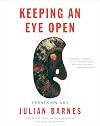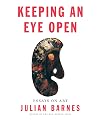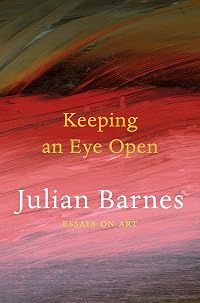
Keeping an Eye Open: Essays on Art
by Julian Barnes
On This Page
Description
"An extraordinary collection-- hawk-eyed and understanding-- from the Booker Prize-winning, best-selling author of The Sense of an Ending and Levels of Life. As Julian Barnes explains: "Flaubert believed that...great paintings required no words of explanation. Braque thought the ideal state would be reached when we said nothing at all in front of a painting ... But it is a rare picture that stuns, or argues, us into silence. And if one does, it is only a short time before we want to explain show more and understand the very silence into which we have been plunged." This is the exact dynamic that informs his new book. Barnes, in his 1989 novel A History of the World in 10 1/2 Chapters, had a chapter on Gericault's The Raft of the Medusa, and since then he has written about many great masters of nineteenth- and twentieth-century art, including Delacroix, Manet, Fantin-Latour, Cezanne, Degas, Redon, Bonnard, Vuillard, Vallotton, Braque, Magritte, Oldenburg, Howard Hodgkin, and Lucian Freud. The seventeen essays gathered here are adroit, insightful and, above all, a true pleasure to read " -- show lessTags
Recommendations









Member Recommendations
Member Reviews
The pleasure of reading Julian Barnes has become greater and greater as I've come to appreciate not only his perceptiveness but how he uses words to express his experiences. Revisiting such artwork as 'Medusa' all this time later, finding even more to it that amazes and delights is revelation that expands in the way that arguably both the visual arts and the art of writing does at its best. The metaphor settled on me gently, that writing fiction is a comparable process. Barnes outlines the choices the artist could have made but wisely avoided and that in so doing made the piece stronger. It was amusing to see Barnes later attack the Gods of contemporary art such as Koons, but understandable given his premise about what lasts and what show more makes one feel educated by art. Thought provoking and rewarding read. show less
This book is an absolute joy!
Julian Barnes teaches by example how to appreciate art far beyond the confines of aesthetics or academic rigour. His studies of the artists reveal much about the art he discusses and illustrates the context in which these pieces were created. While this approach is not unorthodox for art historians, it is a lovely read for those not in the discipline and who want to better develop their analytical and appreciate eye for the art that surrounds.
Julian Barnes teaches by example how to appreciate art far beyond the confines of aesthetics or academic rigour. His studies of the artists reveal much about the art he discusses and illustrates the context in which these pieces were created. While this approach is not unorthodox for art historians, it is a lovely read for those not in the discipline and who want to better develop their analytical and appreciate eye for the art that surrounds.
I am not familiar with Julian Barnes but these writings won me over quickly. The opening chapters on Gericault, Delacroix, Courbet, Manet, Fantin-Latour, Cezanne, Degas, Redon, Bonnard and Vuillard, are a fantastic overview of French painting and will make one long to return to Paris museums. Reading a chapter each evening is enjoyable (and no writer could fail retelling the well-known story of the Medusa disaster which inspired Gericault, but it is a captivating start and introduces us well to Barnes' unique approach to understanding French painting).
But what a disappointment, as my evening reading moved on to Magritte, Oldenburg, and other later artists, and his final fawning on the over-rated paintings of Hodgkin (a close friend of show more Barnes). I held out hope, but once Barnes' leaves the French modern masters, his vision was less insightful, and the pace and my interest lags.
I recognize this is a selected collection of Barnes' previous essays, so maybe I should blame the editors for my disappointments here. Much better to have settled on a shorter, more focused collection. (Personally, I found the artworks illustrated fully adequate to Barnes' discussion). show less
But what a disappointment, as my evening reading moved on to Magritte, Oldenburg, and other later artists, and his final fawning on the over-rated paintings of Hodgkin (a close friend of show more Barnes). I held out hope, but once Barnes' leaves the French modern masters, his vision was less insightful, and the pace and my interest lags.
I recognize this is a selected collection of Barnes' previous essays, so maybe I should blame the editors for my disappointments here. Much better to have settled on a shorter, more focused collection. (Personally, I found the artworks illustrated fully adequate to Barnes' discussion). show less
A selection of essays that Julian Barnes has written over the years, mostly on French painters. Engagingly written and introduced me to new artists, and cured me of overfamiliarity of others. The UK edition at least is handsomely produced on quality paper with good reproductions, though I would certainly have liked to see more of the pictures the text refers to.
I was so disappointed. I found it hard to concentrate. Many of the paintings he talked about were not illustrated. Sigh! I found it time consuming to find the paintings.
Ratings
Members
- Recently Added By
Lists

Books recommended by Calgary Public Library staff
1,588 works; 4 members
Author Information

89+ Works 43,196 Members
Julian Barnes was born in Leicester, England, on January 19, 1946. He received a degree in modern languages from Magdalen College, Oxford University in 1968. He has held jobs as a lexicographer for the Oxford English Dictionary, a reviewer and literary editor for the New Statesmen and the New Review, and a television critic. He has written show more numerous works of fiction including Arthur and George, Pulse: Stories, The Noise of Time, and England, England. He received the Somerset Maugham Award in 1980 for Metroland, the Geoffrey Faber Memorial Prize in 1985 and a Prix Medicis in 1986 for Flaubert's Parrot, and the Man Booker Prize in 2011 for The Sense of an Ending. He also writes non-fiction works including Letters from London, The Pedant in the Kitchen, and Nothing to Be Frightened Of. He received the Shakespeare Prize by the FVS Foundation in 1993, the Austrian State Prize for European Literature in 2004, and the David Cohen Prize for Literature in 2011. He writes detective novels under the pseudonym Dan Kavanaugh. His works under this name include Duffy, Fiddle City, Putting the Boot In, and Going to the Dogs. (Bowker Author Biography) show less
Awards and Honors
Distinctions
Common Knowledge
- Canonical title*
- In ogenschouw. Essays over kunst
- Original title
- Keeping an Eye Open: Essays on Art
- Original publication date
- 2015
- People/Characters
- Paul Cézanne; Eugène Delacroix; Lucian Freud; Édouard Manet; Edgar Degas; Odilon Redon (show all 16); René Magritte; Théodore Géricault; Gustave Courbet; Henri Fantin-Latour; Édouard Vuillard; Pierre Bonnard; Félix Vallotton; Georges Braque; Claes Oldenburg; Howard Hodgkin
- Dedication*
- Voor Pat
- Original language
- English
*Some information comes from Common Knowledge in other languages. Click "Edit" for more information.
Classifications
Statistics
- Members
- 327
- Popularity
- 97,683
- Reviews
- 5
- Rating
- (3.79)
- Languages
- 8 — Dutch, English, French, German, Italian, Portuguese, Spanish, Turkish
- Media
- Paper, Audiobook, Ebook
- ISBNs
- 18
- ASINs
- 9