
How wonderful it was to reread An Appetite for Life: The Education of a Young Diarist, 1924-1927 by Charles Ritchie! I’ve read The Siren Years, Ritchie’s diaries written while working at the Canadian High Commission in London from 1937 to 1945, so often that I long ago lost count but I think I’ve only read this earlier volume once or twice, which is a shame but also a delight since everything seemed fresh to me. Ritchie is, as always, marvelously candid and his daily ponderings – here, unsurprisingly given his youth, focused on women, sex, and school – manage to be both amusing and touching.
Full review: http://thecaptivereader.wordpress.com/2011/11/04/an-appetite-for-life-charles-ri...
Full review: http://thecaptivereader.wordpress.com/2011/11/04/an-appetite-for-life-charles-ri...
Chavs by Owen Jones
Oh, where to start on this one? If ever a book captured the spirit of 2011, Chavs: The Demonization of the Working Class by Owen Jones must surely be it. Filled with indignation and outrage over the selfish, capitalist indulgences of the British middle and upper classes, Jones passionately champions the suffering masses against the largely derogative and dismissive image of them presented by the media and politicians.
Despite some issues with Jones’ basic arguments, I had a huge amount of fun reading this book. It appealed to so many of my sides: economics geek, history geek, and, of course, politics geek. Jones writes like a young idealist on a tear, passionate, outraged, and absolutely convinced of the moral rightness of his arguments. I have no doubt that many of his readers will come away equally convinced, equally outraged. Indeed, this almost seems like required reading for the ‘Occupy’ protestors.
Full review: http://thecaptivereader.wordpress.com/2011/11/03/chavs-the-demonization-of-the-w...
Despite some issues with Jones’ basic arguments, I had a huge amount of fun reading this book. It appealed to so many of my sides: economics geek, history geek, and, of course, politics geek. Jones writes like a young idealist on a tear, passionate, outraged, and absolutely convinced of the moral rightness of his arguments. I have no doubt that many of his readers will come away equally convinced, equally outraged. Indeed, this almost seems like required reading for the ‘Occupy’ protestors.
Full review: http://thecaptivereader.wordpress.com/2011/11/03/chavs-the-demonization-of-the-w...
While the story itself should be intriguing, I found the execution clumsy and was distracted by the many details and comments which felt jarring given the historical context. I can hardly imagine a gentleman in 1903 couching his refusal to adopt by saying “I admire people who do it.” Just one of many instances where it felt like the author’s 21st Century attitudes infringed on the spirit of the story. And a male lead named Ravell, in a novel consumed by music? It felt heavy-handed and had me cringing right from the first sentence. As a music lover, particularly of opera, it was difficult to excuse errors with the musical selections, some of which were shockingly unsuited to the time period (though the author does acknowledge that her choice of Vivaldi was motivated more by personal tastes than by historical accuracy). In the end, I found the want of subtlety too frustrating and so abandoned the book without finishing.
 This review was written for LibraryThing Early Reviewers.
In the course of one wonderful, whirlwind day Miss Guinevere Pettigrew, a forty-year old down-trodden governess/maid-for-hire finds herself swept up in the wake of the glamourous Miss LaFosse and, as a result, Miss Pettigrew’s entire outlook is radically altered. It pure fairy tale, fantastical and wonderful, but, as with most fairy tales, there are dark shadows lurking at the edges.
Miss Pettigrew’s life, prior to this fateful morning, has been a dull regime of doing what is proper and what must be done, of living virtuously and unquestioningly and so, so alone. Her future is bleak: no family, no children, no wealth, no home even to shelter her as she grows older. Cinderella, let us remember, had her youth at least (not the mention her looks) and the optimism that youth invariably possesses (however misguided): Miss Pettigrew may have had that once too but life has taught her to be less fanciful. And then, by a quirk of fate, she suddenly has a chance to be reckless and to act out against all the rigid commandments that have shaped her life. She wears silk under things and makeup, drinks cocktails and dances at a nightclub. She is a woman awakening to the sensual pleasures of life and a delicious hint of sin lingers in the air, thrilling her all the more.
Full review: http://thecaptivereader.wordpress.com/2010/05/08/miss-pettigrew-lives-for-a-day-...
Miss Pettigrew’s life, prior to this fateful morning, has been a dull regime of doing what is proper and what must be done, of living virtuously and unquestioningly and so, so alone. Her future is bleak: no family, no children, no wealth, no home even to shelter her as she grows older. Cinderella, let us remember, had her youth at least (not the mention her looks) and the optimism that youth invariably possesses (however misguided): Miss Pettigrew may have had that once too but life has taught her to be less fanciful. And then, by a quirk of fate, she suddenly has a chance to be reckless and to act out against all the rigid commandments that have shaped her life. She wears silk under things and makeup, drinks cocktails and dances at a nightclub. She is a woman awakening to the sensual pleasures of life and a delicious hint of sin lingers in the air, thrilling her all the more.
Full review: http://thecaptivereader.wordpress.com/2010/05/08/miss-pettigrew-lives-for-a-day-...
Pyongyang is subtitled ‘A Journey in North Korea.’ Journey might be overstating is somewhat: for the most part, Delisle is stationed in Pyongyang, where he is working for a French animation company, occasionally being escorted on day trips further afield. However, his experiences and commentary are fascinating and beautifully illustrated and, occasionally, hilarious. I think it is this humour that made the book special for me: the subject matter is far too depressing otherwise, if I hadn’t been able to laugh every few pages I probably would have abandoned it mid-way. Happily, I was hooked quite early when, immediately after arriving in Pyongyang, Delisle is reading a passage about the thought police from 1984 in his hotel bedroom and subsequently becomes somewhat paranoid about his room being tapped. This is also where I first realised the power of images over text, as the episode is conveyed without commentary.
Delisle’s experience is the same of any foreign entering a communist country. He is assigned a translator and a guide, both of whom chaperon all of his excursions outside of the sterile hotel-zone. Like all foreigners, he attempts to get his translator to admit to feeling stifled and scared by the communist regime. Like all foreigners, he fails. He is outraged by the propaganda that pervades throughout the country: his field trips are all to such inspiring sights as The Children’s Palace, the Museum of Imperialist Occupation, and the Pyongyang subway, show more which foreigners are only allowed to ride from one stop to the next. As Delisle notes in frustration: “there’s a banner on every building, a portrait on every wall, a pin on every chest.” Naïve to be surprised by this perhaps, but his documentation of the various forms of propaganda is fascinating nonetheless. I know so little about North Korea that any glimpse of it is fascinating and Delisle handles the little details exceedingly well – everything from the make-work projects civilians ‘volunteer’ for to the disgusting, soiled tablecloths that can be found in all restaurants.
All in all, an intriguing glimpse into a very private country and a wonderful introduction to a talented illustrator. I’m already eager to get my hands on a copy of Delisle’s The Burma Chronicles.
Full review: http://thecaptivereader.wordpress.com/2010/04/03/pyongyang-guy-delisle/ show less
Delisle’s experience is the same of any foreign entering a communist country. He is assigned a translator and a guide, both of whom chaperon all of his excursions outside of the sterile hotel-zone. Like all foreigners, he attempts to get his translator to admit to feeling stifled and scared by the communist regime. Like all foreigners, he fails. He is outraged by the propaganda that pervades throughout the country: his field trips are all to such inspiring sights as The Children’s Palace, the Museum of Imperialist Occupation, and the Pyongyang subway, show more which foreigners are only allowed to ride from one stop to the next. As Delisle notes in frustration: “there’s a banner on every building, a portrait on every wall, a pin on every chest.” Naïve to be surprised by this perhaps, but his documentation of the various forms of propaganda is fascinating nonetheless. I know so little about North Korea that any glimpse of it is fascinating and Delisle handles the little details exceedingly well – everything from the make-work projects civilians ‘volunteer’ for to the disgusting, soiled tablecloths that can be found in all restaurants.
All in all, an intriguing glimpse into a very private country and a wonderful introduction to a talented illustrator. I’m already eager to get my hands on a copy of Delisle’s The Burma Chronicles.
Full review: http://thecaptivereader.wordpress.com/2010/04/03/pyongyang-guy-delisle/ show less

The Major, a widower in his late sixties, is reeling from his brother’s unexpected death when we first meet him. It is in this state that Mrs. Ali, a widow who owns the local shop that supplies his loose tea, finds him. Though this first encounter is entirely innocent, it brings emotion into what had, until then, been a purely functional acquaintance. Soon, The Major is driving Mrs. Ali into town and they are spending afternoons discussing Kipling over tea. How could that not lead to romance? And, where there are such differences in both class and ethnicity, how could it fail to upset others? Both the Major’s odious son Roger and Mrs. Ali’s conservative extended family disapprove of the friendship and do so in a vocal and forceful manner.
There are multiple sub-plots which, as other reviewers have pointed out, are weak and ultimately serve only to bulk up what would otherwise have been a very slim volume. I must admit that, superfluous as it may be, I was rather fond of the sub-plot centered on Roger Pettigrew. Roger, in his late-twenties, is a self-obsessed, self-important businessman, with little time for others, including his father. He’s selfish and thoughtless and seems to epitomize the ‘me’ generation to which he belongs. But you can’t help wondering why he is this way. The Major recalls how his wife spoiled the boy but you also get the feeling that The Major himself would have been a less than ideal parent, fond of him though I am. Roger spends most of show more the novel being awful but, by the end, after his ego has taken many bashings, there’s a hint of redemption in his future. I have a shocking weakness for tall, dark-haired men named Roger, so I found this evolution most satisfactory.
The ending of the novel gets rather too sensational and the action seems at odds with the quite sensibility that prevails through the bulk of the book. Dramatic rescues are untaken, lovers are united, other lovers are separated, a homicidal knitter runs amok…It gets a little strange.
In general, all the things that made me love the book could have made it come across as incredibly twee but rather than sentimental, I found it quite amusing. Nothing was taken too seriously and there was no situation so dire that The Major couldn’t deflect the awkwardness with a dry aside. This quiet sense of humour kept me smiling throughout.
Full review: http://thecaptivereader.wordpress.com/2010/04/15/major-pettigrews-last-stand-hel... show less
There are multiple sub-plots which, as other reviewers have pointed out, are weak and ultimately serve only to bulk up what would otherwise have been a very slim volume. I must admit that, superfluous as it may be, I was rather fond of the sub-plot centered on Roger Pettigrew. Roger, in his late-twenties, is a self-obsessed, self-important businessman, with little time for others, including his father. He’s selfish and thoughtless and seems to epitomize the ‘me’ generation to which he belongs. But you can’t help wondering why he is this way. The Major recalls how his wife spoiled the boy but you also get the feeling that The Major himself would have been a less than ideal parent, fond of him though I am. Roger spends most of show more the novel being awful but, by the end, after his ego has taken many bashings, there’s a hint of redemption in his future. I have a shocking weakness for tall, dark-haired men named Roger, so I found this evolution most satisfactory.
The ending of the novel gets rather too sensational and the action seems at odds with the quite sensibility that prevails through the bulk of the book. Dramatic rescues are untaken, lovers are united, other lovers are separated, a homicidal knitter runs amok…It gets a little strange.
In general, all the things that made me love the book could have made it come across as incredibly twee but rather than sentimental, I found it quite amusing. Nothing was taken too seriously and there was no situation so dire that The Major couldn’t deflect the awkwardness with a dry aside. This quiet sense of humour kept me smiling throughout.
Full review: http://thecaptivereader.wordpress.com/2010/04/15/major-pettigrews-last-stand-hel... show less
Something about this book never quite clicked for me. I agreed with most everything Douglas said and yet at no time did I feel the excitement I usually do when following an argument that intrigues me. I think it might have been a case of too many examples and not enough analysis. It felt like Douglas got so caught up in her case studies that she forgot to tie them back to the points she was attempting to illustrate. Yes, the information presented was interesting, but what did it mean? Even her initial definition of enlightened feminism seems indistinct, beginning with a relatively clear statement (see below) but then dragging on for several pages:
Enlightened sexism is a response…to the perceived threat of a new gender regime. It insists that women have made plenty of progress because of feminism – indeed, full equity has been achieved – so now it’s okay, even amusing, to resurrect sexist stereotypes of girls and women. (p. 9)
I was able to tolerate Douglas’ use of Valley-Girl speak throughout (it was, like, really annoying) but I lost some respect for her when, while discussing the Sex and the City franchise, she made a sweeping generalization about the show appealing to all women. Seriously? No wonder I found the rest of the analysis confusing – even the author can’t remember that she’s supposed to be arguing against the stereotyping of women.
Full review: http://thecaptivereader.wordpress.com/2010/04/21/enlightened-sexism-susan-j-doug...
Enlightened sexism is a response…to the perceived threat of a new gender regime. It insists that women have made plenty of progress because of feminism – indeed, full equity has been achieved – so now it’s okay, even amusing, to resurrect sexist stereotypes of girls and women. (p. 9)
I was able to tolerate Douglas’ use of Valley-Girl speak throughout (it was, like, really annoying) but I lost some respect for her when, while discussing the Sex and the City franchise, she made a sweeping generalization about the show appealing to all women. Seriously? No wonder I found the rest of the analysis confusing – even the author can’t remember that she’s supposed to be arguing against the stereotyping of women.
Full review: http://thecaptivereader.wordpress.com/2010/04/21/enlightened-sexism-susan-j-doug...
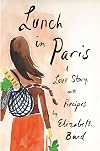
There are few cities in the world with the inherent glamour of Paris. To name it is to instantly conjure up a city of romance, of passion, of love. Even the thought of Paris, for the giddy Francophile, is enough to induce palpitations. It would be easy to follow the clichés, to write of an idealised life that works in all the stereotypes, particularly when writing a book like this aimed at an English-speaking audience so eager to hear only wonderful, fantastic things about France and Paris in particular. Happily, Bard avoids this path. Her life in Paris is neither too glamourous nor too squalid. In fact, at times, it is downright boring. After moving to Paris, Bard is unemployed and her life revolves around the miniscule apartment that she shares with her boyfriend (and future husband) Gwendal. It is during these months that she begins her cooking adventures, spending hours going to the markets and various venders to track down the perfect ingredients (and even more hours looking up and memorizing the vocabulary necessary for these excursions). I found Bard’s description of visits to butcher, of the strict protocol that must be followed, both amusing and stressful: butchers wield incredible power, no matter what country you’re in, and I’ve had some very terrifying lost-in-translation moments of my own with butchers and their patrons in several countries.
Full review: http://thecaptivereader.wordpress.com/2010/04/19/lunch-in-paris-elizabeth-bard/
Full review: http://thecaptivereader.wordpress.com/2010/04/19/lunch-in-paris-elizabeth-bard/
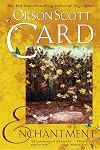
As a young boy, Ivan glimpses a princess asleep in the woods. As an adult coming back to the Ukraine to study after years in America, he returns to those woods and wakes the princess with a kiss. However, nothing is as simple as Disney had made it seem, and Ivan finds himself engaged to Princess Katerina and follows her back to the late 9th Century where the witch Baba Yaga terrorizes all in an attempt to seize the king’s lands. Ivan, a Twentieth Century academic, is unable to even handle a sword – certainly not the hero all had hoped for and relied upon to protect the kingdom. Katerina and Ivan must work together to out run and out wit the deadly Baba Yaga and to plot her defeat.
I loved this book. I thought it had fascinating, complex characters, a rich, detailed narrative and a wonderfully irreverent sense of humour. Fantasy books can take themselves, and their heroes and heroines, too seriously but that’s certainly not the case here. Ivan and Katerina are extraordinary people but both are still sympathetic and believable, with more than enough faults. Katerina has an innate nobility about her, the confidence of someone born to rule and more than capable of doing so. Ivan falls short of her rather lofty expectations but, though somewhat insecure in his new setting and role, he remains strong. The evolution of their relationship is believable, as are the prejudices and misunderstandings that at times keep them apart.
Full review: show more target="_top">http://thecaptivereader.wordpress.com/2010/04/12/enchantment-orson-scott-card/ show less
I loved this book. I thought it had fascinating, complex characters, a rich, detailed narrative and a wonderfully irreverent sense of humour. Fantasy books can take themselves, and their heroes and heroines, too seriously but that’s certainly not the case here. Ivan and Katerina are extraordinary people but both are still sympathetic and believable, with more than enough faults. Katerina has an innate nobility about her, the confidence of someone born to rule and more than capable of doing so. Ivan falls short of her rather lofty expectations but, though somewhat insecure in his new setting and role, he remains strong. The evolution of their relationship is believable, as are the prejudices and misunderstandings that at times keep them apart.
Full review: show more target="_top">http://thecaptivereader.wordpress.com/2010/04/12/enchantment-orson-scott-card/ show less
Green Metropolis: Why Living Smaller, Living Closer, and Driving Less are the Keys to Sustainability by David Owen
Found this to be a quick and not particularly enlightening read. Owen's thesis, essentially, is the obvious: living in a smaller space, close to amenities and your workplace, reduces your carbon footprint. My greatest quibble with this book is that it is very, very American. There are no specific international examples used, aside from vague mentions of Europe’s superiority. Using one example, in this case NYC, to illustrate your argument is never terribly effective and I would have respected Owen much more if he had drawn on further examples. I was also disappointed by the lack of productive suggestions expressed in the conclusion.

I had heard so many mixed reviews of Cheerful Weather for the Wedding that I was almost holding my breath when I started it, scared that it was going to prove a disappointment. I am happy to report that I was not disappointed and, if not delighted, then I was at least amused and rather charmed by this short novella.
It reads more like a play than a novel, which is perhaps the most delightful thing about it. Every line, every description was mentally converted into a script with stage directions, since this is a story where very little goes unsaid or, at the very least, unobserved.
Full review: http://thecaptivereader.wordpress.com/2010/05/05/cheerful-weather-for-the-weddin...
It reads more like a play than a novel, which is perhaps the most delightful thing about it. Every line, every description was mentally converted into a script with stage directions, since this is a story where very little goes unsaid or, at the very least, unobserved.
Full review: http://thecaptivereader.wordpress.com/2010/05/05/cheerful-weather-for-the-weddin...