
Charles Ritchie (1906–1995)
Author of An Alphabet of Saints
Series
Works by Charles Ritchie
Associated Works
The Assassin's Cloak: An Anthology of the World's Greatest Diarists (2000) — Contributor, some editions — 623 copies, 9 reviews
Tagged
Common Knowledge
- Legal name
- Ritchie, Charles Stewart Almon
- Birthdate
- 1906-09-23
- Date of death
- 1995-06-07
- Gender
- male
- Education
- University of King's College, Halifax, Nova Scotia, Canada
University of Oxford (Pembroke College)
Harvard University
École libre des sciences politiques, France - Occupations
- diplomat
diarist - Awards and honors
- Order of Canada (Companion, 1969)
- Relationships
- Bowen, Elizabeth (lover)
- Short biography
- Born in Halifax, Nova Scotia, he was Canada’s ambassador to West Germany (1954-1958), Permanent Representative to the United Nations (1958-1962), ambassador to the United States during the presidencies of John F. Kennedy and Lyndon Johnson (1962-1966), ambassador to the North Atlantic Council (1966-1967) and from 1967 to 1971 was Canadian High Commissioner to the United Kingdom in London. While Ritchie's career as a diplomat marked him as an important person in the history of Canadian foreign relations, he became famous through the publication of his diaries, first The Siren Years, and then three follow-ups. In 1969 he was made a Companion of the Order of Canada. He received honorary doctorates Trent University (1976), York University (1992) and Carleton University (1992).
- Nationality
- Canada
- Birthplace
- Halifax, Nova Scotia, Canada
- Places of residence
- London, England, UK
Washington, D.C., USA - Place of death
- Ottawa, Ontario, Canada
- Associated Place (for map)
- Canada
Members
Reviews
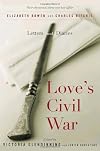
Advance Reader Copy
Elizabeth Bowen (Anglo-Irish, 1899-1973) was the author of at least eleven major novels, and umpteen short stories. Charles Ritchie (1906-1995) was a Canadian career diplomat who worked with the UN from its inception, was involved in NATO and was the Canadian ambassador to the U.S. Love’s Civil War is an edited collection of Bowen’s letters and Ritchie’s diary entries, the documentation of a complex and at times incomprehensible love affair.
Reading this book through show more to the end became an effort of will, a Herculean task requiring fortitude and grit. I picked it up and put it down several times and would cheerfully have ditched it, if it hadn’t been for a commitment as an early reviewer. The struggle wasn’t with their writing. Bowen writes beautifully in her letters, with little masterpieces of description and characterisation; Ritchie less so but his were diary entries. No, the struggle was with the relationship itself and its effect on their lives. There were times when I wanted to hurl the book in frustration with both of them - particularly with her. A brilliant, articulate, fun-loving and fun woman, she nonetheless seemed to abase herself at Ritchie’s feet, submerged in a love for him which would never develop into a life together because he wouldn’t let it. Her moaned “oh Charles, Charles, Charles” or “dear beautiful, I love you, I love you” at the end of many of her letters had me gritting my teeth. “Give him the boot!”, I wanted to yell back through time, “Expend your energy on someone who will love you fully in the way you need and deserve!” But it wasn’t to be.
Part of my frustration was that I didn’t “get” her fascination with Ritchie. He came across as a self-absorbed narcissist, a careerist who always put himself and his own wants and needs first. He was a philanderer, not only betraying Bowen but his wife, Sylvia. He must have been very good at his job because he rose up steadily through the diplomatic ranks. But his purported charm seemed shallow, of the cocktail party sort. I struggled to see what Bowen saw in him, to the point where she made him into the sine qua non in her life. At times it made her seem adolescent in her affections, the angst and constant questioning those of a seventeen year old, not an accomplished woman of letters, sought after by universities to be writer in residence and adored by her students. As judgemental as this likely sounds, it was what was giving me the most trouble reading the first two thirds of the book, as he seemed almost lifeless set beside her energy.
But somehow this relationship hung on for thirty years until her death. As ultimately unfulfilled and unfulfilling as it appeared to be, as awkward and complex, as geographically challenged with continents or oceans between them, they clung to it, writing constantly to each other, growing old, if not together, at least in tandem. It’s difficult to say whether Bowen would have been as successful an author if the affair had ripened into a fully realised relationship or whether this strange yearning after the unattainable provided her with the impetus to write the way she did.
Victoria Glendinning’s editing is unobtrusive but very helpful, her asides in italics useful for fleshing out unknown individuals and their histories, their connection to Bowen’s and Ritchie’s lives. This book did have the effect of making me want to search out Bowen’s writing, to see what she had to say as a writer. It seemed strange to read about her so intimately with no knowledge of what or how she wrote.
Would I recommend this book? On the whole, yes. Although Bowen and Ritchie alternately annoyed and frustrated me, they also provided an interesting glimpse at an era which was one of tremendous upheaval and change, with marvelous bits of gossip in Bowen’s letters. Bowen lived the upper crust life with servants, the great house in Ireland, flitting to Europe, sailing to America, yet struggling with financial troubles. Ritchie was heavily involved in the restructuring of Europe at the end of the war, as well as the creation of the U.N. (although there is a paucity of his actual activities mentioned, no doubt for security reasons). So, their love affair aside, they were interesting studies. But the love affair itself is the point of the book, of the letters and the diary entries, and about this I remain somewhat ambivalent.
I came, by the end, to a kind of grudging acceptance that their relationship was what it was, however uncomfortably it sat in light of Bowen’s frequent bouts with despair and its seemingly lopsided nature. Whatever they gave each other, each seemed to need: Bowen, an object to love as a lodestone for all her ardour; Ritchie, to be the recipient of an unwavering adoration, an idolisation he seemed to need. To his credit, Ritchie went to England to be at her side when she died of lung cancer (she was a heavy smoker and a regular drinker). The last sentence of the book does indicate that whatever his surface failings, she had meant everything to him but I won’t spoil it by telling you what he wrote.
Victoria Glendinning's biography of Elizabeth Bowen is on my must read list now. show less
Elizabeth Bowen (Anglo-Irish, 1899-1973) was the author of at least eleven major novels, and umpteen short stories. Charles Ritchie (1906-1995) was a Canadian career diplomat who worked with the UN from its inception, was involved in NATO and was the Canadian ambassador to the U.S. Love’s Civil War is an edited collection of Bowen’s letters and Ritchie’s diary entries, the documentation of a complex and at times incomprehensible love affair.
Reading this book through show more to the end became an effort of will, a Herculean task requiring fortitude and grit. I picked it up and put it down several times and would cheerfully have ditched it, if it hadn’t been for a commitment as an early reviewer. The struggle wasn’t with their writing. Bowen writes beautifully in her letters, with little masterpieces of description and characterisation; Ritchie less so but his were diary entries. No, the struggle was with the relationship itself and its effect on their lives. There were times when I wanted to hurl the book in frustration with both of them - particularly with her. A brilliant, articulate, fun-loving and fun woman, she nonetheless seemed to abase herself at Ritchie’s feet, submerged in a love for him which would never develop into a life together because he wouldn’t let it. Her moaned “oh Charles, Charles, Charles” or “dear beautiful, I love you, I love you” at the end of many of her letters had me gritting my teeth. “Give him the boot!”, I wanted to yell back through time, “Expend your energy on someone who will love you fully in the way you need and deserve!” But it wasn’t to be.
Part of my frustration was that I didn’t “get” her fascination with Ritchie. He came across as a self-absorbed narcissist, a careerist who always put himself and his own wants and needs first. He was a philanderer, not only betraying Bowen but his wife, Sylvia. He must have been very good at his job because he rose up steadily through the diplomatic ranks. But his purported charm seemed shallow, of the cocktail party sort. I struggled to see what Bowen saw in him, to the point where she made him into the sine qua non in her life. At times it made her seem adolescent in her affections, the angst and constant questioning those of a seventeen year old, not an accomplished woman of letters, sought after by universities to be writer in residence and adored by her students. As judgemental as this likely sounds, it was what was giving me the most trouble reading the first two thirds of the book, as he seemed almost lifeless set beside her energy.
But somehow this relationship hung on for thirty years until her death. As ultimately unfulfilled and unfulfilling as it appeared to be, as awkward and complex, as geographically challenged with continents or oceans between them, they clung to it, writing constantly to each other, growing old, if not together, at least in tandem. It’s difficult to say whether Bowen would have been as successful an author if the affair had ripened into a fully realised relationship or whether this strange yearning after the unattainable provided her with the impetus to write the way she did.
Victoria Glendinning’s editing is unobtrusive but very helpful, her asides in italics useful for fleshing out unknown individuals and their histories, their connection to Bowen’s and Ritchie’s lives. This book did have the effect of making me want to search out Bowen’s writing, to see what she had to say as a writer. It seemed strange to read about her so intimately with no knowledge of what or how she wrote.
Would I recommend this book? On the whole, yes. Although Bowen and Ritchie alternately annoyed and frustrated me, they also provided an interesting glimpse at an era which was one of tremendous upheaval and change, with marvelous bits of gossip in Bowen’s letters. Bowen lived the upper crust life with servants, the great house in Ireland, flitting to Europe, sailing to America, yet struggling with financial troubles. Ritchie was heavily involved in the restructuring of Europe at the end of the war, as well as the creation of the U.N. (although there is a paucity of his actual activities mentioned, no doubt for security reasons). So, their love affair aside, they were interesting studies. But the love affair itself is the point of the book, of the letters and the diary entries, and about this I remain somewhat ambivalent.
I came, by the end, to a kind of grudging acceptance that their relationship was what it was, however uncomfortably it sat in light of Bowen’s frequent bouts with despair and its seemingly lopsided nature. Whatever they gave each other, each seemed to need: Bowen, an object to love as a lodestone for all her ardour; Ritchie, to be the recipient of an unwavering adoration, an idolisation he seemed to need. To his credit, Ritchie went to England to be at her side when she died of lung cancer (she was a heavy smoker and a regular drinker). The last sentence of the book does indicate that whatever his surface failings, she had meant everything to him but I won’t spoil it by telling you what he wrote.
Victoria Glendinning's biography of Elizabeth Bowen is on my must read list now. show less
 This review was written for LibraryThing Early Reviewers.
I’ve always enjoyed epistolary novels and non-fiction books. There’s something about them that I find easy to read and I feel almost guilty as if I were reading someone’s secret diary and thoughts meant only for them. This is certainly true of Love’s Civil War since it is comprised of the letters Elizabeth Bowen wrote to Charles Ritchie, a Canadian diplomat, and his diary entries that encompass his life in Canada and abroad. Charles Ritchie was a well-known diarist and had several show more diaries published in his lifetime, but as to letters to Elizabeth, according to the dust jacket, “Charles did not keep his letters to her, which were returned to him after her death.”
The book begins with Ritchie’s diary in February 1941. He writes about his social life and about meeting Elizabeth, a married, successful author who divides her time between Bowen Court, her family’s ancestral home in Ireland, and England. From her letters and his diary entries, the reader gets the chronicle of their friendship and budding love affair. Still, (and even with my tendency to enjoy this type of book) it takes a bit of work to get pulled into the story. I think that may be because it is non-fiction and the author could only do so much with the material she had to work with. Despite that, I really enjoyed this book. I liked the atmosphere it evoked during the war and reading about the other well-known people that Elizabeth knew.
It is sad and more than a little bittersweet that their love for each other endured for 30 years it could never be made ‘official’ due to their other-halves. It begs the question that if it was possible, would they have married?
Footnotes are used extensively throughout the book. I found these cumbersome at first, but quickly got used to them as they provided a lot of information about the places, people and events that Elizabeth and Ritchie referred to. There are eight pages of photos which I liked – my only complaint is that there weren’t more. show less
The book begins with Ritchie’s diary in February 1941. He writes about his social life and about meeting Elizabeth, a married, successful author who divides her time between Bowen Court, her family’s ancestral home in Ireland, and England. From her letters and his diary entries, the reader gets the chronicle of their friendship and budding love affair. Still, (and even with my tendency to enjoy this type of book) it takes a bit of work to get pulled into the story. I think that may be because it is non-fiction and the author could only do so much with the material she had to work with. Despite that, I really enjoyed this book. I liked the atmosphere it evoked during the war and reading about the other well-known people that Elizabeth knew.
It is sad and more than a little bittersweet that their love for each other endured for 30 years it could never be made ‘official’ due to their other-halves. It begs the question that if it was possible, would they have married?
Footnotes are used extensively throughout the book. I found these cumbersome at first, but quickly got used to them as they provided a lot of information about the places, people and events that Elizabeth and Ritchie referred to. There are eight pages of photos which I liked – my only complaint is that there weren’t more. show less
This review was written for LibraryThing Early Reviewers.This book is the letters of Anglo-Irish author Elizabeth Bowen, and the diary entries of Canadian diplomat Charles Ritchie, from 1941 when they met to 1973 when Elizabeth died. They had a enduring love affair and the letters and diary entries are fascinating to read, passionate on her side, analytical on his.
Both individual's sphere of friends and acquaintances was very interesting, from Virginia Woolf to Vincent Massey to Nancy Mitford to John F. Kennedy. I felt like I entered the whole show more era of the '50's and '60's, the excitement of New York and London. Elizabeth's commentary on life was at times so acerbic, so politically incorrect, I laughed out loud and yet at other times she could be so vulnerable, so painfully revealing. Charles' diary entries were a stark contrast to the rich, description filled letters of Elizabeth. Both personalities come through clearly, whether likeable or not is debatable, but a wonderful experience to read notwithstanding. show less
Both individual's sphere of friends and acquaintances was very interesting, from Virginia Woolf to Vincent Massey to Nancy Mitford to John F. Kennedy. I felt like I entered the whole show more era of the '50's and '60's, the excitement of New York and London. Elizabeth's commentary on life was at times so acerbic, so politically incorrect, I laughed out loud and yet at other times she could be so vulnerable, so painfully revealing. Charles' diary entries were a stark contrast to the rich, description filled letters of Elizabeth. Both personalities come through clearly, whether likeable or not is debatable, but a wonderful experience to read notwithstanding. show less
This review was written for LibraryThing Early Reviewers.This book was sent to me as an advanced reading copy. Glendinning has done a very good job editing the letters of Bowen to Ritchie, and intertwining them with the diaries of Ritchie to Bowen. Her footnotes provide just the right amount of information to fill in the gaps.
This is their correspondence over the period 1941 to 1973, finishing the year Bowen died from lung cancer. It is a revealing and poignant portrayal of their love affair - an affair that was sustained for 32 years despite show more separation by the Atlantic Ocean and marriage to others.
I enjoyed this book, and can recommend it, especially those interested in Elizabeth Bowen and her life - full of the English gentry and artists of the time. It was never dull, and her letters are suffused with lively prose and acerbic commentary. It acts also as a social commentary of the times, the Anglo-Irish connection and places her published writings into the chronology of her life.
One aspect that surprised me was the freedom that Ritchie appeared to have in his marriage – his frequent extra-martial affairs, his entertaining of other women, his frequent trips alone. This aspect made the ardour of his affair with Bowen a little less believable for me.
Overall, I did not get a great feeling about Ritchie - he seemed rather self-absorbed to me. His declarations of love seemed self-interested and he seems to waver more, question his feelings, and overall seemed rather less devoted. However, this is perhaps a unfair position to adopt based on a few very personal musings.
(Remembering how he left the letters of Bowen lying around for his wife to see, and talked about Bowen 'setting him up' with a mistress at one point). Pfff.
My overall feeling about Bowen, reading between the lines of her letters, is that she needed to maintain a romantic interest at a distance as part of her 'raison d’être'. It fed her imagination, her artistry and her soul. show less
This is their correspondence over the period 1941 to 1973, finishing the year Bowen died from lung cancer. It is a revealing and poignant portrayal of their love affair - an affair that was sustained for 32 years despite show more separation by the Atlantic Ocean and marriage to others.
I enjoyed this book, and can recommend it, especially those interested in Elizabeth Bowen and her life - full of the English gentry and artists of the time. It was never dull, and her letters are suffused with lively prose and acerbic commentary. It acts also as a social commentary of the times, the Anglo-Irish connection and places her published writings into the chronology of her life.
One aspect that surprised me was the freedom that Ritchie appeared to have in his marriage – his frequent extra-martial affairs, his entertaining of other women, his frequent trips alone. This aspect made the ardour of his affair with Bowen a little less believable for me.
Overall, I did not get a great feeling about Ritchie - he seemed rather self-absorbed to me. His declarations of love seemed self-interested and he seems to waver more, question his feelings, and overall seemed rather less devoted. However, this is perhaps a unfair position to adopt based on a few very personal musings.
(Remembering how he left the letters of Bowen lying around for his wife to see, and talked about Bowen 'setting him up' with a mistress at one point). Pfff.
My overall feeling about Bowen, reading between the lines of her letters, is that she needed to maintain a romantic interest at a distance as part of her 'raison d’être'. It fed her imagination, her artistry and her soul. show less
This review was written for LibraryThing Early Reviewers.Lists
Awards


You May Also Like


Associated Authors
Statistics
- Works
- 10
- Also by
- 2
- Members
- 337
- Popularity
- #70,619
- Rating
- 4.0
- Reviews
- 20
- ISBNs
- 38
