

Peter C. Newman (1929–2023)
Author of Company of Adventurers
About the Author
Series
Works by Peter C. Newman
True North, Not Strong and Free: Defending the Peaceable Kingdom in the Nuclear Age (1983) 24 copies, 1 review
Hostages to Fortune: The United Empire Loyalists and the Making of Canada (2016) 20 copies, 1 review
King of the Castle 1 copy
My Toronto 1 copy
Associated Works
Tagged
Common Knowledge
- Legal name
- Newman, Peter Charles
- Birthdate
- 1929-05-10
- Date of death
- 2023-09-07
- Gender
- male
- Education
- University of Toronto (BA, MCom)
Upper Canada College - Occupations
- journalist
non-fiction author
editor - Organizations
- International Press Institute
Royal Canadian Yacht Club
Rideau Club
MACLEANS magazine
Toronto Star - Awards and honors
- National Newspaper Award for feature writing (1964)
Wilderness Award, Canadian Broadcasting Association (1967)
Doctor of Laws, Brock University (1974)
Doctor of Letters, York University (1975)
Officer in Order of Canada (1978)
Knighthood in Order of St. Lazarus (1980) (show all 7)
Knight of Lippe (1980) - Relationships
- Turner, Camilla Jane (wife)
McCall, Christina (wife) - Nationality
- Canada
- Birthplace
- Vienna, Austria
- Places of residence
- Toronto, Ontario, Canada
Victoria, British Columbia, Canada - Associated Place (for map)
- Canada
Members
Reviews

My reactions to reading this book in 1994.
A fascinating book about the Hudson Bay Company’s early days and an intriguing account of the beginnings of a commercial empire in the desolate Arctic.
I liked several things in this book.
I found the descriptions of the land (swampy and desolate around Hudson’s Bay) and beaver’s habits interesting and also the French-English naval battles fought in the area as part of the French-English military and political conflicts in North America.
The show more details of the Hudson Bay Company’s men’s lives were interesting: their huge feasts and bouts of drinking (not a lot to do there) and sexual promiscuity with the Indian women. (Taking a “country wife” was not only a good way to get sex but helped the Bay men learn the language and develop trade relations.). I also found it amusing that many men from Scotland’s Orkney islands had long careers in the Bay. The climate wasn’t that much worse than the Orkneys; they could save up – for them – a relatively large sum of money since their needs were met. Indeed, they ate better than at home, and their Bay housing, while primitive (many accounts of ice being chipped from the inside walls of Bay forts), wasn’t any worse than where they came from.
But best of all, I liked the tales of Bay men and legendary Arctic explorers Samuel Hearne and John Rae. Hearne kept a fascinating journal detailing natural history observations, disgusting Indian foods (Hearne only drew the line at eating lice and warble flies), strange Indian practices (like Indian blowing into each others anuses as a cure for constipation), Chipewyan contempt for their women, and the brutal – almost eternal – war between Inuit and Chipewyan. Hearne had very bad luck on his first trips and was barely saved from death by Chipewyan chief Matonabbee who initiated him into the techniques of Arctic survival to the point where Hearne eventually traveled with a minimum of supplies. His walks through the Arctic and survey of the coast of the Arctic Sea put an end to the dream (though this wasn’t recognized at the time) of a Northwest Passage. The even more incredible surgeon John Rae pushed Hearne’s technique of going native even further. (He was inspired by Hearne’s account). He mapped more than 1,700 of the Arctic Sea’s coast. He traveled light, usually little more than a rifle (he was an excellent shot.), ammo, clothes, and snowshoes. He is the first white man to build igloos. Sometimes he’d carry a book of Shakespeare’s plays and always a journal and surveying tools. He, like Hearne, recorded natural history observations, defended the Eskimo culture, and is best known for, in 1854, providing proof with artifacts of the fate of the famous 1821 Franklin expedition and putting forth the unpopular notion that these noble examples of heroic British exploration resorted to cannibalism in the end. (An idea later proved by forensic anthropologists on bodies from the Franklin expedition.). The Royal Geographic Society never forgave him for sullying the name of Franklin while succeeding by violating the “rules” of popular exploration by going native.
Newman also makes an interesting point about the differences in American and HBC relations with their Indian populations. The HBC sought to co-opt the Indians via trade rather than conquer them. By trading guns, iron hatchets, and copper kettles, they propelled the Indians from the Stone Age to the modern age with no intermediate steps, no development of the accompanying and necessary scientific and technical skills. The Indians became dependent for their survival on guns and hatchets supplied by whites. They became addicted to the white’s tobacco (Newman doesn’t answer the question as to what exactly the Indians smoked in their pipe ceremonies they seemed to have had before white arrival) and alcohol. (The Indians preferred English tobacco grown in Brazil but French cognac since the English usually only had gin colored with iodine.) Canadian history is not, like American, marked by Indian Wars. However, Canadian Indians activists don’t see that as a good thing. They argue that by fighting Indians, making treaties (whether kept or not) with them, and eventually setting up the reservation system, the American government came to recognize the Indians as a distinct nation accorded subsequent rights and recognized as a separate culture whereas Canadian Indians became dependent on a patronizing Canadian government. (I would argue that Indian tribes in America are not truly nations a are quite dependent on the U.S. government.) show less
A fascinating book about the Hudson Bay Company’s early days and an intriguing account of the beginnings of a commercial empire in the desolate Arctic.
I liked several things in this book.
I found the descriptions of the land (swampy and desolate around Hudson’s Bay) and beaver’s habits interesting and also the French-English naval battles fought in the area as part of the French-English military and political conflicts in North America.
The show more details of the Hudson Bay Company’s men’s lives were interesting: their huge feasts and bouts of drinking (not a lot to do there) and sexual promiscuity with the Indian women. (Taking a “country wife” was not only a good way to get sex but helped the Bay men learn the language and develop trade relations.). I also found it amusing that many men from Scotland’s Orkney islands had long careers in the Bay. The climate wasn’t that much worse than the Orkneys; they could save up – for them – a relatively large sum of money since their needs were met. Indeed, they ate better than at home, and their Bay housing, while primitive (many accounts of ice being chipped from the inside walls of Bay forts), wasn’t any worse than where they came from.
But best of all, I liked the tales of Bay men and legendary Arctic explorers Samuel Hearne and John Rae. Hearne kept a fascinating journal detailing natural history observations, disgusting Indian foods (Hearne only drew the line at eating lice and warble flies), strange Indian practices (like Indian blowing into each others anuses as a cure for constipation), Chipewyan contempt for their women, and the brutal – almost eternal – war between Inuit and Chipewyan. Hearne had very bad luck on his first trips and was barely saved from death by Chipewyan chief Matonabbee who initiated him into the techniques of Arctic survival to the point where Hearne eventually traveled with a minimum of supplies. His walks through the Arctic and survey of the coast of the Arctic Sea put an end to the dream (though this wasn’t recognized at the time) of a Northwest Passage. The even more incredible surgeon John Rae pushed Hearne’s technique of going native even further. (He was inspired by Hearne’s account). He mapped more than 1,700 of the Arctic Sea’s coast. He traveled light, usually little more than a rifle (he was an excellent shot.), ammo, clothes, and snowshoes. He is the first white man to build igloos. Sometimes he’d carry a book of Shakespeare’s plays and always a journal and surveying tools. He, like Hearne, recorded natural history observations, defended the Eskimo culture, and is best known for, in 1854, providing proof with artifacts of the fate of the famous 1821 Franklin expedition and putting forth the unpopular notion that these noble examples of heroic British exploration resorted to cannibalism in the end. (An idea later proved by forensic anthropologists on bodies from the Franklin expedition.). The Royal Geographic Society never forgave him for sullying the name of Franklin while succeeding by violating the “rules” of popular exploration by going native.
Newman also makes an interesting point about the differences in American and HBC relations with their Indian populations. The HBC sought to co-opt the Indians via trade rather than conquer them. By trading guns, iron hatchets, and copper kettles, they propelled the Indians from the Stone Age to the modern age with no intermediate steps, no development of the accompanying and necessary scientific and technical skills. The Indians became dependent for their survival on guns and hatchets supplied by whites. They became addicted to the white’s tobacco (Newman doesn’t answer the question as to what exactly the Indians smoked in their pipe ceremonies they seemed to have had before white arrival) and alcohol. (The Indians preferred English tobacco grown in Brazil but French cognac since the English usually only had gin colored with iodine.) Canadian history is not, like American, marked by Indian Wars. However, Canadian Indians activists don’t see that as a good thing. They argue that by fighting Indians, making treaties (whether kept or not) with them, and eventually setting up the reservation system, the American government came to recognize the Indians as a distinct nation accorded subsequent rights and recognized as a separate culture whereas Canadian Indians became dependent on a patronizing Canadian government. (I would argue that Indian tribes in America are not truly nations a are quite dependent on the U.S. government.) show less
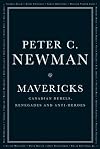
I liked the variety of subjects Newman chose to include in this anthology. It's a collection of mini biographical essays of notable Canadians. I wanted to read what he had to say about Conrad Black and it was one of the standout biographies. Some of the people have faded from the spotlight due to the passage of time, e.g. the Eatons, Victor Rice. It's worth perusing the contents and perhaps selecting one or two of the essays to read.
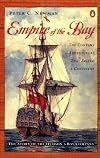
Fascinating. Mr. Newman has done an amazing amount of research and has written a totally engaging history of the Hudson's Bay Company....which, in many ways, is also a history of Canada. There is so much detail here, but it is never boring. There are also lots of interesting facts, such as how fire water got its name; a U.S. bill to annex Canada that was never implemented; how the approaches of the HBC and the Northwest Company differed....
I especially loved the epilogue. These last six show more pages were so moving that I read them to my husband -- they speak directly to the Canadian soul. show less
I especially loved the epilogue. These last six show more pages were so moving that I read them to my husband -- they speak directly to the Canadian soul. show less
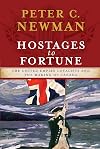
This book presents both a biography of the Loyalist Jarvis family, and a history of the time in North America. Unfortunately, it falls short on both accounts.
There is a lot of general history of the time, little of it specific to the Loyalist experience -- with the notable exception of how Loyalists were discriminated against in the U.S. colonies. I found many generalizations, a Toronto-centric view that goes too far in attributing to Loyalists the shaping of our country -- largely ignoring show more the contributions of Aboriginal Peoples and other immigrants.
The narrative of the Jarvis family wasn't strong enough to carry the story forward.
I'm sure you can find a better book on the Loyalists. show less
There is a lot of general history of the time, little of it specific to the Loyalist experience -- with the notable exception of how Loyalists were discriminated against in the U.S. colonies. I found many generalizations, a Toronto-centric view that goes too far in attributing to Loyalists the shaping of our country -- largely ignoring show more the contributions of Aboriginal Peoples and other immigrants.
The narrative of the Jarvis family wasn't strong enough to carry the story forward.
I'm sure you can find a better book on the Loyalists. show less
Lists
Awards


You May Also Like


Associated Authors
Statistics
- Works
- 40
- Also by
- 1
- Members
- 1,929
- Popularity
- #13,346
- Rating
- 3.8
- Reviews
- 25
- ISBNs
- 92
- Languages
- 1