
Will Ferguson
Author of Happiness™️
About the Author
Series
Works by Will Ferguson
Associated Works
Tagged
Common Knowledge
- Canonical name
- Ferguson, Will
- Legal name
- Ferguson, William Stener
- Birthdate
- 1965-10-12
- Gender
- male
- Education
- York University (BFA|Film Production and Screenwriting)
- Occupations
- writer
- Awards and honors
- Pierre Berton Award for History (2005)
- Relationships
- Ferguson, Ian (brother)
- Nationality
- Canada
- Birthplace
- Fort Vermilion, Alberta, Canada
- Places of residence
- Calgary, Alberta, Canada
St. Andrews, New Brunswick, Canada
Kyushu, Japan - Associated Place (for map)
- Canada
Members
Reviews
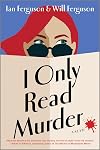
My new favorite sleuth!
She’s a washed up actress best known for playing butt kicking Pastor Fran without a penny to her name or a job on the horizon but she’s deliciously delusional. In her reality she’s still the STAR...when she receives a post card from her...not so ex husband...she thinks he’s ready to reconcile, only to find out that’s not the case and then murder strikes. And it has to be about her, right? It’s a laugh out loud romp!
She’s a washed up actress best known for playing butt kicking Pastor Fran without a penny to her name or a job on the horizon but she’s deliciously delusional. In her reality she’s still the STAR...when she receives a post card from her...not so ex husband...she thinks he’s ready to reconcile, only to find out that’s not the case and then murder strikes. And it has to be about her, right? It’s a laugh out loud romp!
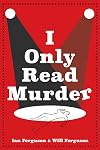
At last, I've found a Cozy Mystery series (I really dislike the Z in Cozy but the genre seems to be an American invention - albeit one that the Canadians excel at, so the American spelling prevails) that has the kind of dry humour and deadpan irony that make me smile.
The GoodReads reviews of 'I Only Read Murder' seemed to split between those who hated it (DNFs and one-star or two-star reviews) and those who loved it. The most common cause for hating it was that the main character was show more unpleasant and the people around her weren't much better. It seemed to fall short of what some readers expect of a Cozy in terms of the warm and fuzzies. I took this as good sign and dived in.
I could see immediately that the haters were right about Miranda Abbott not being likeable. She's a narcissist who is prone to magical thinking and who tramples over everyone she meets in pursuit of her starring role in her own life. The thing is, she's DESIGNED not to be likeable. She's chaotic and overwhelming and difficult to be with but it's her personality that makes the story work. . Yes, she's selfish, completely self-absorbed but her narcissim means that she often doesn't notice or understand how the people around her relate to one another. This makes her a perfect filter for the exposition of a mystery. She's confident and unreasonably demanding so she changes the behaviour of the people around her, forcing them out of their ruts. She's funny, although often not intentionally, and beneath all the drama and the posturing and the attention-seeking, she is quietly vulnerable.
I was amused by Miranda Abbott's inability to make sense of the behaviours and expectations of the inhabitants of Happy Rock, a small coastal town in the Pacific Northwest that her husband has spent the past fifteen years running the 'I Only Read Murder' bookshop while she has been trying to revive her I-used-to-be-a-TV-star career in the Hollywood Hills. Some of my amusement and Miranda's bemusement comes from the nature Happy Rock itself. It is as unrealistic as Jessica Fletcher's town of Cabot Cove, but where Cabot Cove is seen as quaint and charmingly old-fashioned in a way that speaks of American big-city-dwellers nostalgia for a world they've never known but would like to think exists, Happy Rock crosses the line from quaint to crazy fairly early on in a way that I think shows you've-got-to-be-kidding-me response of the Canadian authors to American small-town mythology. The residents of Happy Pebble make the residents of Garrison Keillor's Lake Wobegone seem streetwise and savvy.
One of the things that will either sell this book to a reader or leave them cold is the humour around 1980s American crime shows. Miranda spent six years starring as Pastor Fran, an itinerant minister who travelled America fighting crime with high kicks and karate chops, often working undercover and wearing as little as possible. Some of the humour is about the reverence the fans have for this now-only-available-on-VHS show and some of it comes from Miranda's tales about what really happened on set. To a degree, these two views of the show mirror the slightly delusional way the inhabitants of Happy Rock see their town and how Miranda sees her career.
Some people may find the first half of the book a little slow. This isn't a book where the first murder happens ten pages in and you spend the next fifty pages waiting for the second body to drop. 'I Only Read Murder' follows the rules set down by the Pastor Fran writers: spend the first half getting the audience to guess who is going to die and the second half trying to figure out how Pastor Fran will uncover the murderer. The murder comes exactly halfway through, although by then I was getting itchy for a killing even though I hadn't figured out who was going to die.
I was surprised to find that the plot was quite clever. All the clues had been laid out. I had all the information. I had a suspect pool rich with strange people with combative histories, dark secrets and bizarre attitudes. Despite all that, I was completely blindsided by the identity of the murderer. It was such a bold idea that I wanted to applaud when I was told who the killer was.
I know this may not be a book for everyone but its dry, low-key humour, the cleverness of the plot, and the refusal to keep the grimy nature of the real world completely at bay, worked for me. I also liked that this was a cozy mystery where everyone but Miranda, who has to have the subgenre explained to her, is fully aware of how cozy mysteries work but where their grasp on the real world is often less firm.
I'll be back for the second book, 'Mystery In The Title' later this year. show less
The GoodReads reviews of 'I Only Read Murder' seemed to split between those who hated it (DNFs and one-star or two-star reviews) and those who loved it. The most common cause for hating it was that the main character was show more unpleasant and the people around her weren't much better. It seemed to fall short of what some readers expect of a Cozy in terms of the warm and fuzzies. I took this as good sign and dived in.
I could see immediately that the haters were right about Miranda Abbott not being likeable. She's a narcissist who is prone to magical thinking and who tramples over everyone she meets in pursuit of her starring role in her own life. The thing is, she's DESIGNED not to be likeable. She's chaotic and overwhelming and difficult to be with but it's her personality that makes the story work. . Yes, she's selfish, completely self-absorbed but her narcissim means that she often doesn't notice or understand how the people around her relate to one another. This makes her a perfect filter for the exposition of a mystery. She's confident and unreasonably demanding so she changes the behaviour of the people around her, forcing them out of their ruts. She's funny, although often not intentionally, and beneath all the drama and the posturing and the attention-seeking, she is quietly vulnerable.
I was amused by Miranda Abbott's inability to make sense of the behaviours and expectations of the inhabitants of Happy Rock, a small coastal town in the Pacific Northwest that her husband has spent the past fifteen years running the 'I Only Read Murder' bookshop while she has been trying to revive her I-used-to-be-a-TV-star career in the Hollywood Hills. Some of my amusement and Miranda's bemusement comes from the nature Happy Rock itself. It is as unrealistic as Jessica Fletcher's town of Cabot Cove, but where Cabot Cove is seen as quaint and charmingly old-fashioned in a way that speaks of American big-city-dwellers nostalgia for a world they've never known but would like to think exists, Happy Rock crosses the line from quaint to crazy fairly early on in a way that I think shows you've-got-to-be-kidding-me response of the Canadian authors to American small-town mythology. The residents of Happy Pebble make the residents of Garrison Keillor's Lake Wobegone seem streetwise and savvy.
One of the things that will either sell this book to a reader or leave them cold is the humour around 1980s American crime shows. Miranda spent six years starring as Pastor Fran, an itinerant minister who travelled America fighting crime with high kicks and karate chops, often working undercover and wearing as little as possible. Some of the humour is about the reverence the fans have for this now-only-available-on-VHS show and some of it comes from Miranda's tales about what really happened on set. To a degree, these two views of the show mirror the slightly delusional way the inhabitants of Happy Rock see their town and how Miranda sees her career.
Some people may find the first half of the book a little slow. This isn't a book where the first murder happens ten pages in and you spend the next fifty pages waiting for the second body to drop. 'I Only Read Murder' follows the rules set down by the Pastor Fran writers: spend the first half getting the audience to guess who is going to die and the second half trying to figure out how Pastor Fran will uncover the murderer. The murder comes exactly halfway through, although by then I was getting itchy for a killing even though I hadn't figured out who was going to die.
I was surprised to find that the plot was quite clever. All the clues had been laid out. I had all the information. I had a suspect pool rich with strange people with combative histories, dark secrets and bizarre attitudes. Despite all that, I was completely blindsided by the identity of the murderer. It was such a bold idea that I wanted to applaud when I was told who the killer was.
I know this may not be a book for everyone but its dry, low-key humour, the cleverness of the plot, and the refusal to keep the grimy nature of the real world completely at bay, worked for me. I also liked that this was a cozy mystery where everyone but Miranda, who has to have the subgenre explained to her, is fully aware of how cozy mysteries work but where their grasp on the real world is often less firm.
I'll be back for the second book, 'Mystery In The Title' later this year. show less
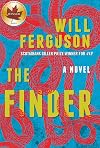
I'm a pretty big fan of Will Ferguson. His book, Beyond Belfast, which was about his attempt to find his grandfather's origin story, was one of the funniest things I ever read but also one of the most disturbing as he talked about the Troubles between the Protestants and Catholics. I read that book in 2009 and I vowed that I was going to visit Northern Ireland. Well, it took me 10 years but I did it. Hopefully when it is safe to travel again we'll go back.
However, this book is quite a bit show more different than Beyond Belfast. It's fiction for one thing and although there are a number of locales mentioned the ones given the most space are New Zealand and Japan. (The title character does have a connection to Northern Ireland though.) I do have to say that Ferguson's descriptive passages show his background as a travel writer because they made me long to visit those places he described. Check out this passage from p. 317 situated in outback Australia after a rare rain:
Flowers exuberant, and birds exultant. Babblers and budgies and many-colored parrots. Cockatoos, uncaged and elegantly crested, gold-flecked and regal, chattering away royally as they rooted about for seeds. Finches flitting in and out of the tussock grass and shrubs, drinking in the dawn. It was the first day of creation, when the world was sung into existence, when that first inhalation had yet to exhale, a breath suspended in amazement and joy.
Wow!
Okay, back to the usual plot summary. The Finder is just that. He finds objects that have been lost, things that the world thought were gone for good. Like Mohammad Ali's Olympic gold medal which Ali threw into a river after being the victim of a racist attack. Somehow The Finder found it. He gets paid handsomely for these items and he is quite ruthless in his pursuit of them. An INTERPOL agent, Gaddy Rhodes, has been hunting the finder and she thought she was about to get him on a tiny island in southern Japan. When she wouldn't accept that the body of a man found there, dead of an apparent suicide shot to his face, was the elusive Finder she was demoted to a desk job in New York City. The Finder next surfaces in Christchurch New Zealand just after the earthquake that hit that city in 2011. Travel writer Thomas Rafferty and photojournalist Tamsin Greene run across him in a hotel bar. Tamsin takes his picture but The Finder manages to steal her memory card. Thomas goes after him but when he sees a body crushed under a recently collapsed wall dressed just like him he assumes the man is dead. Thomas has a bigger agenda than doing travel pieces on New Zealand. He is looking for Rebecca, a woman who has something of his and he thinks she is in New Zealand. He goes tearing to the North Island after her but learns she has left for the Outback of Australia so he follows her there. Tamsin also goes to Australia not so much following Thomas as seeing what there is to see. She doesn't find Thomas but The Finder does because Thomas picked up a saint's medal in Christchurch that belongs to The Finder. The Finder agrees to find Rebecca and get Thomas' item from her and Thomas will then return his medal. It doesn't quite go according to plan but Thomas does get closure. There might even be a happy ending for Thomas and Tamsin. And The Finder? Well, he just keeps finding lost items in his ruthless way.
In the author's note Ferguson tells the reader that he has hidden "almost a dozen...references to the films of Alfred Hitchock" in the book. He tells us some of them but there are six for readers to find. I must confess I didn't find them. I'll be interested to see if the other members of my book club have found them. show less
However, this book is quite a bit show more different than Beyond Belfast. It's fiction for one thing and although there are a number of locales mentioned the ones given the most space are New Zealand and Japan. (The title character does have a connection to Northern Ireland though.) I do have to say that Ferguson's descriptive passages show his background as a travel writer because they made me long to visit those places he described. Check out this passage from p. 317 situated in outback Australia after a rare rain:
Flowers exuberant, and birds exultant. Babblers and budgies and many-colored parrots. Cockatoos, uncaged and elegantly crested, gold-flecked and regal, chattering away royally as they rooted about for seeds. Finches flitting in and out of the tussock grass and shrubs, drinking in the dawn. It was the first day of creation, when the world was sung into existence, when that first inhalation had yet to exhale, a breath suspended in amazement and joy.
Wow!
Okay, back to the usual plot summary. The Finder is just that. He finds objects that have been lost, things that the world thought were gone for good. Like Mohammad Ali's Olympic gold medal which Ali threw into a river after being the victim of a racist attack. Somehow The Finder found it. He gets paid handsomely for these items and he is quite ruthless in his pursuit of them. An INTERPOL agent, Gaddy Rhodes, has been hunting the finder and she thought she was about to get him on a tiny island in southern Japan. When she wouldn't accept that the body of a man found there, dead of an apparent suicide shot to his face, was the elusive Finder she was demoted to a desk job in New York City. The Finder next surfaces in Christchurch New Zealand just after the earthquake that hit that city in 2011. Travel writer Thomas Rafferty and photojournalist Tamsin Greene run across him in a hotel bar. Tamsin takes his picture but The Finder manages to steal her memory card. Thomas goes after him but when he sees a body crushed under a recently collapsed wall dressed just like him he assumes the man is dead. Thomas has a bigger agenda than doing travel pieces on New Zealand. He is looking for Rebecca, a woman who has something of his and he thinks she is in New Zealand. He goes tearing to the North Island after her but learns she has left for the Outback of Australia so he follows her there. Tamsin also goes to Australia not so much following Thomas as seeing what there is to see. She doesn't find Thomas but The Finder does because Thomas picked up a saint's medal in Christchurch that belongs to The Finder. The Finder agrees to find Rebecca and get Thomas' item from her and Thomas will then return his medal. It doesn't quite go according to plan but Thomas does get closure. There might even be a happy ending for Thomas and Tamsin. And The Finder? Well, he just keeps finding lost items in his ruthless way.
In the author's note Ferguson tells the reader that he has hidden "almost a dozen...references to the films of Alfred Hitchock" in the book. He tells us some of them but there are six for readers to find. I must confess I didn't find them. I'll be interested to see if the other members of my book club have found them. show less
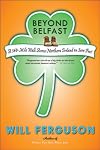
Some authors write history books, some write travel narratives, others write books of humor, but author Will Ferguson, combines them all into his travel books. As good as Hitching Rides with Buddha was telling the story of the authors hitch hiking odyssey from the south of Japan, all the way to the very north end, Beyond Belfast is even better! A 560 mile walk around Northern Ireland, encompassing as much of the geography, the people, the history and the culture as is possible. The author show more does his best to explain what caused "the Troubles" from the very beginning of the country up through the 30 years of the troubles and beyond. He does the whole book in a very entertaining and readable style, that at times will have you laughing out loud- such as death by sausage- to the somber tone when discussing the senseless butchering of often times innocent people during "The Troubles". The descriptions of what a beautiful country Northern Ireland is and the warmth and hospitality of the people Protestant and Catholic alike as well as the quirkiness and craziness that is there, makes for an exceptional piece of storytelling. This is definitely a book worth reading! show less
Lists
Urban Fiction (1)
Awards


You May Also Like


Associated Authors
Statistics
- Works
- 25
- Also by
- 1
- Members
- 4,913
- Popularity
- #5,110
- Rating
- 3.7
- Reviews
- 202
- ISBNs
- 141
- Languages
- 17
- Favorited
- 10
