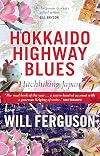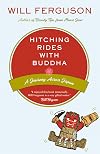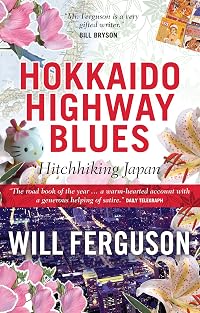
Hokkaido Highway Blues: Hitchhiking Japan
by Will Ferguson
On This Page
Description
It had never been done before. Not in 4000 years of Japanese recorded history had anyone followed the Cherry Blossom Front from one end of the country to the other. Nor had anyone hitchhiked the length of Japan. But, heady on sakura and sake, Will Ferguson bet he could do both.The resulting travelogue is one of the funniest and most illuminating books ever written about Japan. And, as Ferguson learns, it illustrates that to travel is better than to arrive.Tags
Recommendations





























Member Recommendations
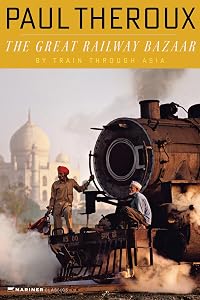
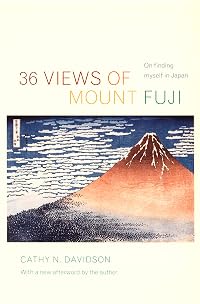
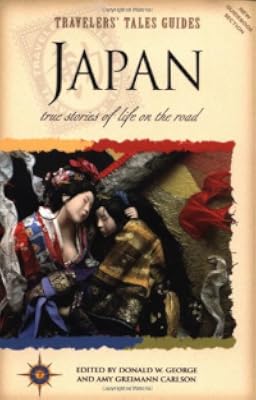
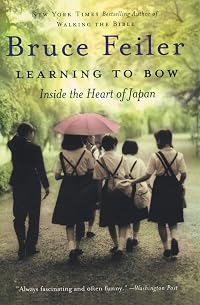
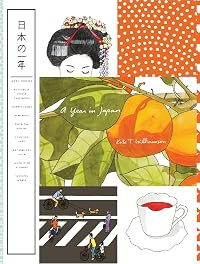
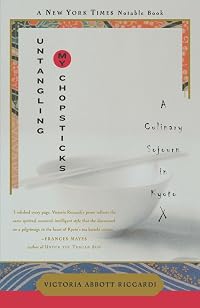
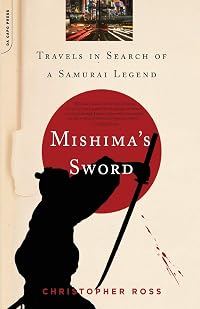
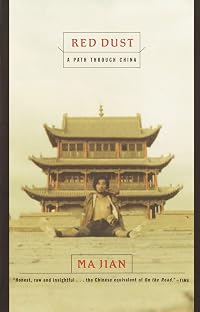
Jannes Walking or Hitchhiking? Westerners traversing Japan through somewhat unconventional means. Both are great reads for anyone interested in Japan or travelogues in general.
Member Reviews
This is just what I'm looking for in a travel book. Ferguson goes all along Japan, meeting interesting people along the way. He skips some of the most popular places for tourists, in favor of less well-known cities. This doesn't matter, though; the point is the people and the connections he makes. There's a gimmick—he's hitchhiking—but it isn't just a gimmick. It slows him down and gives him lots of one-on-one interactions with ordinary Japanese. There are lots of interesting characters and conversations, reaching surprising depth (though none of them are overly drawn out on paper). The hitchhiking almost always works out well, and numerous people drive him hours out of their way, or help him find another ride, or take him out for show more dinner, or to stay at their homes.
He tries to draw cultural lessons and these attempts are at least interesting. Ferguson has a great sense of humor, which comes across both in his writing and in the way he deals with the inevitable frustrations of travel and of hitchhiking in particular.
> I remember a trip to a Japanese zoo, and how the children turned their backs on the caged wildebeest and watched me instead. More interesting than a wildebeest, became my personal motto after that.
> I had heard of bullfights when I was in Okinawa, but I didn't know they were held on the main islands of Japan as well. The sport itself is part pageantry, part parody. The bulls are ranked just as in real sumo, from Grand Champion (yokozuna) down in numbered levels. The bulls being larger than life, a new rank has been added specifically for them, one higher than even yokozuna and rendered, inexplicably, in English: Super Champion. … Then, almost mysteriously, it ends. One bull suddenly loses his courage and breaks away, and the crowds—depending on which way they wagered—either cheer loudly or smile. (The ones smiling have just lost a fortune; this is how you show calamity in Japan.)
> He gave me a look of sorrow and exasperation, and said—in one extended sigh, "The gods are the mountains. They aren't real in the way you say. The gods exist in the act of climbing a mountain, a sacred mountain." He shook his head and gave up.
> Yukio strode out, into the middle of traffic, and began flagging down vehicles. He would check their license plates as they approached, to make sure they were from the next prefecture—no point hitching a short hop—and then raise a hand in an almost imperious manner.
> In Tanoura School an old textbook showed students precisely how far to bow to their superiors (forty-five degrees) and the proper way for women and girls to kneel. "One of the first phrases a child learned to write," said Akihira, "was sakura ga saita, 'the cherry blossoms have bloomed. ' "
> "She died.... Not so long ago. A year. Less, less than a year." He smiled. It was a smile of sadness, an expression that is deeply Japanese. I used to be baffled by smiles of sadness, but now I think I understand. These smiles reveal emotions even as they seek to conceal them. They say, I am sad and so I will smile in the understanding that you will realize that it is only a façade that hides a hurt too deep for tears.
> Asked if there is widespread racism in Japan, the average Japanese will be aghast at the question. They equate racism with overt acts of violence, which are rare in Japan. But it is a racist nation. It is racist in the deepest, purest meaning of the word. In Japan, race is taken as being a tangible definition of someone's talents, worth, and membership. And that is racism at its most refined; an unshakable belief in the primacy of blood. None of Japan's three main subcastes—burakumin, Chinese, or Korean— are what we would call visible minorities, but they are easy enough to detect … Burakumin towns traditionally did not exist; they were not marked on maps nor were they signposted, a habit that lingers in present municipal attitudes
> Every time I took a stab at conversation, he stopped me with a raised hand and a small embarrassed laugh and said, " No English. Sorry. " " But—but I'm speaking Japanese, really I am." " English. No." It was demoralizing.
> He spent six years as a Shingon missionary in San Francisco and had adapted well to life in America but, when his father died, he was forced to return to Shōdo Island and take over the family temple. "I'm the oldest son," he said simply. Priesthood is not a calling in Japan; it is a hereditary post. Training and proper knowledge are absolutely necessary, but a deep spirituality is not mandatory. As in so many things in Japan, it is proper behavior that is the essence of worship: how to follow the rituals, how to recite key sutras, how to avoid making errors of protocol.
> The Transformer approach to things is very different from hidden greatness and secret identities. A secret identify is a superficial mask. Superman fools people, Batman wears a hood, but the Transformers change completely. They don't hide their true self, they rearrange it entirely to fit the situation. By now I was studying these toys like an anthropologist … Shuhō leaned over to me and said, "If you like that toy you can have it." I was tempted—the dual-identity Transformer was a perfect talisman for anyone traveling in Japan—but I declined the offer. Even I have my limits, and taking toys from children, even incredibly cool toys, was something I usually tried to avoid.
> Mr. Ito formally apologized to me on behalf of the cherry trees. "The younger trees blossom later," said Mrs. Ito, making it sound almost poetic. "The older flowers are pink, the younger ones are whiter—purer."
> We dined in the hotel restaurant, overlooking the view and enjoying a meal that must have cost a small fortune, but the Itos waved away my proffered wallet. "You are our guest." "A friend." "A very nice boy." We talked until nightfall, and the lights of the bay glimmered across the water. The Bridge of Heaven was now a silhouette and the Itos were saying goodbye. Mrs. Ito sighed and said, "It is a shame our daughter wasn't here. I'm sure you would have much to say to her." Later, when I checked out, I discovered that her husband had covered the cost of my room.
> Caught in the momentum, Ōishi ended up driving me all the way to Tsuruga City, over an hour out of his way.
> if Alexander didn't like a particular place—say the service was bad or he couldn't find a parking spot—he would simply turn his army loose and they would raze the buildings, salt the fields, and enslave the general population. It sounded like a lot of fun. The point being, had I my own conquering army, Fukui City would no longer be standing. What a hole.
> Kanazawa Station was ringed with bright neon signs and massive, contemporary slabs of hotel. You know the kind; they have names like The Hyatt Royal Regent Davenport Imperial Overpriced Inn, and are lit up at night as though they were the Parthenon itself and not simply a large filing cabinet for humans … Like every hotel in Japan, it was ridiculously overstaffed. Entire fleets of doormen circled the lobby, searching desperately for something to do. They were trying to look busy so that the manager wouldn't notice he had fourteen people to open two doors and empty three ashtrays. Then again, this hotel probably had fourteen managers as well. Heck, it even had escalator girls. That's right, escalator girls. They stand beside the hotel escalators all day long and bow to every honorable guest that passes by.
> The Japanese, meanwhile, can't distinguish between shame and embarrassment; in Japan, to be embarrassed is to be ashamed, the two are inseparable, which may or may not signify something about the Japanese value system as a whole. Yet at the same time, the Japanese have a pair of words, wabi and sabi, which together signify the beauty of the ephemeral and the fleeting; the aesthetic of decay, asymmetrical detail and natural color, and an appreciation of the incomplete, the impermanent, the imperfect.
> "Hello, Willy-chan!" said Mr. Nakamura, without a flicker of what had passed between us the night before. In Japan, saké time is dreamtime; all is forgotten in the light of dawn. Mr. Nakamura, I noticed, no longer addressed me as Mr. but as "chan," a suffix reserved for friends and small children
> Japanese police have frightening powers, no one having the courage to tell them that Japan's feudal age has ended and that Japan is now a democracy (of sorts). … "You tried to hitch a ride with the Japanese police on a national expressway?" "Yes." It was all he could do not to slap his desk and laugh out loud. His mouth twitched with suppressed laughter. "Ah, yes. Well—" He started to giggle and tried to stop himself.
> Kikumi and her husband didn't catch a quick good-bye kiss on the fly as she charged out of the house—in Japan, even with someone as ebullient as Kikumi, that would be unheard of—but she did squeeze his arm, gently, briefly, as she was about to leave. It was one of the most touching gestures I had seen in a long time
> These notebooks are the most bizarre aspect of staying in a Love Hotel. Each page has a cartoon Kama Sutra of sexual positions and space for messages. Couples circle the sex positions they tried and leave notes to the people who follow.
> The Ainu were not officially recognized as being Japanese citizens until 1992. The Japanese government refuses to use the term indigenous when discussing the Ainu (to avoid having to accept responsibility for what happened and to stave off growing demands for a land claims settlement). An important point: the Ainu never ceded their lands nor ever acknowledged Japanese authority, making them one of the few aboriginal groups in the world that have never been offered a treaty by the people who invaded their territory.
> He had the face of a boxer who has seen one too many fights. Heavy, lugubrious features. (I'm not really sure what "lugubrious features" means, but if anyone had them, it was Mr. Saito.) … Mr. Saito's wife stopped in and we chatted a bit in Japanese. Mr. Saito listened with a keen ear, and as soon as his wife excused herself, he leaned over and said to me—in what would be the first and only honest assessment I would ever receive of my second language ability—"Your Japanese is terrible."
> "Are you a sailor?" they'd ask. "I am being from Vladivostok," I would say in what I hoped was a suitably Slavic manner. "Here on business?" "Nyet, nyet. I am, how you say—" and here my voice would drop "—shopping." "Shopping?" "For bicycles." It was all very entertaining, and I like to think I helped escalate international tensions ever so slightly, for which I am suitably proud. show less
He tries to draw cultural lessons and these attempts are at least interesting. Ferguson has a great sense of humor, which comes across both in his writing and in the way he deals with the inevitable frustrations of travel and of hitchhiking in particular.
> I remember a trip to a Japanese zoo, and how the children turned their backs on the caged wildebeest and watched me instead. More interesting than a wildebeest, became my personal motto after that.
> I had heard of bullfights when I was in Okinawa, but I didn't know they were held on the main islands of Japan as well. The sport itself is part pageantry, part parody. The bulls are ranked just as in real sumo, from Grand Champion (yokozuna) down in numbered levels. The bulls being larger than life, a new rank has been added specifically for them, one higher than even yokozuna and rendered, inexplicably, in English: Super Champion. … Then, almost mysteriously, it ends. One bull suddenly loses his courage and breaks away, and the crowds—depending on which way they wagered—either cheer loudly or smile. (The ones smiling have just lost a fortune; this is how you show calamity in Japan.)
> He gave me a look of sorrow and exasperation, and said—in one extended sigh, "The gods are the mountains. They aren't real in the way you say. The gods exist in the act of climbing a mountain, a sacred mountain." He shook his head and gave up.
> Yukio strode out, into the middle of traffic, and began flagging down vehicles. He would check their license plates as they approached, to make sure they were from the next prefecture—no point hitching a short hop—and then raise a hand in an almost imperious manner.
> In Tanoura School an old textbook showed students precisely how far to bow to their superiors (forty-five degrees) and the proper way for women and girls to kneel. "One of the first phrases a child learned to write," said Akihira, "was sakura ga saita, 'the cherry blossoms have bloomed. ' "
> "She died.... Not so long ago. A year. Less, less than a year." He smiled. It was a smile of sadness, an expression that is deeply Japanese. I used to be baffled by smiles of sadness, but now I think I understand. These smiles reveal emotions even as they seek to conceal them. They say, I am sad and so I will smile in the understanding that you will realize that it is only a façade that hides a hurt too deep for tears.
> Asked if there is widespread racism in Japan, the average Japanese will be aghast at the question. They equate racism with overt acts of violence, which are rare in Japan. But it is a racist nation. It is racist in the deepest, purest meaning of the word. In Japan, race is taken as being a tangible definition of someone's talents, worth, and membership. And that is racism at its most refined; an unshakable belief in the primacy of blood. None of Japan's three main subcastes—burakumin, Chinese, or Korean— are what we would call visible minorities, but they are easy enough to detect … Burakumin towns traditionally did not exist; they were not marked on maps nor were they signposted, a habit that lingers in present municipal attitudes
> Every time I took a stab at conversation, he stopped me with a raised hand and a small embarrassed laugh and said, " No English. Sorry. " " But—but I'm speaking Japanese, really I am." " English. No." It was demoralizing.
> He spent six years as a Shingon missionary in San Francisco and had adapted well to life in America but, when his father died, he was forced to return to Shōdo Island and take over the family temple. "I'm the oldest son," he said simply. Priesthood is not a calling in Japan; it is a hereditary post. Training and proper knowledge are absolutely necessary, but a deep spirituality is not mandatory. As in so many things in Japan, it is proper behavior that is the essence of worship: how to follow the rituals, how to recite key sutras, how to avoid making errors of protocol.
> The Transformer approach to things is very different from hidden greatness and secret identities. A secret identify is a superficial mask. Superman fools people, Batman wears a hood, but the Transformers change completely. They don't hide their true self, they rearrange it entirely to fit the situation. By now I was studying these toys like an anthropologist … Shuhō leaned over to me and said, "If you like that toy you can have it." I was tempted—the dual-identity Transformer was a perfect talisman for anyone traveling in Japan—but I declined the offer. Even I have my limits, and taking toys from children, even incredibly cool toys, was something I usually tried to avoid.
> Mr. Ito formally apologized to me on behalf of the cherry trees. "The younger trees blossom later," said Mrs. Ito, making it sound almost poetic. "The older flowers are pink, the younger ones are whiter—purer."
> We dined in the hotel restaurant, overlooking the view and enjoying a meal that must have cost a small fortune, but the Itos waved away my proffered wallet. "You are our guest." "A friend." "A very nice boy." We talked until nightfall, and the lights of the bay glimmered across the water. The Bridge of Heaven was now a silhouette and the Itos were saying goodbye. Mrs. Ito sighed and said, "It is a shame our daughter wasn't here. I'm sure you would have much to say to her." Later, when I checked out, I discovered that her husband had covered the cost of my room.
> Caught in the momentum, Ōishi ended up driving me all the way to Tsuruga City, over an hour out of his way.
> if Alexander didn't like a particular place—say the service was bad or he couldn't find a parking spot—he would simply turn his army loose and they would raze the buildings, salt the fields, and enslave the general population. It sounded like a lot of fun. The point being, had I my own conquering army, Fukui City would no longer be standing. What a hole.
> Kanazawa Station was ringed with bright neon signs and massive, contemporary slabs of hotel. You know the kind; they have names like The Hyatt Royal Regent Davenport Imperial Overpriced Inn, and are lit up at night as though they were the Parthenon itself and not simply a large filing cabinet for humans … Like every hotel in Japan, it was ridiculously overstaffed. Entire fleets of doormen circled the lobby, searching desperately for something to do. They were trying to look busy so that the manager wouldn't notice he had fourteen people to open two doors and empty three ashtrays. Then again, this hotel probably had fourteen managers as well. Heck, it even had escalator girls. That's right, escalator girls. They stand beside the hotel escalators all day long and bow to every honorable guest that passes by.
> The Japanese, meanwhile, can't distinguish between shame and embarrassment; in Japan, to be embarrassed is to be ashamed, the two are inseparable, which may or may not signify something about the Japanese value system as a whole. Yet at the same time, the Japanese have a pair of words, wabi and sabi, which together signify the beauty of the ephemeral and the fleeting; the aesthetic of decay, asymmetrical detail and natural color, and an appreciation of the incomplete, the impermanent, the imperfect.
> "Hello, Willy-chan!" said Mr. Nakamura, without a flicker of what had passed between us the night before. In Japan, saké time is dreamtime; all is forgotten in the light of dawn. Mr. Nakamura, I noticed, no longer addressed me as Mr. but as "chan," a suffix reserved for friends and small children
> Japanese police have frightening powers, no one having the courage to tell them that Japan's feudal age has ended and that Japan is now a democracy (of sorts). … "You tried to hitch a ride with the Japanese police on a national expressway?" "Yes." It was all he could do not to slap his desk and laugh out loud. His mouth twitched with suppressed laughter. "Ah, yes. Well—" He started to giggle and tried to stop himself.
> Kikumi and her husband didn't catch a quick good-bye kiss on the fly as she charged out of the house—in Japan, even with someone as ebullient as Kikumi, that would be unheard of—but she did squeeze his arm, gently, briefly, as she was about to leave. It was one of the most touching gestures I had seen in a long time
> These notebooks are the most bizarre aspect of staying in a Love Hotel. Each page has a cartoon Kama Sutra of sexual positions and space for messages. Couples circle the sex positions they tried and leave notes to the people who follow.
> The Ainu were not officially recognized as being Japanese citizens until 1992. The Japanese government refuses to use the term indigenous when discussing the Ainu (to avoid having to accept responsibility for what happened and to stave off growing demands for a land claims settlement). An important point: the Ainu never ceded their lands nor ever acknowledged Japanese authority, making them one of the few aboriginal groups in the world that have never been offered a treaty by the people who invaded their territory.
> He had the face of a boxer who has seen one too many fights. Heavy, lugubrious features. (I'm not really sure what "lugubrious features" means, but if anyone had them, it was Mr. Saito.) … Mr. Saito's wife stopped in and we chatted a bit in Japanese. Mr. Saito listened with a keen ear, and as soon as his wife excused herself, he leaned over and said to me—in what would be the first and only honest assessment I would ever receive of my second language ability—"Your Japanese is terrible."
> "Are you a sailor?" they'd ask. "I am being from Vladivostok," I would say in what I hoped was a suitably Slavic manner. "Here on business?" "Nyet, nyet. I am, how you say—" and here my voice would drop "—shopping." "Shopping?" "For bicycles." It was all very entertaining, and I like to think I helped escalate international tensions ever so slightly, for which I am suitably proud. show less
Hitching Rides With Buddha, also is published as Hokkaido Highway Blues, but they are the same book.This was a fantastic look at Japan, away from the main cities, and provides real insight into the people and places of Japan. It was also quite funny. Will Ferguson, the author hitchhikes from the southern tip to the northern tip of Japan following the blooming of the cherry blossom. He is in Japan as an English teacher, and provide insight into the Japanese culture, and the people, various levels of introspection on himself, and shares some very funny moments along the way. Overall a fascinating book.
Will Ferguson, after teaching English in Japan for a couple of years, decided to hitchhike from the southernmost point of Japan to the northernmost, following the cherry blossoms.
This is a very funny book! There were plenty of laugh-out-loud moments in Ferguson’s descriptions of Japan, and of the people who picked him up along the way. The book is mixed with descriptions of the places he was (mostly off-the-beaten-path, where you won’t find many tourists), as well as the people he met and some history and mythology thrown in. Personally, I found the people the most interesting part of the book. I really, really enjoyed it.
This is a very funny book! There were plenty of laugh-out-loud moments in Ferguson’s descriptions of Japan, and of the people who picked him up along the way. The book is mixed with descriptions of the places he was (mostly off-the-beaten-path, where you won’t find many tourists), as well as the people he met and some history and mythology thrown in. Personally, I found the people the most interesting part of the book. I really, really enjoyed it.
Will Ferguson is kind of a dick. But it's hard not to be a dick when you live and travel in a country where it's constantly made clear that you don't really belong. I haven't been to Japan (other than a quick trip through Narita airport), but I lived in South Korea for several years, and there are some strong similarities between the two countries. I was kind of a dick at times, too. And, perhaps that's why parts of this book were so painful to read, because it reminded me of my own less-than-exemplary behavior when I was tired of being pointed out, stared at, asked the same questions repeatedly, and told the same cultural bullshit over and over.
Apart from my own visceral reaction, this is an interesting travelogue of Ferguson's trip show more northward through the Japanese islands, following the blossoming of the sakura (Japanese cherry tree). Alternately sad, funny, and informative, Ferguson interlaces historical information along with his own experiences. show less
Apart from my own visceral reaction, this is an interesting travelogue of Ferguson's trip show more northward through the Japanese islands, following the blossoming of the sakura (Japanese cherry tree). Alternately sad, funny, and informative, Ferguson interlaces historical information along with his own experiences. show less
It took me a couple months to slog my way through this book, which sounds—falsely—like the beginnings of a bad review. To say that this is an easy book to get through or a quick read wouldn’t do it justice. I found myself having to step away after a few chapters just to absorb all the information. For someone preparing for departure to Japan, this was exactly what I was looking for—an exploration of the Japanese culture and where a gaijin fits in that culture. Ferguson does throw in the token bits about Japan that most readers of this book will already know—that Japanese people are smaller than your average North American, that you eat a lot of fish, etc.—but he also goes much deeper than that, waxing philosophic about show more Japanese history, culture, and foreign relations, as well as how all of these subjects influence one another.
I found Ferguson to be a very readable narrator and an equally talented writer. His self-deprecating wit when describing his own experiences acts as the perfect counterbalance to the many pages of factual information, and there were moments when his prose was so beautiful I reread it just for the experience. While there were a few times I cringed at his treatment of a particular person or situation, for the most part I was pleased by the respect he showed his subjects. The only major quibble I had with this book was the very abrupt ending; I turned the page to start the next chapter only to find there was no next chapter. This was disappointing because I really wanted to know what happened next, and the journey felt incomplete.
Overall, I would recommend this book to any gaijin looking to delve into the culture of Japan. show less
I found Ferguson to be a very readable narrator and an equally talented writer. His self-deprecating wit when describing his own experiences acts as the perfect counterbalance to the many pages of factual information, and there were moments when his prose was so beautiful I reread it just for the experience. While there were a few times I cringed at his treatment of a particular person or situation, for the most part I was pleased by the respect he showed his subjects. The only major quibble I had with this book was the very abrupt ending; I turned the page to start the next chapter only to find there was no next chapter. This was disappointing because I really wanted to know what happened next, and the journey felt incomplete.
Overall, I would recommend this book to any gaijin looking to delve into the culture of Japan. show less
Will Ferguson has managed a pretty special feat in the writing of this book - he has managed to be funny and poetic in turns, and show the different facets of Japanese life by telling us about the people he meets and the places he goes on his travel from the South to the North of Japan, following the Sakura (Cherry Blossom).
This is not your usual travel book. For starters, Ferguson travels (mostly) by hitch-hiking, and therefore meets a wide variety of everyday Japanese people in his travels. The only musuem he writes about is one that has a rather large stone vagina. He is in turns dimissive and exhultant about Japanese culture. He is, in other words, typical of most of us who spend any time in Japan - he realise that he both loves and show more hates the place, and that the sooner you come to terms with this the better.
This is not your typical book about Japan, and is all the better for it. Some books written by Westerners about Japan end up being love stories written about a country that doesn't really exist. Some end up being rants about an evil empire, that similarly doesn't exist. Ferguson brings us Japan as he sees it, and to me it is believable.
And by the way - this is a very funny book. Insightful and humourous. What a bargain. show less
This is not your usual travel book. For starters, Ferguson travels (mostly) by hitch-hiking, and therefore meets a wide variety of everyday Japanese people in his travels. The only musuem he writes about is one that has a rather large stone vagina. He is in turns dimissive and exhultant about Japanese culture. He is, in other words, typical of most of us who spend any time in Japan - he realise that he both loves and show more hates the place, and that the sooner you come to terms with this the better.
This is not your typical book about Japan, and is all the better for it. Some books written by Westerners about Japan end up being love stories written about a country that doesn't really exist. Some end up being rants about an evil empire, that similarly doesn't exist. Ferguson brings us Japan as he sees it, and to me it is believable.
And by the way - this is a very funny book. Insightful and humourous. What a bargain. show less
Hitching Rides With Buddha, also is published as Hokkaido Highway Blues, but they are the same book.This was a fantastic look at Japan, away from the main cities, and provides real insight into the people and places of Japan. It was also quite funny. Will Ferguson, the author hitchhikes from the southern tip to the northern tip of Japan following the blooming of the cherry blossom. He is in Japan as an English teacher, and provide insight into the Japanese culture, and the people, various levels of introspection on himself, and shares some very funny moments along the way. Overall a fascinating book.
Members
- Recently Added By
Lists

Travelogues in Japan
22 works; 3 members

Some funny stuff!
8 works; 1 member

Books Read in 2016
4,666 works; 197 members
Author Information

25+ Works 4,917 Members
Some Editions
Common Knowledge
- Alternate titles
- Hitching Rides with Buddha; The Hitchhiker's Guide to Japan
- Original publication date
- 1998
- Important places
- Japan
- Epigraph
- All things considered, there are only two kinds of men in the world - those who stay at home and those who do not. The second are the more interesting.
Rudyard Kipling, as quoted in The Honourable Visitors - First words*
- Cape Sata is the end of Japan.
- Last words*
- (Click to show. Warning: May contain spoilers.)All through the day and into the night, the winds lashed my room as I sat, huddled in front of the heater, waiting for the spring to arrive.
- Original language
- English
*Some information comes from Common Knowledge in other languages. Click "Edit" for more information.
Classifications
Statistics
- Members
- 765
- Popularity
- 36,651
- Reviews
- 24
- Rating
- (3.91)
- Languages
- English, Italian, Polish, Portuguese
- Media
- Paper, Ebook
- ISBNs
- 16
- ASINs
- 4