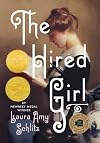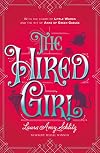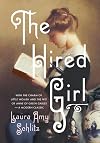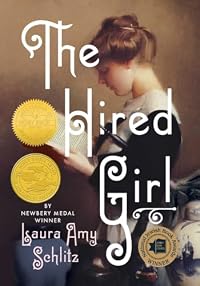
The Hired Girl
by Laura Amy Schlitz
On This Page
Description
Winner of the 2016 Scott O'Dell Award for Historical FictionA 2016 Association of Jewish Libraries Sydney Taylor Award Winner
Winner of the 2016 National Jewish Book Award for Children's and Young Adult Literature
Newbery Medalist Laura Amy Schlitz brings her delicious wit and keen eye to early twentieth-century America in a moving yet comedic tour de force.
Fourteen-year-old Joan Skraggs, just like the heroines in her beloved novels, yearns for real life and true love. But what hope is show more there for adventure, beauty, or art on a hardscrabble farm in Pennsylvania where the work never ends? Over the summer of 1911, Joan pours her heart out into her diary as she seeks a new, better life for herself—because maybe, just maybe, a hired girl cleaning and cooking for six dollars a week can become what a farm girl could only dream of—a woman with a future. Newbery Medalist Laura Amy Schlitz relates Joan's journey from the muck of the chicken coop to the comforts of a society household in Baltimore (Electricity! Carpet sweepers! Sending out the laundry!), taking readers on an exploration of feminism and housework; religion and literature; love and loyalty; cats, hats, and bunions.
. show less
Tags
Recommendations

























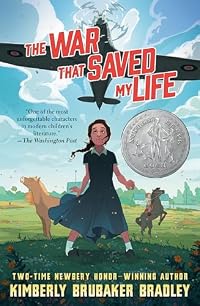
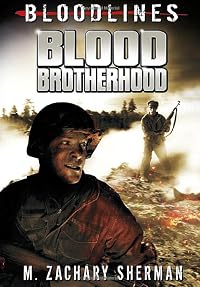


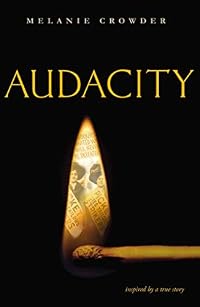
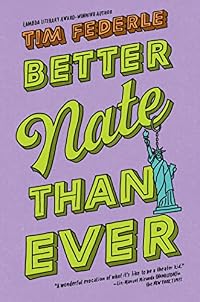

Member Recommendations
charl08 Both feature strong teenage characters dealing with first romance, family and growing up.
Member Reviews
The wonderful memoir-style story of a stubborn, intelligent girl making her way in 1911. The story is full of thoughtful moments -- about religion, self-determination, confidence, meddling (and consequences), love, education and hard, hard work. Inspiring and excellent in pacing, characters and a beautifully immersive setting. One cannot help but admire Joan's spirit, even as we cringe at her mistakes, innocent and honest though they may be. Hard to put down.
Also, Joan's commentary on why a cat is better than a sweetheart is hilarious -- ultimately there is a lack of fur that just can't be got around. :)
Also, Joan's commentary on why a cat is better than a sweetheart is hilarious -- ultimately there is a lack of fur that just can't be got around. :)
Goodreads summary: (24/10/2015) Fourteen-year-old Joan Skraggs, just like the heroines in her beloved novels, yearns for real life and true love. But what hope is there for adventure, beauty, or art on a hardscrabble farm in Pennsylvania where the work never ends? Over the summer of 1911, Joan pours her heart out into her diary as she seeks a new, better life for herself—because maybe, just maybe, a hired girl cleaning and cooking for six dollars a week can become what a farm girl could only dream of—a woman with a future.
Inspired by her grandmother’s journal, Newbery Medalist Laura Amy Schlitz brings her sharp wit and keen eye to early twentieth-century America in a comedic tour de force destined to become a modern classic. show more Joan’s journey from the muck of the chicken coop to the comforts of a society household in Baltimore (Electricity! Carpet sweepers! Sending out the laundry!) takes its reader on an exploration of feminism and housework, religion and literature, love and loyalty, cats, hats, bunions, and burns.
My input: Loved that this story was based on the author's grandmother's life. Adored the naivety of the main character when she gets to Baltimore and is taken into service by a Jewish household. Venerated the character of the cook - an irascible old woman who holds to traditions but admires Joan's work and sticks up for her - she seemed so real. Found the descriptions of the two brothers incredibly detailed and Joan's meddling in the older one's love life ( to repay her debt to him) quaint and tragic at the same time.
Told in diary form, the author's story rang true in that she didn't make any of the classic diary mistakes - it read like a true diary where the main characters looks back on previous pages and realizes what a naive, stupid idiot she has been; mooning over the youngest son and having false hopes above the reality of her life. Loved the ending, real and satisfying. show less
Inspired by her grandmother’s journal, Newbery Medalist Laura Amy Schlitz brings her sharp wit and keen eye to early twentieth-century America in a comedic tour de force destined to become a modern classic. show more Joan’s journey from the muck of the chicken coop to the comforts of a society household in Baltimore (Electricity! Carpet sweepers! Sending out the laundry!) takes its reader on an exploration of feminism and housework, religion and literature, love and loyalty, cats, hats, bunions, and burns.
My input: Loved that this story was based on the author's grandmother's life. Adored the naivety of the main character when she gets to Baltimore and is taken into service by a Jewish household. Venerated the character of the cook - an irascible old woman who holds to traditions but admires Joan's work and sticks up for her - she seemed so real. Found the descriptions of the two brothers incredibly detailed and Joan's meddling in the older one's love life ( to repay her debt to him) quaint and tragic at the same time.
Told in diary form, the author's story rang true in that she didn't make any of the classic diary mistakes - it read like a true diary where the main characters looks back on previous pages and realizes what a naive, stupid idiot she has been; mooning over the youngest son and having false hopes above the reality of her life. Loved the ending, real and satisfying. show less
The year is 1911. Joan Skraggs (aka Janet Lovelace) is a 14 year old Pennsylvania farm girl who toils for her family without love or thanks, following the death of her beloved mother. In today's world, her father might be termed verbally and emotionally abusive as welling as unloving. Joan is forced to drop out of school to tend house on the farm. When she asks her father for the "egg money" from tending the chickens, he responds by burning the only three books she owns. Plucky Joan takes her few worldly possessions, including money her mother saved for her, and escapes to Baltimore, where she is rescued from a park bench by a young Jewish man. He takes her home and she is hired by the wealthy family to help their aging housekeeper, show more after telling them she is 18 and inventing an alias for herself.
As a devout Catholic, Janet is learning for the first time about Judaism through the close-knit, loving family she works for. She makes some blunders, including attempting to convert a grandchild, and falling in love with the one of the sons, a charming artist, and imagining them running away together. She befriends the clever daughter, who is in reality only two years younger than she is. The father in the family allows her to read his books, and engages in discussions with her. Through her diary entries, we follow her through a season in her young life and watch her grow up.
I loved that the language she used was in keeping with the times, and her love of Jane Eyre. Sometimes young adult historical fiction aims to appeal to teens by speaking in their language instead of the language of the time period in which the story is set. The period details in this historical novel really bring it to life as well. I didn't want this story to end. Though it is written for middle school and up, I was thoroughly engaged by it. show less
As a devout Catholic, Janet is learning for the first time about Judaism through the close-knit, loving family she works for. She makes some blunders, including attempting to convert a grandchild, and falling in love with the one of the sons, a charming artist, and imagining them running away together. She befriends the clever daughter, who is in reality only two years younger than she is. The father in the family allows her to read his books, and engages in discussions with her. Through her diary entries, we follow her through a season in her young life and watch her grow up.
I loved that the language she used was in keeping with the times, and her love of Jane Eyre. Sometimes young adult historical fiction aims to appeal to teens by speaking in their language instead of the language of the time period in which the story is set. The period details in this historical novel really bring it to life as well. I didn't want this story to end. Though it is written for middle school and up, I was thoroughly engaged by it. show less
It's 1911, and Joan is desperate for a better life. Ever since her mother died, she has been responsible for all of the "women's work" at Steeple Farm, and now that she's 14, her father expects her to leave school and work all the harder. Joan sees no end to the drudgery, and when a standoff with her father results in the burning of her few, prized books, she determines to run away. In Baltimore, Joan hopes to find work as a hired girl -- she may have to work just as hard as she would back on the farm, but she might make as much as six dollars a week! Of course, things don't go as smoothly as she might have hoped, and she finds herself in Baltimore after dark, alone and scared after a run-in with a man who means her no good. She's show more hesitant to trust another stranger when she's approached by gentle Solomon Rosenbach, who takes Joan home to meet his mother. The upshot of this encounter is that Joan, a devout Catholic girl, finds herself in the employ of the Jewish Rosenbachs. In the months that follow, Joan learns a great deal about the world, religion, love, and herself. She makes mistakes and learns from them, sees things she'd never dreamed about back on the farm, and develops a terrible crush on David Rosenbach, Solomon's younger brother! She also lies about her age, a falsehood that troubles her greatly -- but if the Rosenbachs knew she was just 14, would they send her back to her father?
I can hardly do this book justice in a review. I've heard it described as a modern classic, and I have to concur. Joan's naivete, her struggles to better herself, her foibles and insights, all ring so true and clear. I'm reminded of favorites like Anne of Green Gables. Schlitz's handling of religion in the story is impressive. The secondary characters, setting, plot -- oh, everything about this book is just so good! This is one of my rare five-star reads -- highly recommended! show less
I can hardly do this book justice in a review. I've heard it described as a modern classic, and I have to concur. Joan's naivete, her struggles to better herself, her foibles and insights, all ring so true and clear. I'm reminded of favorites like Anne of Green Gables. Schlitz's handling of religion in the story is impressive. The secondary characters, setting, plot -- oh, everything about this book is just so good! This is one of my rare five-star reads -- highly recommended! show less
Despite the angst-laden beginning, the theme was very engaging and didn't cross the trope line as I feared it was tending. Joan ('Janet', as she masqueraded under after her escape from an unloving, rather, nasty family), was so well-characterized. I felt I was 'there' in the house where she became 'the hired girl'.
While occasionally some behaviours seemed overdone, the narrative carried its tension in a number of places that made reading quite compelling. Malka and Mrs. Rosenbach were especially vivid. Occasionally, Joan's naiveté is a bit overdone, but her behaviour as a very unsophisticated young teen was believable. All the ins and outs of living in a Jewish household and the observances to honour the special religious days were show more really interesting. I think these details about the "Hebrew" way of life in Baltimore in the early 1920's, was quite accurate based on other books I've read (Stand Facing the Stove). Many aspects such as how the kitchen is managed were new to me.
Schlitz's story is a delightful epistolary novel well deserving a 4-star rating. However, near the last quarter of the story, events took a somewhat implausible (if not ridiculous) turn, designed I would guess, to bring us to the final resolution in Joan's situation. The ending was very acceptable, but was all that preceding action really the way to arrive at this dénouement? Still, a very satisfying read. Teens may very well identify with some of Joan's escapades and tumultuous emotions. show less
While occasionally some behaviours seemed overdone, the narrative carried its tension in a number of places that made reading quite compelling. Malka and Mrs. Rosenbach were especially vivid. Occasionally, Joan's naiveté is a bit overdone, but her behaviour as a very unsophisticated young teen was believable. All the ins and outs of living in a Jewish household and the observances to honour the special religious days were show more really interesting. I think these details about the "Hebrew" way of life in Baltimore in the early 1920's, was quite accurate based on other books I've read (Stand Facing the Stove). Many aspects such as how the kitchen is managed were new to me.
Schlitz's story is a delightful epistolary novel well deserving a 4-star rating. However, near the last quarter of the story, events took a somewhat implausible (if not ridiculous) turn, designed I would guess, to bring us to the final resolution in Joan's situation. The ending was very acceptable, but was all that preceding action really the way to arrive at this dénouement? Still, a very satisfying read. Teens may very well identify with some of Joan's escapades and tumultuous emotions. show less
Joan/Janet's voice is appealing in its youthful yearning and earnestness, keeping me invested in her journey of bettering herself. She and the other characters (particularly Malka) are vividly drawn. The conflicts and misunderstandings of working for a Jewish family are often funny (especially when old Malka gets on her case) but sturdy Janet always gets back up after falling down. As historical fiction, readers are drawn into the details of upper class family life in the early 20th century as well as what it's like to work for such people. I did find Janet's path from farmer's daughter to hired girl a bit too smooth and easy, but for teen readers with a bent for Downton Abbey, all the better to cut to the chase.
When I started reading this book I thought immediately of “O Pioneers” by Willa Cather. The images that Ms. Schlitz evokes are intense and vivid. The hard work expected of women and girls is unimaginable by today’s standards. Joan, the wonderful heroine of this story wants more from life than toiling on a farm for a family of men who dismiss her at every turn. Joan is encouraged by her mother from a young age to learn and to possibly become a teacher and break away from this very hard life. Shortly after her mother passes away Joan’s hateful and selfish father (this description may understate how awful he was) forces her to leave school at age 14. Prior to this her beloved teacher, Miss Chandler recognized potential in Joan and show more gave her books and a journal that would become not only cherished possessions but also a place for her mind to retreat to and thus escape the reality of the farm. Eventually, Joan does escape the farm – literally (but I won’t tell you how even though I want to – I don’t want to ruin it for you!). She travels from her home in Pennsylvania to Baltimore where she secures work as a “hired girl” with a Jewish family. Joan, who by then has changed her name to Janet is welcomed (reluctantly by some members) into the Rosenbach household and that’s when the story really takes off. She out of her element, she knows nothing of cities or Judaism - thank goodness she’s a hard worker and loves to learn! show less
Members
- Recently Added By
Lists

1900s: America
31 works; 2 members

Top Five Books of 2015
811 works; 240 members

Historical Fiction Books
99 works; 5 members

wish list
61 works; 3 members

Newbery Adjacent
747 works; 3 members

Best Books I Read in 2024 Young Adult
4 works; 1 member
Author Information

16 Works 6,062 Members
Laura Amy Schlitz is the writer of the 2008 Newbery Medal-winning Good Masters! Sweet Ladies!: Voices from the Medieval Village and the 2013 Newbery Medal-winning Spendors and Glooms. (Bowker Author Biography)
Awards and Honors
Awards
Distinctions
Notable Lists
Common Knowledge
- Canonical title
- The Hired Girl
- Original title
- The Hired Girl
- Original publication date
- 2015-09-01
- People/Characters
- Joan Skraggs aka Janet Lovelace; David Rosenbach; Malka; Josiah Skraggs; Matthew Skraggs; Mark Skraggs (show all 16); Luke Skraggs; Miss Chandler; Freyda Rosenbach; Solomon Rosenbach; Moritz Rosenbach; Miriam “Mimi” “Mirele” Rosenbach; Anna Rosenbach Friedhoff; Nora Himmelrich; Oskar Friedhoff; Irma Friedhoff
- Important places
- Baltimore, Maryland, USA; Maryland, USA; Pennsylvania, USA; Steeple Farm
- Dedication
- For my mother and father with gratitude and love.
- First words
- Today Miss Chandler gave me this beautiful book.
- Quotations
- —and I sometimes wonder if every living thing doesn't need kind words as much as sunshine and water.
I try not to feel too worshipful, though, because I think it's bad when girls think too highly of the men. It ‘s more suitable when the men worship the ladies.
I think I would rather have a cat than a sweetheart, after all. They are less trouble, and even the handsomest sweetheart is sadly lacking in fur. - Last words
- (Click to show. Warning: May contain spoilers.)I think about Ma, telling me to get educated, and dear Malka, who told me to grow up and become a woman.
And I will. - Original language
- English
Classifications
Statistics
- Members
- 780
- Popularity
- 35,602
- Reviews
- 47
- Rating
- (3.99)
- Languages
- English
- Media
- Paper, Audiobook, Ebook
- ISBNs
- 23
- ASINs
- 2