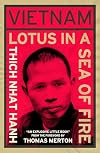
Vietnam: Lotus in a Sea of Fire
by Thich Nhat Hanh
On This Page
Description
This stunning commentary on the cultural and political background to the war in Vietnam resonates deeply as the first work of Vietnamese writer, peace activist, and Buddhist monk Thich Nhat HanhThis rare book from 1967 is one of the very few written in English giving a Vietnamese perspective on the Indochina Wars.Tags
Recommendations































Member Reviews
I just read “Vietnam: The Lotus in the Sea of Fire”. This small book was written at the height of the Vietnam war by my Zen Buddhist teacher Thich Nhat Hanh.
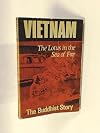
My first sensation on receiving the book was one of gratitude. I had been wanting to read it for some time but it had never come to hand. It has been out of print for a long time but I found a copy on Abebooks for £5 delivered to my door. This copy was an ex-library volume from the Cathedral and Abbey Church of St Alban and is a 1967 first UK edition. It feels like a piece of history. I imagine it being bought 47 years ago by someone trying to understand the situation from a Vietnamese Buddhist perspective. I wonder why it was discarded.
The cover is as powerful as it is iconic. show more It shows the self-immolation of Buddhist monk Thich Quang-Duc. The book could be seen as an explanation of the context in which Thich Quang-Duc and other Buddhists felt they had to burn themselves.
Vietnam had been at war for much of the 20th century. It had been a French colony, occupied by the Japanese, independent and recolonised and split in half. The American’s and the West were fighting the forces of communism coming from the North. The Chinese were fighting capitalism coming from the South. Many Vietnamese felt that the largely Roman Catholic Southern government was a puppet of the West and saw it as a continuation of brutal French colonialism. The communist forces were able to harness this patriotism to gain support of a populous largely ignorant or apathetic to the politics of communism. During this time there was much suppression of Buddhists who had not taken either a communist or ant-communist stance. Thich Nhat Hanh felt that the failure of the Southern governments to engage with the cultural heritage and nationalism was a major failing. It lead to tragedy on many levels. As I write this Thich Nhat Hanh, now 88, is in hospital in France with a brain haemorrhage. He has been living in exile from Vietnam for half a century with only a single return visit. Here is hoping he recovers and continues teaching for a few more years.
Strangely I feel more of a connection from this book to my teacher in hospital than the piece of his calligraphy I have hung on my wall.
Having just gone through the Scottish independence referendum I can only feel gratitude that it was so peaceful and that we were able to have an, albeit a little stilted, debate and vote. It is interesting to reflect that many of those on the nationalist side in our debate also felt stronger socialist leanings than those on the unionist side. The Labour party is Scotland is having something of a crisis at the moment many of its core voters having just voted against it.
Nationalism is often painted as fascistic and right wing because of the terrible things that happened across Europe in the 20th century but I’ve come to appreciate, helped by this book, that the desire for smaller groupings of people to have self determination is a social/socialist and democratic aspiration. show less
My first sensation on receiving the book was one of gratitude. I had been wanting to read it for some time but it had never come to hand. It has been out of print for a long time but I found a copy on Abebooks for £5 delivered to my door. This copy was an ex-library volume from the Cathedral and Abbey Church of St Alban and is a 1967 first UK edition. It feels like a piece of history. I imagine it being bought 47 years ago by someone trying to understand the situation from a Vietnamese Buddhist perspective. I wonder why it was discarded.
The cover is as powerful as it is iconic. show more It shows the self-immolation of Buddhist monk Thich Quang-Duc. The book could be seen as an explanation of the context in which Thich Quang-Duc and other Buddhists felt they had to burn themselves.
Vietnam had been at war for much of the 20th century. It had been a French colony, occupied by the Japanese, independent and recolonised and split in half. The American’s and the West were fighting the forces of communism coming from the North. The Chinese were fighting capitalism coming from the South. Many Vietnamese felt that the largely Roman Catholic Southern government was a puppet of the West and saw it as a continuation of brutal French colonialism. The communist forces were able to harness this patriotism to gain support of a populous largely ignorant or apathetic to the politics of communism. During this time there was much suppression of Buddhists who had not taken either a communist or ant-communist stance. Thich Nhat Hanh felt that the failure of the Southern governments to engage with the cultural heritage and nationalism was a major failing. It lead to tragedy on many levels. As I write this Thich Nhat Hanh, now 88, is in hospital in France with a brain haemorrhage. He has been living in exile from Vietnam for half a century with only a single return visit. Here is hoping he recovers and continues teaching for a few more years.
Strangely I feel more of a connection from this book to my teacher in hospital than the piece of his calligraphy I have hung on my wall.
Having just gone through the Scottish independence referendum I can only feel gratitude that it was so peaceful and that we were able to have an, albeit a little stilted, debate and vote. It is interesting to reflect that many of those on the nationalist side in our debate also felt stronger socialist leanings than those on the unionist side. The Labour party is Scotland is having something of a crisis at the moment many of its core voters having just voted against it.
Nationalism is often painted as fascistic and right wing because of the terrible things that happened across Europe in the 20th century but I’ve come to appreciate, helped by this book, that the desire for smaller groupings of people to have self determination is a social/socialist and democratic aspiration. show less
First book by TNH published in English in the U.S. A history of Viet Nam from the perspective of a then 40 year old Buddhist monk, with emphasis on the role of French and Catholic influences on Vietnamese society during the 19th and 20th centuries.
Mention is made of the need for a "reformation of Buddhism" with a role in "the future society of Viet Nam". This "engagement of Buddhism in the modern society" was called "Nhan Gian Phat Giao, or engaged Buddhism" (page 42) -- and thus the first mention in English of Engaged Buddhism.
Of great interest also are Thomas Merton's foreword and the appendix which includes "Frequently Asked Questions" about Viet Nam by TNH, TNH's letter to Martin Luther King dated 6/1/65 explaining the significane show more of self-immolation by Buddhist monks, remarks by TNH to Pope Paul VI on 7/16/66, and TNH's statement to the American people and Congress dated 6/1/66 on the steps needed to find a true peace in Viet Nam. show less
Mention is made of the need for a "reformation of Buddhism" with a role in "the future society of Viet Nam". This "engagement of Buddhism in the modern society" was called "Nhan Gian Phat Giao, or engaged Buddhism" (page 42) -- and thus the first mention in English of Engaged Buddhism.
Of great interest also are Thomas Merton's foreword and the appendix which includes "Frequently Asked Questions" about Viet Nam by TNH, TNH's letter to Martin Luther King dated 6/1/65 explaining the significane show more of self-immolation by Buddhist monks, remarks by TNH to Pope Paul VI on 7/16/66, and TNH's statement to the American people and Congress dated 6/1/66 on the steps needed to find a true peace in Viet Nam. show less
Ratings
Members
- Recently Added By
Lists

Buddhism
27 works; 1 member
Author Information

496+ Works 42,749 Members
Thich Nhat Hanh was born in central Vietnam on October 11, 1926. He entered Tu Hieu Temple as a novice monk at the age of sixteen. During the Vietnam War, he was part of a movement called "engaged Buddhism", which combines traditional practices with nonviolent civil disobedience. For this, he was exiled by both the Communist and non-Communist show more governments and was nominated by Martin Luther King, Jr. for the Nobel Peace Prize in 1967 for his efforts to reconcile North and South Vietnam. He is a teacher, author, poet, and peace activist. He has written over 100 titles on meditation, mindfulness and Engaged Buddhism, as well as poems, children's stories, and commentaries on ancient Buddhist texts. His books include The Heart of the Buddha's Teaching: An Introduction to Buddhism, Peace Is Every Step, The Miracle of Mindfulness, The Art of Power, True Love and Anger, Vietnam: Lotus in a Sea of Fire, and Living Buddha, Living Christ. He founded a retreat in France called Plum Village. (Bowker Author Biography) show less
Some Editions
Common Knowledge
- Original publication date
- 1967
- Important places
- Vietnam
- Important events
- Vietnam War
Classifications
- Genres
- Nonfiction, Religion & Spirituality, History, General Nonfiction, Politics and Government
- DDC/MDS
- 959.7 — History & geography History of Asia Southeast Asia: Myanmar, Thailand, Laos, Cambodia, Vietnam Vietnam
- LCC
- DS557 .A6 .N495 — History of Europe, Asia, Africa and Oceania Asia History of Asia Southeast Asia French Indochina Vietnam. Annam Vietnamese Conflict
- BISAC
Statistics
- Members
- 97
- Popularity
- 331,101
- Reviews
- 2
- Rating
- (4.08)
- Languages
- 5 — Danish, Dutch, English, Japanese, Swedish
- Media
- Paper, Ebook
- ISBNs
- 4
- ASINs
- 3