
Gene Sharp (1) (1928–2018)
Author of From Dictatorship to Democracy: A Conceptual Framework for Liberation
For other authors named Gene Sharp, see the disambiguation page.
About the Author
Gene Elmer Sharp was born in North Baltimore, Ohio on January 21, 1928. He received a bachelor's degree in social science and a master's degree in sociology from Ohio State University and a doctorate from Oxford University. During the Korean War, rather than declaring himself a conscientious show more objector, he refused to cooperate with his draft board because he opposed conscription altogether. He was sentenced to two years in prison for draft dodging, but only served nine months. His strategy of peaceful resistance inspired velvet revolutions that toppled dictators on four continents. He created a list of 198 nonviolent weapons of protest and noncooperation to disrupt or even paralyze oppressive authorities including boycotts, mock funerals, hunger strikes, and Lysistratic nonaction. In 1983, he founded the Albert Einstein Institution to promote indigenous regime change that does not invite violent retaliation. He also taught political science at the University of Massachusetts Dartmouth and was a researcher at the Weatherhead Center for International Affairs at Harvard University. His first book, Gandhi Wields the Weapon of Moral Power: Three Case Studies, was published in 1960. He wrote over 30 books including The Politics of Nonviolent Action: A Conceptual Framework for Liberation and Civilian-Based Defense: A Post-Military Weapons System. He died on January 28, 2018 at the age of 90. (Bowker Author Biography) show less
Series
Works by Gene Sharp
Sharp's Dictionary of Power and Struggle: Language of Civil Resistance in Conflicts (2011) 30 copies
Self-Liberation: A Guide to Strategic Planning for Action to End a Dictatorship or Other Oppression (2009) 16 copies
Self-reliant defense without bankruptcy or war : considerations for the Baltics, East Central Europe, and members of the (1992) 6 copies
198 Methods of Non-Violent Protest and Persuasion: From The "Methods of Non-violent Action" (1973) 2 copies, 1 review
Nonviolent struggle: an efficient technique of political action an interview with Gene Shaarp 2 copies
The meaning of non-violence 1 copy
Tagged
Common Knowledge
- Birthdate
- 1928-01-21
- Date of death
- 2018-01-30
- Gender
- male
- Education
- Ohio State University (BA ∙ MA)
University of Oxford (PhD) - Occupations
- professor (political science)
political scientist - Organizations
- University of Massachusetts Dartmouth
Harvard University, Center for International Affairs
Albert Einstein Institution - Nationality
- USA
- Birthplace
- North Boston, Ohio, USA
- Places of residence
- Brooklyn, New York, USA
East Boston, Massachusetts, USA - Place of death
- Boston, Massachusetts, USA
- Associated Place (for map)
- USA
Members
Reviews
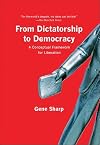
Gene Sharp dedicated his live to studying nonviolent struggle and anti-government resistance. In this short book, he distills this knowledge into an outline for preventing or overthrowing dictatorships and restoring Democracy. Sharp wrote the book initially in response to liberation movements in Burma in the 1990s but it continues to be useful today. In an odd way, it feels like the antithesis of The Prince by Niccolò Machiavelli.
Sharp writes about how dictatorships gain and keep power, and show more how the power of democracy can be wielded against that. While he notes the appeal of violent uprising, he repeatedly warns that violence is the place where dictatorships will always be in a place of superiority. Instead he advises using nonviolence which historically is proven to be a more successful tactic. Despite this he also warns against negotiations which are often a trap used by dictatorships against democratic citizens (picture me looking side-eyed at certain universities in the United States in 2025).
Nonviolent struggle requires a varied and diffuse set of actions for success. Sharp lists 198 Methods of Nonviolent Action in an appendix to this book. He also stresses the importance of strategic planning which is vital to a successful liberation movement. Finally, once the dictatorship is removed from power, he also offers a framework for maintaining and enduring democracy. This book continues to be a valuable resource and I recommend getting a copy to read and refer to.
NOTE: Throughout the work, Sharp uses the term "democrat" (with a small 'd') to refer to advocates of democracy and it should not be confused with the Democratic Party in the United States.
Favorite Passages:
Sharp writes about how dictatorships gain and keep power, and show more how the power of democracy can be wielded against that. While he notes the appeal of violent uprising, he repeatedly warns that violence is the place where dictatorships will always be in a place of superiority. Instead he advises using nonviolence which historically is proven to be a more successful tactic. Despite this he also warns against negotiations which are often a trap used by dictatorships against democratic citizens (picture me looking side-eyed at certain universities in the United States in 2025).
Nonviolent struggle requires a varied and diffuse set of actions for success. Sharp lists 198 Methods of Nonviolent Action in an appendix to this book. He also stresses the importance of strategic planning which is vital to a successful liberation movement. Finally, once the dictatorship is removed from power, he also offers a framework for maintaining and enduring democracy. This book continues to be a valuable resource and I recommend getting a copy to read and refer to.
NOTE: Throughout the work, Sharp uses the term "democrat" (with a small 'd') to refer to advocates of democracy and it should not be confused with the Democratic Party in the United States.
Favorite Passages:
"Democrats should be wary of the traps that may be deliberately built into the negotiation process by the dictators. The call for negotiations when basic issues of political liberties are involved may be an effort by the dictators to induce the induce the democrats to surrender peacefully while the violence of the dictatorship continues."
"The historical record indicates that while casualties in dead and wounded must be expected in political defiance, they will be far fewer than the casualties in military warfare. Furthermore, this type of struggle does not contribute to the endless cycle of killing and brutality."
Unfortunately, because comprehensive strategic plans for liberation are rarely, if ever, developed, dictatorships appear much more durable than they in fact are. They survive for years or decades longer than need be the case."show less

Gene Sharp offers the keen insight that if war is the continuation of politics with other means, then dictators bring the bigger sticks to the fight. Using violence against dictators is both a very bloody and often futile approach, as the chosen battlefield (violence) is a dictatorship's main source of strength. A successful challenge thus must come from other, more patient and more cautious means: Non-violent resistance á la Gandhi, targeting a dictatorship's weaknesses and putting stress show more upon its bureaucracy. A dictatorship is, by definition, a highly centralized organization that can bear little information and control overload. Lessening its grip on society and control over information by establishing parallel (informal and formal) institutions dismantles a dictatorship step by step.
The second big message of the book is the importance of planning and logistics. Caution is the word. Manning the barricades and organizing demonstrations without the legwork and underlying strategy result only in futile bloodshed. While the media promote the images of the brave young revolutionaries, the important work has to be done in meetings, hopefully long prior to the actual revolution. Otherwise, just as in Hungary 1956, winning the tactical fight on the barricades is traded for the strategic loss against the powers of repression.
Sharp's concise manual and checklist of non-violent political measures needs to be fleshed out and adapted to the individual struggle. The biggest omission in my view is the colonial outlook of the manual. It basically assumes either a colonial or local oppressor set against the people. In many current conflicts, however, there are ethnic fault lines where the question is less about dictatorship vs democracy but which clan/ethnic group rules over other clans/ethnic groups. If resources (and wealth) come from a single source (such as oil or diamonds), is there a chance of decentralized democracy or are such countries doomed to fall to strongmen?
In any case, Gene Sharp is an inspiration to the world and this booklet a guide to freedom. show less
The second big message of the book is the importance of planning and logistics. Caution is the word. Manning the barricades and organizing demonstrations without the legwork and underlying strategy result only in futile bloodshed. While the media promote the images of the brave young revolutionaries, the important work has to be done in meetings, hopefully long prior to the actual revolution. Otherwise, just as in Hungary 1956, winning the tactical fight on the barricades is traded for the strategic loss against the powers of repression.
Sharp's concise manual and checklist of non-violent political measures needs to be fleshed out and adapted to the individual struggle. The biggest omission in my view is the colonial outlook of the manual. It basically assumes either a colonial or local oppressor set against the people. In many current conflicts, however, there are ethnic fault lines where the question is less about dictatorship vs democracy but which clan/ethnic group rules over other clans/ethnic groups. If resources (and wealth) come from a single source (such as oil or diamonds), is there a chance of decentralized democracy or are such countries doomed to fall to strongmen?
In any case, Gene Sharp is an inspiration to the world and this booklet a guide to freedom. show less

Sharp is a modern day combination of Gandhi and Machiavelli. While not a strict pacifist, Sharp makes the point that by picking up the gun, you have chosen to fight on the dictator’s terms. Totalitarian regimes can usually muster much greater firepower than their subjects. Rifles against tanks is not a good idea, if it can be avoided.
Sharp catalogs numerous forms of creative resistance, not just gather in the square and be shot down. The utility of his ideas was demonstrated in Serbia and show more in the Arab Spring.
Egypt was a prime example of the successful use of such mostly non-violent tactics. And Syria shows what happens when the dictator is willing and able to use his armor and air force.
This is an important book, but rather dry. For a much more readable exposition of Sharp’s ideas, with plenty of anecdotes, read The Dictator’s Learning Curve. There is also an excellent documentary on DVD, How to Start a Revolution.
For the importance of having at least the neutrality of the armed forces, read Katharine Chorley’s Armies and the Art of Revolution. If you ARE the armed forces, Luttwak’s Coup d’État: a Practical Handbook is essential reading. show less
Sharp catalogs numerous forms of creative resistance, not just gather in the square and be shot down. The utility of his ideas was demonstrated in Serbia and show more in the Arab Spring.
Egypt was a prime example of the successful use of such mostly non-violent tactics. And Syria shows what happens when the dictator is willing and able to use his armor and air force.
This is an important book, but rather dry. For a much more readable exposition of Sharp’s ideas, with plenty of anecdotes, read The Dictator’s Learning Curve. There is also an excellent documentary on DVD, How to Start a Revolution.
For the importance of having at least the neutrality of the armed forces, read Katharine Chorley’s Armies and the Art of Revolution. If you ARE the armed forces, Luttwak’s Coup d’État: a Practical Handbook is essential reading. show less
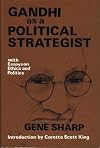
These provocative, readable chapters challenge us to think freshly about our gravest problems. The urge us to seek new solutions, not bound by past doctrines and policies, to such problems as the survival of freedom, genocide, war, political structure, civil disobedience, struggles against depression, and popular powerlessness. "Radical Politics" is reexamined, and the political insights of Hannah Arendt's "On Revolution" and "Eichmann in Jerusalem" are discussed. The author's well known show more "Political Equivalent of War -- Civilian Defense" is included. The book's title was taken from a stimulating power analysis which argues that the vitality of the society's non-governmental institutions determines the degree of freedom or dictatorship. show less
Lists
Awards

You May Also Like


Associated Authors
Statistics
- Works
- 38
- Members
- 1,422
- Popularity
- #18,099
- Rating
- 3.8
- Reviews
- 20
- ISBNs
- 75
- Languages
- 10