

Saul Alinsky (1909–1972)
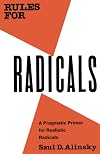
Author of Rules for Radicals: A Practical Primer for Realistic Radicals
About the Author
Works by Saul Alinsky
Associated Works
Tagged
Common Knowledge
- Canonical name
- Alinsky, Saul
- Legal name
- Alinsky, Saul David
- Birthdate
- 1909-01-30
- Date of death
- 1972-06-12
- Gender
- male
- Education
- University of Chicago (Ph.B|1930|MA 1931)
- Occupations
- community organizer
writer - Organizations
- Industrial Areas Foundation
- Awards and honors
- Pacem in Terris Peace and Freedom Award (1969)
- Cause of death
- heart attack
- Nationality
- USA
- Birthplace
- Chicago, Illinois, USA
- Places of residence
- Chicago, Illinois, USA
Carmel, California, USA - Place of death
- Carmel, California, USA
- Burial location
- Zion Gardens, Chicago, Illinois, USA
- Map Location
- Illinois, USA
Members
Discussions
The Conservative Case for Saul Alinsky in Pro and Con (September 2010)
Reviews
You know you're in for a ride when the author dedicates his book to the "first radical who at least won his own kingdom"--Lucifer.
I read this book as I kept hearing about it being the "bible" for liberals. Sitting on the other end of the political spectrum, I felt like it was important for me to understand why those currently (and recently) in power do the things they do. It was a "know thine enemy" kinda thing.
Quite frankly, Saul Alinsky was a pretty brilliant strategist. I find his show more divisiveness and outlook on life in general and on America specifically quite repugnant, but I can't disagree with much of his tactics and logic. It is terrifying, however, that Obama is a big believer in Alinsky's beliefs...something that can easily be seen in how he reacts to issues and runs his administration.
The beauty of America is that Alinsky is free to write books that encourage people to essentially take what isn't theirs and find justifications to take it.
I found the second half of the book more interesting than the first as it offers more case studies and examples and wasn't quite so abstract. I'd encourage anyone to read it, but most especially those who are conservative so they can better understand what drives people like our Community Organizer in Chief and his ilk. show less
I read this book as I kept hearing about it being the "bible" for liberals. Sitting on the other end of the political spectrum, I felt like it was important for me to understand why those currently (and recently) in power do the things they do. It was a "know thine enemy" kinda thing.
Quite frankly, Saul Alinsky was a pretty brilliant strategist. I find his show more divisiveness and outlook on life in general and on America specifically quite repugnant, but I can't disagree with much of his tactics and logic. It is terrifying, however, that Obama is a big believer in Alinsky's beliefs...something that can easily be seen in how he reacts to issues and runs his administration.
The beauty of America is that Alinsky is free to write books that encourage people to essentially take what isn't theirs and find justifications to take it.
I found the second half of the book more interesting than the first as it offers more case studies and examples and wasn't quite so abstract. I'd encourage anyone to read it, but most especially those who are conservative so they can better understand what drives people like our Community Organizer in Chief and his ilk. show less
I think that Saul Alinsky is disingenuous when he represents the views of communities that he was never a part of. I laugh picturing him lecturing Black Panthers about “working within the system.” If a system is fundamentally opposed to your values and aggressively tries to disenfranchise you, how could you truly work within it? How could you hope to work within a system that strips you of your rights? Obviously radicals should try to build mass support for change, but that change should show more be precluded by the very institutions Alinsky tries to protect.
Working outside the established system is the only thing that has ever brought about real change. The system itself has a too slow an inertia to accept change. Society is on course for environmental catastrophe, mass starvation, and the impending nightmare of climate change. Sometimes radical action is necessary in the short term to prevent devastation in the long term.
I find his ideas about what is needed for a critical mass have been debunked by history. Small groups of people have always been the catalysts for major change. show less
Working outside the established system is the only thing that has ever brought about real change. The system itself has a too slow an inertia to accept change. Society is on course for environmental catastrophe, mass starvation, and the impending nightmare of climate change. Sometimes radical action is necessary in the short term to prevent devastation in the long term.
I find his ideas about what is needed for a critical mass have been debunked by history. Small groups of people have always been the catalysts for major change. show less
I won't go so far as to say that what you can't learn about organizing and about standing up to the powerful from this book isn't worth knowing, but Saul Alinsky has penned a book that contains nearly all of what you need to know.
How effective was Alinsky? Forty years after his death, the Right still foams at the mouth when they spit out his name, demonstrating the depths of their fear and hatred. When they're using your name as invective, that's proof positive that you've succeeded.
How effective was Alinsky? Forty years after his death, the Right still foams at the mouth when they spit out his name, demonstrating the depths of their fear and hatred. When they're using your name as invective, that's proof positive that you've succeeded.
It is no exaggeration to claim that Saul Alinsky was an organizing genius. The numerous examples in his book as well as his continued influence 40 years after he died have shown he knew how to organize citizens to influence the powers-that-be. Saul Alinsky writes in 1971 to the radicals of the 1960s who have grown disillusioned with the ideas of success their parents have passed on to them. His hope is to provide rules or guidelines for those who want to change their world. He begins, “The show more Prince was written by Machiavelli for the Haves on how to hold power. Rules for Radicals is written for the Have-Nots on how to take it away (3).”
Alinsky starts his argument by calling his readers to fully recognize “how the world is” without seeing it as we want it to be. In this way he is intensely pragmatic in his suggestions. “We must begin with where we are and what we have,” he repeats. He also has a low view of humanity. “The way the world is,” according to Alinsky, is corrupt and broken. The only way for change to be made is to fight one power with another. Further, for Alinsky there are no altruistic acts. Everything is done for one’s self-interest. Part of what motivates his continual fight for justice and equality is the belief that no one is an island. He writes, “A major revolution to be won... is the dissipation of man’s illusion that his own welfare can be separate from that of all others. As long as man is shackled to this myth, so long will the human spirit languish (23).” Therefore, by helping and empowering others, Alinsky sees such causes as helping himself. These assumptions and others undergird his worldview and rules for changing the way things are.
The two chapters people most often reference from Rules for Radicals are “Of Means and Ends” and “Tactics.” No doubt that many would have trouble to embrace many of the tactics he proclaims, and especially the ethics determined by his rules on means and ends. The tactic I had most trouble with was his last: “Pick the target, freeze it, personalize it, and polarize it.” He argues that often issues are so big there is not one person or even one entity responsible; therefore, to make any sort of progress someone in power must be chosen, “frozen,” so that responsibility is not simply pushed onto someone else. The example he gave was targeting the Director of the School Board for the issue of segregation in public schools. He was no doubt not (fully) responsible for segregation – it had a lot to do with segregated neighborhoods. But by polarizing the issue and making it personal for the Director, they were able to see change. The end result of desegregation justified the means of falsely accusing him. But Alinsky also recognized the inconsistencies of this method by claiming an essential characteristic for an organizer is that they must be “a well-integrated political schizoid.... Before [people] will act an issue must be polarized (78).” Therefore the better organizer can polarize an issue “100 to nothing” but they know that nothing is really black and white.
My bigger trouble with Alinsky is what many others have claimed before – his ethics are questionable. “Consistency” for Alinsky “is not a virtue.” Consistency is to be standing still or not moving. He writes, “Men must change with the times or die (31-32).” Truth is relative; ethics are relative. Repeatedly he looks at the ethical inconsistencies in history, notably Abraham Lincoln, and sees justification for acting inconsistently today. His third rule for ethics sums it up: “In war the end justifies almost any means.” The power struggles of both the corporate and public sectors are seen as a type of war. People resort to almost anything to accomplish their goal, and it usually victory or defeat which determines its morality. I believe Alinsky offers profound insight on the way things are corruptly carried out, but I cannot follow their example. Repeated deceit will tarnish the soul. show less
Alinsky starts his argument by calling his readers to fully recognize “how the world is” without seeing it as we want it to be. In this way he is intensely pragmatic in his suggestions. “We must begin with where we are and what we have,” he repeats. He also has a low view of humanity. “The way the world is,” according to Alinsky, is corrupt and broken. The only way for change to be made is to fight one power with another. Further, for Alinsky there are no altruistic acts. Everything is done for one’s self-interest. Part of what motivates his continual fight for justice and equality is the belief that no one is an island. He writes, “A major revolution to be won... is the dissipation of man’s illusion that his own welfare can be separate from that of all others. As long as man is shackled to this myth, so long will the human spirit languish (23).” Therefore, by helping and empowering others, Alinsky sees such causes as helping himself. These assumptions and others undergird his worldview and rules for changing the way things are.
The two chapters people most often reference from Rules for Radicals are “Of Means and Ends” and “Tactics.” No doubt that many would have trouble to embrace many of the tactics he proclaims, and especially the ethics determined by his rules on means and ends. The tactic I had most trouble with was his last: “Pick the target, freeze it, personalize it, and polarize it.” He argues that often issues are so big there is not one person or even one entity responsible; therefore, to make any sort of progress someone in power must be chosen, “frozen,” so that responsibility is not simply pushed onto someone else. The example he gave was targeting the Director of the School Board for the issue of segregation in public schools. He was no doubt not (fully) responsible for segregation – it had a lot to do with segregated neighborhoods. But by polarizing the issue and making it personal for the Director, they were able to see change. The end result of desegregation justified the means of falsely accusing him. But Alinsky also recognized the inconsistencies of this method by claiming an essential characteristic for an organizer is that they must be “a well-integrated political schizoid.... Before [people] will act an issue must be polarized (78).” Therefore the better organizer can polarize an issue “100 to nothing” but they know that nothing is really black and white.
My bigger trouble with Alinsky is what many others have claimed before – his ethics are questionable. “Consistency” for Alinsky “is not a virtue.” Consistency is to be standing still or not moving. He writes, “Men must change with the times or die (31-32).” Truth is relative; ethics are relative. Repeatedly he looks at the ethical inconsistencies in history, notably Abraham Lincoln, and sees justification for acting inconsistently today. His third rule for ethics sums it up: “In war the end justifies almost any means.” The power struggles of both the corporate and public sectors are seen as a type of war. People resort to almost anything to accomplish their goal, and it usually victory or defeat which determines its morality. I believe Alinsky offers profound insight on the way things are corruptly carried out, but I cannot follow their example. Repeated deceit will tarnish the soul. show less
Lists
Awards

You May Also Like


Associated Authors
Statistics
- Works
- 8
- Also by
- 2
- Members
- 2,984
- Popularity
- #8,551
- Rating
- 3.6
- Reviews
- 46
- ISBNs
- 30
- Languages
- 5
- Favorited
- 1
