
Michael Harrington (1) (1928–1989)
Author of The Other America: Poverty in the United States
For other authors named Michael Harrington, see the disambiguation page.
About the Author
Michael Harrington was an American democratic socialist, bestselling writer, political activist, professor of political science, NPR commentator, atheist, and founder of the Democratic Socialists of America. He is also credited with coining the term "neoconservatism" in the 1970s. A major figure of show more the American left, Harrington is the author of eighteen books including The Other America: Poverty in the United States, The Social-Industrial Complex, Twilight of Capitalism, and his autobiography The Long Distance Runner. He passed away in 1989. show less
Image credit: http://www.mhconline.org/
Works by Michael Harrington
Associated Works
An American Album: One Hundred and Fifty Years of Harper's Magazine (2000) — Contributor — 145 copies, 1 review
On the Firing Line: The Public Life of Our Public Figures (1989) — Contributor — 127 copies, 1 review
Dissent, Winter 1972: Special Issue: The World of the Blue Collar Worker — Contributor — 1 copy
Tagged
Common Knowledge
- Legal name
- Harrington, Edward Michael
- Birthdate
- 1928-02-04
- Date of death
- 1989-07-31
- Gender
- male
- Education
- College of the Holy Cross
University of Chicago (MA | English Literature)
Yale Law School - Occupations
- political scientist
university professor - Organizations
- Socialist Party of America
Democratic Socialist Organizing Committee
Democratic Socialists of America - Nationality
- USA
- Birthplace
- St. Louis, Missouri, USA
- Places of residence
- St. Louis, Missouri, USA
- Associated Place (for map)
- St. Louis, Missouri, USA
Members
Reviews

My original copy of The Other America with it's prolific empty highlighting and the vacuous notes of a college freshman of 50 years ago is long gone. The current copy was picked up at a library sale to be part of my project to re-read years later those books I had loved when a youth. My re-reading took place at the second point in my political life when a self proclaimed socialist was making a recognizable contribution to the public policy discussion in the US. Most of what Bernie Sanders, show more Elizabeth Warren, and other commentators on the income gap or the 99% vs. the 1% was already said by Harrington half a century ago. Harrington wrote with a clarity and urgency that others writing on the subject have lacked. Most strikingly different was the optimism he had that something could, would be done about poverty in America. Surprisingly that optimism was not entirely unwarranted. While exaggerated claims for the War on Poverty cannot be sustained, there was a real - if inadequate - response from government and American society that this book was instrumental in evoking. show less
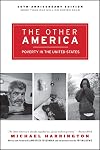
This is a depressing read because it's nearly 60 years old and yet so much of it is still true. LBJ's War on Poverty did lessen poverty, especially amongst the elderly. But too many of us believe in Reagan's quip that "we waged a war on poverty, and poverty won"--cutting benefits and giving up. Harrington's book still articulates the problems with conservative thinking on poverty, and his analyses of rural areas and black poverty still have a great deal of truth today.
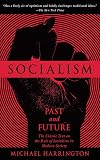
"Unfortunate" might be the best--or at least the most diplomatic--word to describe Michael Harrington's final book. (He was terminally ill when he wrote it.) In the late 1980s, when the Soviet bloc was on the verge of collapse and socialism was the last thing anyone wanted to hear about, this almost neurotically polite call for a very gradual form of social democracy might have seemed like the wisest approach. I get that. However, experience has shown us that Europe's social democracies (the show more model to which the author repeatedly refers) do not qualify as socialist, and have reverted all too easily to the same old ugly authoritarian capitalism because they made so many concessions to it in the first place. And, regardless of time or circumstance, any worthy concept must remain fundamentally what it is; one cannot, as Harrington does here, dilute socialism to the point of meaninglessness and still call it socialism. If he wanted to promote Capitalism Lite, that's precisely the term he should have used. Harrington does a pretty fair job of explaining why the totalitarian regimes of Stalin and Mao were not socialist (and why there is no airtight mathematical formula making socialism inevitable, as Marx proclaimed in The Communist Manifesto), but then overcorrects absurdly to the right rather than attempting to define the middle ground where genuine socialism should, and can, exist. He is correct in observing that if socialism ever becomes a reality, it cannot be concerned solely with matters of economy and class: it must contain a strong ethical component as well. show less

Despite major political disagreements I have with the author, Michael Harrington has penned a formidable and well-researched review of the origins, history, and conteporary tendencies of "socialism." He succesfully demysitifes the hazy origins of socialist thought by reaching back into ancient history and fleshing out the socialist undertones of messianic christianity, the hopelessly romantic continental "utopians", and the turbulent and often violent uprisings that seemed nearly irrational show more or without cause to the petty philosopher, pacifist, or the politically inactive observer. In the book he chronicled European revolutions, and Asian revolutions, and American revolts and passed them through with a fine-toothed comb brushing away all the remnants of "false-consciousness". Michael Harrington was an important part of the American Socialist movement and will not be easily forgotten. show less
Lists
Awards


You May Also Like


Associated Authors
Statistics
- Works
- 23
- Also by
- 5
- Members
- 1,970
- Popularity
- #13,052
- Rating
- 4.0
- Reviews
- 12
- ISBNs
- 81
- Languages
- 2
- Favorited
- 5