On This Page
Description
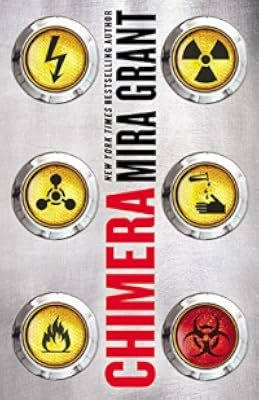
The outbreak has spread, tearing apart the foundations of society, as implanted tapeworms have turned their human hosts into a seemingly mindless mob. Sal and her family are trapped between bad and worse, and must find a way to compromise between the two sides of their nature before the battle becomes large enough to destroy humanity, and everything that humanity has built...including the chimera.Tags
Recommendations























Member Reviews
This is not an easy read. To clarify: the writing’s pretty simple, in the sort of sci-fi thriller style that I like, and the plot is right at the surface so there’s no thinking there, but the issues Grant brings up? The scientific ethics and the issues of bodily autonomy and the stuff about security and control and the right course of action in an emergency? Lord. Gut punch just about every chapter, there, and a lot to think about. I’ll admit, I’m not really a fan of this sort of science fiction—I lean a bit more towards Issues as Subtext, instead of Issues as Plot—and I found Grant a bit repetitive with her points sometimes, so I’m at the wonderful impasse stage of having to say: This was a good read, an important read, show more liked it, would recommend the series, did not exactly enjoy it. Your mileage may vary, though, since like I said, I’m only mostly the target audience and we all have our preferences.
7/10 show less
7/10 show less
Sal is trapped at USAMRIID (United States Army Medical Research Institute for Infectious Diseases) where her father is convinced that Sal will help them cure her comatose sister and consent to having the tapeworm in her brain removed. He is still under the delusion that Sally can somehow still come. Sal keeps this hope alive because it's the only way she can keep existing for the moment. Meanwhile, Dr. Cale is trying to find a solution for all the tapeworm eggs living in the tap water and Sherman, the man who put them there, is lamenting the effect of what he's done. The tapeworm eggs effect everyone: chimera, human, and sleepwalker alike. It's simply acting as a poison except for the lucky very few who become chimera. Will Sherman show more succeed in replacing the human race? What will happen to Sal and her family?
Chimera is the last book in the Parasitology series and picks up right where the last one left off. Sal has gone through quite the transformation over all of the books. Now, Sal is solid in her understanding of and confidence in herself as a chimera. The beginning of the book has Sal trapped in a refugee camp with the general populace, crowded with at least ten people in each room. She goes through a period of depression, where she just languishes and doesn't do much. Then she realizes that she's gotten out of worse and formulates a plan to get out. It's a crazy, not very well thought out plan, but it works. Sal plays on people's assumptions of her and puts on different personas when necessary to make them underestimate her, using half truths and rationalizations to give her performance more veracity. No one can shake Sal's understanding of herself and it's her biggest strength. Everything she does is for the benefit of her family. She deeply cares for humans, chimera, and sleepwalkers alike, but when the priorities get right down to it, she isn't afraid to hurt or stop whoever is hurting those closest to her. Sal's compassion impressed me. It's hard to feel that for people who aren't sentient or aware, but she recognizes their relation to her and ultimately wishes they could be left alone. I like her ability to feel yet she doesn't let it compromise the safety of those around her.
All the characters add to the world and bring along their own flaws and rationales. Fishy, for instance, is convinced he's living in a video game world, complete with cut scenes, restarts, player characters, and everything else. His delusion isn't as strong as it used be and the reality where his wife and child are dead shows through sometimes. Sherman is a classic abuser that blames all of his shortcomings and mistakes on his victims. Sal forced him to take samples from her and dump all the eggs into the water supply. It's not his fault that it didn't have the desired effect. He also has a completely different view of Sal, similar to how she was in the first book but weaker and more malleable. The few passages from his perspective were chilling. It fascinated me how his mental gymnastics justified his awful behavior. Although he hates the humans for mistreating chimera, he does the same thing to humans. In contrast, Sal's group for the most part has their own code of ethics that preserves both chimera and human life whenever possible.
Juniper is a brand new character and chimera because she is the product of multiple worms invading and one coming out on top inside a small girl. The phenomenon is even rarer than the production of regular chimera. Sal immediately protects her and treats her like her child because that worm was created from Sal. Juniper doesn't have a huge role in the books and has to learn everything about being human, but Sal finally understands a mother's perspective. Her experience lets her understand Dr. Cale and Sally's mother better after experiencing the emotions and instincts involved. Dr. Cale is one of my favorite characters because she may be a woman and a mother, but emotions are very low on her list of motivators. She loves all of her children and she takes care of them, but logic and rationality are higher priorities to her. Her experience also pointed out sexism in her field like how she went into hiding because her male colleague lied and opposed her. Few would side with Dr. Cale if any, so she decided to take herself out of the equation instead. This installment gave me a much better understanding than before when she just seemed cold and callous.
The plot twists and turns and I had no idea where it would end up. Some of it seemed a little convenient, but other things are our of Sal's control and don't go quite how she would like. It's a satisfying end to a unique series and doesn't seem too outlandish. I would love to see other stories set within the world. Mira Grant is the pen name of Seanan McGuire and I will read everything she writes. Her writing always sucks me into whatever world she made and keeps me there until I finish and crave the next book. show less
Chimera is the last book in the Parasitology series and picks up right where the last one left off. Sal has gone through quite the transformation over all of the books. Now, Sal is solid in her understanding of and confidence in herself as a chimera. The beginning of the book has Sal trapped in a refugee camp with the general populace, crowded with at least ten people in each room. She goes through a period of depression, where she just languishes and doesn't do much. Then she realizes that she's gotten out of worse and formulates a plan to get out. It's a crazy, not very well thought out plan, but it works. Sal plays on people's assumptions of her and puts on different personas when necessary to make them underestimate her, using half truths and rationalizations to give her performance more veracity. No one can shake Sal's understanding of herself and it's her biggest strength. Everything she does is for the benefit of her family. She deeply cares for humans, chimera, and sleepwalkers alike, but when the priorities get right down to it, she isn't afraid to hurt or stop whoever is hurting those closest to her. Sal's compassion impressed me. It's hard to feel that for people who aren't sentient or aware, but she recognizes their relation to her and ultimately wishes they could be left alone. I like her ability to feel yet she doesn't let it compromise the safety of those around her.
All the characters add to the world and bring along their own flaws and rationales. Fishy, for instance, is convinced he's living in a video game world, complete with cut scenes, restarts, player characters, and everything else. His delusion isn't as strong as it used be and the reality where his wife and child are dead shows through sometimes. Sherman is a classic abuser that blames all of his shortcomings and mistakes on his victims. Sal forced him to take samples from her and dump all the eggs into the water supply. It's not his fault that it didn't have the desired effect. He also has a completely different view of Sal, similar to how she was in the first book but weaker and more malleable. The few passages from his perspective were chilling. It fascinated me how his mental gymnastics justified his awful behavior. Although he hates the humans for mistreating chimera, he does the same thing to humans. In contrast, Sal's group for the most part has their own code of ethics that preserves both chimera and human life whenever possible.
Juniper is a brand new character and chimera because she is the product of multiple worms invading and one coming out on top inside a small girl. The phenomenon is even rarer than the production of regular chimera. Sal immediately protects her and treats her like her child because that worm was created from Sal. Juniper doesn't have a huge role in the books and has to learn everything about being human, but Sal finally understands a mother's perspective. Her experience lets her understand Dr. Cale and Sally's mother better after experiencing the emotions and instincts involved. Dr. Cale is one of my favorite characters because she may be a woman and a mother, but emotions are very low on her list of motivators. She loves all of her children and she takes care of them, but logic and rationality are higher priorities to her. Her experience also pointed out sexism in her field like how she went into hiding because her male colleague lied and opposed her. Few would side with Dr. Cale if any, so she decided to take herself out of the equation instead. This installment gave me a much better understanding than before when she just seemed cold and callous.
The plot twists and turns and I had no idea where it would end up. Some of it seemed a little convenient, but other things are our of Sal's control and don't go quite how she would like. It's a satisfying end to a unique series and doesn't seem too outlandish. I would love to see other stories set within the world. Mira Grant is the pen name of Seanan McGuire and I will read everything she writes. Her writing always sucks me into whatever world she made and keeps me there until I finish and crave the next book. show less
I was really looking forward to reading this last book of the trilogy, but I will admit to some disappointment. I could not get engaged into the story until half way through. I feel like the first half of the book could have been condensed into one chapter and gotten its point across. That being said, Sal goes through quite a bit of back and forth with her 'father' throughout the book and she gets to say her piece about how she deserves to live just as much as his precious Sally did. At times the story was like a larger commentary on our current society, ie: human vs chimera; US citizens vs immigrants; religions vs religions, etc... Can we have tolerance and peaceful cohabitation? Or that is just my Social Work degree coming out in me. show more The ending is appropriate to the series. Thank you to the author for the ride. show less
Okay, there's still no zombies in this book, not that I was actually expecting any, but all those Throwbacks are such a close fit, I just had to add the descriptor.
How did the trilogy end? Was it a satisfying ride? Did it fulfill all my expectations?
It was okay. It didn't quite wow me like Newsflesh did. I enjoyed the feel of falling deeper into Sal's viewpoint all the way from book one and having a slow burn, and it did promise to have a pretty interesting finale. So now that I've made it through book three, did it fill the promise?
Yes, and no. I got the feeling that the story was there and the expected grandness of destruction was also there, but at the same time, it just wasn't pulled off.
It didn't suck. Loose ends were picked up. show more Sal got to confront or engage with all the interested parties, and no one was left unscathed. She wasn't a real fighter, after all, and being a family-gal will only get her a so-so epic rating, but I still feel like the series could have shined more.
Perhaps I didn't like the feeling that the entire tale felt like we were being pulled from one camp to another like the a tide, or like the we just had to touch all the bases once before settling on one final solution. It simply didn't wow me, but it did give me some closure, and for that, I'm grateful.
I love my parasites. Brain parasites are always going to be precious to me. I just wish... well, I just wish that Tansy had been allowed to grow and flourish in the series. She's just NOT INTERESTING as a coma victim. Sorry. She was so damn awesome, too. I never wanted to have her live out her days on the page as the victim. She had so much LIFE in her!
*sigh* Could my one complaint drag down the enjoyment of the entire novel? Or even two novels?
Possibly. Likely, even. *sigh* show less
How did the trilogy end? Was it a satisfying ride? Did it fulfill all my expectations?
It was okay. It didn't quite wow me like Newsflesh did. I enjoyed the feel of falling deeper into Sal's viewpoint all the way from book one and having a slow burn, and it did promise to have a pretty interesting finale. So now that I've made it through book three, did it fill the promise?
Yes, and no. I got the feeling that the story was there and the expected grandness of destruction was also there, but at the same time, it just wasn't pulled off.
It didn't suck. Loose ends were picked up. show more Sal got to confront or engage with all the interested parties, and no one was left unscathed. She wasn't a real fighter, after all, and being a family-gal will only get her a so-so epic rating, but I still feel like the series could have shined more.
Perhaps I didn't like the feeling that the entire tale felt like we were being pulled from one camp to another like the a tide, or like the we just had to touch all the bases once before settling on one final solution. It simply didn't wow me, but it did give me some closure, and for that, I'm grateful.
I love my parasites. Brain parasites are always going to be precious to me. I just wish... well, I just wish that Tansy had been allowed to grow and flourish in the series. She's just NOT INTERESTING as a coma victim. Sorry. She was so damn awesome, too. I never wanted to have her live out her days on the page as the victim. She had so much LIFE in her!
*sigh* Could my one complaint drag down the enjoyment of the entire novel? Or even two novels?
Possibly. Likely, even. *sigh* show less
Lacking in that Wow factor that Grant's initial series books can have this is still a very decent conclusion to the trilogy, everything explained, and everybody accounted for.
There's not a vast amount of action - Sal does a great deal of running around between the camps - military, Sherman's chimeras and Shanti's scientists, all of which seem overly eager to accept her, and also overly easy to escape from. Along the way she finally comes to terms with what she is, and who she isn't. And hence who she does really care about, and the side she must choose to do everything she can to save.
Enjoyable and interesting.
There's not a vast amount of action - Sal does a great deal of running around between the camps - military, Sherman's chimeras and Shanti's scientists, all of which seem overly eager to accept her, and also overly easy to escape from. Along the way she finally comes to terms with what she is, and who she isn't. And hence who she does really care about, and the side she must choose to do everything she can to save.
Enjoyable and interesting.
Third and last in Grant’s Parasitology trilogy. We’ve moved past most of the zombie-like features here, because Sal spends most of her time dealing with humans or other chimeras like her, who’ve integrated their tapeworms with their human host bodies. Grant’s skills at generating dramatic situations are on display here, as are her most characteristic habits/flaws—particularly that all the characters sound basically the same and use a lot of repetitive sentence structures/repeated phrases. Plus everybody keeps quoting a made-up children’s book in ways that just got super annoying, enough so that I agreed with the bad guy’s mockery. Anyhow, civilization is in full collapse by this book, and Sal is trying to navigate among show more the US Army, the evil chimera who’s trying to replace humanity, and the research team (including her human lover) trying to find a way to allow humans and tapeworms to coexist. With a bit of lampshading of her improbable importance, Sal does her best to protect her chimerical family. show less
Let me start by saying that I really liked the other two books. Very good writing, pacing, and dealing with some excellent philosophical issues. The philosophical issues were still here, being tangled with, which was the part I liked. Do the "sleepwalkers" count as people? Wonderful question.
However, the pacing seemed off and the book just wrapped up way too quickly. Not to give anything away, but too much "back and forth." You can never go home again until you can. And Carrie, poor Carrie. Just a plot device that Ms. Grant couldn't get rid of.
In short, the book was fine, but a disappointing finale.
However, the pacing seemed off and the book just wrapped up way too quickly. Not to give anything away, but too much "back and forth." You can never go home again until you can. And Carrie, poor Carrie. Just a plot device that Ms. Grant couldn't get rid of.
In short, the book was fine, but a disappointing finale.
Members
- Recently Added By
Lists

2016 Hugo Eligible Novels
90 works; 32 members

Books Read in 2017
4,249 works; 129 members
Author Information

420+ Works 66,097 Members
Some Editions
Series

Work Relationships
Is abridged in
Common Knowledge
- Canonical title
- Chimera
- Original publication date
- 2015-11
- Dedication
- This book is dedicated to Theodora Hope Buchanan.
You saved me in Montreal. Someday I'll return the favor. But probably not in Montreal.
Classifications
Statistics
- Members
- 403
- Popularity
- 76,685
- Reviews
- 18
- Rating
- (3.65)
- Languages
- English
- Media
- Paper, Audiobook, Ebook
- ISBNs
- 9
- ASINs
- 5