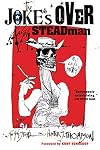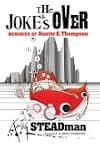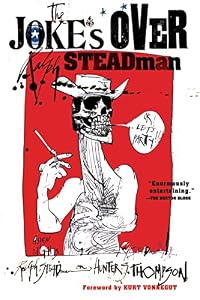
The Joke's Over: Bruised Memories: Gonzo, Hunter S. Thompson, and Me
by Ralph Steadman
On This Page
Description
In the spring of 1970, British artist Ralph Steadman went to America in search of work and found more than he bargained for. At the Kentucky Derby he met a former associate of the Hell's Angels, one Hunter S. Thompson. Their working relationship resulted in the now-legendary Gonzo Journalism. This book tells the inside story of a remarkable collaboration that documented the turbulent years of the civil rights movement, the Nixon years, Watergate, and the many bizarre and great events that show more shaped the second half of the twentieth century. When Thompson committed suicide in 2005, it was the end of a unique friendship filled with both betrayal and understanding.--From publisher description. show lessTags
Recommendations









Member Reviews
Ralph Steadman and Hunter Thompson were kindred spirits. A match made at the Kentucky Derby in 1970.
This is Steadman’s memoir — a running account, almost like a diary, of his relationship with Thompson, beginning when Steadman collaborated with Thompson on The Kentucky Derby is Decadent and Depraved. Steadman’s eccentric and dire artwork was the perfect complement to Thompson’s no-holds-barred writing style, and the two seemed to share similar attitudes toward the rich, decadent, and corrupt.
Steadman includes his own reflections on the assignments and other times the two got together for whatever reason or lack of reason, along with letters and faxes the two exchanged. Thompson seemed to be freely in his element around Steadman. show more The two of them together composed a combustible mobile carnival of weirdness.
Thompson also let Steadman have it with both barrels (not literally), and Steadman gave back as best he could. He understood Thompson like few people did. He took the barrage of insults, slights, and even degradations, and he saw where it was all coming from. He sees Thompson as an intense, pulsing mass of flawed, damaged goods wrapped around a sense of justice and a sense of outrage where it was warranted.
I don’t think it’s even possible to sugar-coat Thompson, and Steadman doesn’t try. Thompson treated him like crap much, maybe most of the time. He ridiculed him, he accused him of disloyalty, he competed for credit and money in their collaborations, . . . .
But Thompson treated most people like crap, especially himself. His writing though — no one could flow such an extreme life into prose that communicated, that called us all to outrage over a corrupt world. We miss that voice today.
One thing I hadn’t known was how bound Thompson’s suicide was to the Bush re-election. Steadman doesn’t come right out and say that Thompson ended his life because of it, but it’s pretty clear it was one of the last straws. The title of the book, The Joke’s Over, is something that Thompson took to saying as he saw the political world degrading into uncharted depths — it just wasn’t funny anymore, and if it wasn’t even funny, what was it?
This is a great chance, if you’re interested in Thompson, to get the perspective of someone with a unique understanding and experience of him. And it’s also a great chance to understand Steadman. I hadn’t really. Now I have a much better picture of where those drawings are coming from, why they are so dire and crazed — a reflection of the world he experienced with Thompson.
As writing goes, the book runs a little long and maybe in need of editing. But then “extreme” is the name of the game.
Steadman of course is still around and active as an artist. He and Thompson were kindred souls, but Thompson was playing a higher stakes game. No slight to Steadman — he was in it heart and soul. But it’s as if Steadman was playing a kind of hard core bumper cars to Thompson’s lifelong demolition derby. show less
This is Steadman’s memoir — a running account, almost like a diary, of his relationship with Thompson, beginning when Steadman collaborated with Thompson on The Kentucky Derby is Decadent and Depraved. Steadman’s eccentric and dire artwork was the perfect complement to Thompson’s no-holds-barred writing style, and the two seemed to share similar attitudes toward the rich, decadent, and corrupt.
Steadman includes his own reflections on the assignments and other times the two got together for whatever reason or lack of reason, along with letters and faxes the two exchanged. Thompson seemed to be freely in his element around Steadman. show more The two of them together composed a combustible mobile carnival of weirdness.
Thompson also let Steadman have it with both barrels (not literally), and Steadman gave back as best he could. He understood Thompson like few people did. He took the barrage of insults, slights, and even degradations, and he saw where it was all coming from. He sees Thompson as an intense, pulsing mass of flawed, damaged goods wrapped around a sense of justice and a sense of outrage where it was warranted.
I don’t think it’s even possible to sugar-coat Thompson, and Steadman doesn’t try. Thompson treated him like crap much, maybe most of the time. He ridiculed him, he accused him of disloyalty, he competed for credit and money in their collaborations, . . . .
But Thompson treated most people like crap, especially himself. His writing though — no one could flow such an extreme life into prose that communicated, that called us all to outrage over a corrupt world. We miss that voice today.
One thing I hadn’t known was how bound Thompson’s suicide was to the Bush re-election. Steadman doesn’t come right out and say that Thompson ended his life because of it, but it’s pretty clear it was one of the last straws. The title of the book, The Joke’s Over, is something that Thompson took to saying as he saw the political world degrading into uncharted depths — it just wasn’t funny anymore, and if it wasn’t even funny, what was it?
This is a great chance, if you’re interested in Thompson, to get the perspective of someone with a unique understanding and experience of him. And it’s also a great chance to understand Steadman. I hadn’t really. Now I have a much better picture of where those drawings are coming from, why they are so dire and crazed — a reflection of the world he experienced with Thompson.
As writing goes, the book runs a little long and maybe in need of editing. But then “extreme” is the name of the game.
Steadman of course is still around and active as an artist. He and Thompson were kindred souls, but Thompson was playing a higher stakes game. No slight to Steadman — he was in it heart and soul. But it’s as if Steadman was playing a kind of hard core bumper cars to Thompson’s lifelong demolition derby. show less
In the world of fiction there exists a plethora of dynamic duos — Batman and Robin, Sherlock Holmes and Watson, Timmy and Lassie, but in the more narrowly focused world of quasi-real fact-bending narrative, there stands one couple towering over the masses, Hunter S. Thompson and Ralph Steadman. Originally just a marketing moment for one artist to help illustrate an article for a crazed, rebellious writer on the upswing, what sprung from the meeting of these two wild minds left an impression on the American literary landscape for generations to come. Millions have already turned the legendary pages of Mr. Thompson, while others have memorized the famous drug-catalog listing monologue from the opening of the film, Fear and Loathing in show more Las Vegas, based on Thompson’s most famous book of the same name. Yet, as with many famous duos, we are all used to hearing from the front man -Batman, Holmes, Timmy (Lassie was really never the big conversationalist), but now we get to see of those integral sidekicks step out into his own right and tell the world how things looked from his perspective, standing off to the right and half in the shadow of a highly intelligent, self-medicated madman.
The Joke’s Over is a vicious eulogy to a carnivorous collaboration of passion, friendship and art. Dangerous at best, suicidal at worst. Getting connected with Thompson, Steadman found himself plugged into a self-propelled generator of creative energy, one that would steamroll over most other people, but he held on, gnashed his teeth in and went for the ride. The partnership shuttled back and forth between being a connected pair of best friends attempting to take over the world to a pair of artistic geniuses desperately trying not to tear each other’s throats out. The ride through their friendship is terrifying, but the results they found are awe-inspiring.
When I first picked up the book I thought I was only in for more stories about Thompson’s eccentricities and crazy drug binges, albeit from a closer perspective, but what I got was only partially that. The unexpected side of the story is hearing about Thompson’s rage, paranoia and continued ability to try and destroy all the close relationships in his life. Being best friends with him is detailed out like a full-time job that only provides partial benefits, but when that one week of paid-vacation comes each year, it feels that much better due to the work you put in to get it. Steadman lists out numerous occasions when Thompson screamed at him, in person or via phone, fax and smoke signals, decrying proof he recently discovered showing that Steadman was only riding his coattails and subconsciously attempting to destroy the power of his literary ambrosia. But before you can feel our rage rising, decrying the treatment of someone who seems to be a soft-spoken, great friend, Steadman would share other messages, like olive branches across the deep, blue ocean that separated them:
[from Thompson to Steadman]
“…Keep in mind that I am always both ahead and behind you in the same moment (an eerie Truth that we both understood in our blood and which you have, in fact, explained more than once, in print…)”
As much as Steadman battled to understand and accept the tumultuous waves of their friendship, it seemed that Thompson himself struggled constantly not to burn the bridge that kept him connected to the real world and real people.
To be fair, even with the letters and reprinted faxes from Thompson, this is all from Steadman’s perspective and it is his autobiography about those infamous years. At times he paints himself the humble hero, while others creates a much sadder picture of an artist beat down and abused by his muse. Far from the wordsmith that Thompson was, a fact Thompson constantly reminded him of, the book is enjoyable, but suffers from subconscious reminders of a more powerful writer. For true worshippers of Steadman’s artwork, the book does raise its own value by detailing numerous other places beyond Thompson’s books where you can find his maddening and wild imagery (personally, I am looking into buying Steadman’s version of Alice in Wonderland. Now that should be a real trip down the rabbit hole.)
My recommendation, it's an interesting look behind the scenes for the devoted followers of intangible excellence that sprang from Thompson and Steadman. show less
The Joke’s Over is a vicious eulogy to a carnivorous collaboration of passion, friendship and art. Dangerous at best, suicidal at worst. Getting connected with Thompson, Steadman found himself plugged into a self-propelled generator of creative energy, one that would steamroll over most other people, but he held on, gnashed his teeth in and went for the ride. The partnership shuttled back and forth between being a connected pair of best friends attempting to take over the world to a pair of artistic geniuses desperately trying not to tear each other’s throats out. The ride through their friendship is terrifying, but the results they found are awe-inspiring.
When I first picked up the book I thought I was only in for more stories about Thompson’s eccentricities and crazy drug binges, albeit from a closer perspective, but what I got was only partially that. The unexpected side of the story is hearing about Thompson’s rage, paranoia and continued ability to try and destroy all the close relationships in his life. Being best friends with him is detailed out like a full-time job that only provides partial benefits, but when that one week of paid-vacation comes each year, it feels that much better due to the work you put in to get it. Steadman lists out numerous occasions when Thompson screamed at him, in person or via phone, fax and smoke signals, decrying proof he recently discovered showing that Steadman was only riding his coattails and subconsciously attempting to destroy the power of his literary ambrosia. But before you can feel our rage rising, decrying the treatment of someone who seems to be a soft-spoken, great friend, Steadman would share other messages, like olive branches across the deep, blue ocean that separated them:
[from Thompson to Steadman]
“…Keep in mind that I am always both ahead and behind you in the same moment (an eerie Truth that we both understood in our blood and which you have, in fact, explained more than once, in print…)”
As much as Steadman battled to understand and accept the tumultuous waves of their friendship, it seemed that Thompson himself struggled constantly not to burn the bridge that kept him connected to the real world and real people.
To be fair, even with the letters and reprinted faxes from Thompson, this is all from Steadman’s perspective and it is his autobiography about those infamous years. At times he paints himself the humble hero, while others creates a much sadder picture of an artist beat down and abused by his muse. Far from the wordsmith that Thompson was, a fact Thompson constantly reminded him of, the book is enjoyable, but suffers from subconscious reminders of a more powerful writer. For true worshippers of Steadman’s artwork, the book does raise its own value by detailing numerous other places beyond Thompson’s books where you can find his maddening and wild imagery (personally, I am looking into buying Steadman’s version of Alice in Wonderland. Now that should be a real trip down the rabbit hole.)
My recommendation, it's an interesting look behind the scenes for the devoted followers of intangible excellence that sprang from Thompson and Steadman. show less
I've long been fascinated by Hunter S. Thompson, but Ralph Steadman's drawings have never held me in similar thrall, although one cannot deny their originality nor the artistry. The same cannot be said for Thompson himself, who was obviously inspired and captivated by his collaborator's grotesque illustrations. Steadman's writing is not up to the same standard, and HST (partly from a strongly developed sense of territoriality, partly as vicious criticism) never lost the opportunity to tell him so.
This memoir does, however, shed light on a period in history that seems almost fantastic now, even after one has discounted the distortions of substances and nostalgia. Drinking and smoking everywhere, slipping over borders and past security, show more securing vast sums for extremely dubious assignments...
I would rather read one of HST's books, but have a drink with Steadman, no question. I wouldn't mind being in the same room with Thompson when things got weird (at a safe distance), but from the way he treats Steadman (allegedly one of his dearest friends) and others around him, it's hard to entertain any warmer feeling than respect for him. There was brilliance and hilarity there, but venality, cruelty and solipsism were always in the wings by the sounds of it. That's the business of the eternal soul of HST, Steadman and those who knew them to worry about - better for us to enjoy the marvellous and terrible bouts of debauchery, and reflect on the phenomenon that is Gonzo, what it did and the much more it could have done. show less
This memoir does, however, shed light on a period in history that seems almost fantastic now, even after one has discounted the distortions of substances and nostalgia. Drinking and smoking everywhere, slipping over borders and past security, show more securing vast sums for extremely dubious assignments...
I would rather read one of HST's books, but have a drink with Steadman, no question. I wouldn't mind being in the same room with Thompson when things got weird (at a safe distance), but from the way he treats Steadman (allegedly one of his dearest friends) and others around him, it's hard to entertain any warmer feeling than respect for him. There was brilliance and hilarity there, but venality, cruelty and solipsism were always in the wings by the sounds of it. That's the business of the eternal soul of HST, Steadman and those who knew them to worry about - better for us to enjoy the marvellous and terrible bouts of debauchery, and reflect on the phenomenon that is Gonzo, what it did and the much more it could have done. show less
Two things: 1. Steadman is an illustrator, not an author. The book is disjointed and focuses more on Steadman than on Thompson, although the section of their first meeting was fun. When the prose does have energy, it feels more like an imitation of Hunteresque rip-roaring than anything genuine. 2. Hunter the person seems just plain pathetic. I'm not sure what this says about me, but I'm much more comfortable with the fictional persona of HST than I am with the author himself. This memoir is in bat country; don't stop here.
There are a few interesting anecdotes here involving the two friends, but not a whole lot more insight into Thompson's inner life. It does reinforce my belief that the whole Gonzo schtick had run its course by 1980 or so; from then on, it was pretty much about self-parody and political ranting for Hunter.
On a personal note, I saw Thompson in action one night at UCSB in 1976 during one of his "college lectures". I don't remember a whole lot about that evening (I happened to have found some brown windowpane acid in my wallet and mistakenly told my friends that it was probably not very strong anymore and distributed it to our group. Bad craziness.) I do remember a bunch of burnt out hippie types cajoling the good Doctor with demands and show more entreaties ("You gotta be an inspiration for us!") and HST deliberately putting on a hostile demeanor. Most of the kids ended up getting pissed off and leaving, throwing obscenities at HST, which he met with a dismissive wave (he concentrated on his ice bucket containing a bottle of Wild Turkey). Eventually, there were just a few dozen of us gathered around and we had a convivial chat (or as close as it got with him) about the upcoming Presidential election. Then it was back to Isla Vista to analyze the evening (and the universe) over beer, pot, and the Flying Burritos on the stereo. Well, we were young, weren't we? show less
On a personal note, I saw Thompson in action one night at UCSB in 1976 during one of his "college lectures". I don't remember a whole lot about that evening (I happened to have found some brown windowpane acid in my wallet and mistakenly told my friends that it was probably not very strong anymore and distributed it to our group. Bad craziness.) I do remember a bunch of burnt out hippie types cajoling the good Doctor with demands and show more entreaties ("You gotta be an inspiration for us!") and HST deliberately putting on a hostile demeanor. Most of the kids ended up getting pissed off and leaving, throwing obscenities at HST, which he met with a dismissive wave (he concentrated on his ice bucket containing a bottle of Wild Turkey). Eventually, there were just a few dozen of us gathered around and we had a convivial chat (or as close as it got with him) about the upcoming Presidential election. Then it was back to Isla Vista to analyze the evening (and the universe) over beer, pot, and the Flying Burritos on the stereo. Well, we were young, weren't we? show less
"Don't write, Ralph. You'll bring shame on your family." - Hunter S. Thompson
Far be it from me to disagree with the greatest American writer since Mark Twain, but Ralph Steadman does a fine job chronicling his 30-year friendship with Hunter.
Starting with their meeting at the Kentucky Derby for the Scanlans’ article that introduced the world to Gonzo Journalism and ending with a Magnum 44 that Steadman seems convinced was held by George W. Bush, this memoir is required reading for any fan of Gonzo Literature.
Steadman must have caught the bug from Hunter, because pure gonzo poetry rears its head throughout the book:
"...he would always convince those around him that they were the ones who were mad, irrational or just plain dumb and he show more was behaving as a decent law-abiding citizen."
"I banged again more emphatically and thought I heard a muffled cry from somewhere inside, like the sound a whale makes when searching for its mate."
"I had no intimate knowledge of any American thus far and maybe all Americans take these pills to withstand the pressure of the responsibility thrust upon them as defenders of the known Free World."
"There were snarling, red eyed dogs eating my socks..."
Steadman’s book pulls no punches. Not only do you see the charming juggernaut of a personality that pulled everyone around him into his wake, but also revealed is the jealous and paranoid artist who hated sharing the limelight and faxed his crazy missives to friends at all hours of the day and night.
If you like Steadman’s art and writing, make sure to pick up his other works – he is more than just Hunter’s right-hand man, he is a true artist and author apart from his friendship with the Doctor of Gonzo. show less
Far be it from me to disagree with the greatest American writer since Mark Twain, but Ralph Steadman does a fine job chronicling his 30-year friendship with Hunter.
Starting with their meeting at the Kentucky Derby for the Scanlans’ article that introduced the world to Gonzo Journalism and ending with a Magnum 44 that Steadman seems convinced was held by George W. Bush, this memoir is required reading for any fan of Gonzo Literature.
Steadman must have caught the bug from Hunter, because pure gonzo poetry rears its head throughout the book:
"...he would always convince those around him that they were the ones who were mad, irrational or just plain dumb and he show more was behaving as a decent law-abiding citizen."
"I banged again more emphatically and thought I heard a muffled cry from somewhere inside, like the sound a whale makes when searching for its mate."
"I had no intimate knowledge of any American thus far and maybe all Americans take these pills to withstand the pressure of the responsibility thrust upon them as defenders of the known Free World."
"There were snarling, red eyed dogs eating my socks..."
Steadman’s book pulls no punches. Not only do you see the charming juggernaut of a personality that pulled everyone around him into his wake, but also revealed is the jealous and paranoid artist who hated sharing the limelight and faxed his crazy missives to friends at all hours of the day and night.
If you like Steadman’s art and writing, make sure to pick up his other works – he is more than just Hunter’s right-hand man, he is a true artist and author apart from his friendship with the Doctor of Gonzo. show less
n the spring of 1970, Ralph Steadman went to America in search of work and found more than he bargained for. In Kentucky to cover the Derby, he met a former Hells Angel called Hunter S. Thompson. Thompson wrote later: 'The rest of that day blurs into madness. The rest of that night too. And all the next day and night. Such horrible things occurred that I can't bring myself even to think about them now, much less put them down in print. Steadman was lucky to get out of Louisville without serious injuries, and I was lucky to get out at all.' That meeting nevertheless resulted in a working relationship and a friendship that lasted for more than thirty years. In "The Joke's Over", Ralph Steadman tells the story of a remarkable collaboration show more that documented the turbulent years of the Civil Rights movement, Nixon and Watergate, and the decay of the American Dream. It is also the story of an unusual friendship, of both unique understanding and of extraordinary betrayals. Few people knew Thompson as well as Ralph Steadman did. In this remarkable memoir, elegaic, bizarre and hilarious, Steadman tells his story for the first time, the story - in words and pictures - of Ralph and Hunter, a great British original on a great American original, Butch and Sundance on acid...
The illustrator Ralph Steadman is a brave man. Not only did he survive humiliation, gunplay and hallucinatory despair through decades of collaboration with the legendarily difficult journalist Hunter S. Thompson, he decided to include as the epigraph to his memoir of those adventures a remark of Thompson’s: “Don’t write, Ralph. You’ll bring shame on your family.”
To follow this with a 400-page ramble is the sort of dare the prank-loving Thompson, who committed suicide last year, might have appreciated. For the sake of the Steadman family’s honor, it should be said that “The Joke’s Over” features a lot of Steadman’s drawings, though reduced too much from their original size. True, these pictures don’t exactly constitute writing, but they are brilliant. Splattery explosions of ink, detonated in the presence of politicians and stolid middle-class citizens, they stand as the mangling visions of a 20th-century Hogarth. When they originally appeared (usually in Rolling Stone), lodged amid Thompson’s prose, the images served as the visual equivalent of the writer’s “gonzo” — a term Steadman defines as “controlled madness” — explorations of America.
As for Steadman’s writing, let’s just say it won’t bring shame to his family, but it won’t slather the clan with glory either. At his best, Steadman, who is Welsh, does a passable imitation of Thompson’s mad rants.
They met in 1970 on Thompson’s home turf of Louisville, covering the Kentucky Derby on assignment for the short-lived magazine Scanlan’s. Steadman’s drawings — vicious caricatures of local residents, including Thompson’s brother — shocked the writer with their predatory vigor. Thompson, soon to become famous for a similar bloodthirsty tack in prose, demanded of the artist: “Why must you scribble these filthy ravings and in broad daylight too? ... This is Kentucky, not skid row. I love these people. They are my friends and you treated them like scum.” Their first collaboration ended with the journalist spraying Steadman from a can of Mace. “We can do without your kind in Kentucky. Now get your bags and get out, and take your rotten drawings with you!”
Isn’t this how all great buddy movies begin? Of course they were bound to work together again, and they did a few months later, scoping out the America’s Cup in Newport, R.I. Steadman, a woozy sailor, asked Thompson if he might have one of the little yellow tablets that he assumed the writer had been taking for seasickness. Thompson obliged; a colossal acid trip ensued. The two men decided to jump-start their nonexistent story by spray-painting profanities deriding the pope on the hulls of multimillion-dollar racing yachts. Detected, they panicked, nearly setting a boat on fire with a flare. “Pigs everywhere!” Thompson cried. “We must flee like hunted animals.” Steadman spouted gibberish, which Thompson avidly recorded in his notebook. “That’s good, Ralph. ... Go on. What else?”
Steadman ended up catching a flight to New York — no shoes, no socks and a suitcase containing only dirty underwear and a sketchbook. He collapsed at a friend’s home, where a doctor was summoned and shot him full of Librium. “This trip ... established a pattern of journalism, if that is what it was, that cemented my friendship with Hunter and laid the ground plan for future assignments. ... It remains a defining moment in the evolution of gonzo and, without doubt, a dress rehearsal for ‘Fear and Loathing in Las Vegas.’ For Hunter, it provided living proof that going crazy as a journalistic style was possible.”
For a few years in the 1970s, it did appear that insanity was a great career move, that a deranged journalist might fruitfully subvert tired conventions that kept a writer from injecting himself into his work. “He was his own best story,” Steadman writes. “The Joke’s Over” shows Thompson stumbling and mumbling his way through the early ’70s with the heart of a lawyer for the A.C.L.U. and the brain of an acidhead. His gift then was not so much for intoxication as for high dudgeon. Thirty-five years after its publication, “Fear and Loathing in Las Vegas,” illustrated by Steadman at bargain rates (he’s still bitter), holds up as more than a generational relic. Thompson depicts himself as a drug-taking idealist blundering through a nightmare, all the while gripping his sanity as tightly as a steering wheel.
Of course, the gonzo journalism that Steadman claims he and Thompson tripped their way into always amounted to a high-risk proposition. “The Joke’s Over” makes clear that Thompson was always writing about himself under the influence, that presidential campaigns, for instance, were just another form of intoxicant, a deranging ordeal capable of twisting the mind as surely as a tab of LSD. If the self wasn’t up to snuff, the stories could become as tedious as an overheard cellphone conversation, exercises in terminal narcissism.
The second half of Steadman’s memoir, which spans the years from 1980 to Thompson’s death, is a sad, sloppy affair, puffed out with faxes and bad song lyrics. No writer, it appears, is a hero to his illustrator, at least not when money is involved. Their collaboration floundered over ill-fated projects. Thompson “was much more into deals than personal affection,” Steadman complains.
The prosecutorial details mount. Seemingly against his own wishes, Steadman indicts Thompson on matters large and small. The writer’s feet stank because he wore Converse sneakers without socks. He was unkind to pets; Steadman shows Thompson hauling his mynah bird Edward out of his cage for refusing to speak, and then berating the creature. “There is not a bird-God who is going to save you now, Edward! ... You are doomed!” In Steadman’s view, Thompson treated his young son, Juan, with only slightly more finesse, grabbing him by the ear and twirling him about the room “like an average-sized cat.” And yet, conflicted to the last, Steadman writes, “I saw nothing uncommonly vicious.” It was “as though the outward signs of distance and malevolent behavior were put on strictly for visitors.”
Indeed, by the end of his life, Thompson had turned himself into a totem of his own invention, and spent his days rattling the bars formed by the cage of his celebrity. His illustrator tries to put the best possible light on the matter, but betrayed and appalled, he can’t. All told, it’s not a pretty picture. show less
The illustrator Ralph Steadman is a brave man. Not only did he survive humiliation, gunplay and hallucinatory despair through decades of collaboration with the legendarily difficult journalist Hunter S. Thompson, he decided to include as the epigraph to his memoir of those adventures a remark of Thompson’s: “Don’t write, Ralph. You’ll bring shame on your family.”
To follow this with a 400-page ramble is the sort of dare the prank-loving Thompson, who committed suicide last year, might have appreciated. For the sake of the Steadman family’s honor, it should be said that “The Joke’s Over” features a lot of Steadman’s drawings, though reduced too much from their original size. True, these pictures don’t exactly constitute writing, but they are brilliant. Splattery explosions of ink, detonated in the presence of politicians and stolid middle-class citizens, they stand as the mangling visions of a 20th-century Hogarth. When they originally appeared (usually in Rolling Stone), lodged amid Thompson’s prose, the images served as the visual equivalent of the writer’s “gonzo” — a term Steadman defines as “controlled madness” — explorations of America.
As for Steadman’s writing, let’s just say it won’t bring shame to his family, but it won’t slather the clan with glory either. At his best, Steadman, who is Welsh, does a passable imitation of Thompson’s mad rants.
They met in 1970 on Thompson’s home turf of Louisville, covering the Kentucky Derby on assignment for the short-lived magazine Scanlan’s. Steadman’s drawings — vicious caricatures of local residents, including Thompson’s brother — shocked the writer with their predatory vigor. Thompson, soon to become famous for a similar bloodthirsty tack in prose, demanded of the artist: “Why must you scribble these filthy ravings and in broad daylight too? ... This is Kentucky, not skid row. I love these people. They are my friends and you treated them like scum.” Their first collaboration ended with the journalist spraying Steadman from a can of Mace. “We can do without your kind in Kentucky. Now get your bags and get out, and take your rotten drawings with you!”
Isn’t this how all great buddy movies begin? Of course they were bound to work together again, and they did a few months later, scoping out the America’s Cup in Newport, R.I. Steadman, a woozy sailor, asked Thompson if he might have one of the little yellow tablets that he assumed the writer had been taking for seasickness. Thompson obliged; a colossal acid trip ensued. The two men decided to jump-start their nonexistent story by spray-painting profanities deriding the pope on the hulls of multimillion-dollar racing yachts. Detected, they panicked, nearly setting a boat on fire with a flare. “Pigs everywhere!” Thompson cried. “We must flee like hunted animals.” Steadman spouted gibberish, which Thompson avidly recorded in his notebook. “That’s good, Ralph. ... Go on. What else?”
Steadman ended up catching a flight to New York — no shoes, no socks and a suitcase containing only dirty underwear and a sketchbook. He collapsed at a friend’s home, where a doctor was summoned and shot him full of Librium. “This trip ... established a pattern of journalism, if that is what it was, that cemented my friendship with Hunter and laid the ground plan for future assignments. ... It remains a defining moment in the evolution of gonzo and, without doubt, a dress rehearsal for ‘Fear and Loathing in Las Vegas.’ For Hunter, it provided living proof that going crazy as a journalistic style was possible.”
For a few years in the 1970s, it did appear that insanity was a great career move, that a deranged journalist might fruitfully subvert tired conventions that kept a writer from injecting himself into his work. “He was his own best story,” Steadman writes. “The Joke’s Over” shows Thompson stumbling and mumbling his way through the early ’70s with the heart of a lawyer for the A.C.L.U. and the brain of an acidhead. His gift then was not so much for intoxication as for high dudgeon. Thirty-five years after its publication, “Fear and Loathing in Las Vegas,” illustrated by Steadman at bargain rates (he’s still bitter), holds up as more than a generational relic. Thompson depicts himself as a drug-taking idealist blundering through a nightmare, all the while gripping his sanity as tightly as a steering wheel.
Of course, the gonzo journalism that Steadman claims he and Thompson tripped their way into always amounted to a high-risk proposition. “The Joke’s Over” makes clear that Thompson was always writing about himself under the influence, that presidential campaigns, for instance, were just another form of intoxicant, a deranging ordeal capable of twisting the mind as surely as a tab of LSD. If the self wasn’t up to snuff, the stories could become as tedious as an overheard cellphone conversation, exercises in terminal narcissism.
The second half of Steadman’s memoir, which spans the years from 1980 to Thompson’s death, is a sad, sloppy affair, puffed out with faxes and bad song lyrics. No writer, it appears, is a hero to his illustrator, at least not when money is involved. Their collaboration floundered over ill-fated projects. Thompson “was much more into deals than personal affection,” Steadman complains.
The prosecutorial details mount. Seemingly against his own wishes, Steadman indicts Thompson on matters large and small. The writer’s feet stank because he wore Converse sneakers without socks. He was unkind to pets; Steadman shows Thompson hauling his mynah bird Edward out of his cage for refusing to speak, and then berating the creature. “There is not a bird-God who is going to save you now, Edward! ... You are doomed!” In Steadman’s view, Thompson treated his young son, Juan, with only slightly more finesse, grabbing him by the ear and twirling him about the room “like an average-sized cat.” And yet, conflicted to the last, Steadman writes, “I saw nothing uncommonly vicious.” It was “as though the outward signs of distance and malevolent behavior were put on strictly for visitors.”
Indeed, by the end of his life, Thompson had turned himself into a totem of his own invention, and spent his days rattling the bars formed by the cage of his celebrity. His illustrator tries to put the best possible light on the matter, but betrayed and appalled, he can’t. All told, it’s not a pretty picture. show less
Members
- Recently Added By
Author Information

56+ Works 2,545 Members
Ralph Steadman has been Gardening Correspondent for Rolling Stone for thirty years.
Common Knowledge
- Canonical title
- The Joke's Over: Bruised Memories: Gonzo, Hunter S. Thompson, and Me
- Original publication date
- 2006-10-02
- People/Characters
- Hunter S. Thompson; Ralph Steadman
- Epigraph
- "Don't write Ralph. You'll bring shame on your family."
Hunter S. Thompson - Dedication
- For ANNA, centre of my universe and Nat Sobel in orbit and it's for you too, you ole BASTARD! wherever you are!
- First words
- A 150-foot monument is a tall thing, even in a majestic range of mountains in Colorado.
- Last words
- (Click to show. Warning: May contain spoilers.)Hunter S. Thompson was just another tax evader who got lucky.
Classifications
- Genres
- Biography & Memoir, Nonfiction, General Nonfiction, Art & Design
- DDC/MDS
- 741.5092 — Arts & recreation Drawing & decorative arts Drawing Comic books, graphic novels, fotonovelas, cartoons, caricatures, comic strips Cartoons, Caricatures, Comics History
- LCC
- NC1479 .S79 .A2 — Fine Arts Drawing. Design. Illustration Drawing. Design. Illustration Pictorial humor, caricature, etc.
- BISAC
Statistics
- Members
- 523
- Popularity
- 56,933
- Reviews
- 10
- Rating
- (3.56)
- Languages
- English
- Media
- Paper, Audiobook, Ebook
- ISBNs
- 13
- ASINs
- 6