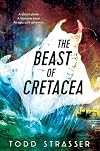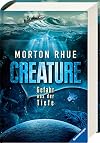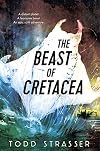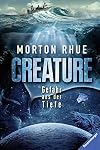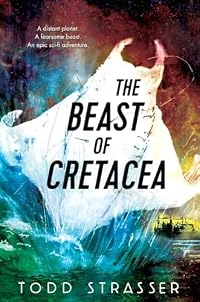
The Beast of Cretacea
by Todd Strasser
On This Page
Description
Aboard the Pequod, seventeen-year-old Ishmael arrives on the planet Cretacea to hunt down great ocean-dwelling beasts to harvest and send back to the resource-depleted Earth. But the ship's captain, Ahab, who lost his leg to the Great Terrafin years ago, is obsessed with hunting down the beast. The classic tale of Moby Dick as set in the future.Tags
Recommendations







Member Reviews
***This book was reviewed for the San Francisco Book Review***
Strasser’s Beast of Cretacea is one thrilling ride from start to finish. It was something fresh and innovative, with an unexpected surprise ending. If I could give this captivating read more than 5 stars, it ranks as one of the few books I would do so. Aside from the brilliant story, the cover was absolutely beautiful.
Cretacea is a re-imagining of Melville's Moby Dick, set in Earth’s dark future. Thankfully, this book dispenses with all of what made Moby Dick a terribly boring read to a twelve year old me- the chapters on marine life, whaling technicalities, and cetology in specific. What it keeps are things that would be familiar even to people who've never read show more Melville's classic- names like Ishmael, Queequeg, Ahab, and Starbuck, a hunting ship called the Pequod, a great white beastie, and Ahab’s burning obsession with said beastie.
Earth is dying. Covered in a smog and filth ridden greenhouse gas Shroud, water and food has become scarce. People of age are recruited to go on missions to distant places and hunt for food that is then processed and sent back.
Ishmael wakes from stasis aboard the Pequod. With him are several other new arrivals- Queequeg, Billy, Gwen, and Pip. Their very first day aboardship they learn just how dangerous this job can be. Two chaseboats have brought in a terrafin. In an attempt to kill the beast, one of the crew ends up dead, and the terrafin goes free. Though smaller than the hunting ships’ normal prey, terrafin (read manta rays on steroids) are among the most deadly.
Soon enough, Ishmael is named skipper if his own chaseboat, with Queequeg, Billy, and Gwen as his crew. They make friends, make enemies, and end up in some unlikely places, such as among pirates, a ‘Swiss Family Robison’ like group of castaways turned islanders, and the nest of a roc-like flyer. Through all their adventures runs the undercurrent of Ahab’s obsession with the white Great Terrafin.
Like its predecessor, Cretacea is a warning against the destructive seduction of obsession and revenge. In the end, it will cost you everything. It also showcases man's penchant for greed. The terrafin are valuable not as food, but commodities of a different sort. Just as whales were hunted for ambergris, the terrafin are hunted for a unique neurotoxin they produce.
It's a cautionary tale as well. This Earth, in the far (or not so far) future, has become a planet destroyed by the choking kudzu of humanity. The air is nigh unbreathable, food must be imported, the seas have disappeared. The waters are not locked in frigid glaciers. It's just gone. The planet is becoming uninhabitable.
I loved the surprise at the end! I was rather pleased that I figured out part of it about halfway through. It was the name of the places Ishmael and his foster-brother Archie were sent- Cretacea and Permia- that clued me in.
I truly can't recommend Strasser’s Beast of Cretacea enough. The author has an engaging style, with well-developed characters. There was never a dull moment, and the lessons offered within seem not like admonishments, but priceless wisdom we should heed. That Earth had Cretacea. We do not. show less
Strasser’s Beast of Cretacea is one thrilling ride from start to finish. It was something fresh and innovative, with an unexpected surprise ending. If I could give this captivating read more than 5 stars, it ranks as one of the few books I would do so. Aside from the brilliant story, the cover was absolutely beautiful.
Cretacea is a re-imagining of Melville's Moby Dick, set in Earth’s dark future. Thankfully, this book dispenses with all of what made Moby Dick a terribly boring read to a twelve year old me- the chapters on marine life, whaling technicalities, and cetology in specific. What it keeps are things that would be familiar even to people who've never read show more Melville's classic- names like Ishmael, Queequeg, Ahab, and Starbuck, a hunting ship called the Pequod, a great white beastie, and Ahab’s burning obsession with said beastie.
Earth is dying. Covered in a smog and filth ridden greenhouse gas Shroud, water and food has become scarce. People of age are recruited to go on missions to distant places and hunt for food that is then processed and sent back.
Ishmael wakes from stasis aboard the Pequod. With him are several other new arrivals- Queequeg, Billy, Gwen, and Pip. Their very first day aboardship they learn just how dangerous this job can be. Two chaseboats have brought in a terrafin. In an attempt to kill the beast, one of the crew ends up dead, and the terrafin goes free. Though smaller than the hunting ships’ normal prey, terrafin (read manta rays on steroids) are among the most deadly.
Soon enough, Ishmael is named skipper if his own chaseboat, with Queequeg, Billy, and Gwen as his crew. They make friends, make enemies, and end up in some unlikely places, such as among pirates, a ‘Swiss Family Robison’ like group of castaways turned islanders, and the nest of a roc-like flyer. Through all their adventures runs the undercurrent of Ahab’s obsession with the white Great Terrafin.
Like its predecessor, Cretacea is a warning against the destructive seduction of obsession and revenge. In the end, it will cost you everything. It also showcases man's penchant for greed. The terrafin are valuable not as food, but commodities of a different sort. Just as whales were hunted for ambergris, the terrafin are hunted for a unique neurotoxin they produce.
It's a cautionary tale as well. This Earth, in the far (or not so far) future, has become a planet destroyed by the choking kudzu of humanity. The air is nigh unbreathable, food must be imported, the seas have disappeared. The waters are not locked in frigid glaciers. It's just gone. The planet is becoming uninhabitable.
I loved the surprise at the end! I was rather pleased that I figured out part of it about halfway through. It was the name of the places Ishmael and his foster-brother Archie were sent- Cretacea and Permia- that clued me in.
I truly can't recommend Strasser’s Beast of Cretacea enough. The author has an engaging style, with well-developed characters. There was never a dull moment, and the lessons offered within seem not like admonishments, but priceless wisdom we should heed. That Earth had Cretacea. We do not. show less
Sometimes you don't ever hear about the best books. Not from a friend. Not from the internet. Not from the thousand and one subscriptions that hit your inbox daily. Sometimes you just have to stumble upon them. And that's exactly how I discovered The Beast of Cretacea by Todd Strasser. I found this one at the library, tucked into the regular circulation stacks when I was busy wondering when exactly the first book in The Raven Cycle by Maggie Stiefvater was going to be returned so I could finally begin that series. And then I saw this one, the spine a mix of color with a title that made the story sound ripe with adventure.
So I did what I always do. Picked up the book without so much as a glance at the synopsis on the inside flap and show more never looked back.
This is a retelling, as so many books seem to be these days. But this one is very unique both in what it is a retelling of and the methods used. The Beast of Cretacea is a retelling of Moby Dick by Herman Melville. Set on a dying planet, this story is about a young man desperate to pay for his adoptive family to escape off-planet before the oxygen reach lethal levels, while struggling with his new position on board a ship with a crazed captain hell bent on catching and killing the legendary white terrafin.
Okay. I know ‘retelling of Moby Dick’ sounds daunting at best and maybe boring and stuffy at worst. But it isn’t. I promise! There aren’t any long passages focused solely on how a boat works and the language isn’t that of the 19th century. This is sci-fi adventure at its finest, taking a classic tale and placing it in the far future in a rather dystopian society with new, fascinating subplots.
Okay. So what exactly is the plot, you ask?
Ishmael has been transported to another planet with several others to work on a fishing ship. It’s the first time he’s been away from Earth, the tiny home he shares with his adoptive brother and parents, and the dangerous, smoggy streets of Black Range. Not only is this off-planet service a requirement for those his age, but Ishmael must accrue $10,000 to get his family off of Earth. According to Old Ben, who knows just about everything, the oxygen production plants just can’t keep up anymore. Oxygen levels are dipping dangerously low and it’s only a matter of time before what little life is left on earth is completely extinguished.
But the easy path to success of ‘catch big fish = make lots of cash’ is hindered by surly crewmates, a captain obsessed with catching the largest terrafin ever seen while ignoring all other possible prey and his ship’s needs, pirate attacks, and more. There are rumors, too. That there’s a class of people who have real food instead of Natrient packs, have clean air, and all the fresh water they could want. And Old Ben left him with a cryptic message just before Ishmael left, a confusing message that simply couldn’t be true. Or could it?
This book is one of the best books I have read in some time. The most basic of plots is simple. Boy must catch giant fish. But the book is so much more than that. We have dystopian civilizations, shadow governments, secret collectives, a dying Earth, a new world called Cretacea, a furtive island society, and a decent amount of interpersonal relationships and character development.
The characters were all very well plotted and developed. Each have their own motivations for being on Cretacea as well as reasons for their actions throughout the novel. This wasn’t just a case of ‘I need the plot to do this so I’ll make a character do X’. These characters have their own hopes and dreams. More than that, even those who were friends didn’t always agree on the correct course of action and always had very solid reasoning for doing so. Limits were pushed and friendships tested in real, believable ways.
Despite there being a lot going on in this book, interpersonal and plot/sub-plot wise, at no point did it feel confusing. Everything is laid out in a very straightforward manner with no convoluted explanations or the like. The chapters are short and succinct, usually ending at the end of a scene, helping the book to feel as if it is moving faster than it sometimes actually is.
Something I thought very interesting was the author’s use of tenses. The majority of the book is written in the third person, present tense from Ishmael's point of view. This gives the action a feel of immediacy, as if it’s happening right now, right in front of you. Flashbacks are presented in their own short chapters, usually only two or three pages long at the most. These flashbacks are all written in past tense, making it very apparent what is happening right now, and what we are seeing in retrospect. This is a technique I have not often seen, and it worked very well here.
Though I initially found this title within the young adult section at the library, it would definitely appeal to readers of adult novels and adult science fiction as well. The characters may be a bit on the young-ish side if you don't normally read young adult novels, but they are from a dying world and were forced to grow up quickly. None of them, especially Ishmael, act immature or blunder their way through the novel as is sometimes seen in YA lit. They are very mature characters dealing with difficult situations and interpersonal issues focusing on issues like class. While romance is hinted at, there is nothing overt. Romance doesn’t take over the story, remaining a barely there feature that enhances rather than steals the plot.
I highly suggest taking a look at The Beast of Cretacea by Todd Strasser. In a publishing world ripe with retellings of old classics this is one that deserves to be at the top of everyone's list, and a fantastic science fiction adventure novel sure to please fans of the genre. If you don't like science fiction, or prefer romance-heavy young adult novels this book may not be exactly what you're looking for. show less
So I did what I always do. Picked up the book without so much as a glance at the synopsis on the inside flap and show more never looked back.
This is a retelling, as so many books seem to be these days. But this one is very unique both in what it is a retelling of and the methods used. The Beast of Cretacea is a retelling of Moby Dick by Herman Melville. Set on a dying planet, this story is about a young man desperate to pay for his adoptive family to escape off-planet before the oxygen reach lethal levels, while struggling with his new position on board a ship with a crazed captain hell bent on catching and killing the legendary white terrafin.
Okay. I know ‘retelling of Moby Dick’ sounds daunting at best and maybe boring and stuffy at worst. But it isn’t. I promise! There aren’t any long passages focused solely on how a boat works and the language isn’t that of the 19th century. This is sci-fi adventure at its finest, taking a classic tale and placing it in the far future in a rather dystopian society with new, fascinating subplots.
Okay. So what exactly is the plot, you ask?
Ishmael has been transported to another planet with several others to work on a fishing ship. It’s the first time he’s been away from Earth, the tiny home he shares with his adoptive brother and parents, and the dangerous, smoggy streets of Black Range. Not only is this off-planet service a requirement for those his age, but Ishmael must accrue $10,000 to get his family off of Earth. According to Old Ben, who knows just about everything, the oxygen production plants just can’t keep up anymore. Oxygen levels are dipping dangerously low and it’s only a matter of time before what little life is left on earth is completely extinguished.
But the easy path to success of ‘catch big fish = make lots of cash’ is hindered by surly crewmates, a captain obsessed with catching the largest terrafin ever seen while ignoring all other possible prey and his ship’s needs, pirate attacks, and more. There are rumors, too. That there’s a class of people who have real food instead of Natrient packs, have clean air, and all the fresh water they could want. And Old Ben left him with a cryptic message just before Ishmael left, a confusing message that simply couldn’t be true. Or could it?
This book is one of the best books I have read in some time. The most basic of plots is simple. Boy must catch giant fish. But the book is so much more than that. We have dystopian civilizations, shadow governments, secret collectives, a dying Earth, a new world called Cretacea, a furtive island society, and a decent amount of interpersonal relationships and character development.
The characters were all very well plotted and developed. Each have their own motivations for being on Cretacea as well as reasons for their actions throughout the novel. This wasn’t just a case of ‘I need the plot to do this so I’ll make a character do X’. These characters have their own hopes and dreams. More than that, even those who were friends didn’t always agree on the correct course of action and always had very solid reasoning for doing so. Limits were pushed and friendships tested in real, believable ways.
Despite there being a lot going on in this book, interpersonal and plot/sub-plot wise, at no point did it feel confusing. Everything is laid out in a very straightforward manner with no convoluted explanations or the like. The chapters are short and succinct, usually ending at the end of a scene, helping the book to feel as if it is moving faster than it sometimes actually is.
Something I thought very interesting was the author’s use of tenses. The majority of the book is written in the third person, present tense from Ishmael's point of view. This gives the action a feel of immediacy, as if it’s happening right now, right in front of you. Flashbacks are presented in their own short chapters, usually only two or three pages long at the most. These flashbacks are all written in past tense, making it very apparent what is happening right now, and what we are seeing in retrospect. This is a technique I have not often seen, and it worked very well here.
Though I initially found this title within the young adult section at the library, it would definitely appeal to readers of adult novels and adult science fiction as well. The characters may be a bit on the young-ish side if you don't normally read young adult novels, but they are from a dying world and were forced to grow up quickly. None of them, especially Ishmael, act immature or blunder their way through the novel as is sometimes seen in YA lit. They are very mature characters dealing with difficult situations and interpersonal issues focusing on issues like class. While romance is hinted at, there is nothing overt. Romance doesn’t take over the story, remaining a barely there feature that enhances rather than steals the plot.
I highly suggest taking a look at The Beast of Cretacea by Todd Strasser. In a publishing world ripe with retellings of old classics this is one that deserves to be at the top of everyone's list, and a fantastic science fiction adventure novel sure to please fans of the genre. If you don't like science fiction, or prefer romance-heavy young adult novels this book may not be exactly what you're looking for. show less
This is a great action romp that I found more enjoyable than Moby Dick. The addition of science fiction, strong hearted crew (male AND female), and basics of the classic should grab any reader from the opening to the end. Perhaps addressed more to the male youth audience, females play an essential part and are portrayed as heroically as deserved. I didn't guess the ending but read through in a fascinated day. Quite pleased with the clever interplay of pirates, islanders, old sea dogs, new sea beasts and the completely unexpected. The abilities for human survival and loyalties play a major part of this updated story and I'd happily recommend it to any age reader.
 This review was written for LibraryThing Early Reviewers.
Seventeen-year-old Ishmael has volunteered for a dangerous assignment - a vaguely outlined stint on Cretacea, where he will work with other adventurers in an untamed environment, harvesting resources bound for Earth. Only the dismal outlook on Earth makes this option seem appealing. Stripped of its natural resources, covered in a perpetual shroud, and dangerously low on breathable air, Earth holds few attractions for Ishmael. His foster family is his only concern, but his foster brother is now headed for assignment, too, and Ishmael hopes to earn enough money on Cretacea to pay for passage from Earth for his foster parents. On Cretacea, a prophetic warning from an old neighbor haunts Ishmael as he works onboard the Pequod under the show more command of the mad Captain Ahab who has set the ship's course to capture the Great Terrafin, a deadly sea creature of near mythical proportions.
For Ishmael and his onboard companions, adventures abound in this cleverly crafted homage to Moby Dick. References to Moby Dick (for those familiar with them) are plentiful; however, The Beast of Cretacea is a sci-fi book for the modern age, despite its similarities to Melville's classic. The Beast of Cretacea confronts modern issues of environmental degradation, resource depletion, wealth and privilege, scientific possibility, and of course, the transcendent coming-of-age issue. Breathtaking excitement is measured with thought-provoking ideas, a rich plotline, and occasional flashbacks. At least one great twist awaits.
For ponderers, sci-fi enthusiasts, and adventure fans seeking a little something extra. Best for ages 12 and up.
Note:
I received two copies of this book. One from LibraryThing Early Reviewers and another from the author, at my request. My thanks for both copies, which will go to my book club members.
http://shelf-employed.blogspot.com show less
For Ishmael and his onboard companions, adventures abound in this cleverly crafted homage to Moby Dick. References to Moby Dick (for those familiar with them) are plentiful; however, The Beast of Cretacea is a sci-fi book for the modern age, despite its similarities to Melville's classic. The Beast of Cretacea confronts modern issues of environmental degradation, resource depletion, wealth and privilege, scientific possibility, and of course, the transcendent coming-of-age issue. Breathtaking excitement is measured with thought-provoking ideas, a rich plotline, and occasional flashbacks. At least one great twist awaits.
For ponderers, sci-fi enthusiasts, and adventure fans seeking a little something extra. Best for ages 12 and up.
Note:
I received two copies of this book. One from LibraryThing Early Reviewers and another from the author, at my request. My thanks for both copies, which will go to my book club members.
http://shelf-employed.blogspot.com show less
This review was written for LibraryThing Early Reviewers.Reviewer's Note: I never received a copy of this book for Early Reviewers, as I was promised. I borrowed a copy from my local library.
The Beast of Cretacea by Todd Strasser is an interesting retelling of Moby Dick, featuring many of the characters from the original book, but with some cast in very different roles from the original. Mr. Strasser does a good job of bringing the story and characters to life, and for the most part the story has a good flow. In this version, Ishmael has come to Cretacea from a dying Earth, and we catch glimpses of his early years living under a cloud of pollution known as the Shroud. His relationship with his foster parents, foster brother, and mysterious neighbor, Old Ben, give depth to his character and show more help the reader to understand him. On Cretacea you are given detailed descriptions of the world, the ship's activities, and Ahab's search for the Great White terrafin.
The futuristic Earth Ismael comes from has been stripped of every resource. It is a dismal world devoid of plants, animals, and oceans, where oxygen is manufactured. It is interesting to watch Ishmael and other new members of the crew get used to things like water, rain, and eating solid food while mysteries unfold about characters like Pip and Tarnmoor. The author is very good at placing puzzle pieces and allowing the reader to fit them together.
My only problem with the book is that the storytelling fails a bit in the end in favor of exposition. I preferred piecing together the truth of Cretacea with the clues given. All the exposition did is make me wonder why certain questions were left unanswered or poorly explained. I would love to elaborate, but I don't want to risk spoiling the ending for anyone, because I do think this story is worth the read. If you liked Moby Dick, much of the story is there, along with important timely messages about the environment and the need to rein in corporate interests. show less
The Beast of Cretacea by Todd Strasser is an interesting retelling of Moby Dick, featuring many of the characters from the original book, but with some cast in very different roles from the original. Mr. Strasser does a good job of bringing the story and characters to life, and for the most part the story has a good flow. In this version, Ishmael has come to Cretacea from a dying Earth, and we catch glimpses of his early years living under a cloud of pollution known as the Shroud. His relationship with his foster parents, foster brother, and mysterious neighbor, Old Ben, give depth to his character and show more help the reader to understand him. On Cretacea you are given detailed descriptions of the world, the ship's activities, and Ahab's search for the Great White terrafin.
The futuristic Earth Ismael comes from has been stripped of every resource. It is a dismal world devoid of plants, animals, and oceans, where oxygen is manufactured. It is interesting to watch Ishmael and other new members of the crew get used to things like water, rain, and eating solid food while mysteries unfold about characters like Pip and Tarnmoor. The author is very good at placing puzzle pieces and allowing the reader to fit them together.
My only problem with the book is that the storytelling fails a bit in the end in favor of exposition. I preferred piecing together the truth of Cretacea with the clues given. All the exposition did is make me wonder why certain questions were left unanswered or poorly explained. I would love to elaborate, but I don't want to risk spoiling the ending for anyone, because I do think this story is worth the read. If you liked Moby Dick, much of the story is there, along with important timely messages about the environment and the need to rein in corporate interests. show less
This review was written for LibraryThing Early Reviewers.I thought that The Beast of Cretacea was a great book. I liked the way the author, Todd Strasser, described the characters and the different worlds. Also, I thought that most of the characters were believable, in the sense that they could easily be alive and real. A part in the book that I thought was funny was when, on the first day, Charity told the kids not to eat too much because their stomachs hadn’t adjusted and they would puke it up if they did. Well, one of the kids didn’t listen and spent the whole night in the bathroom throwing up. One of the things that I liked and didn’t like about this book was that a lot of the characters used lots of sailor and pirate talk. This made a lot of their sentences hard to understand, but show more it added a lot more authenticity. Another thing that I didn't like about this book was that it felt like the ending was a bit rushed. The way it was starting to go I was wondering if there would be a book two, but it finished in ten pages. If the author had given it fifteen pages more or so, it would have made for a better ending and could have answered the rest of my questions. I would recommend this book to ages eleven and up, or to anyone who is a fan of Moby Dick. show less
This review was written for LibraryThing Early Reviewers.To be honest, I haven't read the original Moby Dick. But a sci-fi retelling seemed much more engaging! The Beast of Cretacea is an action packed re-imagining of the classic that portrays believable characters and delightful world-building. Strasser incorporates more modern themes and concerns, but the framework of the original is still evident. Overall I found The Beast of Cretacea to be very enjoyable and easy to read, it has a little bit of everything and could easily be recommended to more mature young readers.
This review was written for LibraryThing Early Reviewers.Members
- Recently Added By
Author Information

169+ Works 17,451 Members
Todd Strasser was born in New York City. While still a child, Strasser and his parents moved to Roslyn Heights, New York on Long Island. Strasser attended the I.U. Willets Elementary school and then the Wheatley School for junior high and high school. Strasser went to college at New York University for a few years, before dropping out. He lived on show more a commune, and then in Europe, where he was a street musician. While he was in Europe, Strasser wrote songs and poems in letters to his friends. He decided to try writing. Upon his return to the United States, Strasser enrolled at Beloit College where he studied literature and writing. After graduating, Strasser worked at the Middletown Times Herald-Record newspaper in Middletown, New York, and later at Compton Advertising in New York City. In 1978, he sold his first novel, Angel Dust Blues. Strasser used the money to start the Dr. Wing Tip Shoo fortune cookie company. For the next 12 years, Todd sold more fortune cookies than books. n 1990, Strasser moved to Westchester County, N.Y., where during the next few years, he wrote various movie novelizations, including Home Alone, Free Willy, Ferris Bueller's Day Off and Jumanji. In 1993 he wrote Help! I'm Trapped in My Teacher's Body and since then has written 16 more Help! I'm Trapped... books, as well as several other series. All together, he has published more than 100 books. Strasser is alos a speaker at schools and conferences when he is not busy writing Strasser has won numerous awards in the course of his career, including the 1995 New York State Library Association Award for Outstanding Children's Literature for the Help! I'm Trapped Series, several State Literature Awards, the 1996 International Reading Association Children's Choice as well as the 1996 Children's Book Council Children's Choice for Give a Boy a Gun and the 1996 American Library Association Best Book for Teens. He won the 1997 American Library Association Notable Book for Abe Lincoln for Class President, the 1988 American Bookseller Pick of the Lists, and was a 1988 Edgar Allan Poe nominee from the Mystery Writers of America. (Bowker Author Biography) show less
Awards and Honors
Awards
Notable Lists
Work Relationships
Was inspired by
Classifications
- Genres
- Fiction and Literature, Tween, Science Fiction, Teen, Young Adult
- DDC/MDS
- 808.8387 — Literature & rhetoric Literature, rhetoric & criticism Composition Literature Collections Collections of fiction Genre fiction Adventure fiction
- LCC
- PZ7 .S899 — Language and Literature Fiction and juvenile belles lettres Fiction and juvenile belles lettres Juvenile belles lettres
- BISAC
Statistics
- Members
- 116
- Popularity
- 279,751
- Reviews
- 14
- Rating
- (4.06)
- Languages
- English, German
- Media
- Paper, Audiobook, Ebook
- ISBNs
- 7
- ASINs
- 1