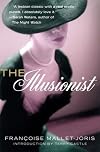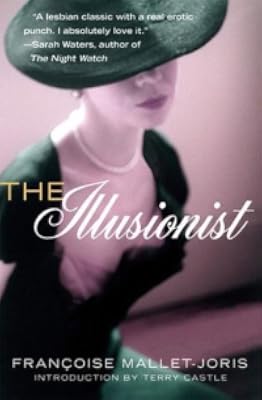
The Illusionist
by Françoise Mallet-Joris
On This Page
Description
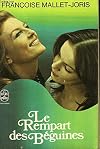
Bored and lonely, 15-year-old Hélène decides to pay a visit to her father's mistress. Within days, she is captivated by Tamara, a Russian émigré whose arts of enchantment include lingering kisses, sudden dismissals, and savage, rapturous reunions. As long as she submits to Tamara, Hélène is permitted to stay near her: reading forbidden novels, meeting Tamara's bohemian friends, and learning more "refinements of depravity" than the gossiping matrons of her provincial French town could show more imagine existed. Flemish writer Françoise Mallet-Joris was 20 years old in 1951 when her first novel, Le Rempart des Beguines - published in English as The Illusionist - created a sensation in France. This contemplative, beautifully written book, with its dark undercurrents of desire, has its origins in Madame Bovary and the novels of Colette, and was a precursor to Françoise Sagan's similarly themed Bonjour Tristesse. show lessTags
Recommendations































Member Reviews
There's nothing especially remarkable about this book except for two things: that the narrator, Helene, is genuinely likeable and that it (uncomfortably and unfortunately) is easier than you would think to really like someone who is aloof and only likes you on her own terms (if she likes you at all.)
If I hadn't personally known what it's like to be attracted to emotionally distant people who are (when you get down to the nitty gritty of it) not worth one second of your suffering over them I might have been more irritated by The Illusionist.
Tamara, the older woman our narrator is hopelessly (and I do mean hopelessly) fascinated and possibly in love with, is a few shades shy of psychotic. She has never quite gotten over her affair with a show more woman named Emily so she takes out most everything that makes her miserable on other people, especially Helene.
Like anyone else who understands that indifference, not hate, is the complete opposite of love, Helene appreciates it more when Tamara treats her badly. Rather than think the older woman just doesn't care, Helene decides she is hurtful so she can "reduce her to despair." Malice is far preferable to nothing.
Tamara is so unpredictable that Helene never knows which version of her she is going to encounter each day: "I wondered if she would have the closed look of her bad days, or the charming look of melancholy which sometimes clouded her eyes, or a smile that I had never seen, but which would be my revenge if I could glimpse it for a moment, that shameless smile of a woman..."
Later on, an understanding and surprisingly sympathetic outsider advises Helene: "Listen, there are people who are in love, miserable and worthy of pity...say what you will, there's nothing very loving and gentle about her."
Sometimes you need an outsider (or maybe a book that speaks to you) to remind you that not everyone is worth falling in love with, no matter how oddly appealing she may be. Easier to listen to than follow, but this kind of advice (so starkly laid out here and with Tamara as such a good example of what not to like) can stand out when you distance yourself a bit from it all. show less
If I hadn't personally known what it's like to be attracted to emotionally distant people who are (when you get down to the nitty gritty of it) not worth one second of your suffering over them I might have been more irritated by The Illusionist.
Tamara, the older woman our narrator is hopelessly (and I do mean hopelessly) fascinated and possibly in love with, is a few shades shy of psychotic. She has never quite gotten over her affair with a show more woman named Emily so she takes out most everything that makes her miserable on other people, especially Helene.
Like anyone else who understands that indifference, not hate, is the complete opposite of love, Helene appreciates it more when Tamara treats her badly. Rather than think the older woman just doesn't care, Helene decides she is hurtful so she can "reduce her to despair." Malice is far preferable to nothing.
Tamara is so unpredictable that Helene never knows which version of her she is going to encounter each day: "I wondered if she would have the closed look of her bad days, or the charming look of melancholy which sometimes clouded her eyes, or a smile that I had never seen, but which would be my revenge if I could glimpse it for a moment, that shameless smile of a woman..."
Later on, an understanding and surprisingly sympathetic outsider advises Helene: "Listen, there are people who are in love, miserable and worthy of pity...say what you will, there's nothing very loving and gentle about her."
Sometimes you need an outsider (or maybe a book that speaks to you) to remind you that not everyone is worth falling in love with, no matter how oddly appealing she may be. Easier to listen to than follow, but this kind of advice (so starkly laid out here and with Tamara as such a good example of what not to like) can stand out when you distance yourself a bit from it all. show less
Very different. Maybe due to period or authors fancy of artistic flaunts. Glad I read, but wont reread.
Ratings
Members
- Recently Added By
Author Information

39+ Works 632 Members
Series
Belongs to Publisher Series
Common Knowledge
- Canonical title*
- Der Nonnenwall
- Original title
- Le Rempart des Beguines
- Alternate titles
- The Loving and The Daring
- Original publication date
- 1952
- First words
- Every evening as soon as the stenographers left, the noise of typewriters, telephones, and banging doors stopped, as though a fountain had been abruptly turned off, and once more I was alone in the silence of my third floor r... (show all)oom under the mansard roof, faced with the tedium of my existence.
- Last words
- (Click to show. Warning: May contain spoilers.)And alone in the darkness, I began to laugh.
*Some information comes from Common Knowledge in other languages. Click "Edit" for more information.
Classifications
Statistics
- Members
- 144
- Popularity
- 227,913
- Reviews
- 2
- Rating
- (3.28)
- Languages
- Danish, English, French, German
- Media
- Paper, Ebook
- ISBNs
- 11
- ASINs
- 11