The Rim of Morning
by William Sloane
On This Page
Description
"In the 1930s, William Sloane wrote two brilliant novels that gave a whole new meaning to cosmic horror. In To Walk the Night, Bark X and his college buddy Jerry Lister, a science whiz, head back to the old alma mater to catch a football game and to visit a cherished professor of astronomy. In the midst of the game, a strange inimical presence seems to grip the entire stadium; after, the two young men discover the body of their professor, consumed by fire; and before long Jerry is married to show more the professor's uncannily beautiful, young widow, Selena, and settled in the Arizona desert, where there's an unobstructed view of the stars--and of the darkness of space. In Edge of Running Water, Julian Blair, a brilliant electrophysicist, has retired to remotest Maine after the death of his beautiful young wife. After living as a recluse for years, he issues an urgent summons to a former student, Richard Sayles, now a well-regarded professor of psychology. At Setauket Point, Sayles finds a house shunned by suspicious locals and under the guard of an unpleasant and uncooperative housekeeper, Mrs. Walters. There is also stunning Anne, Blair's sister-in-law. Meanwhile, Julian, dead to the world, stays locked in his study. The Rim of Morning: two novels about the inescapable link between knowledge and sacrifice, the other, unspeakable, unknowable, unendurable side of the world we think we know. About the silence out there"-- show lessTags
Recommendations











Member Reviews
𝘛𝘰 𝘞𝘢𝘭𝘬 𝘵𝘩𝘦 𝘕𝘪𝘨𝘩𝘵:
“There are some experiences which are alien to everyday life; they are ‘doomed for a certain term to walk the night’ before the mind of man either recognizes them for what they are or dismisses their appearance as fantasy.”
It’s hard to believe this book was written in 1937. It feels far more modern. It’s not hard to believe in the premise, as fantastic is it turns out to be. It is so much better than most modern horror. That’s probably because it’s barely horror, more properly terror, and skirts Sci-Fi and fantasy just enough for the passengers in the speeding car in the desert to catch an ambiguous glimpse of . . . what, exactly? An expression unpins the show more fabric. A misplaced question turns the light of the lamp in the speaker’s direction. An unusual gait hints at alienness or deliberate replication or a different way for all that soft biology to slip and slosh beneath loose skin.
To say I loved this book would be an understatement. It may be unparalleled in its genre—even besting works by Walter Tevis, Heinlein, and Jack Finney. By focusing on character, atmosphere, and subtle details carefully linked like de novo sequencing, the plot can promulgate organically and not be forced to drive the whole story. This latter obligation to blueprint every damn twist and turn in a story is my biggest pet peeve with most Sci-Fi, Fantasy, or Horror, and when I find a rare example that kicks that annoyance in the chops, I latch onto it with full force. The dialogue alone is enough to distinguish this from the glutted pack of novelty-crazed sensationalists. You know, like that warm glow of awareness after you first read Vonnegut’s 𝘊𝘢𝘵’𝘴 𝘊𝘳𝘢𝘥𝘭𝘦 or 𝘚𝘭𝘢𝘶𝘨𝘩𝘵𝘦𝘳𝘩𝘰𝘶𝘴𝘦-𝘍𝘪𝘷𝘦. Wait . . . science fiction can do this? Can be literature? Doesn’t have to kowtow to a fanbase? No need to spoon-feed the puritanical toadies of fan fiction? Canonical fictional universes be damned! I don’t give a fuck how many elvish languages Tolkien created if he didn’t have the good sense to 𝘯𝘰𝘵 show the same damn mountain in the opposite direction when the protagonists turned around to needlessly elongate an already bloated saga. (Yes, I’ve read all the many appendices to TLOTR. Sigh.) Butt-eye-dye-gress . . .
A well-written tale is an achievement in and of itself. A story that hits you emotionally is worth its wait in discarded tissues. A book that makes you pause and contemplate the ramifications is a thing to be hunted. But a work that can sew together all these pieces without a hint of stitching? Sublime. Poetic as diamonds that turn out to be stars having been used by grander beings to drill into distant universes.
“With a single quick motion she stripped her finger of the two rings, the one with the great square emerald in it, and the narrow band of gold with which Jerry had married her, and put them on the table between us. They lay there, bright and beautiful, on the painted iron, and we looked at them. I did not see her go, but the sound of her feet died along the terrace and around the corner of the house.”
𝘛𝘩𝘦 𝘌𝘥𝘨𝘦 𝘰𝘧 𝘙𝘶𝘯𝘯𝘪𝘯𝘨 𝘞𝘢𝘵𝘦𝘳:
“I thought of the shadowy living room, of the river water noiselessly running and running, almost under the sills of its windows. A hundred years and more this house had stood here, alone on the Point. A hundred years of sun and storm, of winters and summers, of dark and light. It was old, but it was not its age that gave me the tight feeling I had in the pit of my stomach.”
This second novel collected in 𝘛𝘩𝘦 𝘙𝘪𝘮 𝘰𝘧 𝘔𝘰𝘳𝘯𝘪𝘯𝘨 is just as remarkable as the first. Remarkable comes from a French word meaning to “take note of”. Alas, these two novels are the only works of fiction I can find by this singular author. And if it hadn’t been for the remarkable series NYRB Classics reprinting the original collection, I’d have had to spend way more money than intended on out-of-print versions—if I’d even heard of the author without the re-release. It’s remarkably sad that there isn’t more from this great, subtle, methodical mind to plumb. Stephen King said it appropriately in his introduction: “ . . . we must be grateful for what we have, which is a splendid rediscovery” since “Sloan takes what he needs from multiple genres, an ability only well-read novelists possess, and makes something new and remarkable from them.” Remarkable. That word again.
Both novels have at their core a warning against digging too deeply into the unknown. Your spade may only strike rocks or bricks or bits of other unknown things. Or, you may come up against a rift in spacetime, sucking that shovel right out of your hand. Maybe you’d clang against an alien spine twisting in the earth. Maybe the horror you’d resurrected and unleashed on the unsuspecting world would be of your own doing—and that would be the greatest horror of them all.
I’d like to think I’ve come close with my own fiction to the subtle yet shining terror in these two novels. Somehow, though, I’ll remain restless and continue to chase that wispy demon. Or maybe it’s chasing me. Whichever the direction, whichever the demon, I’ll ignore that core warning in both of Sloane’s novels and keep on fucking digging. In spadefuls. And hope to have found something nearly as remarkable.
“But the few times when I have tried to imagine what that final moment was like for him, my mind does not picture it quite that way. The funnel of blackness must have grown hideously large by then. Perhaps it filled most of the room, from ceiling to floor. I think Julian may have made no effort to resist it. At least, in the picture of my mind, he is simply walking into it, like a man going through a door . . .” show less
“There are some experiences which are alien to everyday life; they are ‘doomed for a certain term to walk the night’ before the mind of man either recognizes them for what they are or dismisses their appearance as fantasy.”
It’s hard to believe this book was written in 1937. It feels far more modern. It’s not hard to believe in the premise, as fantastic is it turns out to be. It is so much better than most modern horror. That’s probably because it’s barely horror, more properly terror, and skirts Sci-Fi and fantasy just enough for the passengers in the speeding car in the desert to catch an ambiguous glimpse of . . . what, exactly? An expression unpins the show more fabric. A misplaced question turns the light of the lamp in the speaker’s direction. An unusual gait hints at alienness or deliberate replication or a different way for all that soft biology to slip and slosh beneath loose skin.
To say I loved this book would be an understatement. It may be unparalleled in its genre—even besting works by Walter Tevis, Heinlein, and Jack Finney. By focusing on character, atmosphere, and subtle details carefully linked like de novo sequencing, the plot can promulgate organically and not be forced to drive the whole story. This latter obligation to blueprint every damn twist and turn in a story is my biggest pet peeve with most Sci-Fi, Fantasy, or Horror, and when I find a rare example that kicks that annoyance in the chops, I latch onto it with full force. The dialogue alone is enough to distinguish this from the glutted pack of novelty-crazed sensationalists. You know, like that warm glow of awareness after you first read Vonnegut’s 𝘊𝘢𝘵’𝘴 𝘊𝘳𝘢𝘥𝘭𝘦 or 𝘚𝘭𝘢𝘶𝘨𝘩𝘵𝘦𝘳𝘩𝘰𝘶𝘴𝘦-𝘍𝘪𝘷𝘦. Wait . . . science fiction can do this? Can be literature? Doesn’t have to kowtow to a fanbase? No need to spoon-feed the puritanical toadies of fan fiction? Canonical fictional universes be damned! I don’t give a fuck how many elvish languages Tolkien created if he didn’t have the good sense to 𝘯𝘰𝘵 show the same damn mountain in the opposite direction when the protagonists turned around to needlessly elongate an already bloated saga. (Yes, I’ve read all the many appendices to TLOTR. Sigh.) Butt-eye-dye-gress . . .
A well-written tale is an achievement in and of itself. A story that hits you emotionally is worth its wait in discarded tissues. A book that makes you pause and contemplate the ramifications is a thing to be hunted. But a work that can sew together all these pieces without a hint of stitching? Sublime. Poetic as diamonds that turn out to be stars having been used by grander beings to drill into distant universes.
“With a single quick motion she stripped her finger of the two rings, the one with the great square emerald in it, and the narrow band of gold with which Jerry had married her, and put them on the table between us. They lay there, bright and beautiful, on the painted iron, and we looked at them. I did not see her go, but the sound of her feet died along the terrace and around the corner of the house.”
𝘛𝘩𝘦 𝘌𝘥𝘨𝘦 𝘰𝘧 𝘙𝘶𝘯𝘯𝘪𝘯𝘨 𝘞𝘢𝘵𝘦𝘳:
“I thought of the shadowy living room, of the river water noiselessly running and running, almost under the sills of its windows. A hundred years and more this house had stood here, alone on the Point. A hundred years of sun and storm, of winters and summers, of dark and light. It was old, but it was not its age that gave me the tight feeling I had in the pit of my stomach.”
This second novel collected in 𝘛𝘩𝘦 𝘙𝘪𝘮 𝘰𝘧 𝘔𝘰𝘳𝘯𝘪𝘯𝘨 is just as remarkable as the first. Remarkable comes from a French word meaning to “take note of”. Alas, these two novels are the only works of fiction I can find by this singular author. And if it hadn’t been for the remarkable series NYRB Classics reprinting the original collection, I’d have had to spend way more money than intended on out-of-print versions—if I’d even heard of the author without the re-release. It’s remarkably sad that there isn’t more from this great, subtle, methodical mind to plumb. Stephen King said it appropriately in his introduction: “ . . . we must be grateful for what we have, which is a splendid rediscovery” since “Sloan takes what he needs from multiple genres, an ability only well-read novelists possess, and makes something new and remarkable from them.” Remarkable. That word again.
Both novels have at their core a warning against digging too deeply into the unknown. Your spade may only strike rocks or bricks or bits of other unknown things. Or, you may come up against a rift in spacetime, sucking that shovel right out of your hand. Maybe you’d clang against an alien spine twisting in the earth. Maybe the horror you’d resurrected and unleashed on the unsuspecting world would be of your own doing—and that would be the greatest horror of them all.
I’d like to think I’ve come close with my own fiction to the subtle yet shining terror in these two novels. Somehow, though, I’ll remain restless and continue to chase that wispy demon. Or maybe it’s chasing me. Whichever the direction, whichever the demon, I’ll ignore that core warning in both of Sloane’s novels and keep on fucking digging. In spadefuls. And hope to have found something nearly as remarkable.
“But the few times when I have tried to imagine what that final moment was like for him, my mind does not picture it quite that way. The funnel of blackness must have grown hideously large by then. Perhaps it filled most of the room, from ceiling to floor. I think Julian may have made no effort to resist it. At least, in the picture of my mind, he is simply walking into it, like a man going through a door . . .” show less
Classic horror - it's refreshing to read how old-fashioned horror used to take its time building a haunting tone, in lieu of jump-out-to-scare-you moments and gore. The tone in the first book - To Walk the Night - builds slowly but interestingly. The baddy in this one is a woman who carries a creepy aura, but whom no one can explain. By all accounts, she's beautiful and graceful. And has a cold, if dangerously sharp, persona. The men who are drawn to her never last long, dying by their own hand or in inexplicable fashion. A parlor-type tale, suitable for a large fire in the grate and a brandy in the hand to ward off the chill created in the read. This edition has a very nice introduction by Stephen King - follow his advice and read it show more after you read the stories. show less
Subtitled "Two Tales of Cosmic Horror," this volume contains William Sloane's only published novels, "To Walk the Night" (1937) and "The Edge of Running Water" (1939). Both books are beautifully written combinations of science fiction, horror and mystery story, and both generate a palpable sense of dread and uneasiness. They each feel remarkably contemporary, certainly not nearly 90 years old, even though they also provide a glimpse into a time when people relied on train travel and a grown woman wearing pants resulted in negative comments from her friends.
"To Walk the Night" deals with two lifelong friends and roommates who return to their college for a football game and a visit to a favorite professor of astronomy in his observatory. show more But instead of a happy reunion, they discover their professor engulfed in a mysterious fire that burns only his body and nothing else. This leads them to an almost as strange discovery: the professor, a socially backward bachelor completely devoted to his work, leaves behind a young and beautiful widow who seems to have no past before she met and married the professor. The mystery of the locked room death and the widow are the focus of the rest of the book.
"The Edge of Water" is a little more gothic and formal in style. Julian Blair, a brilliant college professor has isolated himself in an old house in Maine, causing suspicion among the conservative townsfolk. He is assisted in his work on a strange electrical device by the mysterious Mrs. Walters, a woman imposing in both will and size. Enter Richard Sayles, a younger professor and friend who has been summoned for some information crucial to Blair's efforts. Blair's lovely niece Anne, visiting for the summer, confides that Blair suffers greatly from the death of his wife five years ago and she fears Blair's device is insanely meant to provide a means to communicate with his lost beloved. When the housekeeper from the town dies mysteriously, the story takes off to solve her death and uncover what Blair has created in his locked lab upstairs.
Both these novels have the cosmic horror theme that the universe is cold and indifferent to us and the more we try to uncover its essential mysteries, the more damage we bring unto ourselves. In addition, both are compulsive and enjoyable reads. show less
"To Walk the Night" deals with two lifelong friends and roommates who return to their college for a football game and a visit to a favorite professor of astronomy in his observatory. show more But instead of a happy reunion, they discover their professor engulfed in a mysterious fire that burns only his body and nothing else. This leads them to an almost as strange discovery: the professor, a socially backward bachelor completely devoted to his work, leaves behind a young and beautiful widow who seems to have no past before she met and married the professor. The mystery of the locked room death and the widow are the focus of the rest of the book.
"The Edge of Water" is a little more gothic and formal in style. Julian Blair, a brilliant college professor has isolated himself in an old house in Maine, causing suspicion among the conservative townsfolk. He is assisted in his work on a strange electrical device by the mysterious Mrs. Walters, a woman imposing in both will and size. Enter Richard Sayles, a younger professor and friend who has been summoned for some information crucial to Blair's efforts. Blair's lovely niece Anne, visiting for the summer, confides that Blair suffers greatly from the death of his wife five years ago and she fears Blair's device is insanely meant to provide a means to communicate with his lost beloved. When the housekeeper from the town dies mysteriously, the story takes off to solve her death and uncover what Blair has created in his locked lab upstairs.
Both these novels have the cosmic horror theme that the universe is cold and indifferent to us and the more we try to uncover its essential mysteries, the more damage we bring unto ourselves. In addition, both are compulsive and enjoyable reads. show less
The two novels contained in The Rim of Morning: Two Tales of Cosmic Horror by William Sloane are surprisingly satisfying. Well-written and displaying a strong command both of style and the standards of the scifi horror genre, these works present an interesting look into the early history of such work.
They function well as science fiction and even better as mysteries and tales of horror.
These novels make me wonder how much influence Mr. Sloane might have had on the genre if he'd continued his career as an author. Instead, he turned away from writing and spent most of his life as an editor and publisher.
In his introduction, Stephen King lauds Mr. Sloane's work as cross-genre, mashing up scifi and horror decades before cross-genre was all show more the rage, as it is today. I think Mr. King is wrong about this.
Science fiction has a long history of finding terror in the territory it explores. Scifi horror stories were incredibly popular in the late '30s. Look also at the mass market pulp magazines of the Golden Age and prior, or the scifi movies on the '40s, '50s, and '60s—there are innumerable tales of monsters and creeping fear in the scifi canon. The fear of technology and aliens, mutated monsters and doomsday weapons, is deeply rooted.
Science pushes us beyond the limits of what we know. It stands to reason that science has long been a focal point for our fear of the unknown. Science has always presented as much threat as opportunity, and scifi has had the pulse of that from the beginning.
Mr. Sloane wasn't creating ahead-of-his-time genre mash-ups with these novels. Rather, his goal was to take the popular scifi horror tales of his time and elevate them to a higher level of literature.
In this, he largely succeeded.
Both novels are well-conceived and plotted, letting the suspense simmer just the right amount of time before the crisis comes to a boil. The Edge of Running Water is notably superior to To Walk the Night, being more confident and commanding in tone and style.
If I'm disappointed by anything in these novels, it's that the climax of The Edge of Running Water strikes me as too small and somewhat anticlimactic. I expected mass destruction and got small-scale ruin, instead. I must keep in mind, though, that my expectations have been conditioned by giant SF movie spectaculars and this novel was written in 1939. The ending was probably sufficiently shocking for its time.
Beyond that, I'm surprised most of all by how well these stories hold up to modern expectations. It's to be expected that the characters occasionally speak and behave in ways that seem dated, and the technology on display is closer to the Steam Age than the Digital Age.
But the works still feel fresh and vibrant. The central themes still resonate. They don't feel stale.
I'm particularly impressed by how Mr. Sloane wrote his female characters. Being works from the late '30s, one expects a certain pre-feminist depiction of women. Instead, he presents women who are smart, strong, and capable. Women who are very much the equal of the men. Women who have personalities as varied as the men. In short—women who are believable people and not just femmes to compliment the men.
Compared to much of the scifi from this era, it puts Mr. Sloane far ahead of his contemporaries.
The Rim of Morning is worth reading for the glimpse it provides into the history of the scifi horror genre.
More importantly, it's worth reading because these novels are good. show less
They function well as science fiction and even better as mysteries and tales of horror.
These novels make me wonder how much influence Mr. Sloane might have had on the genre if he'd continued his career as an author. Instead, he turned away from writing and spent most of his life as an editor and publisher.
In his introduction, Stephen King lauds Mr. Sloane's work as cross-genre, mashing up scifi and horror decades before cross-genre was all show more the rage, as it is today. I think Mr. King is wrong about this.
Science fiction has a long history of finding terror in the territory it explores. Scifi horror stories were incredibly popular in the late '30s. Look also at the mass market pulp magazines of the Golden Age and prior, or the scifi movies on the '40s, '50s, and '60s—there are innumerable tales of monsters and creeping fear in the scifi canon. The fear of technology and aliens, mutated monsters and doomsday weapons, is deeply rooted.
Science pushes us beyond the limits of what we know. It stands to reason that science has long been a focal point for our fear of the unknown. Science has always presented as much threat as opportunity, and scifi has had the pulse of that from the beginning.
Mr. Sloane wasn't creating ahead-of-his-time genre mash-ups with these novels. Rather, his goal was to take the popular scifi horror tales of his time and elevate them to a higher level of literature.
In this, he largely succeeded.
Both novels are well-conceived and plotted, letting the suspense simmer just the right amount of time before the crisis comes to a boil. The Edge of Running Water is notably superior to To Walk the Night, being more confident and commanding in tone and style.
If I'm disappointed by anything in these novels, it's that the climax of The Edge of Running Water strikes me as too small and somewhat anticlimactic. I expected mass destruction and got small-scale ruin, instead. I must keep in mind, though, that my expectations have been conditioned by giant SF movie spectaculars and this novel was written in 1939. The ending was probably sufficiently shocking for its time.
Beyond that, I'm surprised most of all by how well these stories hold up to modern expectations. It's to be expected that the characters occasionally speak and behave in ways that seem dated, and the technology on display is closer to the Steam Age than the Digital Age.
But the works still feel fresh and vibrant. The central themes still resonate. They don't feel stale.
I'm particularly impressed by how Mr. Sloane wrote his female characters. Being works from the late '30s, one expects a certain pre-feminist depiction of women. Instead, he presents women who are smart, strong, and capable. Women who are very much the equal of the men. Women who have personalities as varied as the men. In short—women who are believable people and not just femmes to compliment the men.
Compared to much of the scifi from this era, it puts Mr. Sloane far ahead of his contemporaries.
The Rim of Morning is worth reading for the glimpse it provides into the history of the scifi horror genre.
More importantly, it's worth reading because these novels are good. show less
New York Review Books Classics has just packaged two novels by renowned author, editor and teacher William Sloane into a single offering, The Rim of the Morning: Two Tales of Cosmic Horror. Sloane is not an author I’d previously known, probably due to the fact that these stories are two of only three novels that he ever published. Stephen King contributes a short but impeccable introduction, providing a tight analysis of the stories and windows into Sloane’s background and style. Sloane wrote and edited primarily supernatural mystery/scifi, but is known in literary worlds as a writing teacher.
The first of these novels, To Walk the Night, is a Lovecraftian tale of the investigation into an apparent murder and suicide. This is the show more much stronger of these two stories. It’s a heavy, moody, genre-bending mystery that drips with molasses-dread and alone is worth the full price of the book. The second is The Edge of Running Water, also mystery-based — the tale of an obsessed professor determined to find a way to communicate with his recently departed wife. Each story is about 200 pages long. I’ve reviewed them separately below.
To Walk the Night
A thing of beauty is a joy for ever:
Its loveliness increases; it will never
Pass into nothingness; but still will keep
– From Endymion (A Thing of Beauty) by John Keats
The first story is a weighty and serious scifi/mystery, with Greek tragedy in its tone from the outset. Sloane borrows generously from the myth of Selene, goddess of the moon, who asks Zeus to keep her beautiful human lover, Prince Endymion, forever young. To Walk the Night is suggestive of this myth, though, and not too literal, but it’s fun to catch Sloane’s references to the ancient story sprinkled liberally throughout this novel.
The story opens as our primary narrator, Berkeley (called Bark), journeys to bring his best friend’s ashes home following his suicide. Jerry Lister’s death weighs heavily on Bark, and forms the narrative momentum for the initiation of the story. In many ways, this is a 1930s CSI, as Bark must work back through recent events, piece by piece, to uncover all the details and identify what’s pertinent and relevant to Jerry’s suicide.
Through Bark, Sloane dramatically builds the density and importance of the full backstory and makes clear the dread and imperative nature of the need to find the true reason why Jerry shot himself. Bark reflects on the complexity of events leading up to the suicide and remembers an “atmosphere of strangeness, even of terror, which was so much a part of my life while these events were in progress.”
To Walk the Night feels very gothic: there is a dark and deep polished walnut-tone vibe to Bark’s narration and exposition. The mythological themes are set early, though I only caught the first Selene clue in retrospect, upon reviewing my notes. Not all references are directly related to the story of Selena and Endymion, but the suggestion is always there… sometimes a little deeper under the surface than other times.
Bark dissects his recent trauma as part of a late-night discussion with his informally-adoptive father, Dr. Lister – also Jerry’s father. Bark ponders:
Nothing in life, I think, ordinarily happens in great, thunderous episodes of obvious and romantic force. Life is a series of small things, and most of them mean much or little depending on how the observer thinks of them.
It’s these small things, combined with some larger clues, that feed the narrative and drive the plot.
Bark tells of a visit that he and Jerry made to a former professor — a misunderstood, antisocial, introverted and clearly obsessed scientist (Sloane seems to have been enamored with this character-type). The young men found Professor LeNormand, who had been working late and alone at the campus observatory, on fire and apparently murdered. This is the core mystery around which the remaining narrative revolves.
And it’s at this point that we meet our goddess of the moon: Selena. Selena LeNormand is the professor’s widow and she’s just downright bizarre. In no way does she behave like a normal human, let alone someone who just lost the love of her life. She’s tall, lithe but strong, and thought by many to be the most beautiful woman in the world. Selena’s repeatedly thought of as more than statuesque, but statue-like. Her age is indeterminate, but she’s compared to the “Greek girls in the frieze of the Parthenon.”
Sloane’s writing weeps with loaded language. Language that’s very purposeful in its dramatic flair, while implying things beyond the range of normal human activity:
In the silences that lay between us I heard the bumbling of an insect against the glass of the lamp and the faint slither of water moving on the beach below us.
Instead of doors, he refers to ‘portals’.
There are suggestions of ghosts and that something horrible laying just out of sight. A shooting star “plummets down like a tear of light and vanished in the dark above the Sound.”
Tables are described as altars.
Likewise, the vocabulary reeks of symbolism and weighted meaning. The names, for example: Bark is the strength of the story, and like his namesake, his role is uber-protector of his friend and of that which is normal and sane. Jerry’s actual name is Jeremiah… and like his namesake, the prophet, his role is as a revealer, working to expose the truth of his former mentor. LeNormand was a French tarot reader famous during the reign of Napoleon, and like their namesake, both the professor and Selena are, in their own respects, seers beyond normal human perception.
This is a dark any enjoyable read, with enough literary and narrative weight to stick with the reader days after its completion.
The Edge of Running Water
Like To Walk the Night, the opening chapter of The Edge of Running Water sets the stage for some past dread and draws us into narration looking back across events. The story sends Professor Richard Sayles to a barren coast in Maine where he investigates the scientific shenanigans of his former mentor, Julian Blair. Blair sets the tone:
A year ago it would have seemed to me ridiculous to assume that there are some facts it is better not to know, and even today I do not believe in the bliss of ignorance or the folly of knowledge. But this one thing is best left untouched. It rips the fabric of human existence from throat to hem and leaves us naked to a wind as cold as the space between the stars.
The fringe of that cold touched me once. I know what I am talking about.
Professor Blair has gone off the grid, 1930s-style, to develop a mechanism for speaking with his deceased wife Helen (she of the world-class beauty). Helen, it turns out, was also the focus of Sayles’ own unrequited love. Joining Sayles are Blair’s young sister-in-law Anne, which creates some touching (and awkward) emotional moments, and his assistant/medium, Mrs. Wallace.
Sloane is persistent in the idea that these well-bred foreigners from fancy universities and “cities” are total outsiders in the close-knit society in rural Maine. Sloane is thematically suggestive of the ritual nature that develops throughout the story, as the obsessed professor is positioned as a reclusive high-priest working his voodoo magic with unseen celestial forces. This theme dovetails with Mary Shelly’s Frankenstein in its notions of Prometheus and her doctor’s approach to god-like status. The natives are both awed and horrified by the power and are ultimately driven to violence.
The story is foreshadowing-heavy and melodramatic, and drags at the moments when the narrative becomes a straight-up murder mystery, complete with detectives, and detailed discussion around whose shoe prints could be found in the muddy woods.
Like To Walk the Night, the names in The Edge of Running Water are drenched in meaning: Helen was the beauty and love that motivated men to apparent madness. The locally born housekeeper is Elora Marcy — Elora means ‘foreign’; and ‘Marcy’ is Latin for the Roman god of war, also known as Mars. Marcy’s death is the pivotal point that drives the townspeople from suspicion and fear to violence.
Midway through this story, I was convinced that the plot was leading nowhere, but it grew on me over time. And I wasn’t completely dissatisfied with the conclusion, despite its rather nebulous ending…
While both of these stories are mysteries at their core, neither can be defined as entirely science fiction or horror, but each contains elements of both. King points out that these two novels, apparently Sloane’s only full-length works, were uncommon during an era of pulp science fiction and horror, due to their depth, readability and relative literary prowess.
You’ll note that these stories were each originally published in the 1930s and reflect their era. I lost count of how many ‘highballs’ were ordered and imbibed in To Walk the Night (and, yes, I had to look up what a highball even was). And while women play formative and strong characters in each, there’s a subtle shade of misogyny in the suggestive role of women in society — perhaps not right, but also perhaps not out of place within the context of the time it was written. Also, a lot of people and things were unironically referred to as “swell” (though Sloane, I believe, was using it metaphorically at times as well).
I thoroughly enjoyed To Walk the Night and give that alone a 5-star rating. The Edge of Running Water is a bit meandering and the characters are prone to some stereotypical mystery-novel stupidity, but the tale has stuck with me and I’d give it 3.5 stars. Overall, I rate The Rim of the Morning 4.5 stars. show less
The first of these novels, To Walk the Night, is a Lovecraftian tale of the investigation into an apparent murder and suicide. This is the show more much stronger of these two stories. It’s a heavy, moody, genre-bending mystery that drips with molasses-dread and alone is worth the full price of the book. The second is The Edge of Running Water, also mystery-based — the tale of an obsessed professor determined to find a way to communicate with his recently departed wife. Each story is about 200 pages long. I’ve reviewed them separately below.
To Walk the Night
A thing of beauty is a joy for ever:
Its loveliness increases; it will never
Pass into nothingness; but still will keep
– From Endymion (A Thing of Beauty) by John Keats
The first story is a weighty and serious scifi/mystery, with Greek tragedy in its tone from the outset. Sloane borrows generously from the myth of Selene, goddess of the moon, who asks Zeus to keep her beautiful human lover, Prince Endymion, forever young. To Walk the Night is suggestive of this myth, though, and not too literal, but it’s fun to catch Sloane’s references to the ancient story sprinkled liberally throughout this novel.
The story opens as our primary narrator, Berkeley (called Bark), journeys to bring his best friend’s ashes home following his suicide. Jerry Lister’s death weighs heavily on Bark, and forms the narrative momentum for the initiation of the story. In many ways, this is a 1930s CSI, as Bark must work back through recent events, piece by piece, to uncover all the details and identify what’s pertinent and relevant to Jerry’s suicide.
Through Bark, Sloane dramatically builds the density and importance of the full backstory and makes clear the dread and imperative nature of the need to find the true reason why Jerry shot himself. Bark reflects on the complexity of events leading up to the suicide and remembers an “atmosphere of strangeness, even of terror, which was so much a part of my life while these events were in progress.”
To Walk the Night feels very gothic: there is a dark and deep polished walnut-tone vibe to Bark’s narration and exposition. The mythological themes are set early, though I only caught the first Selene clue in retrospect, upon reviewing my notes. Not all references are directly related to the story of Selena and Endymion, but the suggestion is always there… sometimes a little deeper under the surface than other times.
Bark dissects his recent trauma as part of a late-night discussion with his informally-adoptive father, Dr. Lister – also Jerry’s father. Bark ponders:
Nothing in life, I think, ordinarily happens in great, thunderous episodes of obvious and romantic force. Life is a series of small things, and most of them mean much or little depending on how the observer thinks of them.
It’s these small things, combined with some larger clues, that feed the narrative and drive the plot.
Bark tells of a visit that he and Jerry made to a former professor — a misunderstood, antisocial, introverted and clearly obsessed scientist (Sloane seems to have been enamored with this character-type). The young men found Professor LeNormand, who had been working late and alone at the campus observatory, on fire and apparently murdered. This is the core mystery around which the remaining narrative revolves.
And it’s at this point that we meet our goddess of the moon: Selena. Selena LeNormand is the professor’s widow and she’s just downright bizarre. In no way does she behave like a normal human, let alone someone who just lost the love of her life. She’s tall, lithe but strong, and thought by many to be the most beautiful woman in the world. Selena’s repeatedly thought of as more than statuesque, but statue-like. Her age is indeterminate, but she’s compared to the “Greek girls in the frieze of the Parthenon.”
Sloane’s writing weeps with loaded language. Language that’s very purposeful in its dramatic flair, while implying things beyond the range of normal human activity:
In the silences that lay between us I heard the bumbling of an insect against the glass of the lamp and the faint slither of water moving on the beach below us.
Instead of doors, he refers to ‘portals’.
There are suggestions of ghosts and that something horrible laying just out of sight. A shooting star “plummets down like a tear of light and vanished in the dark above the Sound.”
Tables are described as altars.
Likewise, the vocabulary reeks of symbolism and weighted meaning. The names, for example: Bark is the strength of the story, and like his namesake, his role is uber-protector of his friend and of that which is normal and sane. Jerry’s actual name is Jeremiah… and like his namesake, the prophet, his role is as a revealer, working to expose the truth of his former mentor. LeNormand was a French tarot reader famous during the reign of Napoleon, and like their namesake, both the professor and Selena are, in their own respects, seers beyond normal human perception.
This is a dark any enjoyable read, with enough literary and narrative weight to stick with the reader days after its completion.
The Edge of Running Water
Like To Walk the Night, the opening chapter of The Edge of Running Water sets the stage for some past dread and draws us into narration looking back across events. The story sends Professor Richard Sayles to a barren coast in Maine where he investigates the scientific shenanigans of his former mentor, Julian Blair. Blair sets the tone:
A year ago it would have seemed to me ridiculous to assume that there are some facts it is better not to know, and even today I do not believe in the bliss of ignorance or the folly of knowledge. But this one thing is best left untouched. It rips the fabric of human existence from throat to hem and leaves us naked to a wind as cold as the space between the stars.
The fringe of that cold touched me once. I know what I am talking about.
Professor Blair has gone off the grid, 1930s-style, to develop a mechanism for speaking with his deceased wife Helen (she of the world-class beauty). Helen, it turns out, was also the focus of Sayles’ own unrequited love. Joining Sayles are Blair’s young sister-in-law Anne, which creates some touching (and awkward) emotional moments, and his assistant/medium, Mrs. Wallace.
Sloane is persistent in the idea that these well-bred foreigners from fancy universities and “cities” are total outsiders in the close-knit society in rural Maine. Sloane is thematically suggestive of the ritual nature that develops throughout the story, as the obsessed professor is positioned as a reclusive high-priest working his voodoo magic with unseen celestial forces. This theme dovetails with Mary Shelly’s Frankenstein in its notions of Prometheus and her doctor’s approach to god-like status. The natives are both awed and horrified by the power and are ultimately driven to violence.
The story is foreshadowing-heavy and melodramatic, and drags at the moments when the narrative becomes a straight-up murder mystery, complete with detectives, and detailed discussion around whose shoe prints could be found in the muddy woods.
Like To Walk the Night, the names in The Edge of Running Water are drenched in meaning: Helen was the beauty and love that motivated men to apparent madness. The locally born housekeeper is Elora Marcy — Elora means ‘foreign’; and ‘Marcy’ is Latin for the Roman god of war, also known as Mars. Marcy’s death is the pivotal point that drives the townspeople from suspicion and fear to violence.
Midway through this story, I was convinced that the plot was leading nowhere, but it grew on me over time. And I wasn’t completely dissatisfied with the conclusion, despite its rather nebulous ending…
While both of these stories are mysteries at their core, neither can be defined as entirely science fiction or horror, but each contains elements of both. King points out that these two novels, apparently Sloane’s only full-length works, were uncommon during an era of pulp science fiction and horror, due to their depth, readability and relative literary prowess.
You’ll note that these stories were each originally published in the 1930s and reflect their era. I lost count of how many ‘highballs’ were ordered and imbibed in To Walk the Night (and, yes, I had to look up what a highball even was). And while women play formative and strong characters in each, there’s a subtle shade of misogyny in the suggestive role of women in society — perhaps not right, but also perhaps not out of place within the context of the time it was written. Also, a lot of people and things were unironically referred to as “swell” (though Sloane, I believe, was using it metaphorically at times as well).
I thoroughly enjoyed To Walk the Night and give that alone a 5-star rating. The Edge of Running Water is a bit meandering and the characters are prone to some stereotypical mystery-novel stupidity, but the tale has stuck with me and I’d give it 3.5 stars. Overall, I rate The Rim of the Morning 4.5 stars. show less
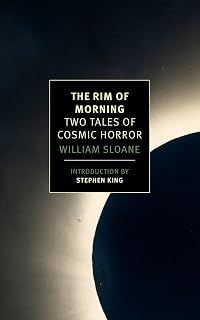
Both tales suffer from the narrator's telling us something awful is coming, but the author's skill as a writer and the old-fashioned 1930s atmosphere makes up for most of the deficit. In the end, the horror behind both of these books has become so much more commonplace since they were written, that it is difficult to appreciate these books for all they are worth. Stephen King, in his introduction--which you should read as an afterword, rightly points out the contrast between how Sloane tells the story and how his contemporary H.P. Lovecraft would have told it. You certainly won't regret reading this. There are a few really nice moments in both stories, and they will definitely take you out of the troubled 21st century. (And personally, show more I find these NYRB covers so entrancing that they probably add a half-star on their own, even when it isn't a physical book I can keep on my shelf with my other NYRB books. But I can do a search on LibraryThing--and don't those covers look great!) show less
About five years ago, I posted a thread in the Name that Book group looking for an old horror novel that I read decades ago. No one responded. I had originally checked out the book from my home town library in the late 70's. It really struck my imagination at the time, and I wanted to reread it. But I couldn't recall the title or author. So what is one to do? The book continued to niggle at the back of my mind.
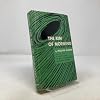
Then a few weeks ago, I read a review of a forthcoming book from the NYRB. I instantly recognized it as the book for which I had been searching. The Rim of Morning by William Sloane. It's an omnibus edition of his only two novels: To Walk the Night and The Edge of Running Water. I checked LibraryThing and recognized the show more distinctive green and black swirling dust jacket of the edition I had originally read. I went to Amazon and preordered it.
This week I've been reading both novels in the omnibus edition. Rereading a book after so many years is a risky proposition. This is especially true for a genre such as horror. So I was anxious to see how my opinion of the book would change. I'm happy to report that I like these books even better after three and half decades! They're unlike any horror novels you'll ever read. They aren't action packed or gory. They're cool, intelligently written stories with a slow paced build up. The horror comes not from some shocking monster, but from the characters facing the cold impersonal terror of the unveiled cosmos. We are the playthings of forces more incomprehensible and powerful than we can imagine. (Well, I guess that can't literally be true in a novel.)
The first novel, To Walk the Night is set in the world of the urbane, witty New York intellectuals of the 1930s. If you can imagine a mashup of H. P. Lovecraft rewritten by Moss Hart and George S. Kaufman, you would have a close approximation to the texture of this novel. You can enjoy the witty banter and cool sophistication of the characters while the realization dawns on them that they're dealing with something beyond their ken.
The second novel, The Edge of Running Water, places the first person narrator (a professor of psychology from a New York university) in a vise between the parochial and suspicious residents of a small Maine town and a cosmic horror unleashed by a former university colleague searching for proof of life after death. Although in his introduction, Stephen King proclaims this to be the more successful of the two novels, I have to disagree. There is a more conventional plot to this story, but it hinges on the unbelievable obtuseness of the narrator. Despite that, the story is compelling and draws you along to its climax. show less
Then a few weeks ago, I read a review of a forthcoming book from the NYRB. I instantly recognized it as the book for which I had been searching. The Rim of Morning by William Sloane. It's an omnibus edition of his only two novels: To Walk the Night and The Edge of Running Water. I checked LibraryThing and recognized the show more distinctive green and black swirling dust jacket of the edition I had originally read. I went to Amazon and preordered it.
This week I've been reading both novels in the omnibus edition. Rereading a book after so many years is a risky proposition. This is especially true for a genre such as horror. So I was anxious to see how my opinion of the book would change. I'm happy to report that I like these books even better after three and half decades! They're unlike any horror novels you'll ever read. They aren't action packed or gory. They're cool, intelligently written stories with a slow paced build up. The horror comes not from some shocking monster, but from the characters facing the cold impersonal terror of the unveiled cosmos. We are the playthings of forces more incomprehensible and powerful than we can imagine. (Well, I guess that can't literally be true in a novel.)
The first novel, To Walk the Night is set in the world of the urbane, witty New York intellectuals of the 1930s. If you can imagine a mashup of H. P. Lovecraft rewritten by Moss Hart and George S. Kaufman, you would have a close approximation to the texture of this novel. You can enjoy the witty banter and cool sophistication of the characters while the realization dawns on them that they're dealing with something beyond their ken.
The second novel, The Edge of Running Water, places the first person narrator (a professor of psychology from a New York university) in a vise between the parochial and suspicious residents of a small Maine town and a cosmic horror unleashed by a former university colleague searching for proof of life after death. Although in his introduction, Stephen King proclaims this to be the more successful of the two novels, I have to disagree. There is a more conventional plot to this story, but it hinges on the unbelievable obtuseness of the narrator. Despite that, the story is compelling and draws you along to its climax. show less
Members
- Recently Added By
Lists

Weird and Weirder Fiction
270 works; 35 members

Books Read in 2018
4,360 works; 110 members
Author Information

12 Works 803 Members
Some Editions
Series
Belongs to Publisher Series
Work Relationships
Common Knowledge
- Canonical title
- The Rim of Morning
- Alternate titles
- The Rim of Morning: Two Tales of Cosmic Horror
- Original publication date
- 1964 (first publication together) (first publication together)
- Blurbers
- King, Stephen
- Canonical DDC/MDS
- 813.54
- Canonical LCC
- PS3537.L59
Classifications
Statistics
- Members
- 446
- Popularity
- 68,549
- Reviews
- 14
- Rating
- (3.78)
- Languages
- English
- Media
- Paper, Ebook
- ISBNs
- 4
- ASINs
- 3