
Thomas Tryon (1) (1926–1991)
Author of The Other
For other authors named Thomas Tryon, see the disambiguation page.
Works by Thomas Tryon
Bobbitt 2 copies
El Cardenal [DVD] 1 copy
Associated Works
Tagged
Common Knowledge
- Other names
- Tryon, Tom
- Birthdate
- 1926-01-14
- Date of death
- 1991-09-04
- Gender
- male
- Education
- Yale University (BA|Art|1949)
- Occupations
- actor
author - Organizations
- United States Navy (1943-1946)
- Cause of death
- stomach cancer
- Nationality
- USA (birth)
- Birthplace
- Hartford, Connecticut, USA
- Places of residence
- Wethersfield, Connecticut, USA
- Place of death
- Los Angeles, California, USA
- Burial location
- Cremated (ashes scattered at sea)
- Map Location
- Connecticut, USA
Members
Discussions
similar to Children of the Corn in Name that Book (January 2012)
Reviews
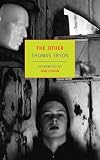
Wow. This is about the most truly horrific thing I have read in a long time. Perhaps ever. But it isn't Lovecraftian horror; the clear antecedent is Shirley Jackson. But she was never so visceral. I'm writing this before I read the afterword to the NYRB edition, because I want to capture my thoughts fresh. This book has one horrific shock after another, although after the first two or three, you realize more are coming, so you are a bit prepared. No spoilers, but the foreshadowing is pretty show more clear in hindsight or even as you are reading. You just don't know exactly how or when the shock will come, but when it does, it still makes you want to put down the book and refresh your drink. The other thing that makes this story about twins very different is the way in which it is told. The narrative voice is certainly unusual in how it shapes the story and resets our expectations. This is a book that you can really spend a long time thinking about afterwards. Horror like this, frankly, has much more impact on me as a reader than Lovecraftian horror, even as much as I love some of Lovecraft's work (particularly The Shadow Over Innsmouth). I recently reviewed the Penguin collection of Thomas Ligotti's first two story collections. They are well written and some are quite clever, but the world they describe isn't real and no amount of nice wordsmithing can make it so. But the events in The Other, no matter how terrible they are, have the aura of truth about them. Again...wow. show less

Please note that I gave this book 4.5 stars and rounded it up to 5 stars on Goodreads.
I read this for Halloween Bingo 2016 and for September's group read for the Horror Aficionados on Goodreads as well as for the Fall Fear Challenge.
Taking place in the early 1970s, a couple (Ned and Beth Constantine) and their young daughter (Kate) move to the small village of Cornwall Coombe in New England.
Told in the first person by Ned, we have him at first charmed and then dismayed by the village of show more Cornwall Coombe. Ned starts to ask questions about people who have come before, what in the world happened to a young girl that made her kill herself, and why is Harvest Home (a celebration that occurs) so essential to the village.
Ned is an aspiring painter, and his artistic bent is seen as setting him apart and a little above from the village full of farmers and farmers wives. However, after a while, Ned is seen as being a busy body who wants to meddle in things best left alone.
I did love the character of Ned, though after a while even I was like, dude, come on, stop. He kept pushing and pushing and digging into things because in his mind, even though he was a new comer, he saw the village and inhabitants as backwards except for a few friends he made (the Widow, his next door neighbors, and a young man who helps him out around his new home) and I think in his mind, if he could pry the mystery off of the village, then things would be better. That he could make the village more align with what he wanted for it. Ned gets spooked early on in the book by a young girl that the village claims can see into the future and from then on he seems to be running from a fate that he ends up bringing about.
What made me laugh, and ultimately what made the ending so satisfying, is that Ned really didn't think things through. He seemed to think that people didn't know what was going on and why. And though he was a man and was used to being in charge and decisive, it made him uncomfortable to see his wife and daughter growing apart from him, and women being in charge of this village.
I was fascinated by so many characters, and could have read about this village for hours. To see how Tyron tied a village in America, back to England, and even then back to something else I thought was pretty smart.
The writing was top notch throughout. The main reason why I didn't give this five stars though is that the book starts off slow (I mean really slow) and it takes a good long while before things start going. I think most readers would not even see this as a horror book at first because you start to feel after a while you are just reading about the day to day happenings in a small New England village and that's for a good 80 percent of the book before things take a turn.
The setting of Cornwall Coombe was perfectly done. I like how Tyron showed a town that was content to stay in the past and not change and how he throughout the story showed that change was going to come one way or another (he brings up a nearby commune, more and more young people wanting to move to New York and get away, one of the younger people in the village buying a tractor) to the village, and now my mind wonders about this fictional town and did it survive after the conclusion to the story. Could they go on with what they were doing or would they eventually have to move on from the old ways.
The ending answered so many questions and you know realize why one man in the town was reluctant to do much to help Ned. It would have been great to read a sequel and see how the town had gone on 7 years from the ending of this novel.
I can definitely see why it is a horror classic, and I really did enjoy this one a lot. show less
I read this for Halloween Bingo 2016 and for September's group read for the Horror Aficionados on Goodreads as well as for the Fall Fear Challenge.
Taking place in the early 1970s, a couple (Ned and Beth Constantine) and their young daughter (Kate) move to the small village of Cornwall Coombe in New England.
Told in the first person by Ned, we have him at first charmed and then dismayed by the village of show more Cornwall Coombe. Ned starts to ask questions about people who have come before, what in the world happened to a young girl that made her kill herself, and why is Harvest Home (a celebration that occurs) so essential to the village.
Ned is an aspiring painter, and his artistic bent is seen as setting him apart and a little above from the village full of farmers and farmers wives. However, after a while, Ned is seen as being a busy body who wants to meddle in things best left alone.
I did love the character of Ned, though after a while even I was like, dude, come on, stop. He kept pushing and pushing and digging into things because in his mind, even though he was a new comer, he saw the village and inhabitants as backwards except for a few friends he made (the Widow, his next door neighbors, and a young man who helps him out around his new home) and I think in his mind, if he could pry the mystery off of the village, then things would be better. That he could make the village more align with what he wanted for it. Ned gets spooked early on in the book by a young girl that the village claims can see into the future and from then on he seems to be running from a fate that he ends up bringing about.
What made me laugh, and ultimately what made the ending so satisfying, is that Ned really didn't think things through. He seemed to think that people didn't know what was going on and why. And though he was a man and was used to being in charge and decisive, it made him uncomfortable to see his wife and daughter growing apart from him, and women being in charge of this village.
I was fascinated by so many characters, and could have read about this village for hours. To see how Tyron tied a village in America, back to England, and even then back to something else I thought was pretty smart.
The writing was top notch throughout. The main reason why I didn't give this five stars though is that the book starts off slow (I mean really slow) and it takes a good long while before things start going. I think most readers would not even see this as a horror book at first because you start to feel after a while you are just reading about the day to day happenings in a small New England village and that's for a good 80 percent of the book before things take a turn.
The setting of Cornwall Coombe was perfectly done. I like how Tyron showed a town that was content to stay in the past and not change and how he throughout the story showed that change was going to come one way or another (he brings up a nearby commune, more and more young people wanting to move to New York and get away, one of the younger people in the village buying a tractor) to the village, and now my mind wonders about this fictional town and did it survive after the conclusion to the story. Could they go on with what they were doing or would they eventually have to move on from the old ways.
The ending answered so many questions and you know realize why one man in the town was reluctant to do much to help Ned. It would have been great to read a sequel and see how the town had gone on 7 years from the ending of this novel.
I can definitely see why it is a horror classic, and I really did enjoy this one a lot. show less

An artist moves his family to a small Connecticut town, where he discovers horrific secrets behind the quaint harvest rituals.
Granted, Harvest Home is a schlocky horror novel published in the 1970s. However, the fear of women expressed in the novel, and the resulting hatred of them, is so palpable that reading it felt icky. I wanted to wash my hands each time I turned the page. The story presents women as unfathomable to men, and ultimately violent toward and oppressive of them. Women are show more linked to an ancient mother Earth force that imbues them with the power to do whatever they want, despite the objections of some of the male characters. One of the "horrors" of the story is when the male protagonist loses control over his wife and daughter, and they begin acting independently to fulfill their needs and desires. In this book, women are the “other,” portrayed as essentially different and opposed to men, wrong where men are right. This worldview just doesn't do it for me. Women are neither mysterious and unknowable goddesses, nor are they automatons only meant for sex, reproduction and raising children. Furthermore, the "twists" are completely predictable. This book was a disappointing follow-up to The Other. show less
Granted, Harvest Home is a schlocky horror novel published in the 1970s. However, the fear of women expressed in the novel, and the resulting hatred of them, is so palpable that reading it felt icky. I wanted to wash my hands each time I turned the page. The story presents women as unfathomable to men, and ultimately violent toward and oppressive of them. Women are show more linked to an ancient mother Earth force that imbues them with the power to do whatever they want, despite the objections of some of the male characters. One of the "horrors" of the story is when the male protagonist loses control over his wife and daughter, and they begin acting independently to fulfill their needs and desires. In this book, women are the “other,” portrayed as essentially different and opposed to men, wrong where men are right. This worldview just doesn't do it for me. Women are neither mysterious and unknowable goddesses, nor are they automatons only meant for sex, reproduction and raising children. Furthermore, the "twists" are completely predictable. This book was a disappointing follow-up to The Other. show less
I watched this film 45 years ago and it terrified me. For nearly 50 years it has stuck with me and planted dark slithering things in my mind. I was only five years old and worked the fields with my family and that association with those evil people has never left. The book is an incredibly well measured and put together story. A slow...very slow build up of something that you know is going to come not out of the dark, but out of the very souls of those surrounding you. I do not want to give show more away the plot by any means, but if someone tells you to mind your own business...guess what? DO IT. The characters are real and well written, The main character Ned, really seems like a good guy but he has not he common sense to just shut his mouth. The story will draw you in and the inhabitants of the village will make sure you stay there. show less
Lists
1970s (4)
Five star books (1)
AP Lit (1)
Autumn books (1)
discontinued (1)
Summer Books (1)
Books with Twins (1)
Gen X Library (1)
Connecticut (2)
Strange Towns (2)
1970s Horror (2)
Favourite Books (1)
Awards


You May Also Like


Associated Authors
Statistics
- Works
- 16
- Also by
- 8
- Members
- 4,217
- Popularity
- #5,958
- Rating
- 3.7
- Reviews
- 85
- ISBNs
- 115
- Languages
- 8
- Favorited
- 9


