On This Page
Description
On a fine autumn weekend, Lord Aveling hosts a hunting party at his country house, Bragley Court. Among the guests are an actress, a journalist, an artist, and a mystery novelist. The unlucky thirteenth is John Foss, injured at the local train station and brought to the house to recuperate--but John is nursing a secret of his own. Soon events take a sinister turn when a painting is mutilated, a dog stabbed, and a man strangled. Death strikes more than one of the house guests, and the police show more are called. Detective Inspector Kendall's skills are tested to the utmost as he tries to uncover the hidden past of everyone at Bragley Court. This country-house mystery is a forgotten classic of 1930s crime fiction by one of the most undeservedly neglected of golden age detective novelists. show lessTags
Recommendations















Member Reviews
Surprisingly wonderful old-fashioned country house mystery originally published in 1936. Poisoned Pen Press in Scottsdale, Arizona, in association with the British Library, has been giving new life to some heretofore forgotten mysteries from the Golden Age. Unfortunately, some of them are best forgotten, as I discovered after purchasing another, less traditional mystery by Farjeon which just didn't cut it. This one, however, is stellar, everything you'd ever want in a country house mystery, including some wit and charm, more than one death, and a romance between John and Anne which is classic. I loved this, and it explains why Farjeon was so respected in his day. Great fun in the very old-fashion - and best - sense of mystery reading show more fun. Highly recommended for fans of Christie, Alingham, Wentworth and Marsh. show less
Social climbing Lord and Lady Aveling are holding a house party at Bragley Court on this fine, fall weekend. As one might expect in England during the late 1930’s, the guests travel down by Friday’s trains, the one around noon, the one mid-afternoon (in time for tea) and the last pulling in just before six. On the surface, it’s an interesting assemblage. There’s the political entity whose loyalties Aveling hopes to sway. There’s the commercial entity -- another potential alliance to be forged. There’s the actress, hoping that someone will agree to back a play for her, the strikingly lovely widow, and the gushing author with the hyphenated surname, personally responsible for a host of bad novels. There’s the sought-after show more portrait painter and the jaded gossip columnist. The daughter of the house too has her suitors, anxious to know where they stand. Just as in Downton Abbey, marriage and financial wherewithal go together.
Also at the station, two other arrivals make their presence known. There’s the klutz who gets his foot caught while descending from the train to the platform, and the sinister lurker who merely “observes”.
Sadly, in the context of this final stag hunt of the season, it takes less than 24 hours for two bodies to be found on the estate. Naturally, this invokes a further level of repressed anxiety on the visitors. The weekend gathering won’t appear in the society columns for the “right” reasons, but more embarrassingly for reasons of uncomfortable scandal. But of course, the guests can’t depart as they might wish until Inspector Kendall has found out the secrets of those responsible.
This Golden Age Mystery -- Thirteen Guests by J. Jefferson Farjeon -- has a certain psychological heaviness. There’s no sense of coziness here -- just a growing discomfort as the thirteen guests gather in small groups of three or two, eyeing their fellows across the china tea cups in the pink-and-white drawing room.
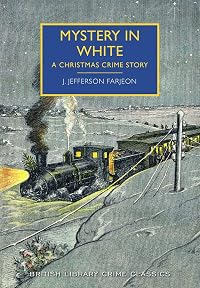
The novel is a convoluted tale that requires a tremendously complex unraveling at the end, but it is also an intriguing presentation that succeeds as a different style of classic “Country House” mystery fiction. This novel predates Farjeon’s lighter Mystery in White that was so popular last year, and it is very different in structure and approach. While personally not a purist in these matters, let me note that Farjeon did break one of the famous Detection Club “rules” (http://www.the-line-up.com/the-detection-club-rules/) and he broke at least one of S.S. Van Dine’s set of 20 rules (http://gaslight.mtroyal.ab.ca/vandine.htm) for writing detective fiction. That said, I think Thirteen Guests was an early attempt to render the emotional agonies and social discomforts that can provoke murderous thoughts and actions. The question is not whether a human being is capable of murder, but rather which anxiety-ridden misfit is sufficiently motivated to override existing taboos against it. Of those attending the Avelings’ weekend house party, there are more secretive candidates than you might think. But don’t misunderstand -- this is still a bit of entertainment and not a modern psychological examination . By which I mean that it is probably safe to read this one at bedtime. show less
Also at the station, two other arrivals make their presence known. There’s the klutz who gets his foot caught while descending from the train to the platform, and the sinister lurker who merely “observes”.
Sadly, in the context of this final stag hunt of the season, it takes less than 24 hours for two bodies to be found on the estate. Naturally, this invokes a further level of repressed anxiety on the visitors. The weekend gathering won’t appear in the society columns for the “right” reasons, but more embarrassingly for reasons of uncomfortable scandal. But of course, the guests can’t depart as they might wish until Inspector Kendall has found out the secrets of those responsible.
This Golden Age Mystery -- Thirteen Guests by J. Jefferson Farjeon -- has a certain psychological heaviness. There’s no sense of coziness here -- just a growing discomfort as the thirteen guests gather in small groups of three or two, eyeing their fellows across the china tea cups in the pink-and-white drawing room.
The novel is a convoluted tale that requires a tremendously complex unraveling at the end, but it is also an intriguing presentation that succeeds as a different style of classic “Country House” mystery fiction. This novel predates Farjeon’s lighter Mystery in White that was so popular last year, and it is very different in structure and approach. While personally not a purist in these matters, let me note that Farjeon did break one of the famous Detection Club “rules” (http://www.the-line-up.com/the-detection-club-rules/) and he broke at least one of S.S. Van Dine’s set of 20 rules (http://gaslight.mtroyal.ab.ca/vandine.htm) for writing detective fiction. That said, I think Thirteen Guests was an early attempt to render the emotional agonies and social discomforts that can provoke murderous thoughts and actions. The question is not whether a human being is capable of murder, but rather which anxiety-ridden misfit is sufficiently motivated to override existing taboos against it. Of those attending the Avelings’ weekend house party, there are more secretive candidates than you might think. But don’t misunderstand -- this is still a bit of entertainment and not a modern psychological examination . By which I mean that it is probably safe to read this one at bedtime. show less
In Thirteen Guests, first published in 1936, disillusioned John Foss suffers a fall from a railway train when alighting in a small Suffolk town and, thanks to an exquisitely beautiful but mysterious young widow, gets spirited to a grand country house, Bragley Court, to recover. There, Foss finds himself in the midst of a weekend stag-hunting party, one of 13 guests. He finds, in addition to the alluring widow Nadine Leveridge, an affable baron with a wandering eye as host, the baron’s high-strung daughter, two cynics — a painter and a gossip columnist, a conceited lady detective novelist, the shady Mr. Chater and his nervous wife, a jumped-up sausage magnate and his wife and unappealing daughter, and several other fleshed-out show more characters.
In author J. Farjeon’s deft hands, what could have been a stagnant variation on the country-house murder turns instead into a suspenseful murder mystery and a wonderful character study. Thirteen Guests may be my first Joseph Jefferson Farjeon novel, but it won’t be my last. Farjeon, although nearly forgotten these days, was so popular in his heyday as a playwright and novelist that no less a luminary than Dorothy L. Sayers called him “quite unsurpassed for creepy skill in mysterious adventures.” While Thirteen Guests isn’t particularly creepy, readers will find it an expertly crafted example of a Golden Age crime novel. And that ending! Magnificent!
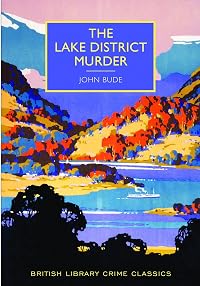
British Library’s Poisoned Pen Press has been steadily bringing back Golden Age crime classics, such as this one by J. (Joseph Jefferson) Farjeon. Some of the reprintings have been a delight, for example, reintroducing John Bude and his The Lake District Murder and The Sussex Downs Murder to modern audiences. Some were not really worth reviving. (I mean, of course, The Notting Hill Mystery, written Charles Warren Adams under the pen name Charles Felix. While The Notting Hill Mystery (1865) is the first detective novel, predating both Émile Gaboriau’s L'affaire Lerouge (1866) and Wilkie Collins’ The Moonstone (1868), its value today is mostly for academics and history buffs.) With Thirteen Guests, Poisoned Pen Press has provided a real gift to readers who weren’t even born yet when the novel was still in print. Here’s hoping that they will reprint the dozens of novels Farjeon penned. After this wonderful introduction to Farjeon, I can’t wait to read the next one!
In the interest of full disclosure, I received this book from NetGalley and Poisoned Pen Press in exchange for an honest review. show less
In author J. Farjeon’s deft hands, what could have been a stagnant variation on the country-house murder turns instead into a suspenseful murder mystery and a wonderful character study. Thirteen Guests may be my first Joseph Jefferson Farjeon novel, but it won’t be my last. Farjeon, although nearly forgotten these days, was so popular in his heyday as a playwright and novelist that no less a luminary than Dorothy L. Sayers called him “quite unsurpassed for creepy skill in mysterious adventures.” While Thirteen Guests isn’t particularly creepy, readers will find it an expertly crafted example of a Golden Age crime novel. And that ending! Magnificent!
British Library’s Poisoned Pen Press has been steadily bringing back Golden Age crime classics, such as this one by J. (Joseph Jefferson) Farjeon. Some of the reprintings have been a delight, for example, reintroducing John Bude and his The Lake District Murder and The Sussex Downs Murder to modern audiences. Some were not really worth reviving. (I mean, of course, The Notting Hill Mystery, written Charles Warren Adams under the pen name Charles Felix. While The Notting Hill Mystery (1865) is the first detective novel, predating both Émile Gaboriau’s L'affaire Lerouge (1866) and Wilkie Collins’ The Moonstone (1868), its value today is mostly for academics and history buffs.) With Thirteen Guests, Poisoned Pen Press has provided a real gift to readers who weren’t even born yet when the novel was still in print. Here’s hoping that they will reprint the dozens of novels Farjeon penned. After this wonderful introduction to Farjeon, I can’t wait to read the next one!
In the interest of full disclosure, I received this book from NetGalley and Poisoned Pen Press in exchange for an honest review. show less
Ein misslicher Unfall beim Aussteigen aus dem Zug, als er beinahe seinen Halt verpasst hätte, bringt John Foss auf das Anwesen Bragley Court von Lord Aveling, der dort eine illustre Jagdgesellschaft versammelt hat. Zwölf Gäste waren geplant und wie jeder weiß, bringt ein dreizehnter Gast Unglück. Und so kommt es auch, denn nicht nur wird ein Gemälde des berühmten Künstler Leicester Pratt zerstört, sondern auch ein Hund getötet, bevor – wie nunmehr zu erwarten – auch noch ein Mord geschieht. Dem ungebetenen und durch die Fußverletzung immobilen Gast bleibt nichts anderes übrig, als das Treiben im Haus zu beobachten und passiv die Ereignisse zu verfolgen. Doch seinem Scharfsinn entgeht nichts und er kann geschickt die show more Puzzleteile zusammenfügen.
Joseph Jefferson Farjeon was ein englischer Kriminalautor und Theaterschreiber, der vor allem durch die Geschichten um Detective X. Crook bekannt wurde, die in dem Magazin „Flynn’s Weekly Detective Fiction“ des ehemaligen FBI Chefs William James Flynn erschienen. „Thirteen Guests“ erschien erstmals 1936 und steht in bester Tradition klassischer britischer Krimis wie etwa der Lord Peter Wimsey Serie von Dorothy L. Sayers oder natürlich der Queen of Crime, Agatha Christie.
Der Krimi folgt einem bekannten Muster: ein abgeschiedener Ort im schottischen Nirgendwo; eine geschlossene Gemeinschaft, die sich mehr oder weniger gut kennt, aber natürlich ihre Geheimnisse hat; ein quasi außenstehender Beobachter und natürlich ein Mord, der aufgeklärt werden muss. Dabei leisten Hobbydetetktive wie hier ein Journalist und der Künstler ebenso ihren Beitrag wie all diejenigen, die gerne etwas vertuschen würden. Am Ende kommt der große Showdown, nachdem der Ermittler die Gäste separierte, um sie einzeln zu verhören, und dann alle losen Enden miteinander zu verbinden und den Täter zu präsentieren. Allerdings schenkt Frajeon dem Leser noch zwei Kapitel, die die Geschichte nochmals in einem anderen Licht erscheinen lassen.
Natürlich sind Krimis aus der Entstehungszeit von „Dreizehn Gäste“ nicht mit heutigen zu vergleichen, die Erzählstruktur, das Figurenpersonal, das Erzähltempo und auch die detailreichen Schilderungen von Mord und Leiche unterscheiden sich nennenswert, weshalb es schlichtweg unfair wäre, den Roman daran zu messen. Als Fan auch der alten Storys, die vorzugsweise in der britischen Oberschicht spielen und auf ganz klassischen Motiven basieren, bei denen dem Leser im Laufe der Handlung kleine Andeutungen gemacht werden, die er hoffentlich nicht übersieht, um so seine eigenen Ermittlungen zu leiten, konnte mich Farjeon mit einem sauberen Krimi überzeugen, der auch sprachlich passend etwas angestaubt wirkt und einen subtil-ironischen Ton pflegt. show less
Joseph Jefferson Farjeon was ein englischer Kriminalautor und Theaterschreiber, der vor allem durch die Geschichten um Detective X. Crook bekannt wurde, die in dem Magazin „Flynn’s Weekly Detective Fiction“ des ehemaligen FBI Chefs William James Flynn erschienen. „Thirteen Guests“ erschien erstmals 1936 und steht in bester Tradition klassischer britischer Krimis wie etwa der Lord Peter Wimsey Serie von Dorothy L. Sayers oder natürlich der Queen of Crime, Agatha Christie.
Der Krimi folgt einem bekannten Muster: ein abgeschiedener Ort im schottischen Nirgendwo; eine geschlossene Gemeinschaft, die sich mehr oder weniger gut kennt, aber natürlich ihre Geheimnisse hat; ein quasi außenstehender Beobachter und natürlich ein Mord, der aufgeklärt werden muss. Dabei leisten Hobbydetetktive wie hier ein Journalist und der Künstler ebenso ihren Beitrag wie all diejenigen, die gerne etwas vertuschen würden. Am Ende kommt der große Showdown, nachdem der Ermittler die Gäste separierte, um sie einzeln zu verhören, und dann alle losen Enden miteinander zu verbinden und den Täter zu präsentieren. Allerdings schenkt Frajeon dem Leser noch zwei Kapitel, die die Geschichte nochmals in einem anderen Licht erscheinen lassen.
Natürlich sind Krimis aus der Entstehungszeit von „Dreizehn Gäste“ nicht mit heutigen zu vergleichen, die Erzählstruktur, das Figurenpersonal, das Erzähltempo und auch die detailreichen Schilderungen von Mord und Leiche unterscheiden sich nennenswert, weshalb es schlichtweg unfair wäre, den Roman daran zu messen. Als Fan auch der alten Storys, die vorzugsweise in der britischen Oberschicht spielen und auf ganz klassischen Motiven basieren, bei denen dem Leser im Laufe der Handlung kleine Andeutungen gemacht werden, die er hoffentlich nicht übersieht, um so seine eigenen Ermittlungen zu leiten, konnte mich Farjeon mit einem sauberen Krimi überzeugen, der auch sprachlich passend etwas angestaubt wirkt und einen subtil-ironischen Ton pflegt. show less
Over the course of an autumn day, a dozen guests representing a sampling of the British elite arrive at the country house of Lord Aveling, an aspiring Conservative politician. To their number is added John Foss, whose ankle sprain compels one of the guests to offer him lodging while he recuperates. His hobbled state leaves him a witness to developments, as clandestine late-night encounters suggest secrets held by many of the people in the house. Thus, when bodies start to appear the next day, Foss is an idea witness for Detective-Inspector Kendall, who must compare stories and uncover clues in an effort to discern who among the assembled party is guilty of murder.
With the initial murders not occurring until well over a third of the way show more into the book, J. Jefferson Farjeon offers his readers a mystery that takes its time to coalesce. The preceding pages are not wasted, though, as he spends it introducing his cast of characters and hinting at the secrets they hold. Once the bodies start dropping, though, the pace picks up quickly as Kendall and his able sidekick Sergeant Price work to discover motive, means and opportunity. While Farjeon's ending is somewhat unusual for a murder mystery, its value is cheapened somewhat by the convoluted result which is designed to provide a degree of moral absolution for the characters involved. It detracts from what is otherwise an enjoyable novel that demonstrates why Farjeon deserves a far wider audience than he has enjoyed since his heyday. show less
With the initial murders not occurring until well over a third of the way show more into the book, J. Jefferson Farjeon offers his readers a mystery that takes its time to coalesce. The preceding pages are not wasted, though, as he spends it introducing his cast of characters and hinting at the secrets they hold. Once the bodies start dropping, though, the pace picks up quickly as Kendall and his able sidekick Sergeant Price work to discover motive, means and opportunity. While Farjeon's ending is somewhat unusual for a murder mystery, its value is cheapened somewhat by the convoluted result which is designed to provide a degree of moral absolution for the characters involved. It detracts from what is otherwise an enjoyable novel that demonstrates why Farjeon deserves a far wider audience than he has enjoyed since his heyday. show less
Originally published in 1936 this British Crime Classic has all the elements we expect from a country house mystery. Twelve guests are invited for a weekend at a country manor. When a stranger is injured on the train platform one of the guests, the beautiful Mrs. Leveridge, insists he come with her to the manor where he is kindly welcomed and looked after. That means of course that there is now the unlucky number of 13 guests. Mrs. Leveridge and the stranger, John Foss, have fun watching the front door to see who the last guest to enter will be.
The doctor decides Foss needs to stay off his foot for a few days and is placed in a small room off the main hallway and next to the drawing-room. From there he is a witness to the comings and show more goings of the guests and to their conversations. Later when it becomes likely that one of the guests is a murderer, his observations will be a valuable resource.
I liked this Farjeon, it's my third of the 80 novels he wrote! Although the plot becomes rather convoluted and we don’t really know what happened until the inspector gives a summary, I liked it and have no reason not to read more by him. show less
The doctor decides Foss needs to stay off his foot for a few days and is placed in a small room off the main hallway and next to the drawing-room. From there he is a witness to the comings and show more goings of the guests and to their conversations. Later when it becomes likely that one of the guests is a murderer, his observations will be a valuable resource.
I liked this Farjeon, it's my third of the 80 novels he wrote! Although the plot becomes rather convoluted and we don’t really know what happened until the inspector gives a summary, I liked it and have no reason not to read more by him. show less
... And Then There Were Twelve
Review of the Poisoned Pen Press paperback (2015) of the British Library Crime Classics reprint (2015) of the original hardcover (1936)
J. Jefferson Farjeon (1883-1955) put the British Library Crime Classics imprint on the map with the breakthrough renaissance of his Mystery in White (orig. 1937 / reprint 2014) which became a posthumous bestseller. Thirteen Guests somewhat follows the same setup of the weekend country house getaway, although the guests are not isolated by a snowstorm and the setting is not during the winter holiday season.
The number of guests, combined with those of the household and then later the police, might make you think this was going to be a complicated affair. Each person did have show more enough of an individual character via personality, profession or even just a quirky name, to help distinguish them. I had no trouble following the different types (some stereotyped of course e.g. the journalist, the artist, the actress, etc.) along with the clues and the red herrings.
The solution was harder to come by and relied on several key pieces of information being held back until the climax, particularly the identity of an initially anonymous 'fourteenth' visitor who appears early but who is not explained until much later. There is a nice twist ending where, although Inspector Kendall solves the crime and the mysteries to his satisfaction, he is not made aware of a random occurrence which determined the fate of one of the characters. A tacked-on romance at the very end was completely unnecessary, but was probably required due to the conventions of the era.
Overall, Thirteen Guests was a nice cozy mystery read from the Golden Age of Crime, even if it didn't breakthrough into 4 or 5 star territory. This continues my tradition in recent years to read some British Library Crime Classic mysteries or anthologies every Christmas/New Year time.
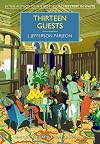
See poster at http://www.artnet.com/WebServices/images/ll00206lld42eGFgbNECfDrCWvaHBOcpvmC/nic...
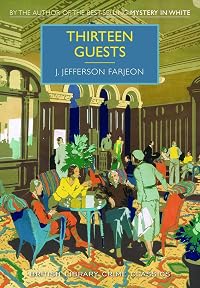
A vintage Cruden Bay Hotel, Aberdeenshire tourism poster (1928), the source of the cover image for "Thirteen Guests." Image sourced from ArtNet
Trivia and Link
The British Library Crime Classic series are reprints of forgotten titles mostly from the 1920's & 1930's, which the series describes as the "Golden Age of Crime". They are up to over 100 titles now (as of early 2022) and you can see a list at the British Library Shop (for North America they are reprinted by the publisher Poisoned Pen Press). There is also a British Library Crime Classics Goodreads Listopia. show less
Review of the Poisoned Pen Press paperback (2015) of the British Library Crime Classics reprint (2015) of the original hardcover (1936)
J. Jefferson Farjeon (1883-1955) put the British Library Crime Classics imprint on the map with the breakthrough renaissance of his Mystery in White (orig. 1937 / reprint 2014) which became a posthumous bestseller. Thirteen Guests somewhat follows the same setup of the weekend country house getaway, although the guests are not isolated by a snowstorm and the setting is not during the winter holiday season.
The number of guests, combined with those of the household and then later the police, might make you think this was going to be a complicated affair. Each person did have show more enough of an individual character via personality, profession or even just a quirky name, to help distinguish them. I had no trouble following the different types (some stereotyped of course e.g. the journalist, the artist, the actress, etc.) along with the clues and the red herrings.
The solution was harder to come by and relied on several key pieces of information being held back until the climax, particularly the identity of an initially anonymous 'fourteenth' visitor who appears early but who is not explained until much later. There is a nice twist ending where, although Inspector Kendall solves the crime and the mysteries to his satisfaction, he is not made aware of a random occurrence which determined the fate of one of the characters. A tacked-on romance at the very end was completely unnecessary, but was probably required due to the conventions of the era.
Overall, Thirteen Guests was a nice cozy mystery read from the Golden Age of Crime, even if it didn't breakthrough into 4 or 5 star territory. This continues my tradition in recent years to read some British Library Crime Classic mysteries or anthologies every Christmas/New Year time.
See poster at http://www.artnet.com/WebServices/images/ll00206lld42eGFgbNECfDrCWvaHBOcpvmC/nic...
A vintage Cruden Bay Hotel, Aberdeenshire tourism poster (1928), the source of the cover image for "Thirteen Guests." Image sourced from ArtNet
Trivia and Link
The British Library Crime Classic series are reprints of forgotten titles mostly from the 1920's & 1930's, which the series describes as the "Golden Age of Crime". They are up to over 100 titles now (as of early 2022) and you can see a list at the British Library Shop (for North America they are reprinted by the publisher Poisoned Pen Press). There is also a British Library Crime Classics Goodreads Listopia. show less
Members
- Recently Added By
Lists

#JustTheFacts2019Gold
59 works; 1 member
#MysteryBingo2019Gold(Original)
36 works; 1 member
#MysteryBingo2019Gold(Revised)
36 works; 1 member

Next in Series
85 works; 1 member

Books Read in 2022
5,226 works; 115 members

Books Read in 2024
4,727 works; 128 members

Books Read in 2026
2,133 works; 70 members
Author Information

78+ Works 1,940 Members
Some Editions
Series

Belongs to Publisher Series
Collins Crime Club (White Circle No. 58)
British Library Crime Classics (Novel)
Common Knowledge
- Canonical title
- Thirteen Guests
- Alternate titles
- Uninvited Guests
- Original publication date
- 1936
- People/Characters
- Inspector Kendall
- First words
- Every station has a special voice.
- Original language
- English
Classifications
Statistics
- Members
- 363
- Popularity
- 87,077
- Reviews
- 20
- Rating
- (3.65)
- Languages
- English, French, German
- Media
- Paper, Audiobook, Ebook
- ISBNs
- 13
- ASINs
- 11