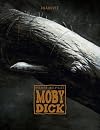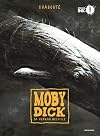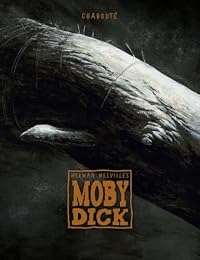
Moby Dick (Graphic Novel)
by Chabouté (Author, Adaptor), Herman Melville (Source Author)
On This Page
Description
A masterful adaptation of the timeless literary classic, faithfully and beautifully rendered by an award-winning artist. In striking black-and-white illustrations, Chabouté retells the story of the Great American Novel. Captain Ahab strikes out on a voyage, obsessively seeking revenge on the great white whale that took his leg. This hardcover edition collects both of the Vents d'Ouest volumes, printed in English for the first time.Tags
Recommendations


















Member Recommendations

Member Reviews
It's been a while since I read Moby-Dick and, though I liked it a lot I am unlikely to read it again (so many books, so little time). But a graphic novel edition? Yes, please! It was a treat to get a refresher in the form of a book I could finish in one sitting, as well as reintroductions to the characters and overall narrative arc. I would have preferred an illustration style that was a bit less stark, but a lack of color is arguably a fitting artistic choice.
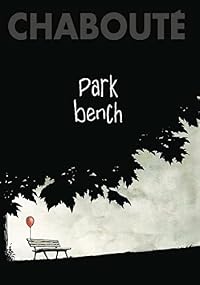
I spent the entire summer after I graduated high school forcing myself to read the Moby Dick novel. It was a dreadful experience, and like the compulsive need to pick at a scab, I keep picking up the inevitable graphic novel adaptations that come out every five years or so to revisit the pain. I was hoping Chaboute would lean toward a mostly wordless adaptation like his [b:The Park Bench|32951507|The Park Bench|Christophe Chabouté|https://images.gr-assets.com/books/1499336598s/32951507.jpg|53580167] GN, but he still included sentences that seem to come directly from the novel, and each time I came across one, I felt sickened.
Chaboute probably does a decent adaptation, but I just cannot be impartial enough to judge that separate from show more the source material. show less
Chaboute probably does a decent adaptation, but I just cannot be impartial enough to judge that separate from show more the source material. show less
Fastest Moby Dick ever, with amazing black and white images capturing a lot of what makes this book special.
It renders the story to its essence and in pictures saves a thousand words.
Il capolavoro di Hermann Melville trova un’ottima trasposizione nella nona arte con il “Moby Dick” di Chabouté. La rappresentazione dell’autore francese è intensa, forte, i volti, sempre in piano, molto espressivi. La potenza della natura contro l’ostinazione dell’uomo, da un lato la balena bianca che incarna la forza dell’oceano e dall’altro il capitano Achab che non accetta di essere sottomesso ad un animale. Il racconto si svolge quasi integralmente sul Pequod, in una dimensione sempre tragica, eroica, l’epilogo, noto al lettore ma anche ai marinai e allo stesso capitano, scontato. Ma l’uomo combatte ciò contro cui non può combattere, il tratto intenso dell’autore francese non fa che rendere ancora più show more evidente l’inesorabilità del destino che attende Achab e il suo equipaggio. L’uomo non accetta di essere parte della natura e di doversi adeguare alle sue regole e il tentativo del capitano di vendicare l’onta subita, una sconfitta, da parte di una creatura considerata inferiore è paragonabile alla posizione dei padroni rispetto agli schiavi ribelli. Ma così non è e non sarà. Il bianco e nero di Chabouté è perfetto nel dettare i ritmi del racconto che funziona benissimo, pochi grigi, buono e cattivo, nessuno spazio per le sfumature. E la fine della storia, la grande balena bianca che porta con sé il suo nemico verso la profondità del mare è rappresentativa della capacità dell’autore francese di trasporre benissimo la storia di Melville. Ottimo lavoro. show less
Dec 27, 2024Italian
Broeiende adaptatie, die vol inzet op de waanzin van Ahab, dik en vettig ingekleurd. Jammer (maar evengoed verdedigbaar) is dat enkele sleutelscènes 'ontbreken' en dat Chabouté niet de variatie in stijlregisters van Melville nastreeft. Het resultaat mag er evenwel zijn. Deze bewerking staat er vanaf de eerste pagina, en overtuigt zowel als een op zich staand werk als als een respectvolle verbeelding van het origineel.
Jun 7, 2017Dutch
Moby Dick é um verdadeiro triunfo do premiado artista francês Christophe Chabouté, aclamada como a mais impressionante adaptação desse clássico da literatura para os quadrinhos. A epopeia do obcecado capitão Ahab em busca do cachalote branco é recontada de forma magistral pelas mãos de um mestre, que optou por conservar o texto original de Herman Melville, transformando-o numa primorosa narrativa gráfica. Prepare-se para a emocionante caçada à maior das criaturas do mar, ao lado do narrador Ismael, do misterioso aborígene Queequeg e de uma tripulação que oferece o próprio sangue para seu capitão em troca da promessa de glória e ouro, sem saber que, na verdade, o que os aguarda é a desgraça e o infortúnio!
Sep 8, 2019Portuguese (Brazil)
Members
- Recently Added By
Lists

Pipoca & Nanquim
138 works; 2 members
Author Information


Herman Melville (August 1, 1819 - September 28, 1891) was born into a seemingly secure, prosperous world, a descendant of prominent Dutch and English families long established in New York State. That security vanished when first, the family business failed, and then, two years later, in young Melville's thirteenth year, his father died. Without show more enough money to gain the formal education that professions required, Melville was thrown on his own resources and in 1841 sailed off on a whaling ship bound for the South Seas. His experiences at sea during the next four years were to form in part the basis of his best fiction. Melville's first two books, Typee (1846) and Omoo (1847), were partly romance and partly autobiographical travel books set in the South Seas. Both were popular successes, particularly Typee, which included a stay among cannibals and a romance with a South Sea maiden. During the next several years, Melville published three more romances that drew upon his experiences at sea: Redburn (1849) and White-Jacket (1850), both fairly realistic accounts of the sailor's life and depicting the loss of innocence of central characters; and Mardi (1849), which, like the other two books, began as a romance of adventure but turned into an allegorical critique of contemporary American civilization. Moby Dick (1851) also began as an adventure story, based on Melville's experiences aboard the whaling ship. However, in the writing of it inspired in part by conversations with his friend and neighbor Hawthorne and partly by his own irrepressible imagination and reading of Shakespeare and other Renaissance dramatists Melville turned the book into something so strange that, when it appeared in print, many of his readers and critics were dumbfounded, even outraged. By the mid-1850s, Melville's literary reputation was all but destroyed, and he was obliged to live the rest of his life taking whatever jobs he could find and borrowing money from relatives, who fortunately were always in a position to help him. He continued to write, however, and published some marvelous short fiction pieces Benito Cereno" (1855) and "Bartleby, the Scrivener" (1853) are the best. He also published several volumes of poetry, the most important of which was Battle Pieces and Aspects of the War (1866), poems of occasionally great power that were written in response to the moral challenge of the Civil War. His posthumously published work, Billy Budd (1924), on which he worked up until the time of his death, became Melville's last significant literary work, a brilliant short novel that movingly describes a young sailor's imprisonment and death. Melville's reputation, however, rests most solidly on his great epic romance, Moby Dick. It is a difficult as well as a brilliant book, and many critics have offered interpretations of its complicated ambiguous symbolism. Darrel Abel briefly summed up Moby Dick as "the story of an attempt to search the unsearchable ways of God," although the book has historical, political, and moral implications as well. Melville died at his home in New York City early on the morning of September 28, 1891, at age 72. The doctor listed "cardiac dilation" on the death certificate. He was interred in the Woodlawn Cemetery in The Bronx, New York, along with his wife, Elizabeth Shaw Melville. (Bowker Author Biography) show less

Herman Melville has a Legacy Library. Legacy libraries are the personal libraries of famous readers, entered by LibraryThing members from the Legacy Libraries group.
Some Editions
Work Relationships
Contains
Is an adaptation of
Common Knowledge
- Canonical title
- Moby Dick (Graphic Novel) (Graphic Novel)
- Original title
- Herman Melville's Moby Dick (Graphic Novel) (Graphic Novel)
- Original publication date
- 2014-01-15
- First words
- Let the most absent-minded of men be plunged in his deepest reveries—stand that man on his legs, set his feet a-going, and he will infallibly lead you to water...
- Last words
- (Click to show. Warning: May contain spoilers.)Call me Ishmael.
- Disambiguation notice*
- This is the Omnibus edition contaning the two books that adapt Moby Dick to comics. Please, don't combine it with other versions of this book.
*Some information comes from Common Knowledge in other languages. Click "Edit" for more information.
Classifications
- Genres
- Graphic Novels & Comics, Teen
- DDC/MDS
- 741.5 — Arts & recreation Drawing & decorative arts Drawing Comic books, graphic novels, fotonovelas, cartoons, caricatures, comic strips
- LCC
- PN6747 .C426 .M6313 — Language and Literature Literature (General) Literature (General) Collections of general literature Comic books, strips, etc.
- BISAC
Statistics
- Members
- 83
- Popularity
- 382,057
- Reviews
- 7
- Rating
- (3.82)
- Languages
- 6 — Czech, English, French, German, Italian, Portuguese (Brazil)
- Media
- Paper, Ebook
- ISBNs
- 8
- ASINs
- 1