On This Page
Description
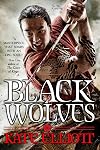
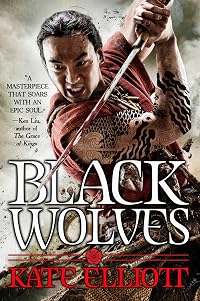
Some choices can never be undone. He lost his honor long ago. Captain Kellas was lauded as the king's most faithful servant until the day he failed in his duty. Dismissed from service, his elite regiment disbanded, he left the royal palace and took up another life. Now a battle brews within the palace that threatens to reveal deadly secrets and spill over into open war. The king needs a loyal soldier to protect him. Can a disgraced man ever be trusted?Tags
Recommendations



Member Reviews
Black Wolves. Where to start? Several friends recommended this book to me, so I figured it was about time I picked it up and gave it a read. This is the first Kate Elliott novel I've read, and I promise I'm not exaggerating when I say I've realized I am missing out. It may seem daunting--coming in at 780 pages--but it reads smoothly and quickly. It's so engaging and well-paced on every single page.
The book starts with a story that sets up the plot. We're introduced to several of the major players--especially Captain Kellas and the princess, Dannarah--and then advance to 44 years later. Dannarah's nephew is king and the whole situation of the kingdom has changed. Part of me wants to describe all of the various players and subplots that show more are going on a this point, but I really, really don't want to spoil anything. The story is so wonderfully written, and the reveals of the various twists and turns are so magnificent, I don't want to steal their thunder.
I'll suffice it to say that if you're a fan of epic fantasy, I think you'll enjoy this one. There's also a bit of mystery, intrigue, betrayal, and all the other trappings that make any story about nobility transcend setting. And some incredibly complex and strong characters. Pick this one up and check it out! show less
The book starts with a story that sets up the plot. We're introduced to several of the major players--especially Captain Kellas and the princess, Dannarah--and then advance to 44 years later. Dannarah's nephew is king and the whole situation of the kingdom has changed. Part of me wants to describe all of the various players and subplots that show more are going on a this point, but I really, really don't want to spoil anything. The story is so wonderfully written, and the reveals of the various twists and turns are so magnificent, I don't want to steal their thunder.
I'll suffice it to say that if you're a fan of epic fantasy, I think you'll enjoy this one. There's also a bit of mystery, intrigue, betrayal, and all the other trappings that make any story about nobility transcend setting. And some incredibly complex and strong characters. Pick this one up and check it out! show less
Let the rating read 4.5
This book came as a surprise. The scope and complexity of the plot were an order of magnitude greater than what I had imagined either from the blurb (which is totally inaccurate) as well as the initial chapters.
Kate Elliott has gotten quite a few things right in this book. She has constructed a very interesting and varied cast of characters, she has built a complex, layered and interesting world, she tells her fascinating story through an intricate and detailed plot - but what surpasses all of these is the way she has presented all of these things to the reader.
There are no clumsy infodumps. On the contrary there is along drawn out, gradual, delicate seeping of information about the characters, history and world show more - through flashbacks, memories, passing statements, hints - the charm of this process is that the more you read the larger and more complex everything seems and earlier assumptions about the book are called into question. As a diehard fan of Malazan which exemplifies the non-infodump approach, I cannot but admire the delicate intricacy through which Elliott has constructed her narrative.
There are things in there which I should have or came close to disliking. The story is about how a more or less egalitarian society in terms of gender and religion is regressing into an authoritarian and unequal one. Its very sad to read, and sometimes I did wonder if all the political machinations were really necessary where some bladework and blood might have simplified things. Also I am a bit allergic to "woman uses intelligence and non-conventional resources to steer her way in an unequal setting" trope as I believe gender equality gives the characters and their actions greater scope, but the compelling unfolding narrative kept me hooked throughout.
This book is highly recommended. show less
This book came as a surprise. The scope and complexity of the plot were an order of magnitude greater than what I had imagined either from the blurb (which is totally inaccurate) as well as the initial chapters.
Kate Elliott has gotten quite a few things right in this book. She has constructed a very interesting and varied cast of characters, she has built a complex, layered and interesting world, she tells her fascinating story through an intricate and detailed plot - but what surpasses all of these is the way she has presented all of these things to the reader.
There are no clumsy infodumps. On the contrary there is along drawn out, gradual, delicate seeping of information about the characters, history and world show more - through flashbacks, memories, passing statements, hints - the charm of this process is that the more you read the larger and more complex everything seems and earlier assumptions about the book are called into question. As a diehard fan of Malazan which exemplifies the non-infodump approach, I cannot but admire the delicate intricacy through which Elliott has constructed her narrative.
There are things in there which I should have or came close to disliking. The story is about how a more or less egalitarian society in terms of gender and religion is regressing into an authoritarian and unequal one. Its very sad to read, and sometimes I did wonder if all the political machinations were really necessary where some bladework and blood might have simplified things. Also I am a bit allergic to "woman uses intelligence and non-conventional resources to steer her way in an unequal setting" trope as I believe gender equality gives the characters and their actions greater scope, but the compelling unfolding narrative kept me hooked throughout.
This book is highly recommended. show less
Review from The Speculative Herald: http://www.speculativeherald.com/2015/11/23/review-black-wolves-by-kate-elliott/
Black Wolves may be a daunting read as it is a massive book and I know sometimes readers are deterred by that. The thing is, though, it is also a massively impressive book. Scaling it down would be a disservice to the story and quite honestly the story deserves to be read. I have not formulated my ‘best of the year’ list, but I can tell you this book will appear on it as it is easily one of the best epic fantasies I have read recently.
I have not read any books by Kate Elliott before. This is evidently placed in the same world as some of her other series, but features a completely new set of characters. So for anyone show more wondering if you need to read her previous books prior to this, I would tell you I felt great about reading experience despite having read none of the other books set in this world.
Rarely have I read a book where the timing and execution of flashback scenes has worked so well with tension/suspense. The integration of these scenes was incredibly well executed. Initially, we are introduced to Kellas, a daring young man who has just completed and unclimable climb without assistance. Actually, it was an impulsive act of defiance and self indulgence as he rather recklessly decided to ignore the laws and climb the mountain, just because he was sure he could. And he did. That decision and the resulting fallout completely changes Kellas’ life. While he is being tried by the King, we also get a glimpse of a young Dannarah, the King’s daughter.
The King decides to show mercy and rather than sentence Kellas to death, as is the known punishment for the climb, he sees an opportunity to use Kellas’ skills and drive for his own benefit by placing him in an elite military group. Dannarah is a spirited girl that you can quickly tell would thrive best outside of her expected role as a princess (which would usually be the role of marrying off for a political alliance). The story spans decades of these characters’ lives and we can see how they grow as people, yet still possess that spirit that we glimpsed in their youth.
I quickly was enamored by both of these characters and so I have to confess to a moment of disappointment when the story takes a 40 year jump in time. I was just invested and attached to these young people and hence I was a bit reluctant to switch gears. However, it did not take long at all before I was just as caught up in events unfolding in the new time period. I also think I felt a stronger connection to both Kellas and Dannarah, who are now aged past their prime, than I would have without that initial opening. It’s not that I wouldn’t be capable of enjoying them as much, I just feel that what we read in the opening gives such a clear and definitive picture of them in their youth and sets their characters up for their path down the road.
In relation to the time jumps, I can be very sensitive to spoilers, feeling they can remove some level of suspense. I always want to get the story how the author decides to tell it. That is the point, after all. But often I think flashbacks don’t work for me because of the knowledge I have about the future (similar to spoilers you may run across from other readers). But in this I craved the details for that skipped over time despite knowing information on “the future”. There are many critical events that take place 20 years after our initial introduction, 20 years prior to the current time after the timeline jump. I loved getting to piece together that part of the story as we went. And how this pieces together turns out to be quite relevant in the current timeline as well.
Characters are so important, and I know there are complaints about the lack of solid female characters in epic fantasy. This book gives us several. In addition to Dannarah, we also are introduced to Sarai in the newer timeline. A bold, impulsive decision forever changes the course of her life, and I have to confess to having a serious soft spot for her. There are also some characters that play a lesser role in the novel, but are incredibly strong, interesting and fun women. To be honest, I hope to see more of at least one of them in the future books.
My chief complaint is really that I have to wait for the next one to be published. Hands down one of my favorite fantasy books of the year and makes me feel perhaps I should explore more of Kate Elliott’s books. show less
Black Wolves may be a daunting read as it is a massive book and I know sometimes readers are deterred by that. The thing is, though, it is also a massively impressive book. Scaling it down would be a disservice to the story and quite honestly the story deserves to be read. I have not formulated my ‘best of the year’ list, but I can tell you this book will appear on it as it is easily one of the best epic fantasies I have read recently.
I have not read any books by Kate Elliott before. This is evidently placed in the same world as some of her other series, but features a completely new set of characters. So for anyone show more wondering if you need to read her previous books prior to this, I would tell you I felt great about reading experience despite having read none of the other books set in this world.
Rarely have I read a book where the timing and execution of flashback scenes has worked so well with tension/suspense. The integration of these scenes was incredibly well executed. Initially, we are introduced to Kellas, a daring young man who has just completed and unclimable climb without assistance. Actually, it was an impulsive act of defiance and self indulgence as he rather recklessly decided to ignore the laws and climb the mountain, just because he was sure he could. And he did. That decision and the resulting fallout completely changes Kellas’ life. While he is being tried by the King, we also get a glimpse of a young Dannarah, the King’s daughter.
The King decides to show mercy and rather than sentence Kellas to death, as is the known punishment for the climb, he sees an opportunity to use Kellas’ skills and drive for his own benefit by placing him in an elite military group. Dannarah is a spirited girl that you can quickly tell would thrive best outside of her expected role as a princess (which would usually be the role of marrying off for a political alliance). The story spans decades of these characters’ lives and we can see how they grow as people, yet still possess that spirit that we glimpsed in their youth.
I quickly was enamored by both of these characters and so I have to confess to a moment of disappointment when the story takes a 40 year jump in time. I was just invested and attached to these young people and hence I was a bit reluctant to switch gears. However, it did not take long at all before I was just as caught up in events unfolding in the new time period. I also think I felt a stronger connection to both Kellas and Dannarah, who are now aged past their prime, than I would have without that initial opening. It’s not that I wouldn’t be capable of enjoying them as much, I just feel that what we read in the opening gives such a clear and definitive picture of them in their youth and sets their characters up for their path down the road.
In relation to the time jumps, I can be very sensitive to spoilers, feeling they can remove some level of suspense. I always want to get the story how the author decides to tell it. That is the point, after all. But often I think flashbacks don’t work for me because of the knowledge I have about the future (similar to spoilers you may run across from other readers). But in this I craved the details for that skipped over time despite knowing information on “the future”. There are many critical events that take place 20 years after our initial introduction, 20 years prior to the current time after the timeline jump. I loved getting to piece together that part of the story as we went. And how this pieces together turns out to be quite relevant in the current timeline as well.
Characters are so important, and I know there are complaints about the lack of solid female characters in epic fantasy. This book gives us several. In addition to Dannarah, we also are introduced to Sarai in the newer timeline. A bold, impulsive decision forever changes the course of her life, and I have to confess to having a serious soft spot for her. There are also some characters that play a lesser role in the novel, but are incredibly strong, interesting and fun women. To be honest, I hope to see more of at least one of them in the future books.
My chief complaint is really that I have to wait for the next one to be published. Hands down one of my favorite fantasy books of the year and makes me feel perhaps I should explore more of Kate Elliott’s books. show less
Trigger Warning: Rape
This may be my favorite read yet from Kate Elliott, and I have the feeling that this trilogy will become one of my all time epic fantasy series. If non-Western epic fantasy with loads of ladies who do things sounds like something you’d like, then you need to read Black Wolves.
The first hundred pages of Black Wolves introduce many of the central characters, but everything then changes after a forty-four year time skip. King Anjihosh saved the Hundred from demons and conquered it in the process. The story starts with Kellas, a captain of the Black Wolves, the king’s elite unit of soldiers and spies. The king’s son, Atani, learns of a family secret and soon after disappears. Kellas is tasked with his retrieval. show more The first section ends soon after. In the time skip, Atani both became king and was murdered on one fateful night still shrouded in questions and mysteries. Now Atani’s son is king, and he fears that no one around him can be trusted. His aunt Dannarah enlists a now elderly Kellas to return to safeguard her nephew and his kingdom.
However, Kellas is just one of many protagonists, all of whom have their own storylines. Dannarah is a Marshel of the Reeves, an ancient military order who’s members are chosen by and bonded to giant eagles. Under her nephew’s rule, she’s seen her power diminish, and she fears for the Reeves as a whole and their traditions.
Lifka is the adopted daughter of a poor carter, who just wants to help her family survive. But the Hundred’s conquerors have become increasingly oppressive of the native culture as the generations have worn on, and new taxes, religious mandates, and forced labor endangers her family. On top of all that, Lifka might just be one of those orphans who has a secret past…
The last couple of major characters are a couple in fact — Gilaras and Sarai, two young people who end up (from her own design in Sarai’s case) in an arranged marriage. Gilaras’s father betrayed Atani, and the family seeks an alliance with a wealthy merchant clan to stay a float. Sarai’s people usually do not marry outsiders… but Sarai is mixed race and has never been fully accepted by her own family members. She’s spent her entire life inside the family’s rural compound, and she wants out. Her girlfriend’s already left, so there’s not much left for her besides spending her days cataloging plants and growing old. When she sees the chance of an escape, she jumps at it.
I was not expecting the time skip at all. I was pretty confused for the first hundred pages! I kept looking at the back of the book and being like, “This doesn’t fit at all what’s happening?” Of course it didn’t. The back blurb was describing events forty-four years later! It was an unusual choice for Kate Elliott to make, and I don’t know how much I liked it. I think it led to Black Wolves having a slower start than it might have otherwise, and I’m not sure it was entirely necessary. On the other hand, it was interesting to have the characters and my assumptions about them shift so radically from one page to the next. Dannarah went from a naive teenage girl to a mature leader, and Kellas went from a young badass male lead to, well, a badass grandpa.
I actually really liked all of these characters. Plus there were some great supporting cast members as well! There’s so many women doing things and being generally amazing… and they interact with other women doing things. Women doing things and interacting with other women isn’t a high bar, but it’s something a lot of fantasy series fail at. Black Wolves gloriously passes that bar.
And the cast of characters is diverse in many different aspects. The majority of the cast are POC and all of the POV characters are. The culture seems to have been based on East Asia but it’s original enough that I can’t pick out any specific influences. Oh, and Sarai is bisexual! Her culture doesn’t allow women to meet with unrelated men before they’re married, but since she’s bi that doesn’t stop her from having a romantic and sexual relationship before she enters into the arranged marriage with Gil. This had the bonus effect of putting her and Gil on more equal footing since they both came in with some prior relationship experience.
Actually, I think Gil and Sarai’s relationship was one of the best arranged marriage plotlines I’ve seen. I tend to hate these plotlines. You know how they go. There’s some naive young woman who has no experience with men or marriage who is suddenly married off (usually unwillingly) to a handsome and super worldly man who is in a more powerful position than her. Of course, he tends to turn out to be the embodiment of perfection and she falls in love with him. Black Wolves changes the equation. Sarai is in her early twenties, not particularly naive, and arranges the marriage herself. Plus, she retains control of all the financial assets she brings to the marriage, so she’s not helpless in comparison to Gil.
I really enjoyed Black Wolves. It just has so much of what I want from fantasy. A world that feels unique and tangible, characters I love, and a plot I find exciting. And I’m going to reiterate this point: it has loads of ladies doing things and some of them are queer. Basically, Black Wolves is everything I love in the fantasy genre wrapped into one awesome package. I’m sure I’ll be recommending this one a ton in the future, and I can’t wait until Kate Elliott releases the next book. It’s slated for spring 2018 and it can’t come out soon enough!
Originally posted on The Illustrated Page. show less
This may be my favorite read yet from Kate Elliott, and I have the feeling that this trilogy will become one of my all time epic fantasy series. If non-Western epic fantasy with loads of ladies who do things sounds like something you’d like, then you need to read Black Wolves.
The first hundred pages of Black Wolves introduce many of the central characters, but everything then changes after a forty-four year time skip. King Anjihosh saved the Hundred from demons and conquered it in the process. The story starts with Kellas, a captain of the Black Wolves, the king’s elite unit of soldiers and spies. The king’s son, Atani, learns of a family secret and soon after disappears. Kellas is tasked with his retrieval. show more The first section ends soon after. In the time skip, Atani both became king and was murdered on one fateful night still shrouded in questions and mysteries. Now Atani’s son is king, and he fears that no one around him can be trusted. His aunt Dannarah enlists a now elderly Kellas to return to safeguard her nephew and his kingdom.
However, Kellas is just one of many protagonists, all of whom have their own storylines. Dannarah is a Marshel of the Reeves, an ancient military order who’s members are chosen by and bonded to giant eagles. Under her nephew’s rule, she’s seen her power diminish, and she fears for the Reeves as a whole and their traditions.
Lifka is the adopted daughter of a poor carter, who just wants to help her family survive. But the Hundred’s conquerors have become increasingly oppressive of the native culture as the generations have worn on, and new taxes, religious mandates, and forced labor endangers her family. On top of all that, Lifka might just be one of those orphans who has a secret past…
The last couple of major characters are a couple in fact — Gilaras and Sarai, two young people who end up (from her own design in Sarai’s case) in an arranged marriage. Gilaras’s father betrayed Atani, and the family seeks an alliance with a wealthy merchant clan to stay a float. Sarai’s people usually do not marry outsiders… but Sarai is mixed race and has never been fully accepted by her own family members. She’s spent her entire life inside the family’s rural compound, and she wants out. Her girlfriend’s already left, so there’s not much left for her besides spending her days cataloging plants and growing old. When she sees the chance of an escape, she jumps at it.
I was not expecting the time skip at all. I was pretty confused for the first hundred pages! I kept looking at the back of the book and being like, “This doesn’t fit at all what’s happening?” Of course it didn’t. The back blurb was describing events forty-four years later! It was an unusual choice for Kate Elliott to make, and I don’t know how much I liked it. I think it led to Black Wolves having a slower start than it might have otherwise, and I’m not sure it was entirely necessary. On the other hand, it was interesting to have the characters and my assumptions about them shift so radically from one page to the next. Dannarah went from a naive teenage girl to a mature leader, and Kellas went from a young badass male lead to, well, a badass grandpa.
I actually really liked all of these characters. Plus there were some great supporting cast members as well! There’s so many women doing things and being generally amazing… and they interact with other women doing things. Women doing things and interacting with other women isn’t a high bar, but it’s something a lot of fantasy series fail at. Black Wolves gloriously passes that bar.
And the cast of characters is diverse in many different aspects. The majority of the cast are POC and all of the POV characters are. The culture seems to have been based on East Asia but it’s original enough that I can’t pick out any specific influences. Oh, and Sarai is bisexual! Her culture doesn’t allow women to meet with unrelated men before they’re married, but since she’s bi that doesn’t stop her from having a romantic and sexual relationship before she enters into the arranged marriage with Gil. This had the bonus effect of putting her and Gil on more equal footing since they both came in with some prior relationship experience.
Actually, I think Gil and Sarai’s relationship was one of the best arranged marriage plotlines I’ve seen. I tend to hate these plotlines. You know how they go. There’s some naive young woman who has no experience with men or marriage who is suddenly married off (usually unwillingly) to a handsome and super worldly man who is in a more powerful position than her. Of course, he tends to turn out to be the embodiment of perfection and she falls in love with him. Black Wolves changes the equation. Sarai is in her early twenties, not particularly naive, and arranges the marriage herself. Plus, she retains control of all the financial assets she brings to the marriage, so she’s not helpless in comparison to Gil.
I really enjoyed Black Wolves. It just has so much of what I want from fantasy. A world that feels unique and tangible, characters I love, and a plot I find exciting. And I’m going to reiterate this point: it has loads of ladies doing things and some of them are queer. Basically, Black Wolves is everything I love in the fantasy genre wrapped into one awesome package. I’m sure I’ll be recommending this one a ton in the future, and I can’t wait until Kate Elliott releases the next book. It’s slated for spring 2018 and it can’t come out soon enough!
Originally posted on The Illustrated Page. show less
I ended up marathoning through the last half of this, until at 5 AM I had to admit I didn't know what those little black marks were anymore, because I was certain, CERTAIN, that I could see terrible things about to happen just around the corner. OK around the next corner. Well around this next one for sure.... Oh. That's not what I was expecting.
A great book in all its death flag defiance (until not) (maybe) and old people kicking butt and then just catching their breath for a minute it's fine. I vaguely remembered points from the Crossroads books, and want to read them again now, but I think it'd be fine to come cold into this one.
A great book in all its death flag defiance (until not) (maybe) and old people kicking butt and then just catching their breath for a minute it's fine. I vaguely remembered points from the Crossroads books, and want to read them again now, but I think it'd be fine to come cold into this one.
The Hundreds is an attractive piece of worldbuilding—on the northeast coast of a continent separated by mountain ranges and deserts from other lands, the Four Mothers and seven Gods set up 9 Guardians to give justice, and the Goddess of Beasts established the reeves who travel suspended from giant eagles and administer justice.
But from the first, in Spirit Gate, The Hundreds is in danger—from some of its own Guardians—and while the first trilogy deals with the initial problem, it sets the stage for the religion and misogynistic culture from the Sirniakan Empire south of The Hundreds to make the inroads it has in this book through the queen and her priests.
So we never see more than fading fragments of what The Hundreds would have show more been like, but it's the entire reason we should care about what the characters do.
Unlike Spirit Gate, none of the other books have characters to care about as much or more than The Hundreds. show less
But from the first, in Spirit Gate, The Hundreds is in danger—from some of its own Guardians—and while the first trilogy deals with the initial problem, it sets the stage for the religion and misogynistic culture from the Sirniakan Empire south of The Hundreds to make the inroads it has in this book through the queen and her priests.
So we never see more than fading fragments of what The Hundreds would have show more been like, but it's the entire reason we should care about what the characters do.
Unlike Spirit Gate, none of the other books have characters to care about as much or more than The Hundreds. show less
(before anything else, I want to warn that there's a fairly graphic rape midway through that some people may want to skip over (and can without missing anything)).
I marathoned the last 300 pages after waffling over it for a week or two, and really tried harder to like it more than I did. It felt like more of a stage for the sequel than a book by itself, although there was a lot to it. The sheer amount of political maneuvering was hard to track at times, and some parts dragged because of it. Despite the back cover and description here, Kellas was my least favorite of the main characters; he seemed pretty one dimensional until the very end, and very much the image of the "legendary elite soldier" type. I did enjoy his flashbacks, however, show more which were much more substantive to me than the present.
Now for the good parts: the eagle-reeve relationships were definitely my favorite, and I enjoyed the scenes where the eagles' connections to their reeves were made almost tangible. Dannarah definitely made up for Kellas's lack of substance, and it was interesting to have the perspective of someone who saw the entirety of her family's rise and fall, and is constantly in conflict with younger, more ignorant characters (mostly reeves and marshals).
I do wish that the demons' subplot had been explored a little more, instead of being explained indirectly and in passing. I particularly would have liked to have the scene withSarai exploring the demon coil in the Assizes Tower mean essentially anything to the rest of the book, but again, more of a setup for the next book.
Overall I enjoyed it, and will probably read the next, but definitely not for Kellas. show less
I marathoned the last 300 pages after waffling over it for a week or two, and really tried harder to like it more than I did. It felt like more of a stage for the sequel than a book by itself, although there was a lot to it. The sheer amount of political maneuvering was hard to track at times, and some parts dragged because of it. Despite the back cover and description here, Kellas was my least favorite of the main characters; he seemed pretty one dimensional until the very end, and very much the image of the "legendary elite soldier" type. I did enjoy his flashbacks, however, show more which were much more substantive to me than the present.
Now for the good parts: the eagle-reeve relationships were definitely my favorite, and I enjoyed the scenes where the eagles' connections to their reeves were made almost tangible. Dannarah definitely made up for Kellas's lack of substance, and it was interesting to have the perspective of someone who saw the entirety of her family's rise and fall, and is constantly in conflict with younger, more ignorant characters (mostly reeves and marshals).
I do wish that the demons' subplot had been explored a little more, instead of being explained indirectly and in passing. I particularly would have liked to have the scene with
Overall I enjoyed it, and will probably read the next, but definitely not for Kellas. show less
Members
- Recently Added By
Lists

Epic fantasy by female authors
47 works; 7 members
Author Information

80+ Works 19,194 Members
Awards and Honors
Series


Common Knowledge
- Canonical title
- Black Wolves
- Original publication date
- 2015
- People/Characters
- Kellas; Dannarah; Anji; Atani; Gilaras (Gil); Sarai (show all 8); Mai; Lifka
- Important places
- the Hundred
- First words
- The whole business stank of rotting fish.
- Last words
- (Click to show. Warning: May contain spoilers.)"But now we have one more."
Classifications
Statistics
- Members
- 330
- Popularity
- 96,333
- Reviews
- 13
- Rating
- (3.85)
- Languages
- English
- Media
- Paper, Audiobook, Ebook
- ISBNs
- 12
- ASINs
- 6