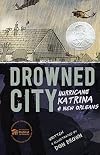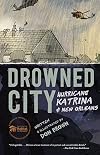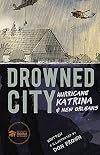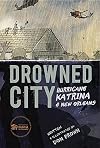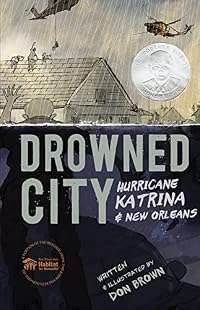
Drowned City: Hurricane Katrina & New Orleans
by Don Brown
On This Page
Description
On August 29, 2005, Hurricane Katrina's monstrous winds and surging water overwhelmed the protective levees around low-lying New Orleans, Louisiana. Eighty percent of the city flooded, in some places under twenty feet of water. Property damages across the Gulf Coast topped $100 billion. One thousand eight hundred and thirty-three people lost their lives. The tale of this historic storm and the drowning of an American city is one of selflessness, heroism, and courage -- and also of show more incompetence, racism, and criminality. Don Brown's kinetic art and as-it-happens narrative capture both the tragedy and triumph of one of the worst natural disasters in American history. show lessTags
Recommendations


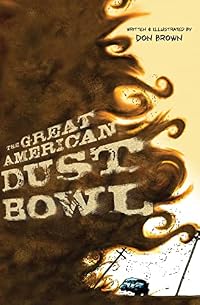
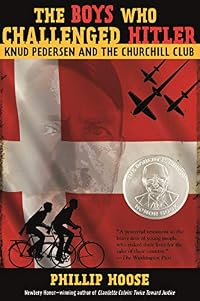
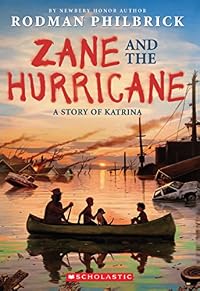

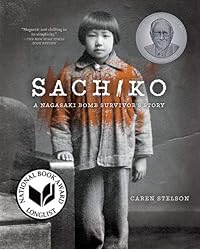


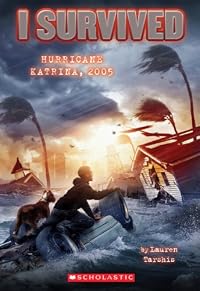

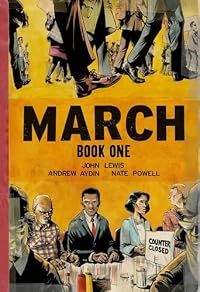


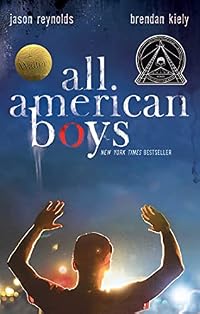

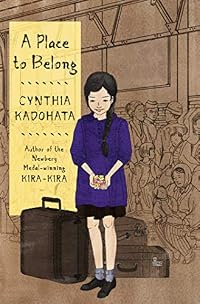









Member Recommendations
Member Reviews
A quick read, this graphic novel does an amazing job outlining the complexities and horror of Hurricane Katrina. Don Brown did an astounding job writing and illustrating the events leading up to the disaster, the struggle for life and safety during the hurricane and flooding, and the chaotic aftermath. Not one to shy away from making it a clear cut disaster, Brown illustrates the screw ups, the loss of life, and the government miscommunication that helped ensure the death of more people than necessary. A great introduction for teens wanting to know more about what happened.
This blunt account of the damage Hurricane Katrina wreaked on New Orleans and the tragically inadequate response from FEMA and then-president George W. Bush pulls no punches. Brown uses two fonts throughout, both all-caps: a somewhat jagged-looking one for narrative text between or within panels, and a clearer one for dialogue in speech bubbles. Quotes are carefully chosen to support the text, move the story forward, and have an emotional impact, e.g. a man in a FEMA jacket saying, "When I have a nightmare, it's a hurricane in New Orleans" in an inset box on a page where the larger illustration is the gray mass of Katrina approaching Louisiana; another sharply poignant quote on page 25 comes from the tiny figure of a mother holding her show more child on a rooftop, viewed from above as the floodwaters rise, saying, "Oh, baby, I don't think we're gonna make it." Another effective spread (p. 30-31) shows just over half the page underwater, just under half above; people swim, reach, and sink, and the text says only, "People fight the flood. Some succeed. Others do not."
Clearly, there are heroes: ordinary people with their own boats, workers from the Louisiana Department of Wildlife and Fisheries, and Coast Guard, all of whom performed dangerous rescues; later, the National Guard helped. Governor Blanco begged the president and FEMA for assistance - transportation, food, water, medical help; their response was catastrophically uncoordinated and slow. On the other hand, there are those who failed to do their jobs, including some police, Mayor Nagin (who was never seen at the Superdome), Michael Chertoff of the DHS, and Michael Brown of FEMA.
The final page addresses the slow return and rebuilding of New Orleans, Hurricane Isaac in 2012, and the Lower Ninth Ward. Although both Black and white people are shown in the illustrations, there is no discussion of racism; it is not mentioned that the Lower Ninth Ward was predominantly Black.
Overall, this is a focused account of Katrina's impact on New Orleans. Back matter includes detailed source notes and a bibliography. show less
Clearly, there are heroes: ordinary people with their own boats, workers from the Louisiana Department of Wildlife and Fisheries, and Coast Guard, all of whom performed dangerous rescues; later, the National Guard helped. Governor Blanco begged the president and FEMA for assistance - transportation, food, water, medical help; their response was catastrophically uncoordinated and slow. On the other hand, there are those who failed to do their jobs, including some police, Mayor Nagin (who was never seen at the Superdome), Michael Chertoff of the DHS, and Michael Brown of FEMA.
The final page addresses the slow return and rebuilding of New Orleans, Hurricane Isaac in 2012, and the Lower Ninth Ward. Although both Black and white people are shown in the illustrations, there is no discussion of racism; it is not mentioned that the Lower Ninth Ward was predominantly Black.
Overall, this is a focused account of Katrina's impact on New Orleans. Back matter includes detailed source notes and a bibliography. show less
Drowned City: Hurricane Katrina & New Orleans by Don Brown, is a graphic novel retelling of the hurricane and the floods which followed. The book relies far more on its illustrations than dialogue and narration, and this is incredibly successful at creating different moods at different points in the events, from the violence of the wind and water to the desperation of those trapped in attics and on roofs to the oppressive silence and heat following the storm. There are countless images of people walking through filthy water, or desperately clinging to something which floats, or swimming past corpses in the water. The colors are often a washed-out version of white, which creates a sense of how miserably hot everyone was after the storm. show more You can smell the stench of the convention center, you can feel the fear of those stranded, you can see the presence of water everywhere. And Brown clearly addresses the non-natural horrors of the storm, the failure of humanity outside of New Orleasn to act appropriately in the aftermath of the storm. We see people being turned away from shelter, people being threatened with death by police when seeking refuge across the river, and we see the failiure of the federal government to respond. Yes, plenty of people rose to the occasion and did everything they could to help survivors, but this is to be expected in any such situation. It is normal for people to go out of their way to help others in a crisis. What is not so normal, what makes the floods after Katrina unique not just because off the scope of the devastation, is the lack of response and the lack of humanity exercised by those who had the power to help, but did not act. Brown’s depiction of the events after Katrina offer a sober, honest portrayal of the disaster. The book would be fantastic in a middle school or high school lesson about Katrina, and would pair well with Jesmyn Ward’s Salvage the Bones in a multi-genre English unit. show less
This comic is pretty remarkable for telling the story of Katrina to young readers using the words and primary documentation of the (largely poor) people who survived it. I remember the media blank on New Orleans back when it happened, and wondering why we seemed to be doing so little to save American citizens trapped in a catastrophic collapse of their society. "Drowned City's" artwork depicts the desperation of the days during and after the hurricane very effectively.
This book doesn't pull punches on the failure of our government towards its' constituents. The scenes of squalor and devastation at the Superdome and the callous and sometimes puzzling behavior of the people in charge (Bush flying over in a jet!) are wrenching. Reading it show more made me think about what will happen to us on the West Coast when the Big One hits. show less
This book doesn't pull punches on the failure of our government towards its' constituents. The scenes of squalor and devastation at the Superdome and the callous and sometimes puzzling behavior of the people in charge (Bush flying over in a jet!) are wrenching. Reading it show more made me think about what will happen to us on the West Coast when the Big One hits. show less
As someone who experienced Hurricane Katrina first-hand, I generally shy away from Katrina-related books. However, I was excited and optimistic when I saw Don Brown's Drowned City; the graphic novel format was fresh and enticing, and I was curious to see how the world saw what I had lived through. I looked forward to reading a Katrina text that I could recommend to students or possibly even use in class. I was sorely disappointed.
While I liked the color schemes and graphic style, there were a two main aspects that I took issue with: sensationalism, and what I felt was the villainization/victimization of the people of New Orleans. I felt that Brown's presentation of those who stayed as either stubborn, poor, or "too stupid to get out of show more town" (50) was honestly offensive. The nearly faceless people exhibit emotion, but they lack a sense of humanity and individuality. Survivors are pigeonholed and dehumanized as victims or crooks, and I think the generalizations fail to capture the reality of the times. At least from my experience--limited and individual as it is--Drowned City does not reflect the atmosphere of New Orleans following the aftermath of Hurricane Katrina. It feels more like an outsider's perspective--a retelling of Katrina from the tv screen.
I mentioned sensationalism for a few reasons; some of the images are, for me, insensitive and too graphic--images of bodies floating in the water (31, 82, 83), or pictures of people drowning in their homes (23). Others exist as hyperbole, but they bothered me nonetheless, such as the image of snakes in the water (41) and bugs in the air, (41) which detracted from the reality of the situation. I also did not appreciate Brown's bias against New Orleans police and other first responders. Although I would not deny that some officers were less than heroic, I felt as if Brown makes no attempt at being equitable in his presentation of the police, characterizing them as cowards, thieves, and bullies (34,35, 43, 73). Even first responders receive, what I felt, was an inordinate amount of criticism in comparison with acknowledgment of their efforts (62, 63, 75). I'm not against presenting all sides of a situation, especially in non-fiction, but Drowned City feels weighted in negativity, and while it claims to "capture both the tragedy and triumph of this American disaster," (front cover), I didn't feel triumphant upon finishing the novel.
So is Drowned City a good book? It's emotionally gripping, and in a way, I appreciate the attention on New Orleans and Hurricane Katrina. As tempted as I am to recommend something that students would actually read on account of its format, I wouldn't want younger generations to read this book and have another negative, inaccurate portrayal of New Orleans. show less
While I liked the color schemes and graphic style, there were a two main aspects that I took issue with: sensationalism, and what I felt was the villainization/victimization of the people of New Orleans. I felt that Brown's presentation of those who stayed as either stubborn, poor, or "too stupid to get out of show more town" (50) was honestly offensive. The nearly faceless people exhibit emotion, but they lack a sense of humanity and individuality. Survivors are pigeonholed and dehumanized as victims or crooks, and I think the generalizations fail to capture the reality of the times. At least from my experience--limited and individual as it is--Drowned City does not reflect the atmosphere of New Orleans following the aftermath of Hurricane Katrina. It feels more like an outsider's perspective--a retelling of Katrina from the tv screen.
I mentioned sensationalism for a few reasons; some of the images are, for me, insensitive and too graphic--images of bodies floating in the water (31, 82, 83), or pictures of people drowning in their homes (23). Others exist as hyperbole, but they bothered me nonetheless, such as the image of snakes in the water (41) and bugs in the air, (41) which detracted from the reality of the situation. I also did not appreciate Brown's bias against New Orleans police and other first responders. Although I would not deny that some officers were less than heroic, I felt as if Brown makes no attempt at being equitable in his presentation of the police, characterizing them as cowards, thieves, and bullies (34,35, 43, 73). Even first responders receive, what I felt, was an inordinate amount of criticism in comparison with acknowledgment of their efforts (62, 63, 75). I'm not against presenting all sides of a situation, especially in non-fiction, but Drowned City feels weighted in negativity, and while it claims to "capture both the tragedy and triumph of this American disaster," (front cover), I didn't feel triumphant upon finishing the novel.
So is Drowned City a good book? It's emotionally gripping, and in a way, I appreciate the attention on New Orleans and Hurricane Katrina. As tempted as I am to recommend something that students would actually read on account of its format, I wouldn't want younger generations to read this book and have another negative, inaccurate portrayal of New Orleans. show less
As a resident of New Orleans during hurricane Katrina, I feel Drowned City: Hurricane Katrina and New Orleans did a thorough job of explaining the harsh truths of what it was really like in New Orleans before, during, and after the storm. Unlike what was initially portrayed in the media, locals struggled to find a way out to safety. The issues of poverty and racism were brought to light in this text and explained how many people ended up trapped in the city. This book was descriptive in explaining the series of events during this catastrophic storm without focusing on one event too much and showed the reality of how our federal and local governments had failed us. Drowned City described the lack of resources, filthy conditions and show more heartbreaking struggles that people enduring during this time so that the reader can understand what really happened to those seeking refuge at the Superdome, local hospitals, and the Convention Center. As I read, I wiped away tears as all the emotions I have suppressed were dug up again. The graphic novel-esque layout coupled with the muted toned watercolor illustrations helped to tell the story and I feel were respectful as actual photographs of suffering New Orleanians might have been just too much to use. Brown also commended the Coastguard, Department of Wildlife and Fisheries, and local folks for their determination and heroism in getting others to safety during the flooding. In a time where the world was ending for many, locals took care of one another. I found this book easy to read, so that younger readers who were alive for this event, but maybe not old enough to remember can understand what happened as the tragic events unfolded from August 29, 2005 on. I have taught many students here in New Orleans who know about Katrina but cannot grasp the magnitude of her destruction from the flooding. This book can allow teachers and educators to tell the (true) story of the city that care forgot. show less
Written and illustrated by Don Brown, Drowned City tells the harrowing story of Hurricane Katrina's destruction in New Orleans. This narrative nonfiction graphic novel allows readers to truly see and learn about the heartbreaking devastation caused by Hurricane Katrina. This story of "the drowning of an American city is one of selflessness, heroism, and courage—and also of incompetence, racism, and criminality."
Brown honestly and appropriately tackles this incredibly difficult subject in a way that is understandable and compelling for readers as young as middle grade readers. He doesn't shy away from explaining the hard stuff in 'just simple enough' ways or showing the loss of life without without being graphic or sugar coating it. show more
**Orbis Pictus Award Winner, Sibert Honor Book show less
Brown honestly and appropriately tackles this incredibly difficult subject in a way that is understandable and compelling for readers as young as middle grade readers. He doesn't shy away from explaining the hard stuff in 'just simple enough' ways or showing the loss of life without without being graphic or sugar coating it. show more
**Orbis Pictus Award Winner, Sibert Honor Book show less
Members
- Recently Added By
Lists

2000s: America
25 works; 1 member

Robert F. Sibert Informational Book Medal
102 works; 1 member
Author Information

40+ Works 6,654 Members
Awards and Honors
Awards
Distinctions
Notable Lists
Common Knowledge
- Canonical title
- Drowned City: Hurricane Katrina & New Orleans
- Important places
- Louisiana, USA; New Orleans, Louisiana, USA
- Important events
- Hurricane Katrina (2005)
- Dedication
- To the resilient people of New Orleans and the Gulf Coast.
- First words
- Early August, 2005. A swirl of unremarkable wind leaves Africa and breezes toward the Americas.
- Last words
- (Click to show. Warning: May contain spoilers.)We're coming back. This is home. This is life.
- Original language
- English
Classifications
- Genres
- Tween, Kids, Graphic Novels & Comics
- DDC/MDS
- 363.34 — Society, Government, and Culture Social problems and social services Public Safety - Police, Crime Investigation Terrorism, Disasters, Civil Defense Disaster relief
- LCC
- HV636 — Social sciences Social pathology. Social and public welfare. Criminology Social pathology. Social and public welfare. Emergency management Relief in case of disasters Special types of disasters
- BISAC
Statistics
- Members
- 755
- Popularity
- 37,033
- Reviews
- 83
- Rating
- (4.17)
- Languages
- English
- Media
- Paper, Ebook
- ISBNs
- 11
- ASINs
- 2