On This Page
Description
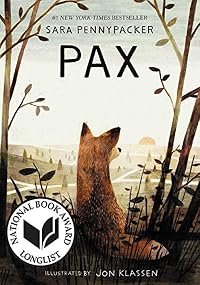
"After being forced to give up his pet fox Pax, a young boy named Peter decides to leave home and get his best friend back"--Tags
Recommendations

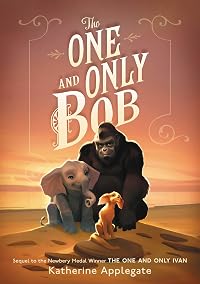
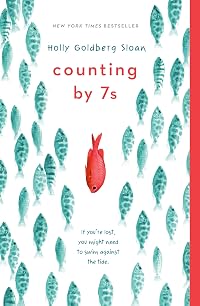
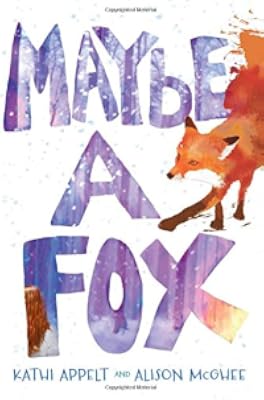
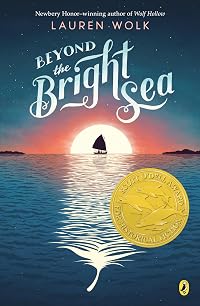
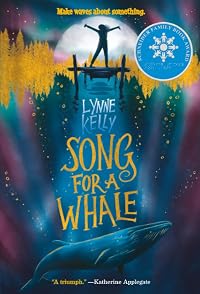
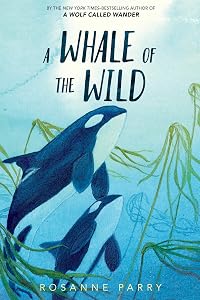
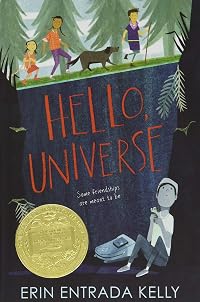
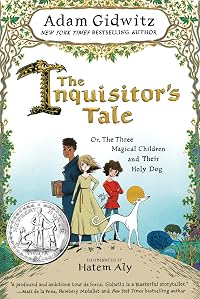





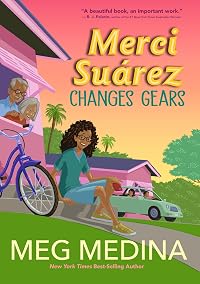
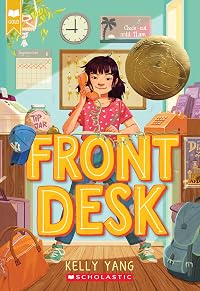
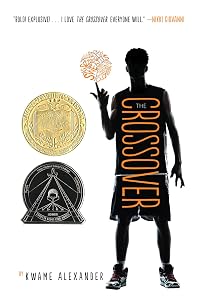

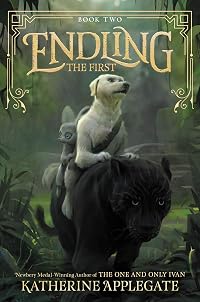
Member Recommendations
Member Reviews
When I picked up this book with a cute illustration of a fox on the cover, I wasn't expecting to be treated to an examination of the cost of war, of breaking from your unwanted inheritance, of deciding who and where you need to be. This was such a compelling read and I got so much more than I expected from it, when really I just thought it would be a Homeward Bound with foxes. The image of Peter kneeling amid the charred wreckage of war, being advanced on by war-sick soldiers, shouting "Pax! Pax!" struck me more deeply than I expected it to. Highly recommended.
War is coming, and Peter's father has enlisted in the military. Peter himself is being sent to live with his grandfather, in safety behind the approaching battle lines. Forced by his father to release his beloved pet fox Pax, whom he had raised since a newborn kit, into the wild, Peter has no sooner arrived at his grandfather's then he realizes what a terrible mistake he has made, and sets off on a two-hundred mile journey to find and rescue his best friend. The way is hard, and along the way he meets with both good and bad fortune, in the form of injury and a new friend - Vola - who takes him in and nurses him back to a semblance of health. Pax, in the meantime, terribly hurt and confused at his abandonment, but determined to wait for show more Peter's return, becomes involved in the world of wild foxes, threatened by the approaching war. As Pax comes to understand the terrible things that lie ahead for humans and animals alike, he becomes ever more determined to find and protect his boy. But the new ties of the wild, to the vixen Bristle and her little brother Runt, pull him in a different direction. Boy and fox draw ever closer to one another, converging on the front lines of the impending conflict...
A book that grabbed hold of me as a reader, and never let go the entire way through, Pax is an intensely emotional roller-coaster ride. I was conscious many times while reading, of a tense knot of anxiety in my stomach, as boy and fox journeyed across a threatening landscape. Aware of the many dangers that await those caught up in war - especially children and animals, who often have fewer defenses that the combatants themselves - I was almost physically repulsed by the idea of reading on, and yet somehow I couldn't stop myself from continuing. This is a thoughtful examination of a number of important themes, from the bond between a child and his animal, to the nature of war and its true costs. The latter is explored, not just through the impending war - very few details are given, save that this is a conflict about water, leading me to suspect that the setting is sometime in the future, when that resource is predicted to become very scarce indeed - but also through Vola's story of serving in a previous conflict, and her twenty-year struggle to find herself again, after the terrible things she did. I thought that the fox-view of human affairs was brilliantly handled - soldiers are referred to as "war-sick," and their actions are depicted as tragic and destructive, not just for their own kind, but for all of creation. This is an important idea to communicate, I think - that humans aren't the only ones who suffer because of human actions, that all of the natural world suffers with us. I was reminded of another fox from children's literature, the immortal Cooroo from Pat O'Shea's marvelous fantasy, The Hounds of the Morrigan, who once said that "it is a sad and puzzling fate to share the world with man, but what can we do?" I was also reminded of the recent Maybe a Fox, which explores some of the same themes as Pax, also to great effect. A lovely book, but a sad one - the conclusion wasn't what I had feared, but was still terribly poignant - this is a book well worth reading, although I would caution very sensitive youngsters to proceed with caution. show less
A book that grabbed hold of me as a reader, and never let go the entire way through, Pax is an intensely emotional roller-coaster ride. I was conscious many times while reading, of a tense knot of anxiety in my stomach, as boy and fox journeyed across a threatening landscape. Aware of the many dangers that await those caught up in war - especially children and animals, who often have fewer defenses that the combatants themselves - I was almost physically repulsed by the idea of reading on, and yet somehow I couldn't stop myself from continuing. This is a thoughtful examination of a number of important themes, from the bond between a child and his animal, to the nature of war and its true costs. The latter is explored, not just through the impending war - very few details are given, save that this is a conflict about water, leading me to suspect that the setting is sometime in the future, when that resource is predicted to become very scarce indeed - but also through Vola's story of serving in a previous conflict, and her twenty-year struggle to find herself again, after the terrible things she did. I thought that the fox-view of human affairs was brilliantly handled - soldiers are referred to as "war-sick," and their actions are depicted as tragic and destructive, not just for their own kind, but for all of creation. This is an important idea to communicate, I think - that humans aren't the only ones who suffer because of human actions, that all of the natural world suffers with us. I was reminded of another fox from children's literature, the immortal Cooroo from Pat O'Shea's marvelous fantasy, The Hounds of the Morrigan, who once said that "it is a sad and puzzling fate to share the world with man, but what can we do?" I was also reminded of the recent Maybe a Fox, which explores some of the same themes as Pax, also to great effect. A lovely book, but a sad one - the conclusion wasn't what I had feared, but was still terribly poignant - this is a book well worth reading, although I would caution very sensitive youngsters to proceed with caution. show less
This was a recommendation and not, frankly, a book I would normally have chosen for myself. That's right: I'm one of those people with PTSD flashbacks from books like Old Yeller and The Yearling and Where the Red Fern Grows. I was warned outright that this book went a bit "dark" - which I suppose it does, for mid-grade children's fiction. What I might prefer to say is that it doesn't shy away from reality. In many ways, Sara Pennypacker's book is completely allegorical: it takes place in an unnamed country, during an unnamed war. Pax and his human boy are two of only three fully drawn characters in the novel. Pennypacker's approach works, though: the story hits hard without feeling "messagey," and the stakes are high without feeling show more overwhelming. In particular, I liked the way she eschewed both the emotionally simplistic Hollywood ending and the overly cynical conclusion you might expect. Instead, she manages to hit a sweet spot: satisfaction without sentimentality, triumph without a return to status quo. A good book, easy to recommend - and, thankfully, not the next Watership Down (in the best possible, least traumatizing sense!). show less
Ok, I'm going to be honest from the start - I didn't care about Pax's story. The first chapter from his perspective tore my heart a little bit, but from there, I just couldn't get into it. Something about the thinking-animal shtick didn't grab me, especially when the rest of the story was so reality-based. Plus I found his story predictable. Maybe if it was told from a 3rd person perspective, focused on animal emotions instead of consciousness, maybe fleshed out the bit about humanity and war and how unthinking we are when it comes to animals and our environment...but as it was I didn't really care. There were a couple times when I really enjoyed Pax thinking about the evils of humanity from the perspective of a pet - for example when show more Bristle asked him if his boy was unthinking when it came to consequences (as humans tend to plow fields without thinking of the animals living under them). I'd like to have seen more of how animals are affected by unthinking humans, more consequences and story. Overall, I read quickly (but I didn't skim! That means I was still interested a little bit) through the Pax chapters to get back to Peter's story.
Peter's emotional state/journey was really fascinating to me. This book dealt with some great themes that I feel aren't tackled in children's literature, though it really should be. Children have emotions and struggles that are just as nuanced as those of adults, especially those on the cusp of teenager-hood like Peter. He'd been through a lot in his 12 years, and it affected the way he saw himself and other people. He's been trying to create his identity in an environment (both physical and emotional) that was not conducive to mistakes. He's constantly walking on eggshells with his fatherand every time he does, he is reminded that he could become that person that people are fearful of and it scares him so much. We are shown and told a lot about his caring and mindfulness, his empathy for animals and other humans, his determination and moral compass, and while we don't know a whole lot about his father except that the death of his wife triggered the same anger problem as Peter's grandfather, it seems clear that Peter is different. But Peter's fear, that he will become like his father, is also not unfounded. His father may have been just as empathetic as a child, but life experience can change us. This is such a beautifully nuanced story for Peter, something that I think many children may unfortunately be able to relate to. Peter and his father, instead of being able to mourn a shared loss together, suffered more because of their inability to connect. Peter found a connection with Pax, and his father's reaction to the fox (mainly indifference/annoyance, sometimes anger and maybe violence) made Peter fear even more what he could become - and drove a larger wedge into their relationship. He was then abandoned by his father who chose to go to war (which was likely his father's reaction to his own grief, but we don't learn a whole lot about the father's experience), and forced by him to abandon his own best friend. And while Peter knew it was the wrong choice, his fear of becoming his father prevented him from standing up for himself. This is some heavy shit for a 12-year-old, but amazing to read about. .
After he decides he needs to go back and find Pax, he breaks his foot and meets Vola, who is fucking amazing. While I would have really loved to see her fleshed out a bit more, she is such an interesting character, especially in a children's book. She's a woman, she's a soldier, she's (potentially) a person of colour (she identifies in the book as half Creole and half Italian - what kind of Creole isn't specified because the book's setting is ambiguous - but so is the word "Creole" - so I don't actually know how she specifically identifies...but I did get a sense that she was not wholly a part of the dominant culture). Before Vola mentioned her background, I assumed she might have been Native, or part of a different group that values culture and family strongly.Vola also struggles with mental illness, and she does so in a way that pushes back against the mainstream western view of mental illness which is something I love about her. She was officially diagnosed with PTSD, but the structure of that definition doesn't fit her, so she re-characterizes it to make sense. Her difficulty, she tells Peter, is one of identity - who is she anymore after being a soldier? How to reconcile the young girl she was, who didn't want to harm an insect, with the woman who has killed people? She appears to have rejected typical psychological help to treat herself according to her own culture and comfort. I do believe in therapy and (to some extent) drugs to treat mental illness, but the western medicine machine is very difficult to reckon with. Especially depending on the timeline. It's highly likely that any help Vola sought would have ignored her culture entirely, and from the sense I get from her character, that could have been disastrous. Vola is strong and damaged, just like Peter, and she helps prepare him for his journey once she realizes he won't give up on it.
There are not very many clues about where or when this story takes place. Vola mentions being Creole but that doesn't necessarily help because there are Creole peoples everywhere. Red foxes live frickin everywhere, so we can rule out central/south America and most of Africa (but not all). There's electricity, and power lines in one of the illustrations, so at least somewhere between the mid-1900s and present/future? When reading, I pictured Canadian wilderness, sometime in the past - maybe the 1970s. But it doesn't have to be either of those things. Probably all my analysis of this is missing the point as well, because the author obviously didn't want to give us any clues.
I don't know how I felt about the ending...it felt mean.It turns out that Peter is just like the other humans after all...false-acting. He came all this way to find Pax, only to abandon him again using the same trick as before. Yes, from Peter's perspective, I guess he felt that Pax had a new family now and would be happier with the other foxes, but Pax had been pining for him the whole time, defending him. Is this a statement on how all humans will eventually become like each other - false-acting and careless, despite their intent? I hope not - Peter is trying so hard to not become his father, and I think he will succeed. Is it about the fundamental differences between human and animal, despite the rest of the book talking about being "two but not two". Or maybe it's referring to how we can hurt the ones we love despite our very good intentions. There are parallels with Peter's dad, who I assume loves his son and wants what's best for him, and with war in general when Vola tells Peter that nobody goes to war believing that they're fighting for the wrong side. And with Vola, who is hurting in her isolation though she's trying to help herself. Anyway the ending made me sad, because I like Peter, but I also get where Bristle is coming from because her generalizations about humans are not wrong. I don't know. I'll think about it.
This review has a lot of words hiding under spoiler tags...phew. That's usually the mark of a good book for me. show less
Peter's emotional state/journey was really fascinating to me. This book dealt with some great themes that I feel aren't tackled in children's literature, though it really should be. Children have emotions and struggles that are just as nuanced as those of adults, especially those on the cusp of teenager-hood like Peter. He'd been through a lot in his 12 years, and it affected the way he saw himself and other people. He's been trying to create his identity in an environment (both physical and emotional) that was not conducive to mistakes. He's constantly walking on eggshells with his father
After he decides he needs to go back and find Pax, he breaks his foot and meets Vola, who is fucking amazing. While I would have really loved to see her fleshed out a bit more, she is such an interesting character, especially in a children's book. She's a woman, she's a soldier, she's (potentially) a person of colour (she identifies in the book as half Creole and half Italian - what kind of Creole isn't specified because the book's setting is ambiguous - but so is the word "Creole" - so I don't actually know how she specifically identifies...but I did get a sense that she was not wholly a part of the dominant culture). Before Vola mentioned her background, I assumed she might have been Native, or part of a different group that values culture and family strongly.
There are not very many clues about where or when this story takes place. Vola mentions being Creole but that doesn't necessarily help because there are Creole peoples everywhere. Red foxes live frickin everywhere, so we can rule out central/south America and most of Africa (but not all). There's electricity, and power lines in one of the illustrations, so at least somewhere between the mid-1900s and present/future? When reading, I pictured Canadian wilderness, sometime in the past - maybe the 1970s. But it doesn't have to be either of those things. Probably all my analysis of this is missing the point as well, because the author obviously didn't want to give us any clues.
I don't know how I felt about the ending...it felt mean.
This review has a lot of words hiding under spoiler tags...phew. That's usually the mark of a good book for me. show less
A children's book just punched me in the damn feels. WTF? When did I start having feelings? I highly recommend this to everyone at any age. Its about the cost of war, family, loyalty, breaking cycles, and selflessness. It's about so much more than a boy and his fox. Ouch. I'm going to go drink a scotch.
In Pax, 12 year old Peter's mother is deceased, and his father tells him he must part from his closest companion, his fox Pax. Peter will live with his grandfather while the father goes off to fight in the war. The parting from Pax, and their subsequent efforts to find each other, are the spine of the story. The war is happening all around them, and we see the harm it causes through the eyes of Pax.
Peter is determined to be a better man than his father, and comes upon a war veteran who has isolated herself n the woods, trying to forget her own memories from the war. The bond they form is moving and genuine, and she helps him in his quest to reunite with Pax.
This is beautifully written, with the POVs of the characters, including Pax, show more believable and page-turning. Pax, having been raised as a pet, has to learn how to survive in the woods, as does Peter in a different way. There are some nice illustrations by Jon Klassen, too. This one has the feel of a classic, and it's well worth entering its world. I'll be giving it as a gift all over the place. show less
Peter is determined to be a better man than his father, and comes upon a war veteran who has isolated herself n the woods, trying to forget her own memories from the war. The bond they form is moving and genuine, and she helps him in his quest to reunite with Pax.
This is beautifully written, with the POVs of the characters, including Pax, show more believable and page-turning. Pax, having been raised as a pet, has to learn how to survive in the woods, as does Peter in a different way. There are some nice illustrations by Jon Klassen, too. This one has the feel of a classic, and it's well worth entering its world. I'll be giving it as a gift all over the place. show less
Set in an intentionally undefined time and place that could very well be a near-future America, the novel opens with a heartbreaking scene of a tame red fox, Pax, being abandoned at the side of the road by his beloved boy, Peter. Perspectives alternate between the boy and the fox, and readers learn that a terrible war rages in this land. Peter's father is about to leave for the frontlines, and while he's away, Peter must live with his grandfather out in the country—and his father makes it clear that there is no place for Pax in Peter's temporary home. Almost as soon as he arrives at his grandfather's, Peter is overcome with guilt, and he sets off under the cover of darkness to trek the 300 miles back to his home, where he prays he'll show more find Pax. The loyal fox, meanwhile, must figure out how to survive in the wild—though never losing hope that his boy will return for him. As the protagonists struggle to reunite in a world in the grip of violence and destruction, they each find helpers who assist them on their respective journeys: Peter breaks his foot and is rehabilitated by Vola, a hermit suffering from post-traumatic stress disorder, while Pax is taken in by a leash of foxes who teach him the basics of foraging and hunting. Pennypacker doesn't shy away from some of the more realistic aspects of war, though she keeps most of the violence slightly off-screen: in one scene, the wild foxes define war for the naive Pax as a "human sickness" that causes them to turn on their own kind, akin to rabies; later, as the battle creeps closer, several creatures are maimed and killed by land mines. Black-and-white drawings by Klassen offer a respite for readers, while adding to the haunting atmosphere.With spare, lyrical prose, Pennypacker manages to infuse this tearjerker with a tender hope, showing that peace and love can require just as much sacrifice as war. show less
Members
- Recently Added By
Lists

Favorite Animal Fiction
359 works; 156 members

Scholastic 100 Best Read-Aloud Books
100 works; 8 members

Rabbit and Fox Story Books For Children
139 works; 7 members

Books Read in 2016
4,666 works; 199 members

Books Read in 2021
5,361 works; 114 members

Books for Tori
11 works; 1 member

Books Read in 2023
5,617 works; 146 members

Books We Discovered On LibraryThing
530 works; 130 members

Children's Adventure
53 works; 4 members
Author Information

40 Works 26,100 Members
Before becoming an author, Sara Young was a watercolor painter. She has written several children's books including the Clementine series, Stuart's Cape, Stuart Goes to School, and Dumbstruck under the name of Sara Pennypacker. Written under her real name, My Enemy's Cradle is her first adult novel. Her title Pax made The New York Times Best Seller show more List in 2017. (Bowker Author Biography) show less
All Editions
Awards and Honors
Awards
Distinctions
Notable Lists
Series

Work Relationships
Is contained in
Common Knowledge
- Original title
- Pax
- Original publication date
- 2016
- People/Characters
- Pax; Peter; Vola; Bristle; Runt; Gray
- Epigraph
- Just because it isn't happening here doesn't mean it isn't happening.
- Dedication
- To my agent, Steven Malk, who said "Pax" -S.P.
- First words
- The fox felt the car slow before the boy did, as he felt everything first.
- Quotations
- Author's note: Fox communication is a complex system of vocalization, gesture, scent, and expression. The "dialogue" in italics in Pax's chapters attempts to translate their eloquent language.
"The Gulf Stream will flow through a straw, provided the straw is aligned to the Gulf Stream and not at crosscurrents." / "What's that supposed to mean?" / "It means align yourself, boy." / "Align myself?"/ "Figure out how t... (show all)hings are, and accept it." (p. 98)
"I have more than everything I need." Vola sat. "I have peace here." / "Because it's so quiet?" / "No. Because I am exactly where I should be, doing exactly what I should be doing. That is peace." (p. 102)
"Rises from the ashes. I know what a phoenix is." / "Right. But out of its own ashes." "... the new bird rises up out of the old bird's ashes. My mother loved that. She said it meant that no matter how bad things got, we coul... (show all)d always make ourselves new again." (p. 116-117)
'Two but not two.' "It's a Buddhist concept. Nonduality. It's about oneness, about how things that seem to be separate are really connected to one another. There are no separations. " Vola picked up his fox again. "This is no... (show all)t just a piece of wood. This is also the clouds that brought the rain that watered the tree, and the birds that nested in it and the squirrels that fed on its nuts. It is also the food my grandparents fed me that made me strong enough to cut the tree, and it's the steel in the axe I used. And it's how you know your fox, which allowed you to carve him yesterday. And it's the story you will tell your children when you give this to them. All these things are separate but also one, inseparable." (p. 186-187)
"You know," he whispered, "you have to be a little careful in there ... " / "Careful?" / "About ... language. You know?" / Vola looked at him blankly. He was going to have to spell it out for her. "It isn't the kind of place ... (show all)where people say "dyableman" a lot." / "Oh, please. I think I know that, boy." Her tone was withering , but it held the hint of a grin. (p. 222) - Last words
- (Click to show. Warning: May contain spoilers.)Sometimes the apple rolls very far from the tree.
- Publisher's editor
- Bray, Donna
Classifications
- Genres
- Tween, Kids, Children's Books, Fiction and Literature
- DDC/MDS
- 813.6 — Literature & rhetoric American literature in English American fiction in English 2000-
- LCC
- PZ7 .P3856 .P — Language and Literature Fiction and juvenile belles lettres Fiction and juvenile belles lettres Juvenile belles lettres
- BISAC
Statistics
- Members
- 3,539
- Popularity
- 4,659
- Reviews
- 129
- Rating
- (3.99)
- Languages
- 12 — Chinese, Dutch, English, Estonian, French, German, Hungarian, Italian, Polish, Portuguese, Spanish, Turkish
- Media
- Paper, Audiobook, Ebook
- ISBNs
- 62
- UPCs
- 1
- ASINs
- 11