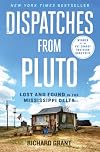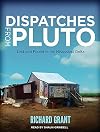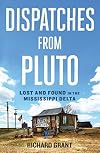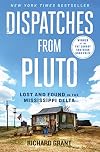
Dispatches from Pluto: Lost and Found in the Mississippi Delta
by Richard Grant
On This Page
Description
New Yorkers Grant and his girlfriend Mariah decided on a whim to buy an old plantation house in the Mississippi Delta. This is their journey of discovery to a remote, isolated strip of land, three miles beyond the tiny community of Pluto. They learn to hunt, grow their own food, and fend off alligators, snakes, and varmints galore. They befriend an array of unforgettable local characters, capture the rich, extraordinary culture of the Delta, and delve deeply into the Delta's lingering racial show more tensions. As the nomadic Grant learns to settle down, he falls not just for his girlfriend but for the beguiling place they now call home. show lessTags
Recommendations










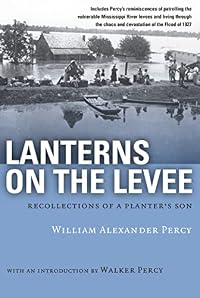

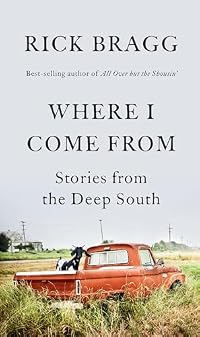
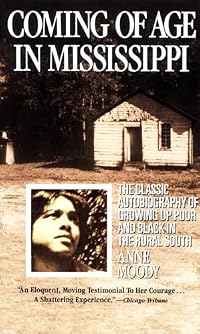

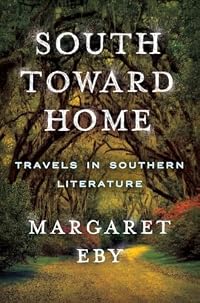























Member Recommendations
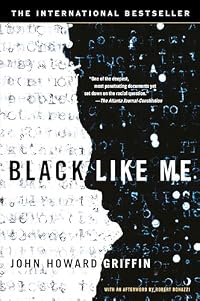
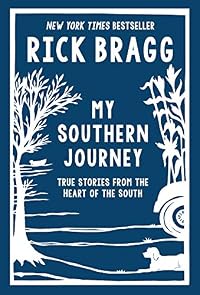
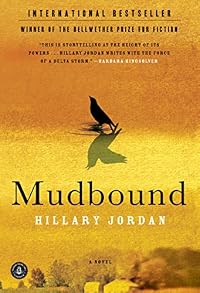
BookshelfMonstrosity These funny and reflective memoirs tell of moving from New York into the unknown in search of a new life.
Member Reviews
Writing about the south as an outsider is dangerous. You could easily suffocate from layers and layers of stereotypes. The outsider is expected to be offended by racism and ignorance, sympathetic to the plight of the poor (both black and white), depressed by dilapidated houses and stores, and driven near crazy by mosquitoes. Not that those things shouldn't happen, but that shouldn't be all that happens.
Richard Grant is British by origin, and he lived, before moving to the Mississippi delta to live and writing this book, in New York. He and his girlfriend, Mariah, could hardly have been more primed for the standardl outsider experience.
But it doesn’t really come off that way. Of the books I’ve read that follow the path of the show more outsider visiting and reporting his impressions of the south, this one may be the one that most avoids death by stereotype.
Grant and Mariah move to an old plantation house near the small town of Pluto, on the delta. They certainly bring their share of naivety. They are especially unprepared for the place itself — the mosquitoes, the snakes, the kudzu, the cold of the winter, and the lack of comfort an old planation house can provide.
But Grant, and Mariah as well, throw themselves into friendships and experiences with seemingly just about anybody and everybody. They are willing to give up some of the things they’ve been — vegetarians, gun opponents — to be fully there, shooting deer and drinking cheap bourbon. Grant certainly takes notice of the differing behaviors of blacks and whites, that he never quite seems to get past some point of formality with blacks — sitting together in the house, dining together, . . .
And yet he captures something I’ve always been impressed by — that, in the south, whites and blacks have a way of being together that is stable, and, maybe unfortunately, comfortable.
In my own experience, having been born in Mississippi and spent at least some time, though not a lot, there, and having lived in other parts of the country, I’ve been surprised how un-at-ease people of different races are with one another elsewhere. There’s a hesitancy, a not knowing what to do, even if well meaning. In the south, it’s sometimes a matter of having a “place” — that’s the bad side. But other times it’s just having the ability to have casual conversation, share a laugh.
Grant has a good feel for that — maybe more than I’ve seen in other visitor-to-the-south writers. Paul Theroux, for example, never really gets to the level that Grant gets to — the familiarity that comes from hanging out at everything from juke joints to dove hunts. He lets himself love the south from the inside.
He sees all the things that spawn the popular stereotypes — the poverty, the racism, the rednecks, the southern white liberals. He especially notes the economic roots of so much that ails the south — the double whammy of its racial history and the path that the economy has taken away from the agricultural south.
But he resists the traps. And, as much as it’s possible for the outsider, he treats the south as a real place instead of an idea. show less
Richard Grant is British by origin, and he lived, before moving to the Mississippi delta to live and writing this book, in New York. He and his girlfriend, Mariah, could hardly have been more primed for the standardl outsider experience.
But it doesn’t really come off that way. Of the books I’ve read that follow the path of the show more outsider visiting and reporting his impressions of the south, this one may be the one that most avoids death by stereotype.
Grant and Mariah move to an old plantation house near the small town of Pluto, on the delta. They certainly bring their share of naivety. They are especially unprepared for the place itself — the mosquitoes, the snakes, the kudzu, the cold of the winter, and the lack of comfort an old planation house can provide.
But Grant, and Mariah as well, throw themselves into friendships and experiences with seemingly just about anybody and everybody. They are willing to give up some of the things they’ve been — vegetarians, gun opponents — to be fully there, shooting deer and drinking cheap bourbon. Grant certainly takes notice of the differing behaviors of blacks and whites, that he never quite seems to get past some point of formality with blacks — sitting together in the house, dining together, . . .
And yet he captures something I’ve always been impressed by — that, in the south, whites and blacks have a way of being together that is stable, and, maybe unfortunately, comfortable.
In my own experience, having been born in Mississippi and spent at least some time, though not a lot, there, and having lived in other parts of the country, I’ve been surprised how un-at-ease people of different races are with one another elsewhere. There’s a hesitancy, a not knowing what to do, even if well meaning. In the south, it’s sometimes a matter of having a “place” — that’s the bad side. But other times it’s just having the ability to have casual conversation, share a laugh.
Grant has a good feel for that — maybe more than I’ve seen in other visitor-to-the-south writers. Paul Theroux, for example, never really gets to the level that Grant gets to — the familiarity that comes from hanging out at everything from juke joints to dove hunts. He lets himself love the south from the inside.
He sees all the things that spawn the popular stereotypes — the poverty, the racism, the rednecks, the southern white liberals. He especially notes the economic roots of so much that ails the south — the double whammy of its racial history and the path that the economy has taken away from the agricultural south.
But he resists the traps. And, as much as it’s possible for the outsider, he treats the south as a real place instead of an idea. show less
This is really fantastic. Richard Grant's best travel/journalism book to date. This part of the country is tied up in a lot of negatives for good reason - poverty, racism, corruption, violence. But it's also strong community, tradition and, well, good times. What makes this more than a good book about the Delta is Grant's outsider status as a British expat which allows him to see objectively American culture and racism in a way that is even handed. People opened up to him, spoke their mind and he presented their POVs with respect. There's a lot of strange stuff that happens in this part of the country - usually of a "weird crime" nature - but there is also a lot of positive that can be said. I'll never see Mississippi and the Delta the show more same again. Highly recommended. show less
What a surprisedly great little book! I received this advance copy from NetGalley, in exchange for a FAIR review. No problem there, this one is a gem!
Richard Grant is a writer living in New York City, who on some crazy whim decides to buy an old plantation-style home in the delta of Mississippi. No logical reason why, other than a visit he had with a chef from there, and the fact that he was tired of the rat race. Little did he know of the problems of living in the delta. Snakes, armadillos, bugs, leaky roofs, are just some of the issues he and his girlfriend face. Before he could give up, he discovers the phenomenon of Southern hospitality. To his surprise, people in the area are friendly and eager to help him out. Quite a change from show more the impersonal big city experience. But the book is not just a humorous retelling of his adventures. A large portion of the book examines Grant's experiences with the racial issues of the south. Pluto, a small town, is one of the poorest, least educated, and most corrupt locations in the United States. Grant is blessed with the ability to talk with just about anyone, and makes friends with people from all walks of life in the area. His examinations, and insights into the inherent racism and other deep rooted problems of Mississippi are incredibly well-stated. Grant managed to lead me to examine my own beliefs, and I came away with a new found appreciation of the subject. And he does it while still making you laugh throughout the experience.
The writing is first-rate and the flow of the book is great. Grant is a fantastic author, who I am looking forward to following in the future.
I highly recommend this book! show less
Richard Grant is a writer living in New York City, who on some crazy whim decides to buy an old plantation-style home in the delta of Mississippi. No logical reason why, other than a visit he had with a chef from there, and the fact that he was tired of the rat race. Little did he know of the problems of living in the delta. Snakes, armadillos, bugs, leaky roofs, are just some of the issues he and his girlfriend face. Before he could give up, he discovers the phenomenon of Southern hospitality. To his surprise, people in the area are friendly and eager to help him out. Quite a change from show more the impersonal big city experience. But the book is not just a humorous retelling of his adventures. A large portion of the book examines Grant's experiences with the racial issues of the south. Pluto, a small town, is one of the poorest, least educated, and most corrupt locations in the United States. Grant is blessed with the ability to talk with just about anyone, and makes friends with people from all walks of life in the area. His examinations, and insights into the inherent racism and other deep rooted problems of Mississippi are incredibly well-stated. Grant managed to lead me to examine my own beliefs, and I came away with a new found appreciation of the subject. And he does it while still making you laugh throughout the experience.
The writing is first-rate and the flow of the book is great. Grant is a fantastic author, who I am looking forward to following in the future.
I highly recommend this book! show less
The state of Mississippi has long fascinated me because of its rich Civil War history and its remarkable literary tradition – two key interests I have enjoyed my entire life. I first started exploring Mississippi by car in the late 1980s and I have continued to do so to this day, often spending many of my vacation days driving the state on self-directed Civil War tours, or ones designed to hit as many of the state’s wonderful bookstores and literary landmarks as I can manage in a week or ten days.
As everyone knows, though, Mississippi has its dark side, a legacy from the darkest days of slavery that continues to haunt the state to this day. Look at all the standards by which American states are generally measured, and you are show more likely to find Mississippi near, or actually at, the bottom of every single one of them. But then consider some other measurement, such as which states produce the highest number of prominent writers (per capita or otherwise) and Mississippi probably stands near the top of the list. Let’s just say that as much as I love the state, I don’t always feel safe driving its back roads on my own.
Richard Grant’s Dispatches from Pluto: Lost and Found in the Mississippi Delta portrays Mississippi and her people through the eyes of a British adventure/travel writer, a man who first became acquainted with the state while “interviewing elderly blues singers in the mid-1990s.” Grant was charmed by Mississippi, particularly by the city of Oxford, while on that initial project and would return periodically to visit his Mississippi friends. On one of those visits an old friend brought Grant to the Mississippi Delta region to show him her “home ground,” and Grant so fell in love with an old plantation house (near Pluto, Mississippi) belonging to his friend’s father that he impetuously offered to buy it – without first mentioning anything to his New York City girlfriend. Luckily for Grant, his girlfriend was as ready to get away from New York City as he was, and after looking at the house she agreed to give the Delta a shot.
Thus begins the Mississippi Delta adventure of two people who could hardly have been any more different from their new neighbors if they had tried. Richard and Mariah were liberal left-wing progressives for whom being politically correct in speech and thought was simply a way of life. For their neighbors, shall we say, it was not. But in the next few months, Richard and Mariah would make some of the closest friends they had ever had, and would explore the Delta in a way that outsiders are seldom permitted to do.
Grant would learn just how tricky race relations still are in Mississippi, a state with so large a black population that blacks can be said to hold as much (or even more) political clout as whites. He would learn that many Mississippi blacks would not look him in the eye when speaking with him; that even if he considered them a friend, many blacks preferred to speak with him outside or to enter his home from its rear entrance; and that there were many places his black friends did not think safe for a white man to visit – even in their company. Grant, though, because he wanted to tell Mississippi’s story, was persistent and he managed to get both his black friends and his white friends to be honest with him.
Along the way he meets some of Mississippi’s most colorful people and some of her most famous, including actor Morgan Freeman who still lives in Mississippi when not working on a film, and owns (with partners) what is perhaps the state’s most famous blues club. He explores the often bizarre world of small town Mississippi politics (in which gunfire and threats sometimes play a key role), the blues legacy being left behind by a generation of blues pioneers now steadily dying off, and the improving but still delicately balanced relationship between the state’s black and white populations.
Dispatches from Pluto exposes a side of a state that has been underappreciated for too long. Mississippi is rich in history, music, and American culture in a way that many other states cannot claim to be. Maybe a few more books like Dispatches from Pluto will finally expose what is still a well kept secret: Mississippi is a great place to visit – for a lot of good reasons. show less
As everyone knows, though, Mississippi has its dark side, a legacy from the darkest days of slavery that continues to haunt the state to this day. Look at all the standards by which American states are generally measured, and you are show more likely to find Mississippi near, or actually at, the bottom of every single one of them. But then consider some other measurement, such as which states produce the highest number of prominent writers (per capita or otherwise) and Mississippi probably stands near the top of the list. Let’s just say that as much as I love the state, I don’t always feel safe driving its back roads on my own.
Richard Grant’s Dispatches from Pluto: Lost and Found in the Mississippi Delta portrays Mississippi and her people through the eyes of a British adventure/travel writer, a man who first became acquainted with the state while “interviewing elderly blues singers in the mid-1990s.” Grant was charmed by Mississippi, particularly by the city of Oxford, while on that initial project and would return periodically to visit his Mississippi friends. On one of those visits an old friend brought Grant to the Mississippi Delta region to show him her “home ground,” and Grant so fell in love with an old plantation house (near Pluto, Mississippi) belonging to his friend’s father that he impetuously offered to buy it – without first mentioning anything to his New York City girlfriend. Luckily for Grant, his girlfriend was as ready to get away from New York City as he was, and after looking at the house she agreed to give the Delta a shot.
Thus begins the Mississippi Delta adventure of two people who could hardly have been any more different from their new neighbors if they had tried. Richard and Mariah were liberal left-wing progressives for whom being politically correct in speech and thought was simply a way of life. For their neighbors, shall we say, it was not. But in the next few months, Richard and Mariah would make some of the closest friends they had ever had, and would explore the Delta in a way that outsiders are seldom permitted to do.
Grant would learn just how tricky race relations still are in Mississippi, a state with so large a black population that blacks can be said to hold as much (or even more) political clout as whites. He would learn that many Mississippi blacks would not look him in the eye when speaking with him; that even if he considered them a friend, many blacks preferred to speak with him outside or to enter his home from its rear entrance; and that there were many places his black friends did not think safe for a white man to visit – even in their company. Grant, though, because he wanted to tell Mississippi’s story, was persistent and he managed to get both his black friends and his white friends to be honest with him.
Along the way he meets some of Mississippi’s most colorful people and some of her most famous, including actor Morgan Freeman who still lives in Mississippi when not working on a film, and owns (with partners) what is perhaps the state’s most famous blues club. He explores the often bizarre world of small town Mississippi politics (in which gunfire and threats sometimes play a key role), the blues legacy being left behind by a generation of blues pioneers now steadily dying off, and the improving but still delicately balanced relationship between the state’s black and white populations.
Dispatches from Pluto exposes a side of a state that has been underappreciated for too long. Mississippi is rich in history, music, and American culture in a way that many other states cannot claim to be. Maybe a few more books like Dispatches from Pluto will finally expose what is still a well kept secret: Mississippi is a great place to visit – for a lot of good reasons. show less
I bought this book based on the title and the description, alone. It wasn't until I started reading it that I realized the author wrote two of my absolute favorite travel books, "Gods Middle Finger" and "Crazy River". This book is excellent as well. Dispatches From Pluto is about the author, a liberal British man who is living in NYC with his liberal girlfriend, who decides to by a house in the delta region of Mississippi. You could not imagine a more "fish out of water" scenario. As funny and entertaining as the book is, it also attempts to explain racism in this part of the country. The author has a hard time recognizing that it is not as simple as many people think. Nor are the solutions or answers to the dismally low education show more standards, high poverty, and high teen pregnancy rates any easier to find. This is an amazing book. show less
This is an affectionate and empathetic exploration of life in the Mississippi Delta. Ostensibly written from an outsider's perspective (and perhaps for that audience), this book is mostly likely to resonate most with the residents and diaspora of the Delta above all. Perhaps most of all, it is concerned with race relations, which defines almost all life in the Delta, but is concerned with reporting different viewpoints (which does skew white, although self-conciously) rather than coming to grand conclusions. Often funny, sometimes wrenching, always outrageous, this book seems well on its way to becoming a minor Southern classic.
The premise here, that stereotypes about Southerners are worthy of investigation, is a big leap for a Brit living in NYC. But Richard and his fifteen years younger American wife, worn to a nub by the city's expenses and lack of space, decide to take a friend's offer and buy a house in Pluto, a hamlet in the poorest county in the poorest state.
The couple makes close friends and relishes their helpful and generous neighbors. But their black friends won't come into their house or eat at their table. They come to believe that Southern black and white people love and despise each other strongly and in equal portions.
And then there are the insects.
A brave adventure, and they are still there. The reader will happily share the saga of their show more days, but not their fate. Anyone, black or white, who has not managed to wrench themselves away from this remarkable remnant of what was, is surely touched in the head and lucky. show less
The couple makes close friends and relishes their helpful and generous neighbors. But their black friends won't come into their house or eat at their table. They come to believe that Southern black and white people love and despise each other strongly and in equal portions.
And then there are the insects.
A brave adventure, and they are still there. The reader will happily share the saga of their show more days, but not their fate. Anyone, black or white, who has not managed to wrench themselves away from this remarkable remnant of what was, is surely touched in the head and lucky. show less
Members
- Recently Added By
Author Information

6 Works 1,264 Members
Richard Grant is an award-winning author, journalist, and television host. His books include Crazy River, the adventure classic God's Middle Finger, and American Nomads. Visit him at richardgrant.us.
Some Editions
Awards and Honors
Awards
Common Knowledge
- Original publication date
- 2015
- Important places
- Pluto, Mississippi, USA
- Epigraph
- Some people who come here even say they have tumbled back in time, but I do not think that is true. They have merely slipped sideways into a place they do not recognize, and may never understand. -- Rick Bragg, New Delta Risi... (show all)ng
A strange and detached fragment thrown off by the whirling comet that is America. -- David Cohn, Where I Was Born and Raised.
Nothing in this world is a matter of black and white, not even in Mississippi, where everything is a matter of black and white. -- Richard Rubin, Confederacy of Silence - Dedication
- For Johnny, who would have loved it here
- Quotations
- "Let's go there and look at nothing," said Martha. "They got buckets of nothing in Issaquena County."
Somebody tracked down his date of birth in the county records, and it was confirmed that James Lewis Carter Ford had made it just past his ninety-second birthday, on a staple diet of fried chicken and Jack Daniel's. The caus... (show all)e of death was having lived a long, full life.
...pick the okra small... fry them in a little olive oil with salt and pepper, add a splash of water, and put a lid on the pan. When they start to get tender, give them a good squirt of lemon juice, which dissolves the slimi... (show all)ness.
Classifications
Statistics
- Members
- 396
- Popularity
- 78,406
- Reviews
- 19
- Rating
- (4.03)
- Languages
- English
- Media
- Paper, Audiobook, Ebook
- ISBNs
- 5
- ASINs
- 4