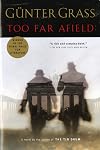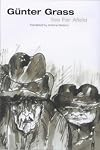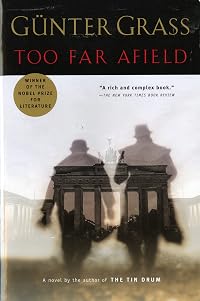
Too Far Afield
by Günter Grass
On This Page
Description
The winner of the Nobel Prize for Literature tells the story of two old men in Berlin -- one a former East German cultural functionary, the other a former mid-level spy -- observing life in the former German Democratic Republic after the fall of the Wall in 1989. Grass weaves a deeply human story laced with pain and humor in equal measure.Tags
Recommendations















Member Reviews
Rarely do I give up on a book, but trying to read "Too Far Afield" was a painful experience. I made it to page 104 (of 658 pages) setting the book aside several times and finally quit. This novel is not for the average reader seeking relaxing, pleasurable entertainment.
It came to my attention after researching on the internet that the story involves the personality of a famous German author who’s name or identity is never revealed in the book... at least not by page 104. All that is revealed is a character named Fonty. And to confuse things, there are two Fontys - one born in 1919 and the other born in 1819. And they both had wives named Emilie.
At any given time, either one of the Fontys could be the subject of observation but you show more never know which until all of a sudden a date or incident is thrown into the plot and you realize you are not in the same era you had been just reading about, and by the time you figure that out, you start to analyze everything you have previously read and question whether you should continue.
Throughout the story references are made to German names and incidents that unless you are a German citizen, or a German historian, you will most likely know nothing about, and therefore understanding the plot is like wading through a dense fog. In one paragraph alone there was mention of "The Likedeeler Project", "Stortebeker’s piracy", and "the case of Oskar Panizza". And from the very start “The Immortal” is mentioned over and over. Who is the “Immortal”? The mysterious German author? Finally on page 86 the narrator throws out a clue that “The Immortal” includes “the archival collective” - whatever that means. German politics? German espionage? At this point does anyone really care?
But I have been rambling- let me tell you what this story is supposed to be about. It’s 1989 and two 70 year old men are watching the Berlin Wall being torn down. That much is clear. One or both of them were previously spies and may still be. I didn’t get far enough into the plot to find out where their loyalties lie. But, they appear to trust each other and are working together methodically destroying files in the Archival building.
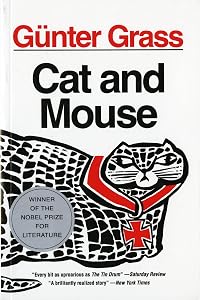
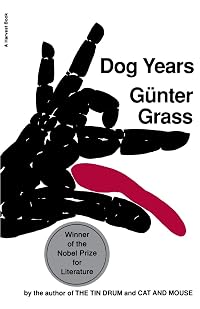
Based on the description on the back cover it should have been a captivating story. Gunter Grass is a wonderful writer. He won the Nobel Prize in Literature. I highly recommend his other books "The Tin Drum" , "Cat and Mouse", and "Dog Years". But "Too Far Afield"? it was just too far afield for me. show less
It came to my attention after researching on the internet that the story involves the personality of a famous German author who’s name or identity is never revealed in the book... at least not by page 104. All that is revealed is a character named Fonty. And to confuse things, there are two Fontys - one born in 1919 and the other born in 1819. And they both had wives named Emilie.
At any given time, either one of the Fontys could be the subject of observation but you show more never know which until all of a sudden a date or incident is thrown into the plot and you realize you are not in the same era you had been just reading about, and by the time you figure that out, you start to analyze everything you have previously read and question whether you should continue.
Throughout the story references are made to German names and incidents that unless you are a German citizen, or a German historian, you will most likely know nothing about, and therefore understanding the plot is like wading through a dense fog. In one paragraph alone there was mention of "The Likedeeler Project", "Stortebeker’s piracy", and "the case of Oskar Panizza". And from the very start “The Immortal” is mentioned over and over. Who is the “Immortal”? The mysterious German author? Finally on page 86 the narrator throws out a clue that “The Immortal” includes “the archival collective” - whatever that means. German politics? German espionage? At this point does anyone really care?
But I have been rambling- let me tell you what this story is supposed to be about. It’s 1989 and two 70 year old men are watching the Berlin Wall being torn down. That much is clear. One or both of them were previously spies and may still be. I didn’t get far enough into the plot to find out where their loyalties lie. But, they appear to trust each other and are working together methodically destroying files in the Archival building.
Based on the description on the back cover it should have been a captivating story. Gunter Grass is a wonderful writer. He won the Nobel Prize in Literature. I highly recommend his other books "The Tin Drum" , "Cat and Mouse", and "Dog Years". But "Too Far Afield"? it was just too far afield for me. show less
I think I liked this better than The Tin Drum, although I would understand if most people thought I was crazy. Two men, tied together through history, and making their ways through a Nazi, a communist, and a capitalist regime. They push and pull, and are utterly flawed. And random.
A very dense novel that doesn't extend a welcome mat to the average reader--and still is rather challenging to a reader of Theodor Fontane, who isn't an author most english-speaking readers encounter. The novel operates on at least two levels--sometimes simultaneously, where the characters at the time of the crumbling of the Berlin wall mirror (and sometimes are) the characters of Theodor Fontane, novelist, and an investigator. A central motif is that of the paternoster, a constantly running opendoored elevator, which operates on multiple levels at once, as well. Not at all an easy read, but proof that Grass has far more intricate and interesting things to offer than Tin Drum
One of the most interesting parts of this book is the reaction of characters from East Berlin to the wall going down. Inflation of rents and the cost of living is a big change to normal everyday life. Commercials all over the place are replacing the boring political slogans and propoganda. Theo is consumed by doubt about his political destiny and about the relationship with his wife.
(Goodreads) From the Nobel Prize-winning author of My Century and The Tin Drum, a novel of broad historical proportions set in Berlin during the years of German reunification.
Marvelous, fascinating, unique and simply Grass.
German Literature
Members
- Recently Added By
Lists

German Literature
518 works; 56 members

1990s
309 works; 17 members
Author Information

214+ Works 22,879 Members
Günter Wilhelm Grass was born on October 16, 1927 in the Free City of Danzig, which is now Gdansk, Poland. He was a member of the Hitler Youth and at the age of 17, he was drafted into the German army. Near the end of the war, he served as a tank gunner in the 10th SS Panzer Division. He was captured by the Americans and forced to visit the newly show more liberated Dachau concentration camp. After his release from a POW camp in 1946, he worked in a potash mine and as a stonemason's apprentice and studied painting and sculpture in Düsseldorf. His first novel, The Tin Drum, was published in 1959. It was adapted into a film and won the Academy Award for Best Foreign Film in 1979. His other works included Cat and Mouse, Dog Years, From the Diary of a Snail, The Flounder, The Rat, and Crabwalk. He also wrote a memoir entitled Peeling the Onion. He received the Nobel Prize for Literature in 1999. He was also a political activist and liberal provocateur. He advocated for environmental conservation, debt relief for poor countries, and generous policies regarding political asylum. He died on April 13, 2015 at the age of 87. (Bowker Author Biography) show less
Some Editions
Awards and Honors
Series
Belongs to Publisher Series
Keltainen kirjasto (296)
dtv (12447)
Common Knowledge
- Canonical title
- Too Far Afield
- Original title
- Ein weites Feld
- Original publication date
- 1995
- People/Characters*
- Theo Wuttke; Ludwig Hoftaller
- Important places
- Berlin, Germany; German Democratic Republic
- Important events
- Wendezeit; Fall of the Berlin Wall
- First words*
- Wir vom Archiv nannten ihn Fonty; nein, viele die ihm über den Weg liefen, sagten: "Na, Fonty, wieder mal Post von Friedlaender? Und wie gehts dem Fräulein Tochter? Überall wird von Metes Hochzeit gemunkelt, nicht nur auf ... (show all)dem Prenzlberg. Ist da was dran, Fonty?"
Selbst sein Tagundnachtschatten rief: "Aber nein, Fonty! Das war Jahre vor den revolutionären Umtrieben, als Sie Ihren Tunnelbrüdern bei Funzellicht was Schottisches, ne Ballade geboten haben..." - Quotations*
- Stimmt, lieber Freundlich. Höre und akzeptiere Ihren Einwand 48 und 53, im März und Juni gab es Tote; diesmal ging es unblutig zu. "Sanfte Revolution" war das Wort. Aber nur deshalb floß kein Blut, weil die Arbeiter- und B... (show all)auernmacht nicht mehr Staat sein wollte, vielmehr beschloss, in dem anderen aufzugehen, auf dass wir nun mit dem vergößerten Weststaat - dank unserer Mitgift, dem Knacks in der Biographie - zur Last fallen werden, bis der an sich selbst gescheiterte Kommunismus seinen Zwillingsbruder, den jetzt noch vital auftrumpfenden Kapitalismus, gleichfalls in die Grube gezogen haben wird.
- Last words*
- (Click to show. Warning: May contain spoilers.)Wir lasen: "Mit ein wenig Glück erleben wir uns in kolossal menschenleerer Gegend. La petite trägt mir auf, das Archiv zu grüßen, ein Wunsch, dem ich gern nachkomme. Wir gehen oft in die Pilze. Bei stabilen Wetter ist Weitsicht möglich. Übrigens täuschte sich Briest; ich jedenfalls sehe dem Feld ein Ende ab..."
- Publisher's editor*
- Helmut Frielinghaus
- Original language
- German
*Some information comes from Common Knowledge in other languages. Click "Edit" for more information.
Classifications
- Genres
- Fiction and Literature, General Fiction
- DDC/MDS
- 833.914 — Literature & rhetoric German & related literatures German fiction 1900- 1900-1990 1945-1990
- LCC
- PT2613 .R338 .W453413 — Language and Literature German, Dutch and Scandinavian literatures German literature Individual authors or works 1860/70-1960
- BISAC
Statistics
- Members
- 654
- Popularity
- 44,358
- Reviews
- 10
- Rating
- (3.37)
- Languages
- 13 — Catalan, Czech, Danish, Dutch, English, Finnish, French, German, Italian, Norwegian (Bokmål), Portuguese, Spanish, Swedish
- Media
- Paper, Ebook
- ISBNs
- 37
- UPCs
- 1
- ASINs
- 4