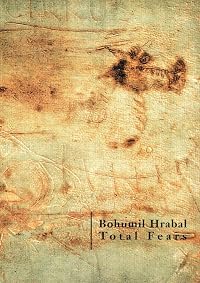
Total Fears: Letters to Dubenka
by Bohumil Hrabal
On This Page
Description
In these letters written to April Gifford (Dubenka) between 1989 and 1991 but never sent, Bohumil Hrabal (1914-1997) chronicles the momentous events of those years as seen, more often than not, from the windows of his favorite pubs. In his palavering, stream-of-conscious style that has marked him as one of the major writers and innovators of postwar European literature, Hrabal gives a humorous and at times moving account of life in Prague under Nazi occupation, Communism, and the brief show more euphoria following the revolution of 1989 when anything seemed possible, even pink tanks. Interspersed are fragmented memories of trips taken to Britain âe" as he attempted to track down every location mentioned in Eliotâe(tm)s âeoeThe Waste Landâe âe" and the United States, where he ends up in one of Dylan Thomasâe(tm)s haunts comparing the waitresses to ones he knew in Prague. The result is a masterful blend of personal history and fee association rendered in a prose as powerful as it is poetic.. show lessTags
Recommendations



















Member Reviews
It's 1989. Bohumil Hrabal is old. He writes letters to a young American named April, called Dubenka, a young woman fascinated with Bohemian (capital B) culture and his writing, which he thinks is mostly in the past.
He writes about aging, about the grief over his dead wife, about the kittens he takes care of.
He writes – extensively – about the concept of killing yourself by jumping out of a fifth floor window. (Defenestration, after all, is a genuinely Pragueish concept.)
He writes about hanging out at his old pub, drinking beer. Really, there's an awful lot of beer in this.
He writes about literature, art, movies. He fanboys Hasek, Sandburg, Warhol and Kerouac, he ponders Kundera and Havel – the ones who went in exile (whether show more abroad or in jail) for their convictions, while he refused to sign the charter and stayed to be able to write brilliant, subversive but not overtly political books.
He writes to a young American who seems to have opened a window for him, a new way of looking at himself and his work. He writes about his life, his youth, his books, how unashamedly (and rightly so) proud he is of Too Loud A Solitude and what he had to do to be able to write it.
He writes about the American book tour she set up for him, a Spinal Tap-esque trip through a strange land filled with strange people (being cluelessly if benignly racist in the process), speaking at colleges where they only want to ask him about politics, trying to get photo ops with people he admires who may or may not have ever heard of a drunken, aging Czech genius.
And how it all seems to go out the window (and yet somehow becomes even more important) when the demonstrations start in Vaclav Square, when the velvet revolution comes, when students take to the streets and demand the freedom he always found in writing. Does he have the right to join them? Does he have the duty? Does he even want to?
He writes letters. He doesn't send them. Seven years later, after he falls out of a fifth floor window while feeding pigeons – it's ruled an accident, of course – presumably, she gets to read them. And I can't help but wonder if she recognises herself.
Everytime god – or the government, which pretty much adds up to the same thing in the 20th century – closes a door, people open windows instead. Bohumil Hrabal's books is one of the most fascinating ones, and his autobiography (if you can call this spontaneous, funny, matter-of-factly sad, self-righteous, self-deprecating collection of letters that) is no exception. I can't do the beauty of his prose justice with anything I could write, but you owe it to yourself to read Hrabal. show less
He writes about aging, about the grief over his dead wife, about the kittens he takes care of.
He writes – extensively – about the concept of killing yourself by jumping out of a fifth floor window. (Defenestration, after all, is a genuinely Pragueish concept.)
He writes about hanging out at his old pub, drinking beer. Really, there's an awful lot of beer in this.
He writes about literature, art, movies. He fanboys Hasek, Sandburg, Warhol and Kerouac, he ponders Kundera and Havel – the ones who went in exile (whether show more abroad or in jail) for their convictions, while he refused to sign the charter and stayed to be able to write brilliant, subversive but not overtly political books.
He writes to a young American who seems to have opened a window for him, a new way of looking at himself and his work. He writes about his life, his youth, his books, how unashamedly (and rightly so) proud he is of Too Loud A Solitude and what he had to do to be able to write it.
He writes about the American book tour she set up for him, a Spinal Tap-esque trip through a strange land filled with strange people (being cluelessly if benignly racist in the process), speaking at colleges where they only want to ask him about politics, trying to get photo ops with people he admires who may or may not have ever heard of a drunken, aging Czech genius.
And how it all seems to go out the window (and yet somehow becomes even more important) when the demonstrations start in Vaclav Square, when the velvet revolution comes, when students take to the streets and demand the freedom he always found in writing. Does he have the right to join them? Does he have the duty? Does he even want to?
He writes letters. He doesn't send them. Seven years later, after he falls out of a fifth floor window while feeding pigeons – it's ruled an accident, of course – presumably, she gets to read them. And I can't help but wonder if she recognises herself.
Everytime god – or the government, which pretty much adds up to the same thing in the 20th century – closes a door, people open windows instead. Bohumil Hrabal's books is one of the most fascinating ones, and his autobiography (if you can call this spontaneous, funny, matter-of-factly sad, self-righteous, self-deprecating collection of letters that) is no exception. I can't do the beauty of his prose justice with anything I could write, but you owe it to yourself to read Hrabal. show less
Only read the first two letters. The first one is soooo haunting yet beautiful.
"Memory makes the past into a new present." --Hrabal
3 brieven aan Miss 'Dubenka' April, een Amerikaanse studente die dweepte met Hrabal en waar hijzelf als een rotsblok voor gevallen was. Gelal en gezwets van de bovenste plank, een poëtische trepanatie. Maakt ons benieuwd naar meer brieven van Hrabal.
Dec 29, 2015Dutch
Drie brieven aan een Amerikaanse studente die tijdens een zomercursus Hrabal opzocht, na zes dagen weer vertrok, een dolverliefde Hrabal achterlatend. De brieven zijn nooit verstuurd, en dienen zowel de literatuur als de troost. Mercks geeft jammer genoeg in zijn nawoord niet mee hoeveel Dubenka-brieven er in totaal zijn, noch of er ooit een volledigere vertaling zal verschijnen.
Ratings
Members
- Recently Added By
Author Information

166+ Works 7,897 Members
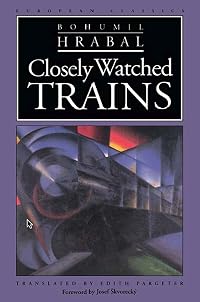
Hrabal worked as a lawyer, clerk, railwayman, traveling salesman, steelworker, and laborer before turning to literature in 1962. In his tragic-comic novels and short stories he concentrates on the everyday lives of ordinary people. Thomas Lask says, "Hrabal shows an offbeat, original mind, a fey imagination and a sure hand in constructing his show more tales" (N.Y. Times Bk. Review). Hrabal's novel Closely Watched Trains (1965) was made into an internationally successful movie. (Bowker Author Biography) show less
Some Editions
Common Knowledge
- Canonical title
- Total Fears: Letters to Dubenka
- Original title
- Totální strachy
Classifications
- Genres
- Fiction and Literature, General Fiction
- DDC/MDS
- 891.86654 — Literature & rhetoric Literatures of other languages East Indo-European and Celtic literatures West and South Slavic languages (Bulgarian, Slovene, Polish, Czech, Slovak, Serbo-Croatian, and Macedonian) Czech Czech letters 1900–1989 Late 20th century 1945–1989
- LCC
- PG5039.18 .R2 .D67213 — Language and Literature Slavic languages and literatures. Baltic languages. Albanian language Slavic. Baltic. Albanian Slavic Czech
- BISAC
Statistics
- Members
- 154
- Popularity
- 212,929
- Reviews
- 5
- Rating
- (4.02)
- Languages
- 6 — Dutch, English, French, Italian, Polish, Swedish
- Media
- Paper, Ebook
- ISBNs
- 10
- ASINs
- 1