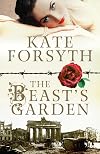
The Beast's Garden
by Kate Forsyth
On This Page
Description
It's August 1939 in Germany, and Ava's world is in turmoil. To save her father, she must marry a young Nazi officer, Leo von Löwenstein, who works for Hitler's spy chief in Berlin. However, she hates and fears the brutal Nazi regime, and finds herself compelled to stand against it. Ava joins an underground resistance movement that seeks to help victims survive the horrors of the German war machine. But she must live a double life, hiding her true feelings from her husband, even as she falls show more in love with him. Gradually she comes to realise that Leo is part of a dangerous conspiracy to assassinate Hitler. As Berlin is bombed into ruins, the Gestapo ruthlessly hunt down all resistance and Ava finds herself living hand-to-mouth in the rubble of the shell-shocked city. Both her life and Leo's hang in the balance. show lessTags
Recommendations















Member Reviews
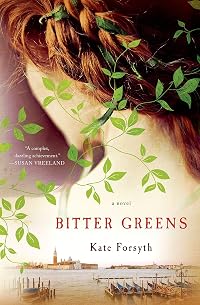
Kate Forsyth is one of my favourite Australian authors, and her re-telling of the Rapunzel fairytale in Bitter Greens is still with me, years after reading it.
The Beast's Garden is Kate Forsyth's latest re-telling and is based on the fairytale Beauty and the Beast. In this case, the beauty is Ava, a talented and beautiful young German woman and the beast of the title is Leo, an intelligent Nazi Officer with an unexpected love of poetry.
Set in Nazi Germany during WWII, Ava rejects all of Leo's advances (despite her attraction to him) until the actions of the Gestapo begin to impact those in her immediate circle, including her Jewish friends.
Taking place in Berlin from 1938 - 1945, we see how regular Germans react to the Gestapo and the show more Hitler regime, and the impact of war on the city's citizens. Ava takes risks to defy Hitler and joins an underground resistance movement, and sees many of her friends arrested, tortured and killed. Leo works for the Abwehr (secret intelligence service) but Ava isn't quite sure if he's a spy or not and has to tread carefully.
Ava's childhood friend is sent to Buchenwald concentration camp and the several chapters from his perspective are thoroughly heartbreaking and a haunting reminder of the atrocities committed during the Hitler regime.
As I was reading this love story filled with brutal destruction, hate and death, (as well as a love of literature) I didn't have the sense of reading a re-telling of Beauty and the Beast in the same way as Bitter Greens. I understand the analogy, but for me The Beast's Garden reads like a WWII historical novel with a fresh perspective.
A handful of main characters in the book are fictional, however I've since learned that all events that take place during the novel and many of the people mentioned were based on real figures from history and required years of research.
The Beast's Garden is bound to appeal to a wide market, those looking for a complex love story and those who want a fresh perspective on the fall of Berlin and the impact of this war on everyday Germans.
* Copy courtesy of the author for review via Penguin Random House Australia and NetGalley * show less
The Beast's Garden is Kate Forsyth's latest re-telling and is based on the fairytale Beauty and the Beast. In this case, the beauty is Ava, a talented and beautiful young German woman and the beast of the title is Leo, an intelligent Nazi Officer with an unexpected love of poetry.
Set in Nazi Germany during WWII, Ava rejects all of Leo's advances (despite her attraction to him) until the actions of the Gestapo begin to impact those in her immediate circle, including her Jewish friends.
Taking place in Berlin from 1938 - 1945, we see how regular Germans react to the Gestapo and the show more Hitler regime, and the impact of war on the city's citizens. Ava takes risks to defy Hitler and joins an underground resistance movement, and sees many of her friends arrested, tortured and killed. Leo works for the Abwehr (secret intelligence service) but Ava isn't quite sure if he's a spy or not and has to tread carefully.
Ava's childhood friend is sent to Buchenwald concentration camp and the several chapters from his perspective are thoroughly heartbreaking and a haunting reminder of the atrocities committed during the Hitler regime.
As I was reading this love story filled with brutal destruction, hate and death, (as well as a love of literature) I didn't have the sense of reading a re-telling of Beauty and the Beast in the same way as Bitter Greens. I understand the analogy, but for me The Beast's Garden reads like a WWII historical novel with a fresh perspective.
A handful of main characters in the book are fictional, however I've since learned that all events that take place during the novel and many of the people mentioned were based on real figures from history and required years of research.
The Beast's Garden is bound to appeal to a wide market, those looking for a complex love story and those who want a fresh perspective on the fall of Berlin and the impact of this war on everyday Germans.
* Copy courtesy of the author for review via Penguin Random House Australia and NetGalley * show less
Inspired by the Grimm Brothers fairytales, most notably ‘The Singing, Springing Lark', a variant of Beauty and the Beast, Kate Forsyth weaves a compelling tale of romance, war, heartbreak and courage in The Beast's Garden.
The Beast's Garden opens in 1938 as Hitler begins to persecute the Jewish population of Berlin. Nineteen year old songstress Ava Falkenhorst is stunned by the violence, and horrified when close family friends, the Feidlers are targeted simply for being Jewish. When Ava's childhood friend Rupert is transported to Buchenwald, and her father threatened with arrest, Ava permits the attentions of Leo von Lowenstein, a high ranking handsome Nazi officer torn between duty and honour. Though their marriage secures Ava's show more father's safety, Ava, who is determined to help the Feidlers and others like them, can't trust that Leo will not betray her and hides her subversive activities, unaware that her husband is also working against the regime he serves.
With authentic and compelling detail Forsyth explores life under the Nazi regime in the lead up and during World War Two. The terrible suffering of the Jewish population and their attempts to defy Hitler are exhaustively documented, but rarely is mention made of the Germans who rebelled against the Gestapo in both small and significant ways. Forsyth acknowledges the efforts of the German people who risked their own lives to mitigate the attrition, and real historical figures, such as Admiral Canaris, and Harro and Libertas Schulze-Boysen of the Red Orchestra Resistance, who actively worked to disrupt Hitler's rule.
Not that Forsyth shies away from illustrating the experience of Nazi rule for the Jewish. Threads of the story illustrate the harrowing experiences of Rupert, imprisoned in Buchenwald, a concentration camp ruled by Karl-Otto Koch and his sadistic wife known as The Witch of Buchenwald; and life for Rupert's sister, Jutta, in Berlin as she becomes involved in the resistance and struggles to stay one step ahead of the SS.
It is the relationship between Ava and Leo that echoes the fairytales we are familiar with. Ava, the innocent, brave beauty, Leo the 'Beast'; an unlikely love, besieged by tragedy, that blooms, like the roses that feature in their courtship. Rich characterisation ensures neither Ava nor Leo are mere cliches, and though there is a happy ending, it is hard won.
Skillfully crafted, The Beast's Garden is another magnificent historical novel seamlessly melding truth and fiction, from Kate Forsyth. A wonderful tale of daring and courage, of struggle and survival, of love and loyalt, this is a 'must read'. show less
The Beast's Garden opens in 1938 as Hitler begins to persecute the Jewish population of Berlin. Nineteen year old songstress Ava Falkenhorst is stunned by the violence, and horrified when close family friends, the Feidlers are targeted simply for being Jewish. When Ava's childhood friend Rupert is transported to Buchenwald, and her father threatened with arrest, Ava permits the attentions of Leo von Lowenstein, a high ranking handsome Nazi officer torn between duty and honour. Though their marriage secures Ava's show more father's safety, Ava, who is determined to help the Feidlers and others like them, can't trust that Leo will not betray her and hides her subversive activities, unaware that her husband is also working against the regime he serves.
With authentic and compelling detail Forsyth explores life under the Nazi regime in the lead up and during World War Two. The terrible suffering of the Jewish population and their attempts to defy Hitler are exhaustively documented, but rarely is mention made of the Germans who rebelled against the Gestapo in both small and significant ways. Forsyth acknowledges the efforts of the German people who risked their own lives to mitigate the attrition, and real historical figures, such as Admiral Canaris, and Harro and Libertas Schulze-Boysen of the Red Orchestra Resistance, who actively worked to disrupt Hitler's rule.
Not that Forsyth shies away from illustrating the experience of Nazi rule for the Jewish. Threads of the story illustrate the harrowing experiences of Rupert, imprisoned in Buchenwald, a concentration camp ruled by Karl-Otto Koch and his sadistic wife known as The Witch of Buchenwald; and life for Rupert's sister, Jutta, in Berlin as she becomes involved in the resistance and struggles to stay one step ahead of the SS.
It is the relationship between Ava and Leo that echoes the fairytales we are familiar with. Ava, the innocent, brave beauty, Leo the 'Beast'; an unlikely love, besieged by tragedy, that blooms, like the roses that feature in their courtship. Rich characterisation ensures neither Ava nor Leo are mere cliches, and though there is a happy ending, it is hard won.
Skillfully crafted, The Beast's Garden is another magnificent historical novel seamlessly melding truth and fiction, from Kate Forsyth. A wonderful tale of daring and courage, of struggle and survival, of love and loyalt, this is a 'must read'. show less
I know I can always rely on Kate Forsyth’s books for a fantastic story and a happy ending, plus The Beast’s Garden was on my list of books I’m looking forward to for the second half of 2015, so when Kate offered me a copy, it was an instant YES PLEASE! The Beast’s Garden is no exception to this – it has a cracking storyline, intrigue, romance and a finale that will blow your socks off. Oh, and there are some dreadfully sad moments too. But ultimately this book will leave you smiling at the power of love and friendship.
For those of you who like your fairy tales, The Beast’s Garden is a retelling of the Grimm brothers’ version of the Beauty and the Beast tale, The Singing, Springing Lark. Now, I’m not familiar with this show more tale but it was really, really difficult not to Google it during the course of The Beast’s Garden to see what happens! So for me, the majority of the storyline was a surprise (I can barely remember what happened in Beauty and the Beast, I think I’ve only seen the Disney film once…yes, sacrilege I know) but for those who are familiar with the tale, you will see some familiar motifs. The main difference is that this story is set in Nazi Germany in the lead up to and during World War II. I’ve read some great stories of WWII from the German point of view (The Undertaking by Audrey Magee is another one) and this book is no exception. It captures the spirit that there were a lot of innocent people caught up in a war that they didn’t really agree it.
The Beauty of this story is Ava, a talented singer who is good friends with a Jewish family. As the story opens on the Night of the Broken Glass, Ava runs to the aid of the Feidlers. She is stopped by a handsome young soldier but still goes to their aid. The Feidlers are like family to Ava, their son Rupert shares her birthday and they are both fans of jazz. But from this day on, life gets more difficult for the Feidlers. They are evicted from their home and Rupert is taken away to a camp called Buchenwald. Life in Berlin is getting dangerous and it’s only made worse when Ava’s father is arrested. To get him safely out of Germany, Ava must marry the handsome soldier – Leo von Lowenstein.
It’s not really a hardship for Ava at first – Leo is handsome and attentive and she’s fallen for him – but Ava desperately wants to help the resistance to thwart Hitler and ensure the Jewish people get to safety. She acts in a clandestine way, but it later turns out that Leo himself is a spy, part of a group trying to oust Hitler. It’s then that the pair fall even deeper in love with their shared goal. But as the war continues, things get worse for the main characters – can Ava save them all?
In the plot summary above, I’ve left out quite a bit of detail for two reasons – one, to coerce you into reading this fantastic story and two, because the story is crammed of excitement, plot twists and thriller-worthy action it would take a long time to describe (and ruin all the fun). Leo and Ava’s dangerous games are balanced with snippets of life of Rupert in Buchenwald where the suffering gives a sombre tone. It’s humbling and sorrowful to read about the kinds of things that happened to people simply because of their religion or political views. Jutta, Rupert’s sister, is part of a group of Jewish people trying to smuggle others out of the country and bring down Hitler. We also see the how Ava’s sister’s life is on the up and up in a relationship with a high ranking Nazi official – and then how it begins to unravel.
There are also many real life figures who appear on these pages, from Hitler himself to the Mitford sisters, Harro and Libertas Schulze-Boysen and Admiral Canaris. All the real life characters are treated with the respect (or distain in Hitler’s case) they deserve. Kate Forsyth’ excellent storytelling has made me research more into the role of the German resistance – it’s fascinating, and a little-told part of history for me. The fictional characters are brilliantly detailed and unforgettable. Ava and Leo’s romance is truly something out of a fairy tale – it’s a rush of passion, love and determination. The finale just demonstrates that even more – it’s wild and crazy but powered by love. I particularly enjoyed how each of the characters we had gotten to know through the course of the book got their own closure – so often you wonder what happened to a minor character but never find out, but it’s not the case here.
I read this book in great big batches – the storyline will carry you away and the characters are unforgettable. This is Kate Forsyth at her best – read it!
Thank you to Kate Forsyth and Random House for the eARC. My review is honest.
http://samstillreading.wordpress.com show less
For those of you who like your fairy tales, The Beast’s Garden is a retelling of the Grimm brothers’ version of the Beauty and the Beast tale, The Singing, Springing Lark. Now, I’m not familiar with this show more tale but it was really, really difficult not to Google it during the course of The Beast’s Garden to see what happens! So for me, the majority of the storyline was a surprise (I can barely remember what happened in Beauty and the Beast, I think I’ve only seen the Disney film once…yes, sacrilege I know) but for those who are familiar with the tale, you will see some familiar motifs. The main difference is that this story is set in Nazi Germany in the lead up to and during World War II. I’ve read some great stories of WWII from the German point of view (The Undertaking by Audrey Magee is another one) and this book is no exception. It captures the spirit that there were a lot of innocent people caught up in a war that they didn’t really agree it.
The Beauty of this story is Ava, a talented singer who is good friends with a Jewish family. As the story opens on the Night of the Broken Glass, Ava runs to the aid of the Feidlers. She is stopped by a handsome young soldier but still goes to their aid. The Feidlers are like family to Ava, their son Rupert shares her birthday and they are both fans of jazz. But from this day on, life gets more difficult for the Feidlers. They are evicted from their home and Rupert is taken away to a camp called Buchenwald. Life in Berlin is getting dangerous and it’s only made worse when Ava’s father is arrested. To get him safely out of Germany, Ava must marry the handsome soldier – Leo von Lowenstein.
It’s not really a hardship for Ava at first – Leo is handsome and attentive and she’s fallen for him – but Ava desperately wants to help the resistance to thwart Hitler and ensure the Jewish people get to safety. She acts in a clandestine way, but it later turns out that Leo himself is a spy, part of a group trying to oust Hitler. It’s then that the pair fall even deeper in love with their shared goal. But as the war continues, things get worse for the main characters – can Ava save them all?
In the plot summary above, I’ve left out quite a bit of detail for two reasons – one, to coerce you into reading this fantastic story and two, because the story is crammed of excitement, plot twists and thriller-worthy action it would take a long time to describe (and ruin all the fun). Leo and Ava’s dangerous games are balanced with snippets of life of Rupert in Buchenwald where the suffering gives a sombre tone. It’s humbling and sorrowful to read about the kinds of things that happened to people simply because of their religion or political views. Jutta, Rupert’s sister, is part of a group of Jewish people trying to smuggle others out of the country and bring down Hitler. We also see the how Ava’s sister’s life is on the up and up in a relationship with a high ranking Nazi official – and then how it begins to unravel.
There are also many real life figures who appear on these pages, from Hitler himself to the Mitford sisters, Harro and Libertas Schulze-Boysen and Admiral Canaris. All the real life characters are treated with the respect (or distain in Hitler’s case) they deserve. Kate Forsyth’ excellent storytelling has made me research more into the role of the German resistance – it’s fascinating, and a little-told part of history for me. The fictional characters are brilliantly detailed and unforgettable. Ava and Leo’s romance is truly something out of a fairy tale – it’s a rush of passion, love and determination. The finale just demonstrates that even more – it’s wild and crazy but powered by love. I particularly enjoyed how each of the characters we had gotten to know through the course of the book got their own closure – so often you wonder what happened to a minor character but never find out, but it’s not the case here.
I read this book in great big batches – the storyline will carry you away and the characters are unforgettable. This is Kate Forsyth at her best – read it!
Thank you to Kate Forsyth and Random House for the eARC. My review is honest.
http://samstillreading.wordpress.com show less
This book took a while to get into; but once hooked, it was a wild ride to the finish. I went in expecting a fantastic retelling of a beloved fairytale in a time era that fascinates me. What I got was so much more! Drama, resistance, love, and horror all play a large part in the story. There's something for everyone in this Kate Forsyth work.
The characters, by and large, are sympathetic and feel real. Let's just say I fell in love with Leo from the very beginning. He's an honorable and dignified man, from a privileged background, who is faced with horrible decisions and the tragedy of the Nazi hierarchy. Some of the choices he’s forced to make will make your heart bleed; needless to say, the reader will find him very relatable.
I ended show more up loving Ava as well. It took me a while to warm to her; at times, she could read a bit Mary Sue-ish. However, as tragedy upon tragedy is visited upon her family and friends, I could see her mature and grow as a woman as she made difficult decisions. As the tension ratcheted up with each resistance group and subtle act of defiance Ava involved herself with, the reader can't help but be sucked in chapter by chapter, not wanting to stop for anything.
I have to give special props to the author for her careful attention to historical detail. From the minutest snapshot of daily life in Nazi Germany to the discussion of the various formats of German resistance, the reader gets a real picture of a society under siege from fear and horror. Where a simple word or stray glance could send you to prison and the guillotine, the subtle, and sometimes not so subtle, actions Ava and Leo took stand out all the more.
I enjoyed learning about the various formats in which that German resistance took shape. From college students handing out pamphlets to major movements in the military, the reader gets a real sense of how people from all steps of German society contributed to the attempted overthrow of a megalomaniac tyrant. I personally had never heard of some of these movements like the Baum Group nor knew much about such organizations as the Red Orchestra and Canaris' Abwehr. For this alone, the book is worth recommending as historical fiction done right.
Yet also impressing me was the author’s very careful attention to the Holocaust details as they took place in, and impacted the community of, Jewish Berlin. So many times in the past I've seen authors summarize or skim over small details to hurry the story along. When one even gets the big details of such a tragic event wrong, I feel like history is being dealt an injustice. And yes I know, this is only historical fiction and not a documentary on the Holocaust, but I feel writing such an event and using it as a backdrop or device in the story requires respect.
For what areas use Holocaust aspects, I felt the author did this. From the intimate horrors of Kristallnacht and how it impacted one particular family to the tiny details of deteriorating daily life of the Berlin’s Jews leading up to the last big round up of 1943, the reader gets a real sense of the pain and tragedy experienced during this event. The author even went so far as to give hints of the fate of one of the first transports sent to Riga in November of 1941 from Berlin, a detail so small even some devoted Holocaust scholars might not know it. That's attention to detail, folks!
What started out as just an intriguing idea of a fairytale retold in Nazi Germany quickly grew into something else entirely. I fell in love with the characters the story was told through; both leads are empathetic and realistic, even if Ava could come off as too perfect in the beginning. However, what really drew my love and respect was the author’s attention to the slightest detail, respect for the material, and the suspenseful tale she told of tragedy, survival, and love. This was my introduction to Kate Forsyth, and I find it sets a high bar for me when it comes to her writing. I feel very comfortable recommending this book to anyone, whether you enjoy historical fiction, fairytale retellings, or just the tale of a girl trying to survive and build a life in a world gone mad. show less
The characters, by and large, are sympathetic and feel real. Let's just say I fell in love with Leo from the very beginning. He's an honorable and dignified man, from a privileged background, who is faced with horrible decisions and the tragedy of the Nazi hierarchy. Some of the choices he’s forced to make will make your heart bleed; needless to say, the reader will find him very relatable.
I ended show more up loving Ava as well. It took me a while to warm to her; at times, she could read a bit Mary Sue-ish. However, as tragedy upon tragedy is visited upon her family and friends, I could see her mature and grow as a woman as she made difficult decisions. As the tension ratcheted up with each resistance group and subtle act of defiance Ava involved herself with, the reader can't help but be sucked in chapter by chapter, not wanting to stop for anything.
I have to give special props to the author for her careful attention to historical detail. From the minutest snapshot of daily life in Nazi Germany to the discussion of the various formats of German resistance, the reader gets a real picture of a society under siege from fear and horror. Where a simple word or stray glance could send you to prison and the guillotine, the subtle, and sometimes not so subtle, actions Ava and Leo took stand out all the more.
I enjoyed learning about the various formats in which that German resistance took shape. From college students handing out pamphlets to major movements in the military, the reader gets a real sense of how people from all steps of German society contributed to the attempted overthrow of a megalomaniac tyrant. I personally had never heard of some of these movements like the Baum Group nor knew much about such organizations as the Red Orchestra and Canaris' Abwehr. For this alone, the book is worth recommending as historical fiction done right.
Yet also impressing me was the author’s very careful attention to the Holocaust details as they took place in, and impacted the community of, Jewish Berlin. So many times in the past I've seen authors summarize or skim over small details to hurry the story along. When one even gets the big details of such a tragic event wrong, I feel like history is being dealt an injustice. And yes I know, this is only historical fiction and not a documentary on the Holocaust, but I feel writing such an event and using it as a backdrop or device in the story requires respect.
For what areas use Holocaust aspects, I felt the author did this. From the intimate horrors of Kristallnacht and how it impacted one particular family to the tiny details of deteriorating daily life of the Berlin’s Jews leading up to the last big round up of 1943, the reader gets a real sense of the pain and tragedy experienced during this event. The author even went so far as to give hints of the fate of one of the first transports sent to Riga in November of 1941 from Berlin, a detail so small even some devoted Holocaust scholars might not know it. That's attention to detail, folks!
What started out as just an intriguing idea of a fairytale retold in Nazi Germany quickly grew into something else entirely. I fell in love with the characters the story was told through; both leads are empathetic and realistic, even if Ava could come off as too perfect in the beginning. However, what really drew my love and respect was the author’s attention to the slightest detail, respect for the material, and the suspenseful tale she told of tragedy, survival, and love. This was my introduction to Kate Forsyth, and I find it sets a high bar for me when it comes to her writing. I feel very comfortable recommending this book to anyone, whether you enjoy historical fiction, fairytale retellings, or just the tale of a girl trying to survive and build a life in a world gone mad. show less
Amazon calls this "A retelling of the Grimms' Beauty and the Beast, set in Nazi Germany." I was immediately hooked and started looking for a copy (unfortunately, the book was published in Australia and is only available in the States from Audible and from Amazon on MP3 CD). Amazon's description is really a simplification because Beauty is more well known than The Singing, Springing Lark, which is the actual tale Forsyth was inspired by.
The garden of the title is the Tiergarten in Berlin, literally, the Animal Garden. The Teirgarten is a central location in the story but the name is also a play on words for the city of Berlin during the Second World War. While I have read dozens of books that feature the French Resistance, the Dutch show more Resistance, etc, the German Resistance was new to me. Forsyth explains in her afterward that several characters were real people. They fought against their own in the very heart of the Reich.
I read a review that complained that a certain part of the plot was not feasible. To me, it's fiction. It's a retelling of a fairy tale and those are not true-to-life anyway. Forsyth's book is a love story with challenges to be overcome, which is matched perfectly with the struggle of life in wartime Berlin. I was captivated and drawn in by it. I did not want it to end. show less
The garden of the title is the Tiergarten in Berlin, literally, the Animal Garden. The Teirgarten is a central location in the story but the name is also a play on words for the city of Berlin during the Second World War. While I have read dozens of books that feature the French Resistance, the Dutch show more Resistance, etc, the German Resistance was new to me. Forsyth explains in her afterward that several characters were real people. They fought against their own in the very heart of the Reich.
I read a review that complained that a certain part of the plot was not feasible. To me, it's fiction. It's a retelling of a fairy tale and those are not true-to-life anyway. Forsyth's book is a love story with challenges to be overcome, which is matched perfectly with the struggle of life in wartime Berlin. I was captivated and drawn in by it. I did not want it to end. show less
I met this author this summer at the US Historical Novel Society 2017 semi-annual conference in Oregon. Everyone was oohing and ahing over her, and then she got up at the final Dinner and told an old Irish Tale that was handed down in her family. She was amazing so I bought this book. It's a retelling of Beauty and the Beast (actually, the Grimm Brother's version) set in Nazi Germany. It was wonderful and so much more than I thought I'd get based on the cover. Also, I loved the Narrator. Forsyth is Not just a story-teller, but a writer. She is also a heck of a researcher. (This book includes many many historical figures, including some glances at Dietrich Bonhoeffer.) I am officially a fan. Don't miss this.
This was the first Kate Forsyth novel that I’ve read (I should probably hang my head in shame at that) and I had high hopes for The Beast’s Garden. Perhaps it was going into the novel with such high hopes that ultimately lead to my disappointment with it. While there was much I enjoyed, I wasn’t completely engaged by it.
I’m someone who loves fairy tale re-tellings – so why didn’t I fall head over heels for this?
The relationship development between the Leo and Ava is limited. They almost fall in love instantly – not quiet but almost. Ava is young, just finishing school, when she meets Leo. She is courageous and innocent. However, there were odd little phrases used to describe her feelings for him that jarred with me as show more being too puerile. They marry out of necessity, though the mutual attraction is there. Once they were married, it seemed the relationship development within the novel took a back seat to the rest of the story.
I sometimes felt the novel was trying to do too much in one book and perhaps this is why the relationship aspect of the story became secondary to the other plot arcs. However, those arcs are great and the secondary characters are wonderful - I loved them. Not all Forsyth’s Germans are evil – many do what they can to work against the Nazi regime. Forsyth’s research is excellent and she interweaves heart rending stories covering the variety of atrocities committed by the Nazi’s.
The writing is of course excellent and there is wonderful use of musical imagery in Ava’s POV to describe events around her.
However, it wasn’t until the end of the novel, during Ava’s rescue of Leo, where the writing actually got me turning the pages rapidly - so much so that I didn’t care about the feasibility of the rescue.
Was it a good read – yes? Could it have been more – yes?
3 Stars show less
I’m someone who loves fairy tale re-tellings – so why didn’t I fall head over heels for this?
The relationship development between the Leo and Ava is limited. They almost fall in love instantly – not quiet but almost. Ava is young, just finishing school, when she meets Leo. She is courageous and innocent. However, there were odd little phrases used to describe her feelings for him that jarred with me as show more being too puerile. They marry out of necessity, though the mutual attraction is there. Once they were married, it seemed the relationship development within the novel took a back seat to the rest of the story.
I sometimes felt the novel was trying to do too much in one book and perhaps this is why the relationship aspect of the story became secondary to the other plot arcs. However, those arcs are great and the secondary characters are wonderful - I loved them. Not all Forsyth’s Germans are evil – many do what they can to work against the Nazi regime. Forsyth’s research is excellent and she interweaves heart rending stories covering the variety of atrocities committed by the Nazi’s.
The writing is of course excellent and there is wonderful use of musical imagery in Ava’s POV to describe events around her.
However, it wasn’t until the end of the novel, during Ava’s rescue of Leo, where the writing actually got me turning the pages rapidly - so much so that I didn’t care about the feasibility of the rescue.
Was it a good read – yes? Could it have been more – yes?
3 Stars show less
Members
- Recently Added By
Lists

Books Set in Germany
74 works; 12 members

Top Five Books of 2015
811 works; 241 members
World War II Novels
28 works; 4 members
Books read in 2015
213 works; 5 members

Books Read in 2015
3,299 works; 126 members
Author Information

64+ Works 9,570 Members
She is an Australian author who is well known for her historical novel Bitter Greens, which won the Historical Fiction category on the American Literary Association 2015 Reading List. She is the author of several children's books including The Gypsy Crown, The Puzzle Ring, The Starthorn Tree, The Wildkin's Curse, The Starkin Crown, and Dragon show more Gold. She has also published two heroic fantasy series, The Witches of Eileanan and Rhiannon's Ride, the poetry collection Radiance, and the novel Full Fathom Five under her maiden name, Kate Humphrey. Her more recent books include Vasilisa the Wise and Tales of Other Brave Young Women, and The Silver Well, which won the 2017 Aurealis Award for the best Australian collection. (Bowker Author Biography) show less
Common Knowledge
- Canonical title
- The Beast's Garden
- Original title
- The Beast's Garden
- Original publication date
- 2015
- People/Characters
- Adolf Hitler; Ava von Lowenstein; Capt. Leo von Lowenstein; Dr Otto Falconhorst; Monika Falconhorst; Rupert Feidler (show all 10); Jutta Feidler; Aunt Thea Feidler; Franz Feidler; Gertrud Breiter
- Important places
- Berlin, Germany
- Important events
- World War II (1939 | 1945)
- Epigraph
- 'The government has no right to dominate and restrain them by force or fear of force...no right to transform them into wild beasts or machines...no right to demand unconditional obedience or blind faith...'
Helmut J... (show all)ames Graf von Moltke
Executed 23 January 1945 by the Third Reich - First words
- Ava fell in love the night the Nazis first showed their true faces to the world.
- Last words
- (Click to show. Warning: May contain spoilers.)Now he hoped that death would be a long time coming.
- Original language
- English
Classifications
Statistics
- Members
- 99
- Popularity
- 325,690
- Reviews
- 7
- Rating
- (3.89)
- Languages
- English
- Media
- Paper, Audiobook, Ebook
- ISBNs
- 8
- UPCs
- 1
- ASINs
- 2