On This Page
Description
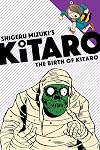
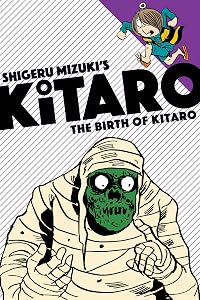
The Birth of Kitaro collects seven of Shigeru Mizuki's early, and beloved, Kitaro stories, making them available for the first time in English, in an all-new, kid-friendly format. These stories are from the golden era of the late 1960s, when Gegege no Kitaro truly hit its stride as an all-ages supernatural series. Mizuki's Kitaro stories are both timelessly relevant and undeniably influential, inspiring a decades-long boom in stories about yokai, Japanese ghosts, and monsters. "Kitaro's show more Birthday" reveals the origin story of the half-yokai boy Kitaro and his tiny eyeball father, Medama Oyaji. "Neko Musume versus Nezumi Otoko" is the first of Mizuki's stories to feature the popular recurring character Neko Musume, a little girl who transforms into a cat when she gets angry or hungry. Other stories in The Birth of Kitaro draw heavily from Japanese folklore, with Kitaro taking on legendary Japanese yokai like the Nopperabo and Makura Gaeshi, and fighting the monstrous recurring villain Gyuki. show lessTags
Recommendations
















Member Reviews
In 2013, comics publisher Drawn & Quarterly released Kitaro a volume collecting stories from Shigeru Mizuki's most well-known and beloved manga series GeGeGe no Kitaro. I absolutely loved the collection and so I was thrilled when Drawn & Quarterly announced that it would be publishing more of Mizuki's GeGeGe no Kitaro in English as part of its Enfant line of kids comics. The Birth of Kitaro, released in 2016, is the first of seven planned Kitaro volumes with stories selected, with input from Mizuki, by the manga's translator and yokai scholar Zack Davisson. The Birth of Kitaro collects seven stories originally published in Japan between 1966 and 1968, an essay about the history of Kitaro as well as an additional guide to yokai written show more by Davisson, and an utterly delightful section devoted to yokai-themed activities such as a word search, a maze, and several matching games among other fun challenges.
The tales in The Birth of Kitaro begin with the origin story of Kitaro, a powerful and mostly benevolent yokai boy. ("The Birth of Kitaro" also explains why his father, Medama Oyaji, is a disembodied/embodied eyeball.) The chapter was first published in the influential alternative manga magazine Garo. The other six stories chosen for the collection were created with a slightly younger audience in mind and were serialized in Shonen Weekly and as well as the magazine's special edition. The second chapter, "Nezumi Otoko versus Neko Musume," introduces one of the series' primary recurring characters. Nezumi Otoko, one of Kitaro's yokai friends even though he is a bit of jerk, tends to either cause trouble or get himself into trouble, needing to be chastised or rescued by Kitaro depending on the circumstances. The other stories included in The Birth of Kitaro are "Nopperabo," "Gyuki," "Yokai of the Mountain Pass," "Makura Gaeshi," and "Hideri Gami."
As much as I loved Drawn & Quarterly's original Kitaro collection, I think that I may love The Birth of Kitaro even more. All of the stories selected for the volume are a little bit creepy, a little bit scary, and a little bit gross, but they are also a great deal of fun and can be rather funny, too. I had actually forgotten just how amusing Mizuki's Kitaro manga could be; the mix of scariness and silliness in the series is marvelous. Mizuki has a terrific sense of humor and comedic timing, perfectly balancing the chuckles with the chills and thrills in the manga collected in The Birth of Kitaro. The horror and the humor work together to create an incredibly enjoyable read. It also doesn't hurt that Kitaro is a likeable lead to begin with, and that the supporting characters like Nezumi Otoko and Medama Oyaji, with their distinctive personalities and entertaining interactions, add a tremendous amount to enjoy in the series as well.
Mizuki's Kitaro manga is steeped in yokai lore which I love. Other readers picking up The Birth of Kitaro may not be as familiar with Japan's mysterious monsters and phenomena, but the volume is still very approachable and accessible. The stories themselves provide an entertaining introduction to yokai (from time to time even Kitaro must do a bit of research in order to effectively confront and deal with troublesome spirits) and for readers who are curious to learn more, Davisson's "Yokai Files" are an informative addition to the volume. The Birth of Kitaro is an excellent all-ages manga, suitable for younger readers who enjoy a bit of a scare and supernatural excitement while still being entertaining and appealing for adults. It's also a wonderful overall package, with fun and games, the manga itself, and background information all together in one place. The new Kitaro series in English is off to a fantastic start with The Birth of Kitaro; I can't wait for the next volume to be released.
Experiments in Manga show less
The tales in The Birth of Kitaro begin with the origin story of Kitaro, a powerful and mostly benevolent yokai boy. ("The Birth of Kitaro" also explains why his father, Medama Oyaji, is a disembodied/embodied eyeball.) The chapter was first published in the influential alternative manga magazine Garo. The other six stories chosen for the collection were created with a slightly younger audience in mind and were serialized in Shonen Weekly and as well as the magazine's special edition. The second chapter, "Nezumi Otoko versus Neko Musume," introduces one of the series' primary recurring characters. Nezumi Otoko, one of Kitaro's yokai friends even though he is a bit of jerk, tends to either cause trouble or get himself into trouble, needing to be chastised or rescued by Kitaro depending on the circumstances. The other stories included in The Birth of Kitaro are "Nopperabo," "Gyuki," "Yokai of the Mountain Pass," "Makura Gaeshi," and "Hideri Gami."
As much as I loved Drawn & Quarterly's original Kitaro collection, I think that I may love The Birth of Kitaro even more. All of the stories selected for the volume are a little bit creepy, a little bit scary, and a little bit gross, but they are also a great deal of fun and can be rather funny, too. I had actually forgotten just how amusing Mizuki's Kitaro manga could be; the mix of scariness and silliness in the series is marvelous. Mizuki has a terrific sense of humor and comedic timing, perfectly balancing the chuckles with the chills and thrills in the manga collected in The Birth of Kitaro. The horror and the humor work together to create an incredibly enjoyable read. It also doesn't hurt that Kitaro is a likeable lead to begin with, and that the supporting characters like Nezumi Otoko and Medama Oyaji, with their distinctive personalities and entertaining interactions, add a tremendous amount to enjoy in the series as well.
Mizuki's Kitaro manga is steeped in yokai lore which I love. Other readers picking up The Birth of Kitaro may not be as familiar with Japan's mysterious monsters and phenomena, but the volume is still very approachable and accessible. The stories themselves provide an entertaining introduction to yokai (from time to time even Kitaro must do a bit of research in order to effectively confront and deal with troublesome spirits) and for readers who are curious to learn more, Davisson's "Yokai Files" are an informative addition to the volume. The Birth of Kitaro is an excellent all-ages manga, suitable for younger readers who enjoy a bit of a scare and supernatural excitement while still being entertaining and appealing for adults. It's also a wonderful overall package, with fun and games, the manga itself, and background information all together in one place. The new Kitaro series in English is off to a fantastic start with The Birth of Kitaro; I can't wait for the next volume to be released.
Experiments in Manga show less
I think I enjoyed this less for the story and more for the historical value. I enjoy classic manga quite a bit and while I've heard of Shigeru Mizuki before, I had never read him as it's less of my kind of story.
Still I can see the appeal - the style is very different from today's manga and while there is some harsh parts, overall this should catch elementary school kids quite easily.
Still I can see the appeal - the style is very different from today's manga and while there is some harsh parts, overall this should catch elementary school kids quite easily.
Ratings
Members
- Recently Added By
Lists

Graphic Novels
94 works; 6 members

Humorous, need I say more?
10 works; 1 member

Asiatic Settings
21 works; 1 member

Paranormal & Supernatural
33 works; 1 member

Zombies
8 works; 1 member
Author Information

236+ Works 2,602 Members
Shigeru Mizuki was born as Shigeru Mura in Japan in 1922. He fought in Papua New Guinea during World War II and lost his left arm during a battle. He returned to Japan and initially worked as an illustrator for picture-story shows. He later become one of Japan's leading manga artists and was known for his Gegege no Kitaro series and show more autobiographical works depicting the frontline in Southeast Asia during World War II. He received the Medal with Purple Ribbon in 1991 for his contribution to academics and arts and was recognized as a Person of Cultural Merit by the government in 2010. He died of heart failure on November 30, 2015 at the age of 93. (Bowker Author Biography) show less
Some Editions
Awards and Honors
Series

Classifications
- Genres
- Graphic Novels & Comics, Tween
- DDC/MDS
- 741.5 — Arts & recreation Drawing & decorative arts Drawing Comic books, graphic novels, fotonovelas, cartoons, caricatures, comic strips
- LCC
- NC1709 .M566 — Fine Arts Drawing. Design. Illustration Drawing. Design. Illustration Pictorial humor, caricature, etc.
- BISAC
Statistics
- Members
- 89
- Popularity
- 360,185
- Reviews
- 2
- Rating
- (3.96)
- Languages
- English
- Media
- Paper
- ISBNs
- 2