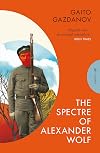
The Spectre of Alexander Wolf
by Gaito Gazdanov
On This Page
Description
Of all my memories, of all my life's innumerable sensations, the most onerous was that of the single murder I had committed.' A man comes across a short story which recounts in minute detail his killing of a soldier, long ago - from the victim's point of view. It's a story that should not exist, and whose author can only be a dead man. So begins the strange quest for the elusive writer 'Alexander Wolf'. A singular classic, The Spectre of Alexander Wolf is a psychological thriller and show more existential inquiry into guilt and redemption, coincidence and fate, love and death. show lessTags
Recommendations












Member Reviews
The initial premise to this story is intriguing – during the Russian Civil War, a 16-year-old encounters an enemy soldier alone in the woods and shoots him, an event that changes him forever. It would be too simple to say he’s haunted by it, but as traumatic memories will do, it floats into his consciousness unprovoked years later, even after he’s settled in Paris as an émigré. The first line grabs you: “Of all my memories, of all life’s innumerable sensations, the most onerous was that of the single murder I had committed.” While no one was a witness, eerily enough he comes across a description of the encounter in a book, and seeks out the author, Alexander Wolf.
While Gazdanov meanders in the plot from there in ways that show more may be dissatisfying to the reader, there is an ephemeral, dream-like quality to his writing, and as in one of his other books, ‘The Buddha’s Return’, this one is highly philosophical. The narrator has a sense of detachment, a little cynicism, and a heightened awareness of the transience of life and the “constant, icy proximity to death”, even as he’s going through his ‘normal life’, reporting on boxing matches, sitting in cafes, and having a love affair. We wonder about the mystery behind Alexander Wolf, and whether he is a split personality, an actual ghost, or some symbol of life ending at pivotal moments and starting again anew. Meanwhile, the actual point of the book seems to be in dualities: randomness and coincidence, life and death, isolation and interconnectedness, chance and fate, passion and intellect, and of course, the narrator and Alexander Wolf. One gets the sense that Gazdanov himself didn’t know where to take his initial premise, but the book succeeds for me because of the intelligence of his ruminations.
Quotes:
On chance, and unforgettable moments:
“Right then, I was struck by the thought that if I wanted to explain fully why this had happened, how it had been possible and how I now came to find myself in the forest on a summer’s night, in the rain, with a woman of whose existence I had known nothing only a few months before (and yet without whom I was now unable to imagine my life), I would have to spend years labouring and taxing my memory. I would probably be able to write a few volumes on it into the bargain. How was it all possible, the steady rhythm of the rain, the feeling of this head resting in my lap – my muscles already begun to get used to the imprint made by this round, tender weight on them – this face I was looking at in the darkness, as if leaning over my own fate, and this unforgettable feeling of blissful plenitude?”
On the cycle of a day:
“When I wake up every morning, I think to myself, Today my life will begin in earnest. I’ll feel as though I’m not much older than sixteen again, and that man who has known so much tragedy and sadness, he who fell asleep in my bed the previous night, will seem alien and distant, and I’ll comprehend neither his inner weariness nor his frustration. Then, as I go to sleep every night, I feel as though I’ve lived a long life, and yet all I’ve taken from it is the loathing and burden of lingering years. And so the day passes.
On happiness:
“If we’re possessed of that tragic, ferocious courage that forces man to live with his eyes open, can we really ever be happy? It’s impossible even to imagine that the world’s most extraordinary people were happy. Shakespeare couldn’t have been happy. Nor could Michelangelo.”
On interconnectedness:
“Every human life is connected to other human lives, those in turn are connected with others, and when we reach the logical end of this sequence of interrelations, we approach the sum total of people inhabiting the vast surface of the terrestrial globe. The constant threat of death in all its endless diversity hangs over every man, every life: catastrophe, train crash, earthquake, tempest, war, illness, accident, all manifestations of a blind and merciless power, a peculiarity of which consists in our inability ever to predict the moment when it – this instantaneous break in the history of the world – will happen.”
On love:
“’Every love affair is an attempt to thwart fate; it’s a naïve illusion of brief immortality,’ he once said. ‘Nevertheless, it’s probably the best thing that we’re ever given to know.’”
On passion:
“She was lying supine, her arms behind her head, without the slightest hint of modesty, gazing at my face with her impossibly serene eyes – it seemed almost incredible. Even when I felt (and not for the first time in my life) that inexplicable synthesis of pure emotion and physical sensation filling not only my entire consciousness, but everything, everything without exception, even the farthest muscles of my body; even then, when she said, ‘You’re hurting me,’ with so languorous an intonation that it seemed entirely misplaced, betraying neither complaint nor protest; and even then, when she gave a spasmodic shudder – her eyes remained just the same: deathly still.” show less
While Gazdanov meanders in the plot from there in ways that show more may be dissatisfying to the reader, there is an ephemeral, dream-like quality to his writing, and as in one of his other books, ‘The Buddha’s Return’, this one is highly philosophical. The narrator has a sense of detachment, a little cynicism, and a heightened awareness of the transience of life and the “constant, icy proximity to death”, even as he’s going through his ‘normal life’, reporting on boxing matches, sitting in cafes, and having a love affair. We wonder about the mystery behind Alexander Wolf, and whether he is a split personality, an actual ghost, or some symbol of life ending at pivotal moments and starting again anew. Meanwhile, the actual point of the book seems to be in dualities: randomness and coincidence, life and death, isolation and interconnectedness, chance and fate, passion and intellect, and of course, the narrator and Alexander Wolf. One gets the sense that Gazdanov himself didn’t know where to take his initial premise, but the book succeeds for me because of the intelligence of his ruminations.
Quotes:
On chance, and unforgettable moments:
“Right then, I was struck by the thought that if I wanted to explain fully why this had happened, how it had been possible and how I now came to find myself in the forest on a summer’s night, in the rain, with a woman of whose existence I had known nothing only a few months before (and yet without whom I was now unable to imagine my life), I would have to spend years labouring and taxing my memory. I would probably be able to write a few volumes on it into the bargain. How was it all possible, the steady rhythm of the rain, the feeling of this head resting in my lap – my muscles already begun to get used to the imprint made by this round, tender weight on them – this face I was looking at in the darkness, as if leaning over my own fate, and this unforgettable feeling of blissful plenitude?”
On the cycle of a day:
“When I wake up every morning, I think to myself, Today my life will begin in earnest. I’ll feel as though I’m not much older than sixteen again, and that man who has known so much tragedy and sadness, he who fell asleep in my bed the previous night, will seem alien and distant, and I’ll comprehend neither his inner weariness nor his frustration. Then, as I go to sleep every night, I feel as though I’ve lived a long life, and yet all I’ve taken from it is the loathing and burden of lingering years. And so the day passes.
On happiness:
“If we’re possessed of that tragic, ferocious courage that forces man to live with his eyes open, can we really ever be happy? It’s impossible even to imagine that the world’s most extraordinary people were happy. Shakespeare couldn’t have been happy. Nor could Michelangelo.”
On interconnectedness:
“Every human life is connected to other human lives, those in turn are connected with others, and when we reach the logical end of this sequence of interrelations, we approach the sum total of people inhabiting the vast surface of the terrestrial globe. The constant threat of death in all its endless diversity hangs over every man, every life: catastrophe, train crash, earthquake, tempest, war, illness, accident, all manifestations of a blind and merciless power, a peculiarity of which consists in our inability ever to predict the moment when it – this instantaneous break in the history of the world – will happen.”
On love:
“’Every love affair is an attempt to thwart fate; it’s a naïve illusion of brief immortality,’ he once said. ‘Nevertheless, it’s probably the best thing that we’re ever given to know.’”
On passion:
“She was lying supine, her arms behind her head, without the slightest hint of modesty, gazing at my face with her impossibly serene eyes – it seemed almost incredible. Even when I felt (and not for the first time in my life) that inexplicable synthesis of pure emotion and physical sensation filling not only my entire consciousness, but everything, everything without exception, even the farthest muscles of my body; even then, when she said, ‘You’re hurting me,’ with so languorous an intonation that it seemed entirely misplaced, betraying neither complaint nor protest; and even then, when she gave a spasmodic shudder – her eyes remained just the same: deathly still.” show less
The Spectre of Alexander Wolf, by Gaito Gazdanov
This stylish short novel set in Paris in the 1920’s/30’s tells the story of a white Russian émigré now making his way as a freelance journalist.
Haunted by a near-death event when he was 16 fighting in the early years of the Bolshevik Revolution the horse he is riding on is shot out from under him. Dazed he spies the man who shot him ride up on a great white horse and instinctively he grabs his own revolver and shoots knocking his enemy down, the 16 year old rides off on the white horse.
Years later, in Paris, working as a freelance journalist he reads a book written by one Alexander Wolf in which the incident that haunts him is depicted detail for detail. Unmistakably he understands show more only the man he shot down could have written this story. Off he goes to London where the book was published only to be told that the author’s whereabouts are unknown and, indeed, Wolf’s publisher wishes nothing more to do with him. The journalist, undaunted, makes it his goal to somehow keep searching until he finds Wolf. He is driven by his own nightmares, his haunting feelings of guilt he has lived with at having killed another man. This mystery will drive him through the rest of this novel.
Back in Paris, assigned to cover a boxing match between a French champion and an American contender (the description of which compares to the best of Budd Schulberg or Ring Lardner) he ends up sitting next to a young attractive widow, her American husband having died in London the past year. They strike up a conversation, spend hours at a café, talking, flirting and getting to know one another, by which time he discovers she, too, is a white Russian émigré.
They become lovers but this is interrupted after she relates to him her last affair to an erudite morphine addict, obsessed with a deep streak of fatalism and an overriding awareness of death. Indeed, the subject of fate is a major theme of this small masterpiece.
Astoundingly, while slumming in a café he befriends another Russian, a cavalierish lout who knows everyone and through him ends up meeting Alexander Wolf. Both, haunted by their near death experiences, meet to discuss their crossed paths. They share their guilt, fatalism, lost innocence and cynicism.
Wolf asks, “who will give us back the time, and who will change your fate or mine? And do you think, after all this, that it’s still possible to harbor any naïve illusions?” The journalist replies, “it is possible to understand that all illusions are vain and that in the end there’s no consolation…so, as we’re still alive, perhaps not all is lost”.
More passages illuminate the powerful message of this tale, and speak to the probable post traumatic stress both Wolf and the journalist, former combatants in war experience, that paradoxical dread and awe a soldier feels when he survives war:
“Where exactly did the allure of this type of crime lie…those few seconds it takes to terminate a person’s life comprise the idea of an incredible, almost superhuman, power”.
“Only those who have pulled the trigger would truly understand the fragility of life”
“the constant threat of death in all its endless diversity hangs over every man, every life: catastrophe, train crash, earthquake, tempest, war, illness, accident, all manifestations of a blind and merciless power, a peculiarity of which consists in our inability ever to predict the moment when it [death]…will happen.”
Gazdanov throws in a memory of what a college teacher had taught the journalist while relating how a 24 year old coed had committed suicide, that Dickens had written somewhere that “we are given life with the vital stipulation that we bravely defend it to the last breath”.
Indeed this is a thoughtful tale with a deep message about life and death. It moves quickly with style, energy and suspense. Having recently read some Stefan Zweig I see a resemblance in style, yet Gazdanov is a unique writer and this is a most memorable tale.
One criticism I do have, is that given the power of the story it ends too suddenly as in the last 10 pages Gazdanov brings all the characters in place to tie the pieces together. Despite this , it is a book that will stay with you in a haunting and enjoyable manner. show less
This stylish short novel set in Paris in the 1920’s/30’s tells the story of a white Russian émigré now making his way as a freelance journalist.
Haunted by a near-death event when he was 16 fighting in the early years of the Bolshevik Revolution the horse he is riding on is shot out from under him. Dazed he spies the man who shot him ride up on a great white horse and instinctively he grabs his own revolver and shoots knocking his enemy down, the 16 year old rides off on the white horse.
Years later, in Paris, working as a freelance journalist he reads a book written by one Alexander Wolf in which the incident that haunts him is depicted detail for detail. Unmistakably he understands show more only the man he shot down could have written this story. Off he goes to London where the book was published only to be told that the author’s whereabouts are unknown and, indeed, Wolf’s publisher wishes nothing more to do with him. The journalist, undaunted, makes it his goal to somehow keep searching until he finds Wolf. He is driven by his own nightmares, his haunting feelings of guilt he has lived with at having killed another man. This mystery will drive him through the rest of this novel.
Back in Paris, assigned to cover a boxing match between a French champion and an American contender (the description of which compares to the best of Budd Schulberg or Ring Lardner) he ends up sitting next to a young attractive widow, her American husband having died in London the past year. They strike up a conversation, spend hours at a café, talking, flirting and getting to know one another, by which time he discovers she, too, is a white Russian émigré.
They become lovers but this is interrupted after she relates to him her last affair to an erudite morphine addict, obsessed with a deep streak of fatalism and an overriding awareness of death. Indeed, the subject of fate is a major theme of this small masterpiece.
Astoundingly, while slumming in a café he befriends another Russian, a cavalierish lout who knows everyone and through him ends up meeting Alexander Wolf. Both, haunted by their near death experiences, meet to discuss their crossed paths. They share their guilt, fatalism, lost innocence and cynicism.
Wolf asks, “who will give us back the time, and who will change your fate or mine? And do you think, after all this, that it’s still possible to harbor any naïve illusions?” The journalist replies, “it is possible to understand that all illusions are vain and that in the end there’s no consolation…so, as we’re still alive, perhaps not all is lost”.
More passages illuminate the powerful message of this tale, and speak to the probable post traumatic stress both Wolf and the journalist, former combatants in war experience, that paradoxical dread and awe a soldier feels when he survives war:
“Where exactly did the allure of this type of crime lie…those few seconds it takes to terminate a person’s life comprise the idea of an incredible, almost superhuman, power”.
“Only those who have pulled the trigger would truly understand the fragility of life”
“the constant threat of death in all its endless diversity hangs over every man, every life: catastrophe, train crash, earthquake, tempest, war, illness, accident, all manifestations of a blind and merciless power, a peculiarity of which consists in our inability ever to predict the moment when it [death]…will happen.”
Gazdanov throws in a memory of what a college teacher had taught the journalist while relating how a 24 year old coed had committed suicide, that Dickens had written somewhere that “we are given life with the vital stipulation that we bravely defend it to the last breath”.
Indeed this is a thoughtful tale with a deep message about life and death. It moves quickly with style, energy and suspense. Having recently read some Stefan Zweig I see a resemblance in style, yet Gazdanov is a unique writer and this is a most memorable tale.
One criticism I do have, is that given the power of the story it ends too suddenly as in the last 10 pages Gazdanov brings all the characters in place to tie the pieces together. Despite this , it is a book that will stay with you in a haunting and enjoyable manner. show less
A forgotten Russian classic, recently reissued by Pushkin Press. The 'twist' at the heart of the story is less shocking than perhaps the author would have hoped, and generally the tone of the book puts this more in the 'minor classic' subcategory, but it is a worthwhile read for sure.
This odd little novella has a compelling premise. It starts with the narrator remembering the time he killed a man. It was during wartime, but only the two of them were on the scene; it's one of the narrator's most intense memories, and one which comes back to him unbidden from time to time. One day, many years later, he picks up a book of short stories and finds the exact same scene described - but from the point of view of the man he thought he'd killed. The narrator tries to find out more about the author, whose name is Alexander Wolf - but he hears vastly different things about him. He's a cultivated Englishman who rarely travels abroad; or he is a wild, womanising Russian. All this happens in the first 10% of the book, and is then show more followed by a rambling, philosophical story of the narrator's life and a romance that he starts with a mysterious woman. He does meet Alexander Wolf by the end of the book, but the focus is not on the mystery but on the author's musings about, well, split personalities and mirror images, the impact of violent events on a person's life and character, the inevitability of death, the possibility of happiness in the face of the inevitability of death... what else have you got?
If you think that sounds interesting you'd probably enjoy this book. I found the sudden change of pace disconcerting, and wasn't very interested in the romance. I think I prefer my philosophy a bit better integrated into the story!
Assuming that the origin of this long chain of events was my outstretched hand holding a revolver and the bullet that pierced Wolf's chest, then in this brief space of time, as quick as a flash, a complex process was born, which could be neither foreseen nor accounted for by any human mind possessed of even the most powerful, grotesque imagination. Who could have known that the bullet's spining, instantaneous flight actually contained that town on the Dnieper, Marina's inexpressible charm, her bracelets, her singing, her betrayal, her disappearance, Voznesensky's life, the ship's hold, Constantinople, London, Paris, the book I'll Come Tomorrow and the epigraph about the corpse with the arrow in its temple? show less
If you think that sounds interesting you'd probably enjoy this book. I found the sudden change of pace disconcerting, and wasn't very interested in the romance. I think I prefer my philosophy a bit better integrated into the story!
Assuming that the origin of this long chain of events was my outstretched hand holding a revolver and the bullet that pierced Wolf's chest, then in this brief space of time, as quick as a flash, a complex process was born, which could be neither foreseen nor accounted for by any human mind possessed of even the most powerful, grotesque imagination. Who could have known that the bullet's spining, instantaneous flight actually contained that town on the Dnieper, Marina's inexpressible charm, her bracelets, her singing, her betrayal, her disappearance, Voznesensky's life, the ship's hold, Constantinople, London, Paris, the book I'll Come Tomorrow and the epigraph about the corpse with the arrow in its temple? show less
Lovely and intriguing story about the inevitability of fate - and how a single event can change a life forever.
A journalist living in Paris feels like his life has changed since he killed a man in the Russian civil war - then he reads a book in which the murder he committed is described precisely, but from the point of view of the victim, who survived. He sets out to find the author of the novel, Alexander Wolf, who long remains an intriguing mystery. When he finally meets him, it appears that his 'murder' in the civil war also had an enormous influence on his life. Their encounter soon turns to disaster...
I found this novel very intriguing - it reads a lot like a mystery or crime novel. The ending is not that surprising, in fact, it show more feels almost inevitable that this is how the story should end.
Aside from the intrigue surrounding the mysterious Alexander Wolf, the novel also shows an interesting insight into the huge influence a war can have on the lives of the people fighting it. Furthermore, it has some philosophical musings about what it means to kill someone - and what it means to almost be killed, but survive.
Something that strikes me is the fact that Russian novels all seem to share a similar writing style, a similar tone and rhythm. I'm not sure if this is due to the way these novels are translated or if it is really an inherently Russian style. I do find it pleasant to read, it has a nice calm sort of rhythm and good flow to it. show less
A journalist living in Paris feels like his life has changed since he killed a man in the Russian civil war - then he reads a book in which the murder he committed is described precisely, but from the point of view of the victim, who survived. He sets out to find the author of the novel, Alexander Wolf, who long remains an intriguing mystery. When he finally meets him, it appears that his 'murder' in the civil war also had an enormous influence on his life. Their encounter soon turns to disaster...
I found this novel very intriguing - it reads a lot like a mystery or crime novel. The ending is not that surprising, in fact, it show more feels almost inevitable that this is how the story should end.
Aside from the intrigue surrounding the mysterious Alexander Wolf, the novel also shows an interesting insight into the huge influence a war can have on the lives of the people fighting it. Furthermore, it has some philosophical musings about what it means to kill someone - and what it means to almost be killed, but survive.
Something that strikes me is the fact that Russian novels all seem to share a similar writing style, a similar tone and rhythm. I'm not sure if this is due to the way these novels are translated or if it is really an inherently Russian style. I do find it pleasant to read, it has a nice calm sort of rhythm and good flow to it. show less
The opening is strong & pulled me right in. But, the rambling narrative soon veered into other territories, not always well or smoothly connected. Some thoughts were fascinating intellectual or philosophical musings, but they lost their punch because they were buried among some longer, less interesting episodes of the book. The ending felt contrived. Perhaps the older translation I read is not as good as the more recent release by Pushkin Press? The uneven tone relegates what could have been 'great' firmly into 'good' territory instead.
Gazdanov's elegant writing, dreamy atmosphere, and slightly odd stories were thoroughly enjoyable. The narrator's philosophical wanderings about death and fate, though, felt a little tedious and familiar.
Members
- Recently Added By
Published Reviews
ThingScore 100
Another masterpiece from someone I'd never heard of before published by Pushkin Press; how many more do they have up their sleeve? This time it is by Gaito Gazdanov, a Russian émigré novelist whose work was not published in his native country until the collapse of the communist regime. As he fought in the Russian civil war on the side of the White army, you can understand why.
added by wandering_star
Lists

Books Read in 2020
4,379 works; 123 members
Author Information

30+ Works 935 Members
Some Editions
Awards and Honors
Notable Lists
Series
Belongs to Publisher Series
Common Knowledge
- Canonical title
- The Spectre of Alexander Wolf
- Original title
- Призрак Александра Вольфа (Prizrak Aleksandra Vol'fa) (Prizrak Aleksandra Vol'fa)
- Original publication date
- 1947 (in Russian) (in Russian); 2013 (English translation) (English translation)
- People/Characters*
- Alexander Wolf; Wladimir Petrowitsch Wosnessenski
- Important places
- London, England, UK; Paris, France
- First words*
- Von allen meinen Erinnerungen, von all den unzähligen Empfindungen meines Lebens war die bedrückendste die Erinnerung an den einzigen Mord, den ich begangen habe.
- Quotations*
- Dein Denkvermögen behindert dich sehr, denn ohne es wärst du natürlich glücklich.
Ein jegliches Leben wird - in seiner Bewegung, seiner Besonderheit, meine ich - erst dann klar, in den letzen Minuten.
Jede Liebe ist der Versuch, sein Schicksal aufzuhalten, es ist die naive Illusion einer kurzen Unsterblichkeit.
Immer, mein Leben lang, habe ich darauf gewartet, dass plötzlich etwas gänzlich Unvorhergesehenes geschähe, eine unglaubliche Erschütterung, und ich würde von neuem erblicken, was ich früher so geliebt hatte, diese warm... (show all)e und sinnliche Welt, die ich dan verlor.
Wenn wir nichts vom Tod wüssten, wüssten wir auch nichts vom Glück, denn wüssten wir nichts vom Tod, hätten wir keine Vorstellung vom Wert unserer besten Gefühle, wir wüssten nicht, dass einige niemals wiederkehren und... (show all) dass wir sie nur jetzt in ihrer ganzen Fülle begreifen können.
Wenn ich über mich nachdachte, über Gefühle, die ich empfand, über Dinge, die ich, wie mir schien, besonders gut begriff, sah ich mich immer als etwas beinahe Abstraktes, denn die andere, visuelle Erinnerung war mir läst... (show all)ig und unangenehm. - Last words*
- (Click to show. Warning: May contain spoilers.)Vom grauen Teppich, der den Boden dieses Zimmers bedeckte, schauten auf mich die toten Augen des Alexander Wolf.
- Blurbers
- Beevor, Antony
- Original language
- Russian
*Some information comes from Common Knowledge in other languages. Click "Edit" for more information.
Classifications
- Genres
- Fiction and Literature, General Fiction
- DDC/MDS
- 891.734 — Literature & rhetoric Literatures of other languages East Indo-European and Celtic literatures Russian and East Slavic languages Russian fiction USSR 1917–1991
- LCC
- PG3476 .G39 .P713 — Language and Literature Slavic languages and literatures. Baltic languages. Albanian language Slavic. Baltic. Albanian Russian literature Individual authors and works 1917-1960
- BISAC
Statistics
- Members
- 416
- Popularity
- 74,774
- Reviews
- 14
- Rating
- (3.62)
- Languages
- 9 — Czech, Dutch, English, French, German, Hebrew, Italian, Russian, Spanish
- Media
- Paper, Audiobook, Ebook
- ISBNs
- 24
- ASINs
- 11