On This Page
Description
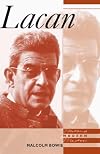
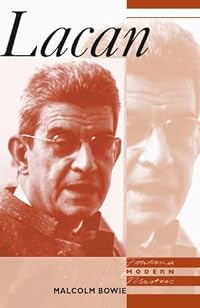
In this Modern Master on Jacques Lacan (1901-81), Malcolm Bowie presents a clear, coherent introduction to the work of one of the most influential and forbidding thinkers of our century.Tags
Recommendations




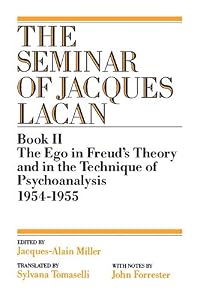

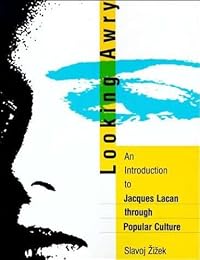
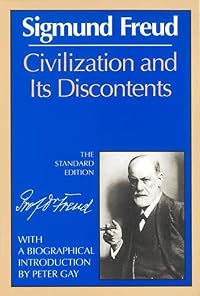
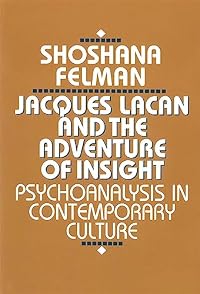











Member Recommendations
stevereads These books are both excellent introductions to the work of complex original thinkers,
.
Member Reviews
In this book, Malcolm Bowie provides yet another "Lacan for beginners" text that was obviously popular at the time. Bowie is well-equipped to undertake such a task, with a vast knowledge of the material and a writing style that is generally easy enough to follow (although I suspect readers who are entirely new to Lacan will still find it a challenge).
Bowie's book has a bit more of a historical sense than some other books of this kind. As such, he opens with a chapter on the complex relationship between Freud and Lacan, observing cannily that "Lacan's argument is conducted on Freud's behalf and, at the same time, against him" (p.7).
The rest of the book is organized into a kind of "greatest hits" of Lacanian concepts, starting with an show more explanation of Lacan's notion of the divided subject (Ch.2). Bowie moves from there to the relationship between language and the unconscious (Ch.3), the development of Lacan's three registers of the real, symbolic, and imaginary (Ch.4), an explanation of the symbolic phallus (Ch.5), and an overview of how Lacan's final years were spent exploring mathemes, knots and other more obscure theoretical concepts (Ch.5).
Bowie's book is a solid but unremarkable introduction to Lacan. It is readable and goes over the basic concepts, although in terms of theoretical scope I would probably recommend Joël Dor's [b:Introduction to the Reading of Lacan: The Unconscious Structured Like a Language|262773|Introduction to the Reading of Lacan The Unconscious Structured Like a Language|Joël Dor|https://images.gr-assets.com/books/1320450096s/262773.jpg|254712] ahead of this one. show less
Bowie's book has a bit more of a historical sense than some other books of this kind. As such, he opens with a chapter on the complex relationship between Freud and Lacan, observing cannily that "Lacan's argument is conducted on Freud's behalf and, at the same time, against him" (p.7).
The rest of the book is organized into a kind of "greatest hits" of Lacanian concepts, starting with an show more explanation of Lacan's notion of the divided subject (Ch.2). Bowie moves from there to the relationship between language and the unconscious (Ch.3), the development of Lacan's three registers of the real, symbolic, and imaginary (Ch.4), an explanation of the symbolic phallus (Ch.5), and an overview of how Lacan's final years were spent exploring mathemes, knots and other more obscure theoretical concepts (Ch.5).
Bowie's book is a solid but unremarkable introduction to Lacan. It is readable and goes over the basic concepts, although in terms of theoretical scope I would probably recommend Joël Dor's [b:Introduction to the Reading of Lacan: The Unconscious Structured Like a Language|262773|Introduction to the Reading of Lacan The Unconscious Structured Like a Language|Joël Dor|https://images.gr-assets.com/books/1320450096s/262773.jpg|254712] ahead of this one. show less
Ratings
Members
- Recently Added By
Author Information

All Editions
Series

Belongs to Publisher Series
Work Relationships
Inspired
Common Knowledge
- People/Characters
- Jacques Lacan
- Original language
- English
- Disambiguation notice
- 0006860761 1991 softcover Fontana
0674508521 1991 hardcover Harvard University Press
067450853X 2010 softcover Harvard University Press
Classifications
- Genres
- Nonfiction, Philosophy, Biography & Memoir, Literature Studies and Criticism
- DDC/MDS
- 150.19 — Philosophy & psychology Psychology Emotions, Relationships, & Family Theory And Instruction Systems, schools, viewpoints
- LCC
- BF175 — Philosophy, Psychology and Religion Psychology Psychology Psychoanalysis
- BISAC
Statistics
- Members
- 108
- Popularity
- 299,411
- Reviews
- 1
- Rating
- (3.90)
- Languages
- English, German, Turkish
- Media
- Paper
- ISBNs
- 7