On This Page
Description
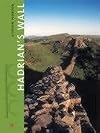
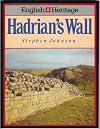
"Anyone picking up this book will want to buy it, and they will find a text which is well written, scholarly without sacrifice of readability, and taking account of the latest work and thought on the wall."--Archaeological Journal. Here is the most complete account yet of Hadrian's Wall, with descriptions of its military and political functions; details of its engineering and construction, and a complete look at the way of life enjoyed and endured by both the soldiers and civilians who dwelt show more near it. show lessTags
Recommendations

























Member Reviews
There is a "statement by Hadrian's biographer that the Wall was to 'separate Romans from barbarians' .... The Wall was to mark the reasonable limit of spread of Romanitas - the process of absorption of native style, culture and lifestyle and adapting them into the Roman system of administration and social class which was the hallmark of the Roman presence in much of the western empire." pg. 60
"But what was Hadrian's intentions? Apart from these practical considerations - those of border control, of separation of the Brigantes from their disruptive neighbours, of a measure of preclusive security - what other motives were there? For if the Wall was built actually to mark the limit of Rome's empire, to signify the extent to which Rome show more could hope to control the peoples under its sway, then this is a momentous event indeed. Up until this point, Roman armies had been specialists in expansion, and had excelled at taking the fight to the enemy.... [T]he general exercise of the army's powers had been to suggest that its potential was unlimited....
"Is Hadrian's Wall, therefore, the first sign of a realisation in the imperial councils that Rome's power was limited? Far from being a great and grandiose achievement, is it a sign of defeat, of incipient entrenchment, a reversal of the aggressive mentality into one which was defensive and watchful?
"This attitude was later to manifest itself in the construction of massive walls round forts and towns, including Rome itself. But if acceptance of Rome's limitations was the theme which underlies the construction of Hadrian's wall, the chosen mode of displaying the fact is in itself an impressive one. The construction of a massive barrier running 80 miles (117 km) from sea to sea to separate Roman from barbarian is hardly an overt sign of absolute defeat." pg. 65 show less
"But what was Hadrian's intentions? Apart from these practical considerations - those of border control, of separation of the Brigantes from their disruptive neighbours, of a measure of preclusive security - what other motives were there? For if the Wall was built actually to mark the limit of Rome's empire, to signify the extent to which Rome show more could hope to control the peoples under its sway, then this is a momentous event indeed. Up until this point, Roman armies had been specialists in expansion, and had excelled at taking the fight to the enemy.... [T]he general exercise of the army's powers had been to suggest that its potential was unlimited....
"Is Hadrian's Wall, therefore, the first sign of a realisation in the imperial councils that Rome's power was limited? Far from being a great and grandiose achievement, is it a sign of defeat, of incipient entrenchment, a reversal of the aggressive mentality into one which was defensive and watchful?
"This attitude was later to manifest itself in the construction of massive walls round forts and towns, including Rome itself. But if acceptance of Rome's limitations was the theme which underlies the construction of Hadrian's wall, the chosen mode of displaying the fact is in itself an impressive one. The construction of a massive barrier running 80 miles (117 km) from sea to sea to separate Roman from barbarian is hardly an overt sign of absolute defeat." pg. 65 show less
Ratings
Members
- Recently Added By
Lists

Roman Britain
42 works; 12 members
Author Information
12 Works 303 Members
Stephen Johnson is a regular contributor to Gramophone and The Independent. He lives in London. (Bowker Author Biography)
Series

Common Knowledge
- Important places
- Hadrian's Wall, England, UK
Classifications
- Genres
- History, Nonfiction, Anthropology, General Nonfiction, Travel
- DDC/MDS
- 936.2 — History & geography History of ancient world (to ca. 499) Europe north and west of Italian Peninsula to ca. 499 England to 410 and Wales to 410
- LCC
- DA146 — History of Europe, Asia, Africa and Oceania Great Britain History of Great Britain England History By period Early and medieval to 1485 Celts. Romans. Saxons. Danes. Normans
- BISAC
Statistics
- Members
- 68
- Popularity
- 459,551
- Reviews
- 1
- Rating
- (2.50)
- Languages
- English
- Media
- Paper
- ISBNs
- 3
- ASINs
- 1