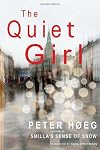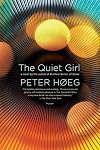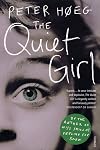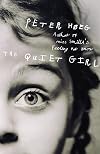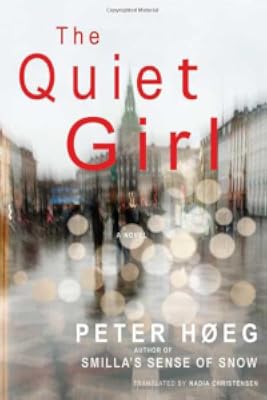
The Quiet Girl
by Peter Høeg
On This Page
Description
Set in Denmark in the here and now, The Quiet Girl centers around Kaspar Krone, a world-renowned circus clown with a deep love for the music of Johann Sebastian Bach, and an even deeper gambling debt. Wanted for tax evasion and on the verge of extradition, Krone is drafted into the service of a mysterious order of nuns who promise him reprieve from the international authorities in return for his help safeguarding a group of children with mystical abilities - abilities that Krone shares. When show more one of the children goes missing, Krone sets off to find the young girl and bring her back, making a shocking series of discoveries along the way about her identity and the true intentions of his young wards. The result is a fast-paced, philosophical thriller blending social realism with the literary fantastic and pitting art and spirituality against corporate interests and nothing less than the will to war by the industrialized world. The Quiet Girl is a masterful, inventive novel that marks the triumphal return of one of the great writers of the international literary world. show lessTags
Recommendations
























Member Recommendations

Member Reviews
This complex, philosophical, literary thriller—with a musical, famous circus clown as its action hero—is a dizzying, but riveting read. I'm not sure I've read anything quite like it. Sometimes I felt I was being used as a pin in a juggling act.
Kasper Krone, the clown, is being pursued by the Danish government for his gambling debts and tax evasion, and will face deportation if they catch him. Kasper is 42, brilliant, and possesses an unusual sense of hearing; he can sense a "world of sounds" behind physical sound, including the music within each of us. This special ability has a variety of uses, one of which involves helping children. An unusual young girl is briefly brought to him for help. She has a certain 'silence' that show more captures Kasper's attention and he knows he must find her. Turns out she and a group of children have been kidnapped. He sets out and is soon being pursued by almost everyone for one reason or another. Circus people have some interesting resources and abilities. His de-facto 'sidekick' is a a former race car driver who now is a legless, for-hire driver. The number of players in this book can be confusing - the ministry, the scientists, the corporation, the doctor, the police, the circus contacts, and family members and ex-girlfriends. Oh, and the nuns (are they really nuns?).
Alternating between action sequences and back story, The Quiet Girl is beautifully written with a wry humor, and is both fascinating and strangely thoughtful. Kasper's musings on sound, music and silence are philosophical and often mystical. It's a challenging read and might not be for everyone, but I found it thoroughly invigorating.
------
Excerpt. In a back story segment, Kasper has told his lover, Stina, how he came to have his unusual hearing and she has asked him what keeps the rest of us from hearing what he hears:
It took him a long time to reply. Only once before had he spoken about this to another person.
In order to live in this world we need to keep an orchestra playing. Way in the foreground. It's a small dance orchestra. It always plays its own melody. It plays the golden oldie 'Kasper Krone.' Which has a series of refrains that are repeated over and over. Again and again it plays our bank account numbers, our childhood memories, our PIN numbers, the sound of our mother's and father's voices. The pale-green strophes we hope will be the future. The black noise we have good reason to suppose will be our actual reality. It plays continuously, like a heartbeat. But when the other sound begins to come through, you discover that you've been standing with your back to the true concert hall the whole time. We live in a sort of lobby. Where we can faintly hear the great orchestra. And that sound, just the embouchure to a sound from the real concert hall, makes the Mass in B-Minor disappear. Like a whisper in windy weather. It's a sound that sweeps away the din of war. It drowns the music of the spheres. It takes away all the sounds of reality. And at the same time as you vaguely hear the great orchestra, you vaguely sense the price of the ticket. When the door to the real concert hall begins to open you discover that perhaps you were mistaken. That Kasper Krone exists only because your ears continue to isolate the same little refrain from the collected mass of sound. That in order to preserve Kasper and Stina we've turned down the input from other channels to pianissimo. But that's about to change. And you can feel it. If you want to go inside, it will be the most expensive concert tickets anyone has ever bought. It will cost you the sound of your own self. show less
Kasper Krone, the clown, is being pursued by the Danish government for his gambling debts and tax evasion, and will face deportation if they catch him. Kasper is 42, brilliant, and possesses an unusual sense of hearing; he can sense a "world of sounds" behind physical sound, including the music within each of us. This special ability has a variety of uses, one of which involves helping children. An unusual young girl is briefly brought to him for help. She has a certain 'silence' that show more captures Kasper's attention and he knows he must find her. Turns out she and a group of children have been kidnapped. He sets out and is soon being pursued by almost everyone for one reason or another. Circus people have some interesting resources and abilities. His de-facto 'sidekick' is a a former race car driver who now is a legless, for-hire driver. The number of players in this book can be confusing - the ministry, the scientists, the corporation, the doctor, the police, the circus contacts, and family members and ex-girlfriends. Oh, and the nuns (are they really nuns?).
Alternating between action sequences and back story, The Quiet Girl is beautifully written with a wry humor, and is both fascinating and strangely thoughtful. Kasper's musings on sound, music and silence are philosophical and often mystical. It's a challenging read and might not be for everyone, but I found it thoroughly invigorating.
------
Excerpt. In a back story segment, Kasper has told his lover, Stina, how he came to have his unusual hearing and she has asked him what keeps the rest of us from hearing what he hears:
It took him a long time to reply. Only once before had he spoken about this to another person.
In order to live in this world we need to keep an orchestra playing. Way in the foreground. It's a small dance orchestra. It always plays its own melody. It plays the golden oldie 'Kasper Krone.' Which has a series of refrains that are repeated over and over. Again and again it plays our bank account numbers, our childhood memories, our PIN numbers, the sound of our mother's and father's voices. The pale-green strophes we hope will be the future. The black noise we have good reason to suppose will be our actual reality. It plays continuously, like a heartbeat. But when the other sound begins to come through, you discover that you've been standing with your back to the true concert hall the whole time. We live in a sort of lobby. Where we can faintly hear the great orchestra. And that sound, just the embouchure to a sound from the real concert hall, makes the Mass in B-Minor disappear. Like a whisper in windy weather. It's a sound that sweeps away the din of war. It drowns the music of the spheres. It takes away all the sounds of reality. And at the same time as you vaguely hear the great orchestra, you vaguely sense the price of the ticket. When the door to the real concert hall begins to open you discover that perhaps you were mistaken. That Kasper Krone exists only because your ears continue to isolate the same little refrain from the collected mass of sound. That in order to preserve Kasper and Stina we've turned down the input from other channels to pianissimo. But that's about to change. And you can feel it. If you want to go inside, it will be the most expensive concert tickets anyone has ever bought. It will cost you the sound of your own self. show less
This books is stunningly bad. It's as if someone took a lyrical thriller set in Denmark with a misanthropic, glamorous hero and then savaged the book afterward to make it unreadable. The book skips around in a way that does not make it more suspenseful but rather eviscerates the reader of any sense of understanding. Whole paragraphs seem to be plain missing from the text. Pronouns are used perhaps to seem sentimental, mysterious, or romantic but actually they attach to nothing and leave no clarity about even the most basic relationship to the story. This is all overlaid on a series of implausible premises which have no political, moral, or other value as metaphors or symbols. It seems the writer has talent, which makes the whole thing show more worse--one can't put the book down as 'bad writing'. More likely it's a combination of bad translation, bad storytelling, narcissism, and failed attempts to create some wistful mystique wrapped around superhuman hearing (that's right, super-human auditory prowess) and deep insights into metaphysical wisdom beyond human understanding suddenly found in a magical child. show less
Deserves more than 3 stars - very nearly four. I read the book in short bursts but not leaving too long between readings - just right as it is a bit repetitive. More head than heart but intriguing, mystic and ultimately inconclusive - which I like. Another reviewer called it "brittle intellectualism and dreamy philosophy" and that's a great description.
tanslators are an underappreciated lot. When they’re bad, we mock them and when they’re good, we ignore them. Nadia Christensen displays all the athleticism of a champion wrestler in pinning down Peter Høeg’s new book, The Quiet Girl, and credit must be paid.
For this reviewer, it’s also a disclaimer, for while the book is a breathless display of language and idea, I couldn’t quite hold onto it. The cityscape of Copenhagen, the blues and blacks and whites and grays of its modern, impersonal architecture, the midnight fringes where outsiders linger – it rears up at you, but I was constantly aware of a language and culture hidden behind the words that I could not reach.
Perhaps this sense of alienation would please Høeg and, show more indeed, please his main character, a deep-in-debt circus clown named Kasper. Kasper is a genius of sorts, blessed with the ability to hear on a deeper level than any around him. He might be able to tell you the mechanisms of a watch in a pocket, the mood of his lover, or the specific geography of a place.
It’s a clever stylistic move. For as we follow Kasper’s involvement in a bewildering conspiracy to do with a missing girl and a group of special children, we are privy to thoughts and feelings that a normal person would be hard pressed to describe:
“Kasper could hear the intimacy between his parents, and also the passion, the caution. He would not have had a word for it. But he was able to sense that if you want to have the experience of a home that’s meaningful and open and natural, like Bach’s music and the big cats on the savannah, it costs something…”
Kasper’s hearing attunes him to becoming a legendary performer in the ring but it also makes him vulnerable to those who want to abuse his talents for their own gain. Chopping and changing between the past and present, Høeg takes us into a labyrinth of untrustworthy lovers, odd coincidences, show business precepts, child kidnappings, nuns with symphonic personalities, and philosophic musings:
“Balance and prayer are self-confrontational. Behind the muscular and spiritual exertion there must be a point of effortless calm. At that point you meet yourself.”
Using his hearing as a detective tool and taking advantage of skills learned in the circus, Kasper charms, talks, fights, and wriggles his way through the book. While he searches for the titular girl, whose gift of silence is an uncanny counterpoint to the noise that surrounds him, the omnipresent forces of authority and greed try to catch him.
Confused? I was. The book is billed as a taut thriller, but it’s hardly that. A cry against the depersonalizing forces of society, yes; a strange mixture of gratuitous violence and haphazardly funny escapes, sure; an dazzling exploration of sounds in language, quite; but it has none of the crisp bite, the pared pace of a conventional thriller.
Does it matter? Well, if we go by the title, yes, it does. The quiet girl is the hinge on which Kasper’s life changes (and perhaps a literary comment on the recent crimes against children in Northern Europe).
Yet we are only given a few instances when they meet face-to-face and their moments of intimacy are fleeting. A thriller is often a race, but without the understanding of exactly why this girl is so great a prize, it makes it harder to follow the runner.
Høeg was a dancer and actor before turning writer and father, so it’s hard not to cross the line between fiction and reality. Does Høeg manifest the same irresistible magnetism and subsequent uneasiness with women as Kasper? Is Kasper’s tender relationship with his dying father, a small spot of calm in the book’s maelstrom, a reflection of Høeg’s own experiences?
And what should one make of Kasper as professional clown, as the archetype who traditionally stands outside of society and comments on its inadequacies? Surely there’s an argument to be made that Høeg as an author wants to fulfill a similar function.
If this is the case, I might wish to ask Høeg why he chose to combine Kasper’s sensitive exploration of his life and work with an acidic, almost Viking-inspired, focus on bruises and bullets.
Is it an echo of an old Scandinavian sensibility, the same that inspires Hamlet’s bloodbath? Or a modern comment on the dispensability of human life? More importantly, does it make the book, already a fibrous knot of structure and purpose, any stronger?
I’d have to ask him in Danish, of course, after I’ve learned the language, read the book in the original, and lived in Copenhagen for, say, ten years. Until then, as a reviewer I’m remaining dissatisfied, both with the book and my own cultural deafness.
Elinor Teele show less
For this reviewer, it’s also a disclaimer, for while the book is a breathless display of language and idea, I couldn’t quite hold onto it. The cityscape of Copenhagen, the blues and blacks and whites and grays of its modern, impersonal architecture, the midnight fringes where outsiders linger – it rears up at you, but I was constantly aware of a language and culture hidden behind the words that I could not reach.
Perhaps this sense of alienation would please Høeg and, show more indeed, please his main character, a deep-in-debt circus clown named Kasper. Kasper is a genius of sorts, blessed with the ability to hear on a deeper level than any around him. He might be able to tell you the mechanisms of a watch in a pocket, the mood of his lover, or the specific geography of a place.
It’s a clever stylistic move. For as we follow Kasper’s involvement in a bewildering conspiracy to do with a missing girl and a group of special children, we are privy to thoughts and feelings that a normal person would be hard pressed to describe:
“Kasper could hear the intimacy between his parents, and also the passion, the caution. He would not have had a word for it. But he was able to sense that if you want to have the experience of a home that’s meaningful and open and natural, like Bach’s music and the big cats on the savannah, it costs something…”
Kasper’s hearing attunes him to becoming a legendary performer in the ring but it also makes him vulnerable to those who want to abuse his talents for their own gain. Chopping and changing between the past and present, Høeg takes us into a labyrinth of untrustworthy lovers, odd coincidences, show business precepts, child kidnappings, nuns with symphonic personalities, and philosophic musings:
“Balance and prayer are self-confrontational. Behind the muscular and spiritual exertion there must be a point of effortless calm. At that point you meet yourself.”
Using his hearing as a detective tool and taking advantage of skills learned in the circus, Kasper charms, talks, fights, and wriggles his way through the book. While he searches for the titular girl, whose gift of silence is an uncanny counterpoint to the noise that surrounds him, the omnipresent forces of authority and greed try to catch him.
Confused? I was. The book is billed as a taut thriller, but it’s hardly that. A cry against the depersonalizing forces of society, yes; a strange mixture of gratuitous violence and haphazardly funny escapes, sure; an dazzling exploration of sounds in language, quite; but it has none of the crisp bite, the pared pace of a conventional thriller.
Does it matter? Well, if we go by the title, yes, it does. The quiet girl is the hinge on which Kasper’s life changes (and perhaps a literary comment on the recent crimes against children in Northern Europe).
Yet we are only given a few instances when they meet face-to-face and their moments of intimacy are fleeting. A thriller is often a race, but without the understanding of exactly why this girl is so great a prize, it makes it harder to follow the runner.
Høeg was a dancer and actor before turning writer and father, so it’s hard not to cross the line between fiction and reality. Does Høeg manifest the same irresistible magnetism and subsequent uneasiness with women as Kasper? Is Kasper’s tender relationship with his dying father, a small spot of calm in the book’s maelstrom, a reflection of Høeg’s own experiences?
And what should one make of Kasper as professional clown, as the archetype who traditionally stands outside of society and comments on its inadequacies? Surely there’s an argument to be made that Høeg as an author wants to fulfill a similar function.
If this is the case, I might wish to ask Høeg why he chose to combine Kasper’s sensitive exploration of his life and work with an acidic, almost Viking-inspired, focus on bruises and bullets.
Is it an echo of an old Scandinavian sensibility, the same that inspires Hamlet’s bloodbath? Or a modern comment on the dispensability of human life? More importantly, does it make the book, already a fibrous knot of structure and purpose, any stronger?
I’d have to ask him in Danish, of course, after I’ve learned the language, read the book in the original, and lived in Copenhagen for, say, ten years. Until then, as a reviewer I’m remaining dissatisfied, both with the book and my own cultural deafness.
Elinor Teele show less
I came upon this fascinating book by accident (if there is such a thing). In Copenhagen, secret undercover works, forces and speculation are happening. Our hero is a circus clown, a profession that is dramatically elevated in this story. Kaspar Krone is something of mystic genius, or maybe it is just his huge ego on display for the reader. He is always encountering mysterious, wise, and talented females, whilst accompanied by an inner soundtrack of classical music, in fact every situation, place and character suggests to Kaspar a passage of music, often J.S.Bach, but also Haydn, Mozart and Beethoven. Kaspar has skills, he can pass any barrier or guard, usually by trickery, subterfuge, acting, impersonation. Also his other major skill is show more his acute hearing, which is so refined that he can 'hear' the difference in colour of playing cards! Or he can find locations by identifying the background noise in a phone call. And there are many ex-circus contacts on hand to support him in almost any way.
The plot revolves around some missing children (also with special abilities) and for the most part it is convoluted and confusing. Most of Kaspar's acquaintances know more than they're letting on, and it becomes increasingly difficult to know for sure which side anyone is on, right up to the final page!
Apart from these difficulties, there are some interesting philosophical ideas floated, such as the suggestion that we are all simply repeating the same scenarios in our life, endlessly, only with different characters and settings. And that our perception of reality is only a thin veneer, which hides a vast consciousness. There is a nice depth to the whole thing, which appeals to me anyway.
Overall, it was a memorable read, if a bit confusing and frustrating. Certainly it contains some sparks of real genius. Now I want to read more of this interesting author. show less
The plot revolves around some missing children (also with special abilities) and for the most part it is convoluted and confusing. Most of Kaspar's acquaintances know more than they're letting on, and it becomes increasingly difficult to know for sure which side anyone is on, right up to the final page!
Apart from these difficulties, there are some interesting philosophical ideas floated, such as the suggestion that we are all simply repeating the same scenarios in our life, endlessly, only with different characters and settings. And that our perception of reality is only a thin veneer, which hides a vast consciousness. There is a nice depth to the whole thing, which appeals to me anyway.
Overall, it was a memorable read, if a bit confusing and frustrating. Certainly it contains some sparks of real genius. Now I want to read more of this interesting author. show less
The Quiet Girl honestly didn't work for me. It follows a man named Kasper, who has superhuman hearing abilities, as he runs from the police and tries to find a missing girl. He is wanted in several countries and is drowning in debt, which complicates him finding this child. He ends up being brought in by a group of nuns who promise they will help him, but they end up being more than what he was expecting.
As much as I liked the premise of the book, there were a few things that really didn't sit well with me. First is the racism towards one of the characters. She is a Black woman who is referred to as "the African" and is not given much more character or personality beyond that, to the point that we don't even know her name. She is in show more most of the book as well, so there is no excuse for her to not have any real personality or character to her either.
I also struggled with the writing quite a bit. There were lines I really enjoyed, but it was hampered with a translation (that as someone with a Bachelor's degree in translation, I am assuming was a literal translation) which left many of the sentences as sentence fragments. This made it really hard to read as there were so many sentences that were just chopped in half during the translation process. It also felt as if several scenes were missing from the book, as it was hard to follow at times. There were moments in which it felt as if there should have been extra scenes to act as a transition, but instead were missing so they just jolted me around as a reader. show less
As much as I liked the premise of the book, there were a few things that really didn't sit well with me. First is the racism towards one of the characters. She is a Black woman who is referred to as "the African" and is not given much more character or personality beyond that, to the point that we don't even know her name. She is in show more most of the book as well, so there is no excuse for her to not have any real personality or character to her either.
I also struggled with the writing quite a bit. There were lines I really enjoyed, but it was hampered with a translation (that as someone with a Bachelor's degree in translation, I am assuming was a literal translation) which left many of the sentences as sentence fragments. This made it really hard to read as there were so many sentences that were just chopped in half during the translation process. It also felt as if several scenes were missing from the book, as it was hard to follow at times. There were moments in which it felt as if there should have been extra scenes to act as a transition, but instead were missing so they just jolted me around as a reader. show less
The Quiet Girl's protagonist is Kasper Krone, a world-famous and rather resourceful circus clown with psychic abilities, a staggering gambling debt and an aversion to paying his taxes. Life isn't going Krone's way. He's about to be deported for tax evasion, his father is ailing and an enigmatic taxi driver with a curious scar seems to appear whenever he needs a lift. Kasper can hear the sound of a person's fear, doubt and various forms of deceit. He can hear the colors and figurative shapes of an opponent's playing cards. He can hear fog. "SheAlmighty had tuned each person in a musical key, and Kasper could hear it," reads the opening sentence. And with that, we're off.
The Quiet Girl concerns a group of children with exceptional show more powers, and one in particular, a girl named KlaraMaria who, even to Kasper's finely tuned ear, and to his amazement, is silent. These children, working together, can use their abilities to move objects, stop time and sense geological shifts in the Earth. A corporate entity may have kidnapped the child so that her power can be used to increase their profits. When she is kidnapped by those who want to use her special abilities to further their own nefarious goals, Kasper must go in search of her. Eventually, Krone will discover that he and the missing girl, KlaraMaria, share more than their psychic powers. All the while he's holding a lottery ticket that just might be his salvation.
There’s some irony in the fact that the author chose a clown as his protagonist because the story is itself like a three-ring circus: exaggerated characters, sensory overload and incredible events at every turn. Unfortunately, the spectacle often overshadows the story. It is a bit like a seventies bad acid trip.
I fought my way to the end – out of pure determination to see if I could make any sense of any of the twists and turns. But I couldn’t. show less
The Quiet Girl concerns a group of children with exceptional show more powers, and one in particular, a girl named KlaraMaria who, even to Kasper's finely tuned ear, and to his amazement, is silent. These children, working together, can use their abilities to move objects, stop time and sense geological shifts in the Earth. A corporate entity may have kidnapped the child so that her power can be used to increase their profits. When she is kidnapped by those who want to use her special abilities to further their own nefarious goals, Kasper must go in search of her. Eventually, Krone will discover that he and the missing girl, KlaraMaria, share more than their psychic powers. All the while he's holding a lottery ticket that just might be his salvation.
There’s some irony in the fact that the author chose a clown as his protagonist because the story is itself like a three-ring circus: exaggerated characters, sensory overload and incredible events at every turn. Unfortunately, the spectacle often overshadows the story. It is a bit like a seventies bad acid trip.
I fought my way to the end – out of pure determination to see if I could make any sense of any of the twists and turns. But I couldn’t. show less
Members
- Recently Added By
Lists

Books Read in 2023
5,638 works; 147 members

Top Five Books of 2023
767 works; 317 members

Best Crime Fiction
262 works; 39 members
Author Information

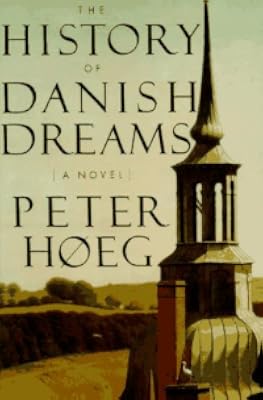
Peter Hoeg, is a writer. He was born in Copenhagen, Denmark in 1957. Hoeg's first book, The History of Danish Dreams, was published in 1988. Another book, Smilla's Sense of Snow, received the Glass Key Award from the Crime Writers of Scandinavia in 1992. The book was made into a film in 1997 starring Julia Ormond, Gabriel Bryne, and Vanessa show more Redgrave. (Bowker Author Biography) show less
Some Editions
Awards and Honors
Awards
Series
Belongs to Publisher Series
Common Knowledge
- Canonical title
- The Quiet Girl
- Original title
- Den stille pige
- Original publication date
- 2006
- People/Characters
- Kasper Krone; Stina; KlaraMaria; Maximilian; Franz Fieber; Blue Lady (show all 8); Josef Kain; SheAlmighty
- Important places
- Copenhagen, Denmark
- First words*
- RouvaHerra oli virittänyt jokaisen ihmisen tiettyyn sävellajiin ja Kasper pystyi kuulemaan sen.
- Quotations*
- „ – Laimės, - tarė jis, - žmogui suteikia ne tiek mintis apie sukrapštytus pinigus ir sėkmingą veiklą, kiek žinojimas, ko galėjai sau leisti atsisakyti.“, „ tačiau suprato, abu suprato, jog įsileido vidun ... (show all)vėją, kurį nuraminti bus labai sunku.“, „ – Prašyti negalima, - atsakė jis. – Bent jau ne kitų natų. Gali nebent melsti, kad kiek įmanoma geriau sugrotum tas, kurias esi gavęs.“, „ – Didžius vyrus ir moteris, - tarė ji, - nuo kitų skyrė tai, kad viskam žlungant jie buvo pasirengę viską pastatyti ant vienos kortos. Neturėdami jokių garantijų, jog ji atneš sėkmę.“, „Tačiau aš taip pat sugadintas gyvenimo, man sunku priimti malonę, aš visada ieškau žvaigždutėmis pažymėtų pastabų, kokios jos bus šį kartą?“, „ – Man keturiasdešimt dveji. Ar žinai, kokią išvadą galiu padaryti apie visą ligšiolinį savo gyvenimą? Pragaras. Pragaras nėra konkreti vieta. Jis yra kilnojamas. Mes visi nešiojamės jį su savimi. Ir vos tik atsisakome savo įgimto gebėjimo užjausti, jis akimirksniu iššoka iš dėžutės.“, „ Ar vaikas dings, ar sugrįš. Ar gyvens, ar mirs. Galbūt iš esmės mes nieko ir negalime pakeisti. Tačiau su savo bejėgiškumu gali susitaikyti tik vienu atveju. Jei esi padaręs viską, kas buvo įmanoma.“
- Last words*
- (Click to show. Warning: May contain spoilers.)Ja epäilemättä hyvin, hyvin työläältä.
- Disambiguation notice
- Translation of: Den stille pige
*Some information comes from Common Knowledge in other languages. Click "Edit" for more information.
Classifications
- Genres
- Fiction and Literature, General Fiction, Mystery
- DDC/MDS
- 839.81374 — Literature & rhetoric German & related literatures Other Germanic literatures Danish and Norwegian literatures Danish Danish fiction 1900–2000 Late 20th century 1945–2000
- LCC
- PT8176.18 .O335 .S7513 — Language and Literature German, Dutch and Scandinavian literatures Danish literature Individual authors or works 1961-2000
- BISAC
Statistics
- Members
- 945
- Popularity
- 28,180
- Reviews
- 41
- Rating
- (3.05)
- Languages
- 15 — Danish, Dutch, English, Estonian, Finnish, French, German, Hebrew, Italian, Lithuanian, Norwegian (Bokmål), Norwegian, Russian, Serbian, Swedish
- Media
- Paper, Audiobook, Ebook
- ISBNs
- 47
- ASINs
- 6