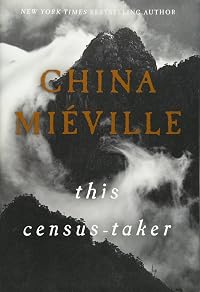
This Census-Taker
by China Miéville
On This Page
Description
For readers of George Saunders, Kelly Link, David Mitchell, and Karen Russell, This Census-Taker is a stunning, uncanny, and profoundly moving novella from multiple-award-winning and bestselling author China Miéville.NAMED ONE OF THE BEST BOOKS OF THE YEAR BY NPR
In a remote house on a hilltop, a lonely boy witnesses a profoundly traumatic event. He tries—and fails—to flee. Left alone with his increasingly deranged parent, he dreams of safety, of joining the other children in the town show more below, of escape.
When at last a stranger knocks at his door, the boy senses that his days of isolation might be over.
But by what authority does this man keep the meticulous records he carries? What is the purpose behind his questions? Is he friend? Enemy? Or something else altogether?
Filled with beauty, terror, and strangeness, This Census-Taker is a poignant and riveting exploration of memory and identity.
Praise for This Census-Taker
“China Miéville is a magician . . . who can both blow your mind with ideas as big as the universe and break your heart with language so precise and polished, it’s like he’s writing with diamonds.”—NPR
“The book haunts the reader; what actually happened seems always just out of reach, glimpsed in shadow as it rounds a corner ahead of our vision.”—Los Angeles Review of Books
“[Mieville’s] been compared to Karen Russell and George Saunders, and rightfully so.”—The Huffington Post
“Marvellous.”—The Guardian
“Lingers in the mind like an unsettling dream.”—Financial Times
“A thought-provoking fairy tale for adults . . . [This Census-Taker] resembles the narrative style, quirkiness, and plotting found in the works of Karen Russell, Aimee Bender, or Steven Millhauser.”—Booklist
“Brief and dreamlike . . . a deceptively simple story whose plot could be taken as a symbolic representation of an aspect of humanity as big as an entire society and as small as a single soul.”—Kirkus Reviews. show less
Tags
Recommendations
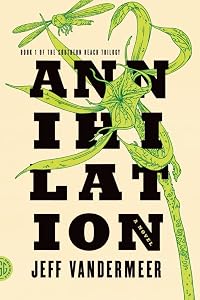
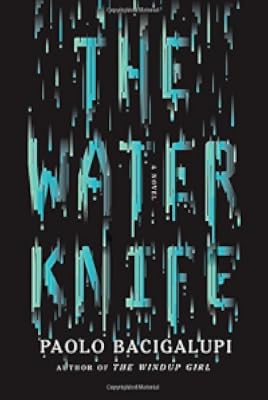
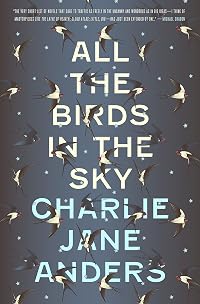
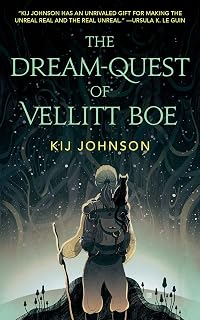
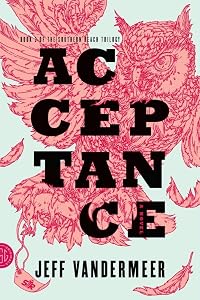
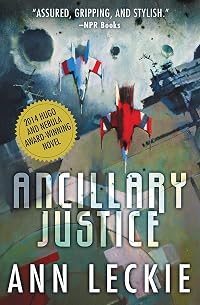
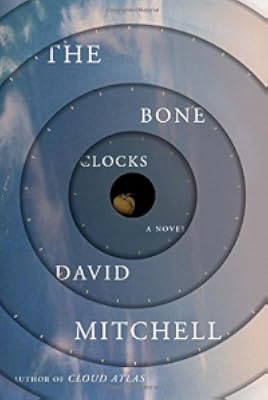
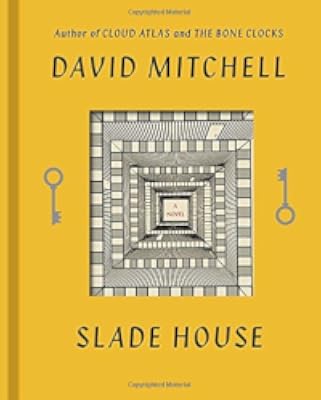
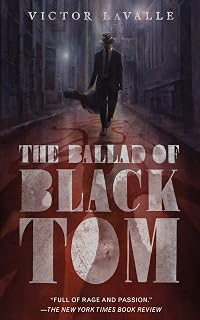
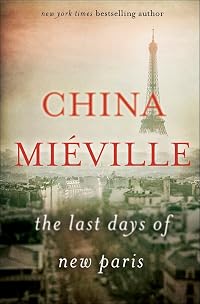
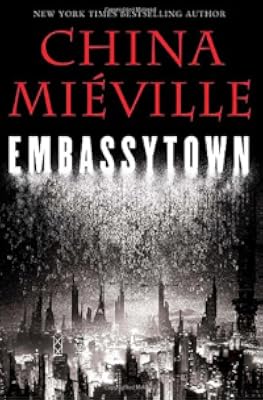
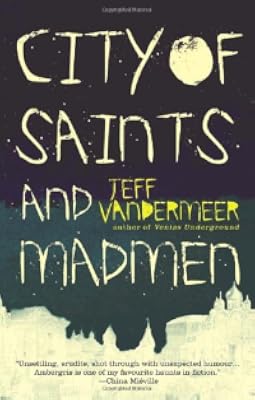
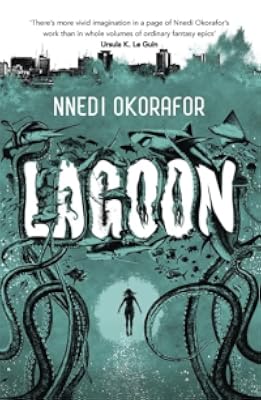
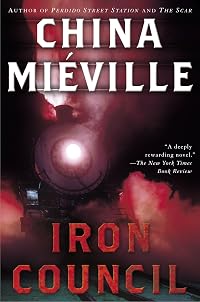
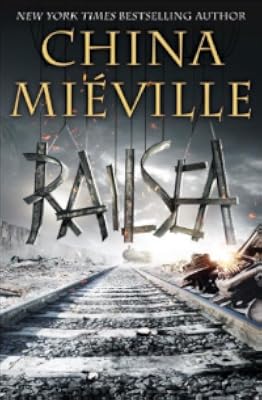
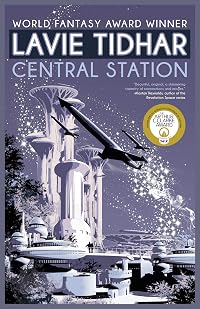
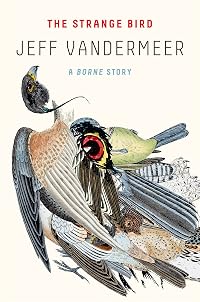
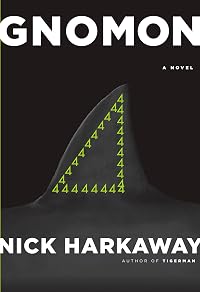
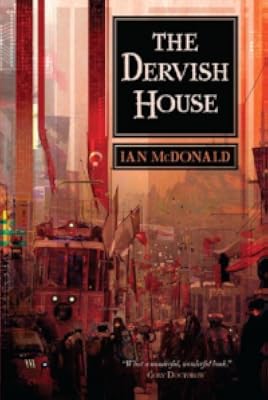
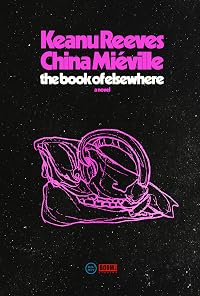

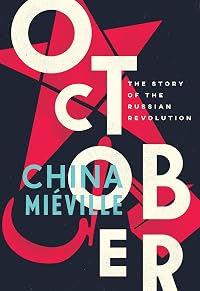
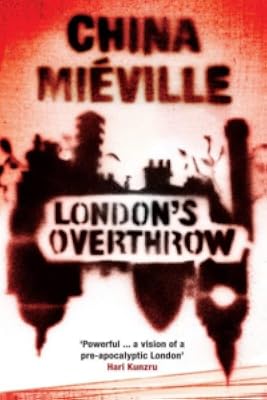
Member Recommendations
Euryale Another short novel with a similar atmosphere (although a very different structure and voice)
20
Member Reviews
I can't say that I'm completely satisfied with this novella, but I can say that I'm haunted by it. I'm haunted by all the little details that make up this world so much like our own, the hints of wars and magics and strange chemicals and vials and keys that provide people with purpose and a way out or through the labyrinths of their lives...
Not to mention a very Schrodinger's Cat view of reality, where murderers are and are not, where the murdered is and is not, where, perhaps, everything is rewritten and only census takers can determine the correct average.
Not that I'm truly or even likely getting the grok of this novel. I am just using my intuition. But it's possible.
We've got a murder mystery, first and foremost, and not even the show more MC, a kid who constantly doubts what he's seen, can really take the measure of it. No one in the town can, but everyone suspects everything.
And then there's the trademark monsters and monstrosities that Meivillé is so good at.
I can honestly say this feels like a more mature work from his earlier stuff, more willing to take the slow path while all the little details encroach upon us from the periphery.
I respect it. It also happens to be nominated for the '17 Hugos, and while I wouldn't put it at the top of my list, I totally agree it should be here. It's very impressive in its way even if I catch myself wanting a lot more than where it ended. show less
Not to mention a very Schrodinger's Cat view of reality, where murderers are and are not, where the murdered is and is not, where, perhaps, everything is rewritten and only census takers can determine the correct average.
Not that I'm truly or even likely getting the grok of this novel. I am just using my intuition. But it's possible.
We've got a murder mystery, first and foremost, and not even the show more MC, a kid who constantly doubts what he's seen, can really take the measure of it. No one in the town can, but everyone suspects everything.
And then there's the trademark monsters and monstrosities that Meivillé is so good at.
I can honestly say this feels like a more mature work from his earlier stuff, more willing to take the slow path while all the little details encroach upon us from the periphery.
I respect it. It also happens to be nominated for the '17 Hugos, and while I wouldn't put it at the top of my list, I totally agree it should be here. It's very impressive in its way even if I catch myself wanting a lot more than where it ended. show less
When you finish it, you lie back and think. And keep on thinking..
Set in a weird, unknowable village (I began picturing a Welsh mountain, but banyan trees and feral children with odd names made me think India??
The narrator opens, recalling as a child running...from a murder at home. He tells of his odd, uncommiunicative parents - especially his father, whose work in his keymaker's shed is punctuated with occasional never-discussed murders...of animals..or people. There's no tell tale evidence- there's a great cleft in the cave outside, where they throw all the rubbish... The boy lives a solitary, fearful existence.
But it feels "off"...the boy moves from referring to himself as "I" to the 3rd person- like he's now distanced from it. And show more the narrative - written in a slightly stumbling way, as if trying to explain something difficult ..is punctuated with bits from Now- where he's writing it down, compiling notes, under some kind of manager... The baffled reader reads on...
And as this grim life continues- the villagers arent sure and send the child back to his father- a Census Taker comes knocking one day. Seeking official information...
It felt to me like a profoundly religious book. The matter-of-fact, kindly census taker on his mule...unafraid of delving the darkest recesses...of Dealing With Stuff...the Gehenna-like cleft in rock...a later life of hazy recollections, setting things straight..the mission of his department: "The Hope Is So: Count Entire Nation. Subsume Under Sets. Take Accounts. Keep Estimatesa. Realize Interests. So. Reach Our Government's Ultimate Ends."
Superb. This is, apparently, what they call "speculative fiction." show less
Set in a weird, unknowable village (I began picturing a Welsh mountain, but banyan trees and feral children with odd names made me think India??
The narrator opens, recalling as a child running...from a murder at home. He tells of his odd, uncommiunicative parents - especially his father, whose work in his keymaker's shed is punctuated with occasional never-discussed murders...of animals..or people. There's no tell tale evidence- there's a great cleft in the cave outside, where they throw all the rubbish... The boy lives a solitary, fearful existence.
But it feels "off"...the boy moves from referring to himself as "I" to the 3rd person- like he's now distanced from it. And show more the narrative - written in a slightly stumbling way, as if trying to explain something difficult ..is punctuated with bits from Now- where he's writing it down, compiling notes, under some kind of manager... The baffled reader reads on...
And as this grim life continues- the villagers arent sure and send the child back to his father- a Census Taker comes knocking one day. Seeking official information...
It felt to me like a profoundly religious book. The matter-of-fact, kindly census taker on his mule...unafraid of delving the darkest recesses...of Dealing With Stuff...the Gehenna-like cleft in rock...a later life of hazy recollections, setting things straight..the mission of his department: "The Hope Is So: Count Entire Nation. Subsume Under Sets. Take Accounts. Keep Estimatesa. Realize Interests. So. Reach Our Government's Ultimate Ends."
Superb. This is, apparently, what they call "speculative fiction." show less
Wow! Just wow!
The basic story is about a boy who runs into town, in the beginning of the book, hysterical and implying he saw his father murder his mother. As the story unfolds, through his eyes, we see scenes where the father brutally kills animals and terrorizes his wife and son. He makes his living by making keys that perform various deeds, both good and not so, for village folk. Was this all from a lonely child's imagination?
Mièville tells the story from the boy's perspective, from a third person's viewpoint, and even puts the reader in the action using second person perspective. The whole time I read this short but packed book I was immersed in amazing imagery and fascinating use of words.
The basic story is about a boy who runs into town, in the beginning of the book, hysterical and implying he saw his father murder his mother. As the story unfolds, through his eyes, we see scenes where the father brutally kills animals and terrorizes his wife and son. He makes his living by making keys that perform various deeds, both good and not so, for village folk. Was this all from a lonely child's imagination?
Mièville tells the story from the boy's perspective, from a third person's viewpoint, and even puts the reader in the action using second person perspective. The whole time I read this short but packed book I was immersed in amazing imagery and fascinating use of words.
“This”–he tapped the broad gauge tube–“a shotgun. It spreads possibilities.”
This inscrutable novella is about the son of a man who makes magic keys, and whose father may have killed his mother, but no one knows for sure-- not the authorities, who only have his word for it, and not the narrator, who thought he may have seen his father dying or someone else entirely. The novella chronicles the time before and after the murder, with occasional glimpses of the present day, where the narrator is writing the whole incident up in the second of three books he owns. The first is facts, which everyone can read but few will. The second is stories, written for readers even though they might not come. The third is secrets, which only he show more is supposed to read but others might. As maybe you can tell from what I've said so far, the book is partially about truths and how we capture them-- the kid is fascinated by creatures in bottles as a kid, because it makes him imagine an entirely contained world, and of course the census-taker who comes to the village is all about the capturing of (a form of) truth. Anyway, there are significant aspects of this book I did not comprehend, and I did not expect it to end where it did, but I greatly enjoyed reading it. show less
This inscrutable novella is about the son of a man who makes magic keys, and whose father may have killed his mother, but no one knows for sure-- not the authorities, who only have his word for it, and not the narrator, who thought he may have seen his father dying or someone else entirely. The novella chronicles the time before and after the murder, with occasional glimpses of the present day, where the narrator is writing the whole incident up in the second of three books he owns. The first is facts, which everyone can read but few will. The second is stories, written for readers even though they might not come. The third is secrets, which only he show more is supposed to read but others might. As maybe you can tell from what I've said so far, the book is partially about truths and how we capture them-- the kid is fascinated by creatures in bottles as a kid, because it makes him imagine an entirely contained world, and of course the census-taker who comes to the village is all about the capturing of (a form of) truth. Anyway, there are significant aspects of this book I did not comprehend, and I did not expect it to end where it did, but I greatly enjoyed reading it. show less
Truly, madly, deeply
It’s hard to resist the lure of labels and the urge to uncover the truth. But labels obscure as much as they reveal. The truth of a good story isn’t in whether it happened as described, but in the more profound and elliptical lessons it teaches us, whether we realise it or not. That’s why fairy tales, myths, and legends persist through millennia, across the globe, sometimes as sacred texts. What I drew from this may not be the same as what you draw from it.
Miéville has famously said he plans to write in every genre. Sometimes that manifests itself in books that blur and blend genres. I’d say this is Kafka for the older end of YA, both in the telling, and the vague menace of sinister authorities, compounded show more by the looming fear of what might be in the hole in the cave.
Image: Untitled artwork by Valentin Pavageau that fits aspects of this story (Source)
There’s a sprinkling of fantasy and thus mystery.
“I didn’t know if I’d seen anything real, because the hill will throw up its nightmares.”
The story is slippery, sometimes shocking, and ultimately unknowable. Perhaps irrelevant. It opens thus:
“A boy ran down a hill path screaming. The boy was I. He held his hands up and out in front of him as if he’d dipped them in paint… I shouted, ‘My mother killed my father!’”
Keys
“In Keying, No Obstacle Withstands”
Apart from casually mentioning that neighbours include “weather-watchers, hermits and witches”, the magical aspect comes mainly from the keys the boy’s father makes. Customers ask for:
“Love, money, to open things, to know the future, to fix animals, to fix things, to be stronger, to hurt someone or save someone, to fly - and he’d make them a key.”
But they play no real part in the story: we never “see” the magic or know the consequences. Maybe they’re a fantasy or fraud, rather than fantastical. Instead, the key we might want, and never get, is the one that unlocks the full truth of the story itself.
Image: Keys, by Arsenic in the Shell (Source)
Note the language
Miéville always seduces with words, but here, he largely eschews unusual vocabulary (I didn’t notice a single instance of “palimpsest” or “puissant”, of which he’s so fond). However, the contrasting meanings of another favourite, “cleave”, silently seep through the pages: push and pull, mother and father, a hole and a bridge, us and them, two cities, two languages, “Two wars! One inside, one out”, truth and lies, life and death.
“You can be I or he or she or we or they or you and you won’t be lying, though you might be telling two stories at once.”
The careful switch of the unnamed narrator's pronouns for himself (he, I, you), sometimes in a single sentence, stand out. Mostly, “he” experiences emotions at the time, and “I” has the benefit of hindsight.
The second person is used only twice I think, both at times of cleaving:
“You watched her go. That was the last time you saw her.”
And when ostracism forces closeness with the one he fears:
“x held your hand tight while you stared at them”.
In a story where truth, understanding, and memory are always cloudy, this adds another veil.
Occasionally, Miéville uses articles in unexpected ways: “the Bridgetown” (definite article, one word, no capital letter), and most notably in the title, although the reason for that one does emerge.
Image: A bridge town, by surrealist photographer, Erik Johansson (Source)
The narrator, the writer
“You’ll write it not because there’s no possibility it’ll be found but because it costs too much to not write it.”
The more the narrator explains about writing this story, the more puzzling it becomes. It’s not in the language he grew up speaking. Secrets and ciphers are important. The exact circumstances of where he’s writing, and whether the compulsion is his own or from external sources, are ominous.
Is there a mystical, magical aspect, or is he mad, or coerced?
“You never put anything down except to be read.”
Early in the book, he discusses the nature of his three books. (The words below are direct quotes, but I’ve stitched the sentences into more logical sequences.)
1. “My first is a book of numbers. It’s lists and calculations and, for efficiency, I write it using ciphers… A ledger that we share, my manager and I… [It’s] for everyone, though almost no one wants it or would know how to read it.”
2. “My second book is this box of papers… for readers… But you can’t know when they’ll come, if they do. It’s the book for telling: no code for that one… [But] you can still use it to tell secrets and send messages… You can tell it any way you want, he said, you can be I or he or she or we or they or you and you won’t be lying, though you might be telling two stories at once. Inherit a second book from someone else, to continue it, and you can have a conversation with what’s already there… Yes, there are papers here from when this story was started, not by me.”
3. “The third of my three books is for me… alone to read, in which [I] should write secrets. But [I’ll] never be sure that no one else will read them.”
Image: Pages of The Voynich Manuscript (Source)
Where and when?
Not all questions need answers, and yet we seek them.
The hill or mountain (both words are used) the boy lives on and the town below are vividly but vaguely described. It certainly doesn’t feel Chinese, despite the cover photo, and passing mention of banyans, coyotes, bats, pumas, cicadas, and jackals don’t clarify, nor the fact there are two seasons on the mountain, but three on the calendar. It doesn’t obviously fit with Miéville’s more fantastical worlds either. The time period is a bit fuzzy too, but roughly 20th century: plastic packaging, but no computers, and there was anti-mechanical insurrection and vandalism from another place’s recent past.
Both aspects remind me of Peake’s Gormenghast, of which Miéville is a fan (see my review HERE). In addition, the urchins of the bridgetown reminded me of Peake’s Under-River.
Quotes
• “The thick mist beckoned me and pushed me back at the same time.”
• “They lived together… without viciousness or rancour but… without pleasure or interest.”
• “He watched me with desperate fondness.”
• “I can’t tell you what my father wanted from me.”
“Once I said to my father, ‘Why do you want me?’ I still think that’s the bravest thing I’ve ever done.”
• “Luxuriating in the terror of it, the sense that the hill had paused and would at any moment flex and crush me.”
• “The room felt saturated with his presence, felt like he was speaking in it.”
• “The ruckusing air of the uplands.”
“The sway of our step-by-step descent narcotized me so I felt myself retreat behind my eyes.”
“A sequence of imbricated catastrophes.”
(It’s Miéville; there have to be a few strange words.)
• “Houses built on bridges are scandals. A bridge wants to not be. If it could choose its shape, a bridge would be no shape, an unspace to link One-place-town to Another-place-town.” Huh?!
See also
I recently enjoyed Jesse Ball’s Census. It’s similarly hard to place and unravel, with dubious intent behind the titular census, but it has less plot and is rather more beautiful. See my review HERE. show less
It’s hard to resist the lure of labels and the urge to uncover the truth. But labels obscure as much as they reveal. The truth of a good story isn’t in whether it happened as described, but in the more profound and elliptical lessons it teaches us, whether we realise it or not. That’s why fairy tales, myths, and legends persist through millennia, across the globe, sometimes as sacred texts. What I drew from this may not be the same as what you draw from it.
Miéville has famously said he plans to write in every genre. Sometimes that manifests itself in books that blur and blend genres. I’d say this is Kafka for the older end of YA, both in the telling, and the vague menace of sinister authorities, compounded show more by the looming fear of what might be in the hole in the cave.
Image: Untitled artwork by Valentin Pavageau that fits aspects of this story (Source)
There’s a sprinkling of fantasy and thus mystery.
“I didn’t know if I’d seen anything real, because the hill will throw up its nightmares.”
The story is slippery, sometimes shocking, and ultimately unknowable. Perhaps irrelevant. It opens thus:
“A boy ran down a hill path screaming. The boy was I. He held his hands up and out in front of him as if he’d dipped them in paint… I shouted, ‘My mother killed my father!’”
Keys
“In Keying, No Obstacle Withstands”
Apart from casually mentioning that neighbours include “weather-watchers, hermits and witches”, the magical aspect comes mainly from the keys the boy’s father makes. Customers ask for:
“Love, money, to open things, to know the future, to fix animals, to fix things, to be stronger, to hurt someone or save someone, to fly - and he’d make them a key.”
But they play no real part in the story: we never “see” the magic or know the consequences. Maybe they’re a fantasy or fraud, rather than fantastical. Instead, the key we might want, and never get, is the one that unlocks the full truth of the story itself.
Image: Keys, by Arsenic in the Shell (Source)
Note the language
Miéville always seduces with words, but here, he largely eschews unusual vocabulary (I didn’t notice a single instance of “palimpsest” or “puissant”, of which he’s so fond). However, the contrasting meanings of another favourite, “cleave”, silently seep through the pages: push and pull, mother and father, a hole and a bridge, us and them, two cities, two languages, “Two wars! One inside, one out”, truth and lies, life and death.
“You can be I or he or she or we or they or you and you won’t be lying, though you might be telling two stories at once.”
The careful switch of the unnamed narrator's pronouns for himself (he, I, you), sometimes in a single sentence, stand out. Mostly, “he” experiences emotions at the time, and “I” has the benefit of hindsight.
The second person is used only twice I think, both at times of cleaving:
“You watched her go. That was the last time you saw her.”
And when ostracism forces closeness with the one he fears:
“x held your hand tight while you stared at them”.
In a story where truth, understanding, and memory are always cloudy, this adds another veil.
Occasionally, Miéville uses articles in unexpected ways: “the Bridgetown” (definite article, one word, no capital letter), and most notably in the title, although the reason for that one does emerge.
Image: A bridge town, by surrealist photographer, Erik Johansson (Source)
The narrator, the writer
“You’ll write it not because there’s no possibility it’ll be found but because it costs too much to not write it.”
The more the narrator explains about writing this story, the more puzzling it becomes. It’s not in the language he grew up speaking. Secrets and ciphers are important. The exact circumstances of where he’s writing, and whether the compulsion is his own or from external sources, are ominous.
Is there a mystical, magical aspect, or is he mad, or coerced?
“You never put anything down except to be read.”
Early in the book, he discusses the nature of his three books. (The words below are direct quotes, but I’ve stitched the sentences into more logical sequences.)
1. “My first is a book of numbers. It’s lists and calculations and, for efficiency, I write it using ciphers… A ledger that we share, my manager and I… [It’s] for everyone, though almost no one wants it or would know how to read it.”
2. “My second book is this box of papers… for readers… But you can’t know when they’ll come, if they do. It’s the book for telling: no code for that one… [But] you can still use it to tell secrets and send messages… You can tell it any way you want, he said, you can be I or he or she or we or they or you and you won’t be lying, though you might be telling two stories at once. Inherit a second book from someone else, to continue it, and you can have a conversation with what’s already there… Yes, there are papers here from when this story was started, not by me.”
3. “The third of my three books is for me… alone to read, in which [I] should write secrets. But [I’ll] never be sure that no one else will read them.”
Image: Pages of The Voynich Manuscript (Source)
Where and when?
Not all questions need answers, and yet we seek them.
Both aspects remind me of Peake’s Gormenghast, of which Miéville is a fan (see my review HERE). In addition, the urchins of the bridgetown reminded me of Peake’s Under-River.
Quotes
• “The thick mist beckoned me and pushed me back at the same time.”
• “They lived together… without viciousness or rancour but… without pleasure or interest.”
• “He watched me with desperate fondness.”
• “I can’t tell you what my father wanted from me.”
“Once I said to my father, ‘Why do you want me?’ I still think that’s the bravest thing I’ve ever done.”
• “Luxuriating in the terror of it, the sense that the hill had paused and would at any moment flex and crush me.”
• “The room felt saturated with his presence, felt like he was speaking in it.”
• “The ruckusing air of the uplands.”
“The sway of our step-by-step descent narcotized me so I felt myself retreat behind my eyes.”
“A sequence of imbricated catastrophes.”
(It’s Miéville; there have to be a few strange words.)
• “Houses built on bridges are scandals. A bridge wants to not be. If it could choose its shape, a bridge would be no shape, an unspace to link One-place-town to Another-place-town.” Huh?!
See also
I recently enjoyed Jesse Ball’s Census. It’s similarly hard to place and unravel, with dubious intent behind the titular census, but it has less plot and is rather more beautiful. See my review HERE. show less
Reading China Mieville is a little like being kidnapped. You’re not quite sure what’s happening, you’re not sure where you going, and afterwards, you’re not sure where you’ve been. That’s where the analogy ends, because China Mieville is a wonderful experience and This Census-Taker, his latest story, is another great one.
One of Mieville’s strengths is immersing you in a world that is a surreal yet contains tantalizing elements of familiarity. This Census-Taker is the story of a boy who lives on a hill in a remote location. After an event which leaves him terrified, the boy is left alone with a parent who is both mysterious and possibly dangerous. The story is told from the point of view of the man the boy became.
This story show more draws you in, fascinates you and discomfits you all at the same time. The characters are solid and well-drawn even while their actions and views of events may remain opaque. I was struck by the beauty and oddness of the descriptions, both of people and place. This story in particular reminded me of something that Shirley Jackson or Kelly Link might have written. There is a sense of disquiet created, even a sense of foreboding. It pulls you forward but you have no idea what awaits and if you should anticipate it or dread it.
The ending of this book for me was incredible, and while not filled with answers, it did fill me with wonder. I won’t spoil the ending, but I will say that I am fascinated with Mieville’s command of language and the ability to structure things in a way that let you reexamine early story events in a new light once certain things are revealed. The tantalizing glimpse of this world and its inhabitants that Mieville offers is very satisfying. It may not be for everyone, but for anyone who enjoys their fiction a little odd and exceptionally well-written, it might be for you. I loved this story. Highly recommended.
I was fortunate to receive an advance copy of this book. show less
One of Mieville’s strengths is immersing you in a world that is a surreal yet contains tantalizing elements of familiarity. This Census-Taker is the story of a boy who lives on a hill in a remote location. After an event which leaves him terrified, the boy is left alone with a parent who is both mysterious and possibly dangerous. The story is told from the point of view of the man the boy became.
This story show more draws you in, fascinates you and discomfits you all at the same time. The characters are solid and well-drawn even while their actions and views of events may remain opaque. I was struck by the beauty and oddness of the descriptions, both of people and place. This story in particular reminded me of something that Shirley Jackson or Kelly Link might have written. There is a sense of disquiet created, even a sense of foreboding. It pulls you forward but you have no idea what awaits and if you should anticipate it or dread it.
The ending of this book for me was incredible, and while not filled with answers, it did fill me with wonder. I won’t spoil the ending, but I will say that I am fascinated with Mieville’s command of language and the ability to structure things in a way that let you reexamine early story events in a new light once certain things are revealed. The tantalizing glimpse of this world and its inhabitants that Mieville offers is very satisfying. It may not be for everyone, but for anyone who enjoys their fiction a little odd and exceptionally well-written, it might be for you. I loved this story. Highly recommended.
I was fortunate to receive an advance copy of this book. show less
In a house on a hilltop, a young boy witnesses a traumatic event, but without any proof of wrong-doings, the boy is returned to the hilltop to make the most of his apprehensive situation. I've read a few reviews that complain that the story-telling is jumbled and the plot confusing and I couldn't disagree more. This is an wonderful, albeit scary (nay, horrific), story about a seven-year-old's experiences when his sociopath father murders his mother and his many impotent attempts at escape. So, it's set in the Bas-Lag universe, which may have been what has irked readers not used to the conventions in this world, but even without that knowledge, Miéville's world-building is as strong as ever and the events that are described may or may show more not have happened, but it isn't too difficult to find one version of "truth" that works for the story. I meant to read this in chunks as I know Miéville writes a dense text, but once I had started, nothing could have kept me from finding out the boy's ultimate fate. show less
Members
- Recently Added By
Lists

2017 Hugo Eligible Novellas
25 works; 4 members

2016 Science Fiction and Fantasy Books I'm Looking Forward To.
54 works; 6 members

Books Read in 2016
4,666 works; 199 members

Books Read in 2019
4,052 works; 110 members

Books Read in 2021
5,361 works; 114 members

Books Read 2025
70 works; 2 members
Author Information

115+ Works 50,967 Members
China Miéville was born in Norwich, England on September 6, 1972. He received a B.A. in social anthropology from the University of Cambridge in 1994, and a Masters' degree with distinction and Ph.D in international relations from the London School of Economics, the latter in 2001. He has also held a Frank Knox fellowship at Harvard University. show more His first novel, King Rat, was nominated for both an International Horror Guild and a Bram Stoker award. His other works include Perdido Street Station, The Scar, Iron Council, Un Lun Dun, The City and the City, Embassytown, and Three Moments of an Explosion: Stories. He has won numerous awards for his works including three Arthur C. Clarke Awards, two British Fantasy Awards, the British Science Fiction Award, and the 2008 Locus Award for Best Young Adult Book. He also published a book on Marxism and international law called Between Equal Rights: A Marxist Theory of International Law. He teaches creative writing at Warwick University. (Bowker Author Biography) show less
Some Editions
Awards and Honors
Awards
Distinctions
Work Relationships
Has as a reference guide/companion
Common Knowledge
- Canonical title
- This Census-Taker
- Original title
- This Census-Taker
- Original publication date
- 2016-01-12
- People/Characters
- The boy; The father; The mother; The line manager; Samma; Drobe
- Epigraph
- 'Like all these long low squat houses, it had been built not for but against. They were built against the forest, against the sea, against the elements, against the world. They had roof-beams and doors and hatre... (show all)d—as though in this part of the world an architect always included hatred among his tools, and said to his apprentice: "Mind you've brought along enough hatred today."'
—Jane Gaskell, Some Summer Lands - Dedication
- To Mic
- First words
- A boy ran down a hill path screaming.
- Last words
- (Click to show. Warning: May contain spoilers.)One of those rises must have been the hill, with its counter-hill, and its bridge, from where I'd come, from which my manager and I were just newly descended.
- Blurbers
- Le Guin, Ursula K.
- Original language
- English
- Canonical DDC/MDS
- 823.914
- Canonical LCC
- PR6063.I265
Classifications
Statistics
- Members
- 1,080
- Popularity
- 23,689
- Reviews
- 69
- Rating
- (3.37)
- Languages
- English, French, German
- Media
- Paper, Audiobook, Ebook
- ISBNs
- 21
- ASINs
- 8