On This Page
Description
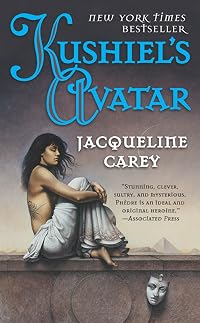
Erotic Literature. Fantasy. Fiction. Literature. The land of Terre d'Ange is a place of unsurpassed beauty and grace. It is said that angels found the land and saw it was good...and the ensuing race that rose from the seed of angels and men live by one simple rule: Love as thou wilt. Phèdre nó Delaunay is a woman pricked by Kushiel's Dart, chosen to forever experience pain and pleasure as one. Her path has been strange and dangerous, and through it all the devoted swordsman Joscelin has show more been at her side. Her very nature is a torturous thing for them both, but he is sworn to her and he has never violated his vow: to protect and serve. But Phèdre's plans put Joscelin's pledge to the test, for she has never forgotten her childhood friend Hyacinthe. She has spent ten long years searching for the key to free him from his eternal indenture, a bargain he struck with the gods-to take Phèdre's place as a sacrifice and save a nation. Phèdre cannot forgive-herself or the gods. She is determined to seize one last hope to redeem her friend, even if it means her death. The search will bring Phèdre and Joscelin across the world, to distant courts where madness reigns and souls are currency, and down a fabled river to a land forgotten by most of the world. And to a power so mighty that none dare speak its name. show lessTags
Recommendations




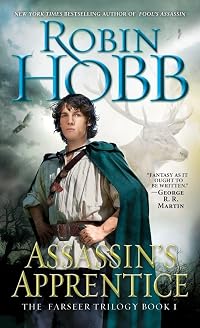
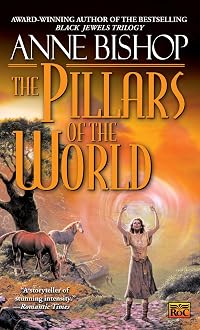
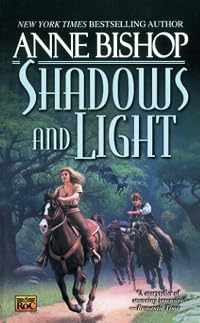

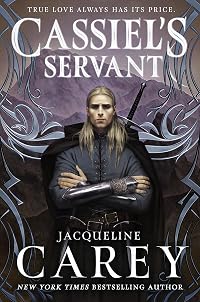










Member Recommendations
mollishka Naamah's Kiss is much more in the style of the first Kushiel trilogy than the second Kushiel trilogy is. I'd recommend reading Kushiel's Justice for some background first (Kushiel's Scion is totally skippable) and then diving into the delicious new Naamah's Kiss.
20
Member Reviews
These books, sweet baby jesus. If the first book was just totally whoa this book just totally destroyed me. It goes in so many directions and twists around so many times, that it was more like 2 or 3 books in one.
This particular book ventures far beyond the alt-Europe setting into alt-Africa and alt-Middle East. It was very interesting to see the subtle twists on those myriad cultures. There were quite a few bits when they are in Darsanga that made me feel less than well, but I think that Phèdre having to face those aspects of her desires again made me feel like I really had to read those parts, even when I really wanted to skim past them. Still, I loved Phèdre and Joscelin (even though Joscelin was a little too much the Perfect show more Companion in this one). And Imriel, I am feeling a little trepidation about his books, but I loved him too.
Overall, a really strong trilogy, with a bittersweet but perfect ending. I'm going to take a break before I start in on Imriel's books, because this one was pretty dark and I need some sunshine books. show less
This particular book ventures far beyond the alt-Europe setting into alt-Africa and alt-Middle East. It was very interesting to see the subtle twists on those myriad cultures. There were quite a few bits when they are in Darsanga that made me feel less than well, but I think that Phèdre having to face those aspects of her desires again made me feel like I really had to read those parts, even when I really wanted to skim past them. Still, I loved Phèdre and Joscelin (even though Joscelin was a little too much the Perfect show more Companion in this one). And Imriel, I am feeling a little trepidation about his books, but I loved him too.
Overall, a really strong trilogy, with a bittersweet but perfect ending. I'm going to take a break before I start in on Imriel's books, because this one was pretty dark and I need some sunshine books. show less
Assolutamente il degno finale di questa fantastica triologia di Jacqueline Carey.
Fra i tre è quello che ho preferito in assoluto per la presenza in egual misura di avventura, amore e sesso.
Avvenutura perchè il viaggio di Phèdre e Joscelin verso le terre inospitali di Saba, per scoprire l'unico modo che gli avrebbe permesso di liberare Hyacinthe, è irto e pieno di ostacoli. Le descrizioni assolutamente perfette ed evocative. La Carey non si limita a raccontare, no, le ci dimostra e ci mostra con minuziosa bravura ogni passaggio, ogni vallata... Semplicemente magnifica.
Amore perchè, in questo volume, Phèdre si trova a dover affrontare un lato più maturo di sè stessa. La parte compagna/amica e, inaspettatamente, madre. L'amore show more provato per una patrona, l'amore verso un amico, l'amore verso il frutto del tradimento, l'amore verso il proprio compagno... A volte risci, tu lettore, a percepire la frustrazione, la confusione ma allo stesso tempo la decisione di questa bellissima seppur imperfetta protagonista.
Ed, infine, credo che sia questo il volume più "brutale" di tutti. Brutale perchè vengono trattate tematiche più dure da digerire nel loro contesto. Vediamo la nostra anguissette che si trova a volutare, finalmente, con obiettività la sua natura. Ama il piacere, sopporta il dolore... Ma fino a quale punto? E se il signale non esistesse più fra le regole del gioco?
Coinvolgente, passionale, intrigante... Non so come definirlo. Ho adorato tutti i suoi libri e non vedo l'ora di poter leggere la nuova triologia. show less
Fra i tre è quello che ho preferito in assoluto per la presenza in egual misura di avventura, amore e sesso.
Avvenutura perchè il viaggio di Phèdre e Joscelin verso le terre inospitali di Saba, per scoprire l'unico modo che gli avrebbe permesso di liberare Hyacinthe, è irto e pieno di ostacoli. Le descrizioni assolutamente perfette ed evocative. La Carey non si limita a raccontare, no, le ci dimostra e ci mostra con minuziosa bravura ogni passaggio, ogni vallata... Semplicemente magnifica.
Amore perchè, in questo volume, Phèdre si trova a dover affrontare un lato più maturo di sè stessa. La parte compagna/amica e, inaspettatamente, madre. L'amore show more provato per una patrona, l'amore verso un amico, l'amore verso il frutto del tradimento, l'amore verso il proprio compagno... A volte risci, tu lettore, a percepire la frustrazione, la confusione ma allo stesso tempo la decisione di questa bellissima seppur imperfetta protagonista.
Ed, infine, credo che sia questo il volume più "brutale" di tutti. Brutale perchè vengono trattate tematiche più dure da digerire nel loro contesto. Vediamo la nostra anguissette che si trova a volutare, finalmente, con obiettività la sua natura. Ama il piacere, sopporta il dolore... Ma fino a quale punto? E se il signale non esistesse più fra le regole del gioco?
Coinvolgente, passionale, intrigante... Non so come definirlo. Ho adorato tutti i suoi libri e non vedo l'ora di poter leggere la nuova triologia. show less
I fell in love with this series years ago with the first book. Jacqueline Carey is incredibly clever and makes a complex, beautiful world loosely based on the cultures from this one. What I love about this series is that it's a mix of adventure, fantasy, philosophy, and romance. Really, you can't lose with this one.
I think this is the most gruesome out of the series so far. The previous two had some bad stuff, but nothing like what Phedre endures while enslaved to the sadistic warlord, the Mahrkagir. However, the reader is spared the worst of it and it's nice that the conflict is enhanced with each subsequent novel. The relationship between Joscelin and Phedre is really put to the test, and Phedre's strength of will to carry out her show more mission is also challenged. These two characters are so extraordinary that they sometimes seem invincible, but Carey makes sure to never take it easy on her characters. She gives them the ultimate challenges, making life difficult for even them.
I really love the relationship between Phedre and Joscelin. They fiercely love each other, and it makes me so happy to read about their story. They accept all of each other: the flaws, the strengths, the quirks. I feel like this is how relationships should be. They hardly ever argue because they are always looking at situations through the other person's point of view, and they respect each other to make the right decisions for themselves. I love it. This is what true love is, and this is what a mature, adult relationship should be.
This series is unique in that it just dives right into the dark stuff and keeps going. But amid all the death, torture, kidnappings, and slavery, there are so many great lessons and things to think about for real life. Most of all, what Kushiel's Avatar especially does is show the strength of love. What it is, what people will do for it and because of it, how it tears people apart, brings people together, and how it gives meaning to our lives are all main themes woven through this novel. For that alone, I'd recommend it. However, it also has fantastic writing, an interesting world, brilliant characters, and an entertaining plot. I don't think it's for everyone, because there is a lot of darkness and stuff many may considered "weird," but for those who can take the different culture of the D'Angeline world, you will be enamored of this series. show less
I think this is the most gruesome out of the series so far. The previous two had some bad stuff, but nothing like what Phedre endures while enslaved to the sadistic warlord, the Mahrkagir. However, the reader is spared the worst of it and it's nice that the conflict is enhanced with each subsequent novel. The relationship between Joscelin and Phedre is really put to the test, and Phedre's strength of will to carry out her show more mission is also challenged. These two characters are so extraordinary that they sometimes seem invincible, but Carey makes sure to never take it easy on her characters. She gives them the ultimate challenges, making life difficult for even them.
I really love the relationship between Phedre and Joscelin. They fiercely love each other, and it makes me so happy to read about their story. They accept all of each other: the flaws, the strengths, the quirks. I feel like this is how relationships should be. They hardly ever argue because they are always looking at situations through the other person's point of view, and they respect each other to make the right decisions for themselves. I love it. This is what true love is, and this is what a mature, adult relationship should be.
This series is unique in that it just dives right into the dark stuff and keeps going. But amid all the death, torture, kidnappings, and slavery, there are so many great lessons and things to think about for real life. Most of all, what Kushiel's Avatar especially does is show the strength of love. What it is, what people will do for it and because of it, how it tears people apart, brings people together, and how it gives meaning to our lives are all main themes woven through this novel. For that alone, I'd recommend it. However, it also has fantastic writing, an interesting world, brilliant characters, and an entertaining plot. I don't think it's for everyone, because there is a lot of darkness and stuff many may considered "weird," but for those who can take the different culture of the D'Angeline world, you will be enamored of this series. show less
Summary: Terre D'Ange has had ten years of peace since Phèdre nó Delaunay helped defeat the plots of Melisande and secure Ysandre de la Courcel on the throne for good. In that time Phèdre and her consort Joscelin have prospered, troubled only by two failures. First, Melisande's son Imriel is third in line for the D'Angeline throne, and thus poised to be at the center of plots against Ysandre and her daughters, but Phèdre has been unable to find him. Secondly, not a day goes by that her childhood friend Hyacinthe is not on Phèdre's mind, but she has been unable to find the one word that will free him from his terrible burden as the Master of the Straits - a burden that he accepted on her behalf. But now the ten years of peace have show more come to an end, with a terrible dream and a message from Melisande. For Imriel is missing, kidnapped from the temple at which he'd been secreted away, and although Melisande should be Phèdre's enemy, she agrees to look for the missing boy... a quest which will take her farther from her beloved homeland than she's ever been before, and which may ultimately hold the key to Hyacinthe's fate.
Review: It's really difficult to do justice to these books in a single review, because they are so big, so complex, and so, so good. I don't know exactly how to start, other than just dissolving into a mess of fangirly "eeee! so good!" gushing all over the page, but: Eeee! So good!
I suppose I'll start with the things that are wonderful about the series as a whole. Carey's writing is amazing, lush and beautiful and descriptive and full of wonderfully well-turned phrases. Phèdre's voice is a little bit archaic-sounding in places, but it's never difficult to read, and it adds to the characterization. (That characterization is, of course, also wonderful, which I'll get into below.) I also really like Carey's world that she's built - or more to the point, the way that she's tweaked our world so that she can add in religions and fantasy elements (although really, not that many) and play with the history a bit, but left it similar enough to our world that it feels rich and familiar. This book, as it ventures further afield, was less familiar to me than the previous two, although I loved the sections in Menehkhet (Egypt) and I'm now curious to go in search of some history and legend, just to see how much of Carey's story is based on reality, and how much is invention.
Carey also does a good job of keeping her story moving. This book feels somewhat episodic, which I think is unavoidable with a book of this size, but she handles her transitions smoothly. But really, the main reason that I love these books is not the writing or the worldbuilding or the action or the sexytimes (of which this book actually had comparably few); it's that they're incredibly absorbing, and I think a large part of that is down to the characters. Phèdre is a great narrator, strong and smart and not only self-confident but also aware of her foibles and limitations. This book is substantially darker than previous books, especially throughout its middle section, and it was the first time when Phèdre being who she is made me (and, I think, her) truly uncomfortable, but the characterization rings true throughout. Joscelin is... Joscelin. (Read: Amazing. And a lot more present in this book than in the previous, even when he wasn't physically on-screen.) But what really stood out for me in this book was how quickly, and how absolutely completely I fell in love with Imriel. Carey writes him exquisitely well, with the perfect blend of hurt and anger and hesitant trust and old-for-his-age savvy and general ten-year-old-boy-ishness. I don't know that I've encountered another character with such power to simultaneously make my heart break, and melt, on his behalf. If I'm being perfectly honest, I got teary-eyed more than once throughout this book.
So. That was gushy and rambly and I have now used up all of the superlatives in the English language, but it basically boils down to: Love, love, love. So good. 4.5 out of 5 stars.
Recommendation: Kushiel's Avatar does not at all stand alone. The trilogy as a whole, though, is highly, highly recommended for fans of epic, complex, mature, and beautiful fantasy novels. show less
Review: It's really difficult to do justice to these books in a single review, because they are so big, so complex, and so, so good. I don't know exactly how to start, other than just dissolving into a mess of fangirly "eeee! so good!" gushing all over the page, but: Eeee! So good!
I suppose I'll start with the things that are wonderful about the series as a whole. Carey's writing is amazing, lush and beautiful and descriptive and full of wonderfully well-turned phrases. Phèdre's voice is a little bit archaic-sounding in places, but it's never difficult to read, and it adds to the characterization. (That characterization is, of course, also wonderful, which I'll get into below.) I also really like Carey's world that she's built - or more to the point, the way that she's tweaked our world so that she can add in religions and fantasy elements (although really, not that many) and play with the history a bit, but left it similar enough to our world that it feels rich and familiar. This book, as it ventures further afield, was less familiar to me than the previous two, although I loved the sections in Menehkhet (Egypt) and I'm now curious to go in search of some history and legend, just to see how much of Carey's story is based on reality, and how much is invention.
Carey also does a good job of keeping her story moving. This book feels somewhat episodic, which I think is unavoidable with a book of this size, but she handles her transitions smoothly. But really, the main reason that I love these books is not the writing or the worldbuilding or the action or the sexytimes (of which this book actually had comparably few); it's that they're incredibly absorbing, and I think a large part of that is down to the characters. Phèdre is a great narrator, strong and smart and not only self-confident but also aware of her foibles and limitations. This book is substantially darker than previous books, especially throughout its middle section, and it was the first time when Phèdre being who she is made me (and, I think, her) truly uncomfortable, but the characterization rings true throughout. Joscelin is... Joscelin. (Read: Amazing. And a lot more present in this book than in the previous, even when he wasn't physically on-screen.) But what really stood out for me in this book was how quickly, and how absolutely completely I fell in love with Imriel. Carey writes him exquisitely well, with the perfect blend of hurt and anger and hesitant trust and old-for-his-age savvy and general ten-year-old-boy-ishness. I don't know that I've encountered another character with such power to simultaneously make my heart break, and melt, on his behalf. If I'm being perfectly honest, I got teary-eyed more than once throughout this book.
So. That was gushy and rambly and I have now used up all of the superlatives in the English language, but it basically boils down to: Love, love, love. So good. 4.5 out of 5 stars.
Recommendation: Kushiel's Avatar does not at all stand alone. The trilogy as a whole, though, is highly, highly recommended for fans of epic, complex, mature, and beautiful fantasy novels. show less
Note: It is possible to read this book as a stand alone as relevant events from Book 1 and Book 2 are reflected upon in enough detail for a reader of Book 3 to grasp the point. However, I highly recommend reading the earlier books so that you get the most out of this book.
Set 10 years after Book 2, Kushiel’s Chosen, Phedre and Joscelin have had all that time to settle into their relationship. Both have made compromises to their wants in order to make room for their love. Phedre only takes two assignations a year in Naamah’s service while Joscelin has learned to let his sense of humor show here and there. But through this well-earned and hard-found bliss, Phedre has never forgotten Hyacinthe and his sacrifice for Terre D’Ange and show more herself. He still lives an isolated life out on the Three Sisters, learning the powers of the Master of the Straights. Then she receives an unexpected missive from an old enemy and one-time patron, Melisande. Phedre’s adventuring days are not over yet.
This is a re-read for me. I have enjoyed this series over and over again and it was awesome to revisit this book as part of a read along with several blogger friends. They brought new insights to this much beloved book. I have always found this book to be the darkest of the first trilogy. The entire series deals with consent in its many myriad forms. However, in this installment of the series we see how those lines can get blurred and shattered apart. This epic fantasy is not for the faint of heart.
There’s two plot lines for Joscelin and Phedre to solve in this book and one has always been more interesting to me than the other. First, as we know from Book 2, Melisande had a son who she somehow spirited away. Now, it is up to Phedre and Joscelin to track down this long-lost Prince of the Blood, Imriel. Second, the Master of the Straights has passed his powers on to Hyacinthe after a long 10-year apprenticeship. Phedre still searches for the key to free him and will never give up.
The search for Imriel is the one that has always held my attention. It deals with child slavery and the broken trust of a child and how, if ever, to recover that trust. Meanwhile, I have never gotten caught up fully in Hyacinthe’s plight. He went into the agreement with full knowledge as an adult. I know the life on the Three Sisters is a complete 180 for him, being trapped on these three isles with only his servants and the Master of the Straights for company. And yet…. Well, I always felt that he was moping about it, for ten years. He wasn’t trying to make the most of the situation. He wasn’t making an effort to embrace the few, yet awesomely powerful, perks of his new station in life and I think that is what dampened my feelings towards him. Meanwhile, Phedre was all in an anguish over him every other chapter and felt this great survivor’s guilt for not having been the one trapped on that isle instead of Hyacinthe. It’s totally in keeping with Phedre’s personality, and yet I still found it a little tiring.
So, setting aside that one tiny quibble, this is an excellent book to wrap up the first trilogy. Phedre’s gods ask her to take on a dangerous and most difficult task. The asking is subtle and I feel there’s plenty there for each reader to interpret their own way. The magic of Terre D’Ange is not often direct. Phedre’s deities will be tested by the dark powers that have taken up residence in Darsanga, a land far to the east of Terre D’Ange. Phedre and Joscelin won’t be able to count on any help from friends and allies. My heart really went out to Joscelin on this one. In the past books, Phedre’s actions have often tested Joscelin’s vows, but this is a new level. I think both Phedre and Joscelin lost a little bit of themselves.
There’s plenty of travel for Phedre and Joscelin in this story. New lands and new cultures are explored. The Yeshuites continue to play a part in this tale. Indeed, they have quite a significant role in part of the adventure. It’s easy to see how both Phedre and Joscelin have grown throughout the series in this book. They take on meeting new peoples in stride and adapting their own manners to be more accommodating to their hosts. In Book 1 and Book 2, Phedre can sometimes come off as a little conceited. I think she’s really grown out of that here in Book 3. She still observes differences, but she’s not longer simply comparing those differences to the ways of Terre D’Ange.
As with the first two books, the author doesn’t shy away from detailed sex scenes. They are always used to move the plot forward or show some aspect of the characters. One of the reasons that I adore these books is that they don’t ignore the fact that sex is a main driver for human behavior and that how we treat someone both outside and inside the bedroom is important (and sometimes is mightily different). This book contains one of my favorite sex scenes of all time. It involves fishing. The scene was moving, beautiful, arousing, loving, sensual, and meaningful.
Enough gushing. You know by now that I adore this book even if I find it the darkest of the three. I also find that it holds the most food for thought. The myriad of characters show their strengths, and try to hide their weaknesses, in a variety of ways. It’s not just swords and muscles that will win your way through this adventure. The ending was quite satisfying. Not everyone got everything they were hoping for, but everyone got enough.
The Narration: Once again, Anne Flosnik gives a stellar performance. The list of accents needed for this trilogy grows yet again with this installment. I can’t imagine the amount of research she had to put into this before she could begin the narration. Her character voices are always distinct and she holds this accent or that accent steady for each character. I love her little kid voice for Imriel. Great narration! show less
Set 10 years after Book 2, Kushiel’s Chosen, Phedre and Joscelin have had all that time to settle into their relationship. Both have made compromises to their wants in order to make room for their love. Phedre only takes two assignations a year in Naamah’s service while Joscelin has learned to let his sense of humor show here and there. But through this well-earned and hard-found bliss, Phedre has never forgotten Hyacinthe and his sacrifice for Terre D’Ange and show more herself. He still lives an isolated life out on the Three Sisters, learning the powers of the Master of the Straights. Then she receives an unexpected missive from an old enemy and one-time patron, Melisande. Phedre’s adventuring days are not over yet.
This is a re-read for me. I have enjoyed this series over and over again and it was awesome to revisit this book as part of a read along with several blogger friends. They brought new insights to this much beloved book. I have always found this book to be the darkest of the first trilogy. The entire series deals with consent in its many myriad forms. However, in this installment of the series we see how those lines can get blurred and shattered apart. This epic fantasy is not for the faint of heart.
There’s two plot lines for Joscelin and Phedre to solve in this book and one has always been more interesting to me than the other. First, as we know from Book 2, Melisande had a son who she somehow spirited away. Now, it is up to Phedre and Joscelin to track down this long-lost Prince of the Blood, Imriel. Second, the Master of the Straights has passed his powers on to Hyacinthe after a long 10-year apprenticeship. Phedre still searches for the key to free him and will never give up.
The search for Imriel is the one that has always held my attention. It deals with child slavery and the broken trust of a child and how, if ever, to recover that trust. Meanwhile, I have never gotten caught up fully in Hyacinthe’s plight. He went into the agreement with full knowledge as an adult. I know the life on the Three Sisters is a complete 180 for him, being trapped on these three isles with only his servants and the Master of the Straights for company. And yet…. Well, I always felt that he was moping about it, for ten years. He wasn’t trying to make the most of the situation. He wasn’t making an effort to embrace the few, yet awesomely powerful, perks of his new station in life and I think that is what dampened my feelings towards him. Meanwhile, Phedre was all in an anguish over him every other chapter and felt this great survivor’s guilt for not having been the one trapped on that isle instead of Hyacinthe. It’s totally in keeping with Phedre’s personality, and yet I still found it a little tiring.
So, setting aside that one tiny quibble, this is an excellent book to wrap up the first trilogy. Phedre’s gods ask her to take on a dangerous and most difficult task. The asking is subtle and I feel there’s plenty there for each reader to interpret their own way. The magic of Terre D’Ange is not often direct. Phedre’s deities will be tested by the dark powers that have taken up residence in Darsanga, a land far to the east of Terre D’Ange. Phedre and Joscelin won’t be able to count on any help from friends and allies. My heart really went out to Joscelin on this one. In the past books, Phedre’s actions have often tested Joscelin’s vows, but this is a new level. I think both Phedre and Joscelin lost a little bit of themselves.
There’s plenty of travel for Phedre and Joscelin in this story. New lands and new cultures are explored. The Yeshuites continue to play a part in this tale. Indeed, they have quite a significant role in part of the adventure. It’s easy to see how both Phedre and Joscelin have grown throughout the series in this book. They take on meeting new peoples in stride and adapting their own manners to be more accommodating to their hosts. In Book 1 and Book 2, Phedre can sometimes come off as a little conceited. I think she’s really grown out of that here in Book 3. She still observes differences, but she’s not longer simply comparing those differences to the ways of Terre D’Ange.
As with the first two books, the author doesn’t shy away from detailed sex scenes. They are always used to move the plot forward or show some aspect of the characters. One of the reasons that I adore these books is that they don’t ignore the fact that sex is a main driver for human behavior and that how we treat someone both outside and inside the bedroom is important (and sometimes is mightily different). This book contains one of my favorite sex scenes of all time. It involves fishing. The scene was moving, beautiful, arousing, loving, sensual, and meaningful.
Enough gushing. You know by now that I adore this book even if I find it the darkest of the three. I also find that it holds the most food for thought. The myriad of characters show their strengths, and try to hide their weaknesses, in a variety of ways. It’s not just swords and muscles that will win your way through this adventure. The ending was quite satisfying. Not everyone got everything they were hoping for, but everyone got enough.
The Narration: Once again, Anne Flosnik gives a stellar performance. The list of accents needed for this trilogy grows yet again with this installment. I can’t imagine the amount of research she had to put into this before she could begin the narration. Her character voices are always distinct and she holds this accent or that accent steady for each character. I love her little kid voice for Imriel. Great narration! show less
I adore Jacqueline Carey's writing. I personally think she is more suited for me than George R. Martin. She is definitely more personal while her world-building is still just as vast as Martin's.
Kushiel's Avatar starts 10 years after the end of Kushiel's Chosen. Melisande Shahrizai is vanquished and hiding away at Asherat's sanctuary while Phedre and Joscelin enjoy their quiet living in their country estate. But all good things come to an end when they receive a letter from Melisande asking for their help in finding her missing son in exchange for information Phedre has been desperately seeking all this time.
Phedre is obsessed with releasing Hyacinthe from his servitude to an ancient fallen angel as Master of Straits. In book #1 show more Hyacinthe took her place and sacrificed himself so Phedre would save Terre D'Ange, and since then she hasn't stopped looking in the ancient texts for a solution to breaking the curse.
Now, when Melisande dangles a carrot like this in front of her, Phedre will have to do everything in her power to find missing Imriel. She goes searching for him, and her journey takes her to forgotten dark places. Through her hardships Phedre comes to realise that she is led by higher forces not only to find Imriel but to vanquish dark forces rising in the East from the ruins of an ancient civilisation.
The part when Phedre is immersing herself and Joscelin, poor Joscelin, in that dark kingdom is truly horrifying. It's literally a kingdom of death, rot and decay, it's ruler is a mad evil sadist, there is so much desperation, depression and pain it's emotionally hard to read. You feel hot and cold, your stomach is in knots.... In comparison, Phedre's further quest for The Name of God feels almost anticlimactic.
However, this doesn't take anything away from the EPIC awesomeness of this series. Phedre's journey has been amazing, and I can't wait to start the next trilogy which is about Imriel. Jacqueline Carey provided unique outlook on BDSM, making Phedre an ultimate submissive before such topic even became widely spread and popular, but most of all there is an incredible amount of love and wisdom here even if the journey itself is not for the fainthearted. show less
Kushiel's Avatar starts 10 years after the end of Kushiel's Chosen. Melisande Shahrizai is vanquished and hiding away at Asherat's sanctuary while Phedre and Joscelin enjoy their quiet living in their country estate. But all good things come to an end when they receive a letter from Melisande asking for their help in finding her missing son in exchange for information Phedre has been desperately seeking all this time.
Phedre is obsessed with releasing Hyacinthe from his servitude to an ancient fallen angel as Master of Straits. In book #1 show more Hyacinthe took her place and sacrificed himself so Phedre would save Terre D'Ange, and since then she hasn't stopped looking in the ancient texts for a solution to breaking the curse.
Now, when Melisande dangles a carrot like this in front of her, Phedre will have to do everything in her power to find missing Imriel. She goes searching for him, and her journey takes her to forgotten dark places. Through her hardships Phedre comes to realise that she is led by higher forces not only to find Imriel but to vanquish dark forces rising in the East from the ruins of an ancient civilisation.
The part when Phedre is immersing herself and Joscelin, poor Joscelin, in that dark kingdom is truly horrifying. It's literally a kingdom of death, rot and decay, it's ruler is a mad evil sadist, there is so much desperation, depression and pain it's emotionally hard to read. You feel hot and cold, your stomach is in knots.... In comparison, Phedre's further quest for The Name of God feels almost anticlimactic.
However, this doesn't take anything away from the EPIC awesomeness of this series. Phedre's journey has been amazing, and I can't wait to start the next trilogy which is about Imriel. Jacqueline Carey provided unique outlook on BDSM, making Phedre an ultimate submissive before such topic even became widely spread and popular, but most of all there is an incredible amount of love and wisdom here even if the journey itself is not for the fainthearted. show less
92 points/100 (4.75 stars/5).
After having been sold into slavery several times over the course of her life, saved her kingdom several times over as well, Comtess Phèdre nó Delaunay de Montrève has had ten quiet years of peace. Now, the dreams have started again, and Phèdre has more work to do. There is two things left for her to do, find Melisande's son, Imriel, and save Hyacinthe from his fate. When Imriel goes missing and Melisande offers the way to save Hyacinthe in order for her to find him, Phédre knows what she has to do.
A fitting end for a fitting series. This is a great ending to this trilogy, though it is not the entire story. I enjoyed the entire ride of this ending, though I did have fear at times. This ending holds show more true to the series so far, and I was not disappointed in it at all.
Compared to the first two books in this trilogy, the start of this book was really fast. I was surprised just how little time the story took to warm up after I read the first two. I figured either this book was going faced paced, which good for it, or it was luring me into a false sense of belief that the story would stay at that pace. Turns out it was both, because that middle was even more crazy than I could have expected.
There are two parts to the middle of this story. The first is the dark middle, which holy fucking shit. I knew Carey had it in her to go this far. After the first two, I believed anything could happen to our two protagonists. At least I was prepared for anything because this was one hell of a period. I have no words to describe this section other than read the book and find out, and be prepared for anything. There are so many things that happen here so quickly it is hard to process it all. It probably didn't actually take as long to read as it felt like it did, because it felt like an eternity of fear and pain.
Then there is the traveling middle, once we get out of the dark middle. We travel halfway across the world to get to our next adventure. All of the characters are healing, which is something we actually didn't get to see too much in the story so far. The characters had gone through hell prior, but in the books they mostly were jumping from one fire to the next. This time they have time in the middle to go through their healing process, lick their wounds, and get to their next adventure, which couldn't possibly be as bad as what they just went through. I enjoyed this section a lot, for how little actually happens in it. This section probably did take as long as it felt like it took, because it was actually rather long, because Carey talks about every new place our characters come to.
The ending is really sweet. It is exactly what I wanted to read at the end. I didn't exactly want it to end, and I suppose it won't because I have two more trilogies to get through. These two, Phèdre and Joscelin, they have been through enough together. They don't need any more. They need their happily ever after. I'm willing to give it to them.
In a surprise change, that I didn't actually notice in the middle of the book, the narration changes. Carey and Phèdre no longer combine future and past and present. There isn't really any foreshadowing this book. There is a bit of both of these, it isn't over done. It is still a bit flowery, but it is more contained. I have a theory that this is on purpose, that we didn't know what had happened, not really. Most of this book, Phèdre and Joscelin are alone, without anyone else around to have told the tale to others. We also knew all of the past events leading up to this book, so we didn't really need to be told those, either. What we really needed to know was the present, and that is what we got. If so, though, that isn't really made clear, so it is just a personal theory for now.
The way religion has been thread through this series up until this point is something I have ignored. She has done an good job of threading real life beliefs into her story, while making it truly her own. Until this book, I just thought she was doing a good job. This book though, it takes it to another level. I honestly didn't expect this level of import on the religions of this world on the world of Kushiel before now. There is so much that goes on in this book on this front. I'd recommend this to anyone looking for more religion in their book, because this was phenomenal.
The biggest change in this book compared to the others is there really isn't much court intrigue. For most of the book, they're away from court, away from Terre d'Ange, away from everything they have ever known. What little intrigue there is, is because they're being introduced to dignitaries because they had never met before. This was a sigh of relief for me, because that just wasn't really what I was interested in in this series. Unfortunately, I'm sure I'll get a lot more of it in the coming trilogies.
Phèdre and Joscelin are amazing this book. I felt annoyed coming into this book when I knew that I would miss ten full years of development in their relationship. How rude! Instead we get what happens in the middle portion of this book, which is hell. Pure hell. However after that, I got to fall in love with these two all over again. Phédre is so incredibly strong in this book, I hate that she has to be this strong all over again. Joscelin finally comes into his true core strength. I love the growth of Joscelin in the entire series. Phèdre starts off incredibly strong, but young, but Joscelin starts off so determined to hold true to his vows it makes him weak. These two are a great couple.
The surprise of the book is Imriel de la Courcel. I came in to this book expecting nothing about him, not really. I only knew that he was out there and Phèdre was looking for him for the Queen. Then, he became a big part of the plot. Then he became a big character. I knew the next trilogy was about him, but I didn't know the shape that trilogy would take. Now I do. Now I'm looking forward to it, because I love this little kid. If he could be my own, I would love to make that true. He is amazing.
An ending befitting the series, this was a truly great book, and I'm glad I read it. I honestly didn't want to stop reading, even though my body had other ideas. show less
After having been sold into slavery several times over the course of her life, saved her kingdom several times over as well, Comtess Phèdre nó Delaunay de Montrève has had ten quiet years of peace. Now, the dreams have started again, and Phèdre has more work to do. There is two things left for her to do, find Melisande's son, Imriel, and save Hyacinthe from his fate. When Imriel goes missing and Melisande offers the way to save Hyacinthe in order for her to find him, Phédre knows what she has to do.
A fitting end for a fitting series. This is a great ending to this trilogy, though it is not the entire story. I enjoyed the entire ride of this ending, though I did have fear at times. This ending holds show more true to the series so far, and I was not disappointed in it at all.
Compared to the first two books in this trilogy, the start of this book was really fast. I was surprised just how little time the story took to warm up after I read the first two. I figured either this book was going faced paced, which good for it, or it was luring me into a false sense of belief that the story would stay at that pace. Turns out it was both, because that middle was even more crazy than I could have expected.
There are two parts to the middle of this story. The first is the dark middle, which holy fucking shit. I knew Carey had it in her to go this far. After the first two, I believed anything could happen to our two protagonists. At least I was prepared for anything because this was one hell of a period. I have no words to describe this section other than read the book and find out, and be prepared for anything. There are so many things that happen here so quickly it is hard to process it all. It probably didn't actually take as long to read as it felt like it did, because it felt like an eternity of fear and pain.
Then there is the traveling middle, once we get out of the dark middle. We travel halfway across the world to get to our next adventure. All of the characters are healing, which is something we actually didn't get to see too much in the story so far. The characters had gone through hell prior, but in the books they mostly were jumping from one fire to the next. This time they have time in the middle to go through their healing process, lick their wounds, and get to their next adventure, which couldn't possibly be as bad as what they just went through. I enjoyed this section a lot, for how little actually happens in it. This section probably did take as long as it felt like it took, because it was actually rather long, because Carey talks about every new place our characters come to.
The ending is really sweet. It is exactly what I wanted to read at the end. I didn't exactly want it to end, and I suppose it won't because I have two more trilogies to get through. These two, Phèdre and Joscelin, they have been through enough together. They don't need any more. They need their happily ever after. I'm willing to give it to them.
In a surprise change, that I didn't actually notice in the middle of the book, the narration changes. Carey and Phèdre no longer combine future and past and present. There isn't really any foreshadowing this book. There is a bit of both of these, it isn't over done. It is still a bit flowery, but it is more contained. I have a theory that this is on purpose, that we didn't know what had happened, not really. Most of this book, Phèdre and Joscelin are alone, without anyone else around to have told the tale to others. We also knew all of the past events leading up to this book, so we didn't really need to be told those, either. What we really needed to know was the present, and that is what we got. If so, though, that isn't really made clear, so it is just a personal theory for now.
The way religion has been thread through this series up until this point is something I have ignored. She has done an good job of threading real life beliefs into her story, while making it truly her own. Until this book, I just thought she was doing a good job. This book though, it takes it to another level. I honestly didn't expect this level of import on the religions of this world on the world of Kushiel before now. There is so much that goes on in this book on this front. I'd recommend this to anyone looking for more religion in their book, because this was phenomenal.
The biggest change in this book compared to the others is there really isn't much court intrigue. For most of the book, they're away from court, away from Terre d'Ange, away from everything they have ever known. What little intrigue there is, is because they're being introduced to dignitaries because they had never met before. This was a sigh of relief for me, because that just wasn't really what I was interested in in this series. Unfortunately, I'm sure I'll get a lot more of it in the coming trilogies.
Phèdre and Joscelin are amazing this book. I felt annoyed coming into this book when I knew that I would miss ten full years of development in their relationship. How rude! Instead we get what happens in the middle portion of this book, which is hell. Pure hell. However after that, I got to fall in love with these two all over again. Phédre is so incredibly strong in this book, I hate that she has to be this strong all over again. Joscelin finally comes into his true core strength. I love the growth of Joscelin in the entire series. Phèdre starts off incredibly strong, but young, but Joscelin starts off so determined to hold true to his vows it makes him weak. These two are a great couple.
The surprise of the book is Imriel de la Courcel. I came in to this book expecting nothing about him, not really. I only knew that he was out there and Phèdre was looking for him for the Queen. Then, he became a big part of the plot. Then he became a big character. I knew the next trilogy was about him, but I didn't know the shape that trilogy would take. Now I do. Now I'm looking forward to it, because I love this little kid. If he could be my own, I would love to make that true. He is amazing.
An ending befitting the series, this was a truly great book, and I'm glad I read it. I honestly didn't want to stop reading, even though my body had other ideas. show less
Members
- Recently Added By
Lists

NPRs your picks: top 100 Sci-Fi/Fantasy books
297 works; 80 members

Female Protagonist
1,056 works; 57 members

Unread books
1,063 works; 83 members
Author Information

52+ Works 33,969 Members
Jacqueline Carey was born in 1964 in Highland Park, Illinois. After receiving B.A. degrees in psychology and English literature from Lake Forest College, she spent six months working in a bookstore in London. Upon returning to the U.S., she began her writing career while working at a local college. Her debut novel, Kushiel's Dart, was published in show more 2001 and won the 2002 Locus Award for Best First Novel. Her other works include the Kushiel's Legacy series, the Naamah series, the Sundering series, and Santa Olivia series. (Bowker Author Biography) show less
Some Editions
Series


Belongs to Publisher Series
Gallimard, Folio SF (718)
Work Relationships
Common Knowledge
- Canonical title
- Kushiel's Avatar
- Original title
- Avatar
- Alternate titles*
- Kushiel's Avatar
- Original publication date
- 2003-04-01
- People/Characters
- Phèdre nó Delaunay; Joscelin Verreuil; Melisande Sharizhai; Imriel de la Courcel; Mahrkagir; Drustan mab Necthana (show all 8); Hyacinthe; Ysandre de la Courcel
- Important places
- Terre D'Ange; Khebbel-im-Akkad; Drujan; Menekhet; Saba; The Three Sisters
- First words
- It ended with a dream.
- Last words
- (Click to show. Warning: May contain spoilers.)I touched the bare hollow of my throat, and smiled, remembering. Love as thou wilt.
- Publisher's editor
- Eddy, Claire
- Blurbers*
- Jordan, Robert; Anthony, Pierce
- Original language
- English
*Some information comes from Common Knowledge in other languages. Click "Edit" for more information.
Classifications
Statistics
- Members
- 4,320
- Popularity
- 3,484
- Reviews
- 76
- Rating
- (4.31)
- Languages
- 8 — Czech, Dutch, English, French, German, Italian, Polish, Portuguese
- Media
- Paper, Audiobook, Ebook
- ISBNs
- 35
- ASINs
- 11