On This Page
Description
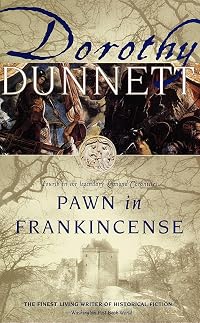
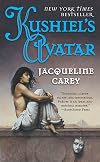
In this fourth book in the legendary Lymond Chronicles, Francis Crawford of Lymond desperately searches the Ottoman empire for his kidnapped child.Somewhere within the bejeweled labyrinth of the Ottoman empire, a child is hidden. Now his father, Francis Crawford of Lymond, soldier of fortune and the exiled heir of Scottish nobility, is searching for him while ostensibly engaged on a mission to the Turkish Sultan. At stake is the political order of three continents, for Lymond's child is a show more pawn in a cutthroat game whose gambits include treason, enslavement, and murder. In that game's final move, which is played inside the harem of the Topkapi palace, Lymond will come face to face with his most implacable enemy and the dreadful ambiguities of his own nature.
With a Foreword by the author. show less
Tags
Recommendations















Member Recommendations
Member Reviews
“Evil matters. So does love. So does pity. My pilgrim,” said Dame de Doubtance gently, “you have still three bitter lessons to learn.”
Bitter lessons indeed. This book broke my heart in too many places to count. I should not be surprised, really, Dunnett had done it before. I put the book aside for many days, because the emotional turmoil at last became too much for me to bear. I gathered my courage and dived back – and Dunnett promptly broke my heart yet again. Danse Macabre is mentioned at one point, and this is what the long, desperate quest feels like.
Oh, Lymond. There were battles of all kinds, so many yet to come. I hope that you will let love come to you. Sometimes it’s amazing how much you care for imaginary show more people…
“Duty, friendship, compassion I do owe to many. But love I offer to none.”
“Duty, friendship, compassion. Which moved him to die for you?”
I loved the partnership of Lymond and Jerott and tempests between them.
“Lymond grinned. “When the clay for thee was kneaded, as they say,” he remarked, “they forgot to put in common sense.”
I loved Marthe – so gifted, so angry, so damaged, so sharp, so clever, so resilient. Her scenes with Lymond at the very end are touching and harrowing at the same time. Give me more Marthe, please.
“I never expect anything,” said Marthe. “It provides a level, low-pitched existence with no disappointments.”
Philippa’s storyline requires suspension of disbelief. Somehow, I was happy to oblige. In the beginning, she does so many right things for the wrong reasons and wrong things for the right reasons, and I wanted to shake her. I ended up admiring and cheering (yes, that’s the same me who screamed “Philippa the brat!” at earlier books). What a journey, what a coming of age, what a spirit… Philippa’s storyline was the only thing that brought me small morsels of joy from time to time.
And so... five stars it is. Because of the characters (book constraints are almost too narrow for them!) - so flawed, so beautifully rendered. Because of the story arcs. Because of the power of storytelling. Because of the dialogues. Because of those turns of phrase that made me fall in love with the written word all over again, as though for the first time. Oh, am I doing this series justice? I don’t think I am. show less
Bitter lessons indeed. This book broke my heart in too many places to count. I should not be surprised, really, Dunnett had done it before. I put the book aside for many days, because the emotional turmoil at last became too much for me to bear. I gathered my courage and dived back – and Dunnett promptly broke my heart yet again. Danse Macabre is mentioned at one point, and this is what the long, desperate quest feels like.
Oh, Lymond. There were battles of all kinds, so many yet to come. I hope that you will let love come to you. Sometimes it’s amazing how much you care for imaginary show more people…
“Duty, friendship, compassion I do owe to many. But love I offer to none.”
“Duty, friendship, compassion. Which moved him to die for you?”
I loved the partnership of Lymond and Jerott and tempests between them.
“Lymond grinned. “When the clay for thee was kneaded, as they say,” he remarked, “they forgot to put in common sense.”
I loved Marthe – so gifted, so angry, so damaged, so sharp, so clever, so resilient. Her scenes with Lymond at the very end are touching and harrowing at the same time. Give me more Marthe, please.
“I never expect anything,” said Marthe. “It provides a level, low-pitched existence with no disappointments.”
Philippa’s storyline requires suspension of disbelief. Somehow, I was happy to oblige. In the beginning, she does so many right things for the wrong reasons and wrong things for the right reasons, and I wanted to shake her. I ended up admiring and cheering (yes, that’s the same me who screamed “Philippa the brat!” at earlier books). What a journey, what a coming of age, what a spirit… Philippa’s storyline was the only thing that brought me small morsels of joy from time to time.
And so... five stars it is. Because of the characters (book constraints are almost too narrow for them!) - so flawed, so beautifully rendered. Because of the story arcs. Because of the power of storytelling. Because of the dialogues. Because of those turns of phrase that made me fall in love with the written word all over again, as though for the first time. Oh, am I doing this series justice? I don’t think I am. show less
The violence of my reaction to the fourth Lymond book was a sight to behold. Eight hours later and my brain is still numb, my heart still hurts. And I am still really very angry at Dorothy Dunnett.
From a technical point of view, it's a much easier read than its predecessors. By now, you'll be in the swing of things Dunnett-style, so in that way it will flow. But also, the plot is easier to follow as we're now (mostly) in on the motivations that drive Lymond and his companions throughout most of the book.
But. But but but. That doesn't mean that it is in anyway simplified. Haha, no. Dorothy Dunnett throws down the gauntlet. This is a far bigger challenge in many respects than anything that's come before it. Misery without relief. It's show more awful. And it's wonderful. And I loathe it. And she is still reigning queen of my favourites list.
And for those who say "but it's just a book" - you have obviously never read a Dorothy Dunnett. show less
From a technical point of view, it's a much easier read than its predecessors. By now, you'll be in the swing of things Dunnett-style, so in that way it will flow. But also, the plot is easier to follow as we're now (mostly) in on the motivations that drive Lymond and his companions throughout most of the book.
But. But but but. That doesn't mean that it is in anyway simplified. Haha, no. Dorothy Dunnett throws down the gauntlet. This is a far bigger challenge in many respects than anything that's come before it. Misery without relief. It's show more awful. And it's wonderful. And I loathe it. And she is still reigning queen of my favourites list.
And for those who say "but it's just a book" - you have obviously never read a Dorothy Dunnett. show less
Oh, yes. This one. The one they talk about in hushed whispers. A game played out between two masters from one end of the Mediterranean to the other, one a sadistic genius, the other a man of brilliance and control aware that he is balancing way too many interests to do anything other than manoeuvre with an inhumanly clinical skill until the opportunity comes to act decisively. Chasing a kidnapped child and his mother with a strange motley of friends he'd rather weren't there and a misanthropic pawn broker and horologist and his shocking and incomprehensible assistant, Francis Crawford of Lymond and Sevigny embarks on a fearful and harrowing voyage that culminates in one of the most tense, agonising emotionally devastating set-pieces in show more literature. A truly magnificent novel, and a wrenching turning point for the whole series. show less
Francis Crawford of Lymond has discovered that he has a son. That son has been taken somewhere in the Ottoman Empire, and Lymond needs to find him while trying to outwit his nemesis from the previous book, Gabriel.
To be honest, I found this book a real slog. Perhaps it really didn’t work as a bus book, or I had too much else going on in my life while trying to read. Perhaps the less-familiar-to-me setting had something to do with it. Perhaps Gabriel is just the Worst. Human. Ever. and I didn’t enjoy reading about him (especially when there were scenes set in harems or seraglios — I was skipping pages to make sure I didn’t inadvertently read anything horrifying). That said, the last third really picked up, and any scenes with show more Philippa were great, because she is a highly resourceful, determined character. And Archie Abernethy is always a welcome visitor on these pages. But overall, this is certainly my least favourite book in the series. show less
To be honest, I found this book a real slog. Perhaps it really didn’t work as a bus book, or I had too much else going on in my life while trying to read. Perhaps the less-familiar-to-me setting had something to do with it. Perhaps Gabriel is just the Worst. Human. Ever. and I didn’t enjoy reading about him (especially when there were scenes set in harems or seraglios — I was skipping pages to make sure I didn’t inadvertently read anything horrifying). That said, the last third really picked up, and any scenes with show more Philippa were great, because she is a highly resourceful, determined character. And Archie Abernethy is always a welcome visitor on these pages. But overall, this is certainly my least favourite book in the series. show less
Pawn in Frankincense is the fourth book in the six-volume Lymond Chronicles, set in mid-16th century Scotland and Europe. Francis Lymond is a mercenary, serving first the Scots and then the French. I nearly gave up on the series after the third book, in which Lymond joined an order of knights on Malta, and engaged in overly complicated battles culminating in a showdown with his nemesis, Graham Reid Mallet aka Gabriel. But I had the fourth book on my Kindle and, after a year-long hiatus I thought why not try again. I’m glad I did.
In Pawn in Frankincense, Lymond seeks vengeance against Gabriel even as he knows Gabriel has laid a series of traps for him. Chief among these traps is the search for Lymond’s illegitimate son, now about two show more years old. Gabriel has decreed the boy will die if Gabriel is killed. The action takes Lymond and his allies all over the Mediterranean, from Algiers to Constantinople, and ultimately into the palace of Suleiman the Magnificant, ruler of the Ottoman Empire. Lymond and Gabriel are well matched in their intellect and ability to deceive the other, and when new characters are introduced it’s often unclear whose side they are on. The reader quickly learns to suspect everyone, even characters who have been with Lymond in previous books. The showdown between Lymond and Gabriel culminates in a game of “live chess,” with devastating consequences that were quite upsetting to read. In the denouement, Lymond dispenses with a few more enemies and disloyal followers and sets his friends and allies up for safety.
In addition to its solid storyline, Pawn in Frankincense further developed some of the characters surrounding Lymond, particularly the ex-knight Jerrott, young Philippa Somerville, and a somewhat mysterious young woman named Marthe, who I am sure will figure more prominently in the remaining two books. And now, of course, I’m hooked again. show less
In Pawn in Frankincense, Lymond seeks vengeance against Gabriel even as he knows Gabriel has laid a series of traps for him. Chief among these traps is the search for Lymond’s illegitimate son, now about two show more years old. Gabriel has decreed the boy will die if Gabriel is killed. The action takes Lymond and his allies all over the Mediterranean, from Algiers to Constantinople, and ultimately into the palace of Suleiman the Magnificant, ruler of the Ottoman Empire. Lymond and Gabriel are well matched in their intellect and ability to deceive the other, and when new characters are introduced it’s often unclear whose side they are on. The reader quickly learns to suspect everyone, even characters who have been with Lymond in previous books. The showdown between Lymond and Gabriel culminates in a game of “live chess,” with devastating consequences that were quite upsetting to read. In the denouement, Lymond dispenses with a few more enemies and disloyal followers and sets his friends and allies up for safety.
In addition to its solid storyline, Pawn in Frankincense further developed some of the characters surrounding Lymond, particularly the ex-knight Jerrott, young Philippa Somerville, and a somewhat mysterious young woman named Marthe, who I am sure will figure more prominently in the remaining two books. And now, of course, I’m hooked again. show less
I read this in February and have been procrastinating from reviewing it because this was a lot to process and I wanted to say more than “Well, that was devastating!”
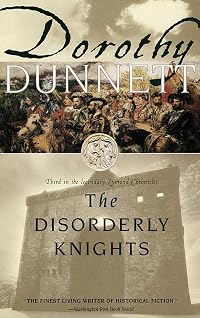
In the aftermath of revelations made at the end of The Disorderly Knights, Francis Crawford of Lymond embarks on a journey through the Mediterranean. Officially he is an emissary of France, delivering a gift to the Sultan of Turkey; unofficially, Lymond has people he is desperate to find.
This is more sombre, more stressful and less surprising than its predecessors, because, after The Disorderly Knights, one has a clearer sense of Lymond’s goals and of what he is up against, and because there are children to worry about.
And it is, at times, utterly devastating.
… oh, show more this is such a difficult book to discuss without spoilers! There’s a hauntingly unforgettable scene and I am impressed by how it fits this story, and moreover that it didn’t make me want to throw the book across the room and shout “DUNNETT, CLEARLY YOU CANNOT BE TRUSTED WITH FICTIONAL CHARACTERS EVER AGAIN! OR CHESS!”
I think it’s because it doesn’t feel like Dunnett is just trying to traumatise her characters and her readers because she can mwahahaha, or like she’s just following through on things already set in motion. She’s using this moment to reveal things of significant importance. And, while things end badly, it’s not as bad as I feared. As if Dunnett knows she can throw a devastating punch but chooses to employ that move sparingly.
Anyway, this is also brilliant and captivating. And still surprising. And I would have liked this a lot less if Philippa Somerville, now in her mid teens, hadn’t had such a large part. She’s delightfully determined and resourceful -- by force of logic [...] and the doggedness of a flower-pecker attacking a strangling fig -- and acquits herself admirably in the face of difficulties. She’s certainly not immune from things not going to plan, but I am very glad that she survives certain situations unscathed.
I think if I reread this, I would have a better understanding of Marthe; I ended up liking her more than I expected to.
I’m sure I will be signing up for further devastating developments, er I mean, the sequel, eventually.
“ [...] As I have said before, and am now saying for the last time, I cannot tell you with what awe my family and friends, not to mention yours, would receive the idea that I should ship a twelve-year-old girl along the Barbary coast --”
“Fifteen-year-old,” said Philippa, furiously, for the third time.
“Or a fifty-year-old: what’s the difference?” said Lymond. “The coast's a jungle of Moors, Turks, Jews, renegades from all over Europe, sitting in palaces built from the sale of Christian slaves. There are twenty thousand men, women and children in the bagnios of Algiers alone. I am not going to make it twenty thousand and one because your mother didn't allow you to keep rabbits, or whatever is at the root of your unshakable fixation."
“I had weasels instead,” said Philippa shortly.
“Good God,” said Lymond, looking at her. “That explains a lot. [...]” show less
In the aftermath of revelations made at the end of The Disorderly Knights, Francis Crawford of Lymond embarks on a journey through the Mediterranean. Officially he is an emissary of France, delivering a gift to the Sultan of Turkey; unofficially, Lymond has people he is desperate to find.
This is more sombre, more stressful and less surprising than its predecessors, because, after The Disorderly Knights, one has a clearer sense of Lymond’s goals and of what he is up against, and because there are children to worry about.
And it is, at times, utterly devastating.
… oh, show more this is such a difficult book to discuss without spoilers! There’s a hauntingly unforgettable scene and I am impressed by how it fits this story, and moreover that it didn’t make me want to throw the book across the room and shout “DUNNETT, CLEARLY YOU CANNOT BE TRUSTED WITH FICTIONAL CHARACTERS EVER AGAIN! OR CHESS!”
I think it’s because it doesn’t feel like Dunnett is just trying to traumatise her characters and her readers because she can mwahahaha, or like she’s just following through on things already set in motion. She’s using this moment to reveal things of significant importance. And, while things end badly, it’s not as bad as I feared. As if Dunnett knows she can throw a devastating punch but chooses to employ that move sparingly.
Anyway, this is also brilliant and captivating. And still surprising. And I would have liked this a lot less if Philippa Somerville, now in her mid teens, hadn’t had such a large part. She’s delightfully determined and resourceful -- by force of logic [...] and the doggedness of a flower-pecker attacking a strangling fig -- and acquits herself admirably in the face of difficulties. She’s certainly not immune from things not going to plan, but I am very glad that she survives certain situations unscathed.
I think if I reread this, I would have a better understanding of Marthe; I ended up liking her more than I expected to.
I’m sure I will be signing up for further devastating developments, er I mean, the sequel, eventually.
“ [...] As I have said before, and am now saying for the last time, I cannot tell you with what awe my family and friends, not to mention yours, would receive the idea that I should ship a twelve-year-old girl along the Barbary coast --”
“Fifteen-year-old,” said Philippa, furiously, for the third time.
“Or a fifty-year-old: what’s the difference?” said Lymond. “The coast's a jungle of Moors, Turks, Jews, renegades from all over Europe, sitting in palaces built from the sale of Christian slaves. There are twenty thousand men, women and children in the bagnios of Algiers alone. I am not going to make it twenty thousand and one because your mother didn't allow you to keep rabbits, or whatever is at the root of your unshakable fixation."
“I had weasels instead,” said Philippa shortly.
“Good God,” said Lymond, looking at her. “That explains a lot. [...]” show less
The first three volumes in the Lymond Chronicles were nice, but with this fourth one the series takes a big leap in quality to being very good indeed. Part of the reason for this is admittedly somewhat rather subjective: Most of the novel takes place in the Ottoman Empire, and I have always had a huge fondness for everything related to Arabian Nights – so everything set against that or a similar background gets a big advance bonus from me.
More importantly though, the series’ hero Francis Lymond is considerably less annoying here than he was in the previous volumes – while I have never held with the view that a protagonist has to be likeable, Lymond’s “tragically misunderstood” posturing was just teeth-grindingly irritating show more and rather clashed with his exhaustively stated brilliance. There is almost nothing of his former emo attitude left in Pawn in Frankincense, which might be due to the character experiencing some real tragedy – in any case, while still not exactly likeable (which he might not supposed to be anyway) he appears considerably more mature in this volume.
Dunnett evokes the atmosphere of Renaissance Ottoman Empire very vividly – her prose is both rich in historical information and saturated with sensual detail. The compelling, complex plot leads all the way from Switzerland to Constantinople, and another thing which distinguishes Pawn in Frankincense is that while in previous novels in the Lymond Chronicles it was always pretty obvious that no matter how bad things seemed to look for our hero, he was always following some secret master plan that would make him emerge victorious in the end, there is no such certainty in Pawn in Frankincense – this time, it is the bad guy who pulls all of the strings, and Lymond has to struggle to keep up with him, which does not always manage successfully. The final confrontation, while it appears somewhat contrived and not particularly plausible, has a huge emotional impact and I don’t think anyone who read it is likely to ever forget it. show less
More importantly though, the series’ hero Francis Lymond is considerably less annoying here than he was in the previous volumes – while I have never held with the view that a protagonist has to be likeable, Lymond’s “tragically misunderstood” posturing was just teeth-grindingly irritating show more and rather clashed with his exhaustively stated brilliance. There is almost nothing of his former emo attitude left in Pawn in Frankincense, which might be due to the character experiencing some real tragedy – in any case, while still not exactly likeable (which he might not supposed to be anyway) he appears considerably more mature in this volume.
Dunnett evokes the atmosphere of Renaissance Ottoman Empire very vividly – her prose is both rich in historical information and saturated with sensual detail. The compelling, complex plot leads all the way from Switzerland to Constantinople, and another thing which distinguishes Pawn in Frankincense is that while in previous novels in the Lymond Chronicles it was always pretty obvious that no matter how bad things seemed to look for our hero, he was always following some secret master plan that would make him emerge victorious in the end, there is no such certainty in Pawn in Frankincense – this time, it is the bad guy who pulls all of the strings, and Lymond has to struggle to keep up with him, which does not always manage successfully. The final confrontation, while it appears somewhat contrived and not particularly plausible, has a huge emotional impact and I don’t think anyone who read it is likely to ever forget it. show less
Members
- Recently Added By
Lists

Best Historical Fiction
620 works; 258 members

Books with "Living Chess"
17 works; 12 members

Books We Love to Reread
695 works; 298 members
Author Information

35+ Works 18,124 Members
Dorothy Dunnett was born on August 25, 1923 in Dunfermline, Fife, Scotland. She attended Gillespie's High School for Girls. After graduation she attended Edinburgh College of Art, and transferred, upon her marriage, to Glasgow School of Art. From 1940-1955, she worked for the Civil Service as a press officer. Her first novel, The Game of Kings, show more was published in the United States in 1961 and in the United Kingdom the year after. During her lifetime, she wrote over 20 books including King Hereafter, the six-part Lymond Chronicles, and the eight-part House of Niccolo series. She was also a professional portrait painter and exhibited at the Royal Scottish Academy. In 1992 she was awarded the Office of the British Empire for services to literature. She died from cancer on November 9, 2001 at the age of 78. (Bowker Author Biography) show less
Some Editions
Series

Work Relationships
Is contained in
Has as a reference guide/companion
Common Knowledge
- Canonical title
- Pawn in Frankincense
- Original publication date
- 1969
- People/Characters
- Francis Crawford of Lymond and Sevigny; Philippa Somerville; Jerott Blyth
- Important places
- Constantinople, Byzantine Empire
- First words
- The bathers of Baden in summer were few and fat.
- Last words
- (Click to show. Warning: May contain spoilers.)'You are here; and we have begun on our journey together.'
Classifications
Statistics
- Members
- 1,198
- Popularity
- 20,884
- Reviews
- 25
- Rating
- (4.64)
- Languages
- English, Finnish, Italian
- Media
- Paper, Audiobook, Ebook
- ISBNs
- 31
- ASINs
- 12