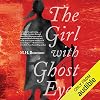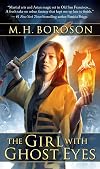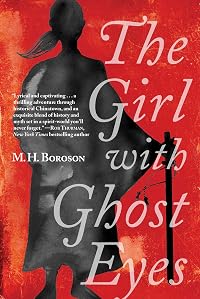
On This Page
Description
It's the end of the nineteenth century in San Francisco's Chinatown, and ghost hunters from the Maoshan traditions of Daoism keep malevolent spiritual forces at bay. Li-lin, the daughter of a renowned Daoshi exorcist, is a young widow burdened with yin eyes--the unique ability to see the spirit world. Her spiritual visions and the death of her husband bring great shame to Li-lin and her father. When a sorcerer cripples her father, terrible plans are set in motion, and only Li-lin can stop show more them. To aid her are her martial arts and a peachwood sword, her burning paper talismans, and a wisecracking spirit in the form of a human eyeball tucked away in her pocket. Navigating the dangerous alleys and backrooms of Chinatown, Li-lin must confront evil spirits, gangsters, and soulstealers before the sorcerer's ritual summons an ancient evil that could burn Chinatown to the ground. With a rich and inventive historical setting, nonstop martial arts action, authentic Chinese magic, and bizarre monsters from Asian folklore, The Girl with Ghost Eyes is also the poignant story of a young woman searching to find her place beside the long shadow of a demanding father and the stigma of widowhood. In a Chinatown caught between tradition and modernity, one woman may be the key to holding everything together. show lessTags
Recommendations

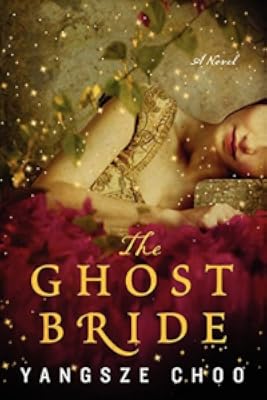
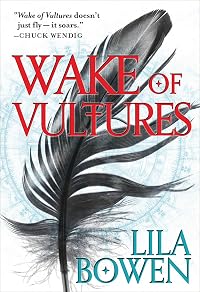

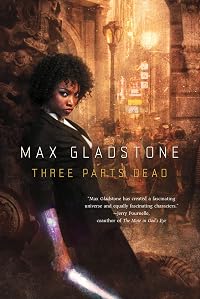
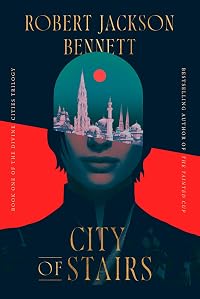
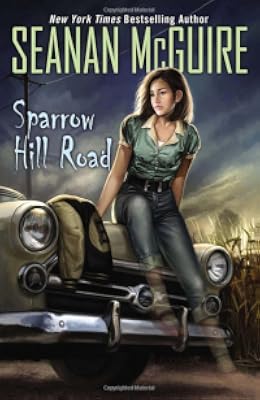
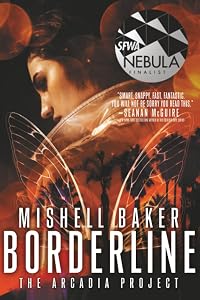
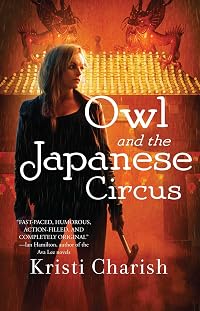
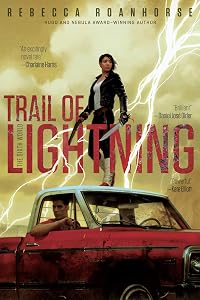

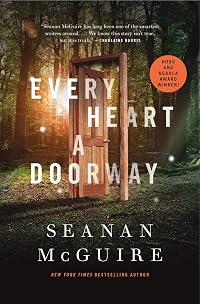
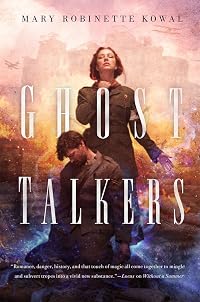
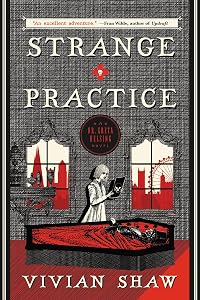
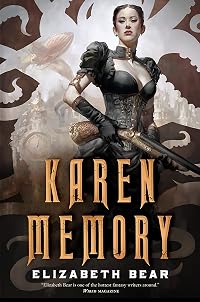
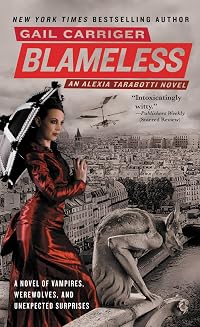
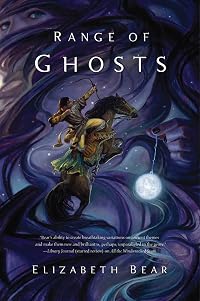
Member Recommendations
Member Reviews
I guess there's something wrong with me, because I didn't enjoy this book even though it is extremely popular and well-received. And where other people praised the author for the research they did in writing a book outside of their own culture, I found various things jarring.
The setting is cool and the premise appealed to me a lot, and I'm on a bingefest of Chinese ghost fiction at the moment, but despite a strong start, I nearly didn't finish.
A lot of subtle things bugged me about the interaction. For example, characters were constantly talking about face. I thought about why this bugged me, and talked to some other Asian friends about it, and here's the thing: I don't think I have EVER heard anyone mention 'face' directly in show more conversation. Yes it is an important concept in Chinese culture and other Asian cultures too, and can shape everything from day to day interactions to large political decisions (governments not wanting to lose face or look weak etc). But we don't tend to reference it directly.
The characters here are constantly talking about face, though, in a way I find really weird. Li Lin frequently remarks *in dialogue* on whether something will cause her to gain or lose face, to the person whom she's conversing with. This would be the English equivalent of me saying "Oh wow, you didn't find my joke funny. I will have lost social standing with you!"
Consider how odd this sounds in English, and likewise how odd it would sound for the Asian characters to constantly be remarking "You will gain much face for doing this to me!" (Nota bene: I probably woudlnt' have complained if the MC thought constantly about face in her own internal thoughts; very specifically, what makes me baulk is that it's frequently dropped into out-loud dialogue.)
The naming conventions were quite odd, and I won't say they didn't work so much as they maybe needed more explanation. Why is the gangster named Bok Choy? Someone hangs a lantern on it by saying it's unusual but I think it maybe needed a little more to it. Like Carrot in Terry Pratchett's novel; his name is a thing, a joke, and we get both an explanation for *why* it is his name along with why nobody ever makes fun of him for it.
Other name things: A surprising amount of Chinese characters have non Chinese names, with not much explanation offered. Li Lin supposedly doesn't have fluent English, but she calls Tom Wong "Tom" and I thought that unusual; I would expect her, in that time period and with her background, to use his Chinese name. Or to at least mention it, or maybe just to highlight the fact that Tom has deliberately chosen a Western name, or... something lol.
Li Lin's deceased husband is named Rocket, and I spent too long wondering whether that was English, or a Chinese name that for some reason was translated directly when other Chinese names weren't. (Frex, Gene Wolfe wrote a Roman setting where all the names were translated, including cities, so Athens became the City of Thought.) No one seems to find it unusual, either way.
But ultimately, while these things annoyed me, they're not the key reason for my poor review. As with all things, I'm a structure whore, and in the end it was the narrative structure itself that bothered me.
In short: Li Lin mostly fails. By which I mean, she does things and they don't work. She makes plans, and they crumble. She fights but usually loses. She tries to avert disaster and either escalates it, causes herself delays, or is wholly ineffectual and it happens regardless.
Characters shouldn't succeed all the time or they feel overpowered and dull, but the reverse is also true. When a character fails constantly and continuously at almost every hurdle, it starts to feel like they're just spinning their wheels while things happen around them. It got to the point where for every single conflict, I was just tiredly waiting for her to cock it up, which she inevitably seemed to, only to get bailed out in some fashion by the eyeball spirit (which WAS cool, I will grant) or her father, or some other character, or luck.
###
Dean Koontz talks about the difference between delay and complication in narratives, and gives this example (I'm paraphrasing)). Say you're accused of murder, and only one person can clear your name. You go to her house, but she's not at home and has gone to the mall; so you go to the mall, but she's just left and you've missed her, and so on.
Say instead that you're accused of murder and only one person can clear your name. You go to her house... and find her dead. Now the police are on their way, you're accused of two murders, and NO one can clear your name.
The first example is DELAY: the solution is in sight, but artificially removed from the MC by the author dossing around. The second example is COMPLICATION: the problems are multiplying.
A lot of the narrative structure in GHOST EYES (this book) felt like delay. Instead of succeeding in her goals, and then inadvertently creating new problems, she failed in her goals. That failure rarely incurred new consequences for her and instead mostly functioned to move the goal posts further away. The solution to the plot problems are X: she didn't manage it. Now the solution is Y: she chases after that, doesn't manage it.
In the end, both her failures and successes felt anaemic and without stakes as a result.
I hope I don't sound like I'm beating a dead horse but I'm wanting to be clear on what is a very subtle structural issue that was bothering me in the book.
###
I won't say that you shouldn't read this book. Lots of people clearly liked it so I'm probably off base. But it didn't work for me on lots of different levels. show less
The setting is cool and the premise appealed to me a lot, and I'm on a bingefest of Chinese ghost fiction at the moment, but despite a strong start, I nearly didn't finish.
A lot of subtle things bugged me about the interaction. For example, characters were constantly talking about face. I thought about why this bugged me, and talked to some other Asian friends about it, and here's the thing: I don't think I have EVER heard anyone mention 'face' directly in show more conversation. Yes it is an important concept in Chinese culture and other Asian cultures too, and can shape everything from day to day interactions to large political decisions (governments not wanting to lose face or look weak etc). But we don't tend to reference it directly.
The characters here are constantly talking about face, though, in a way I find really weird. Li Lin frequently remarks *in dialogue* on whether something will cause her to gain or lose face, to the person whom she's conversing with. This would be the English equivalent of me saying "Oh wow, you didn't find my joke funny. I will have lost social standing with you!"
Consider how odd this sounds in English, and likewise how odd it would sound for the Asian characters to constantly be remarking "You will gain much face for doing this to me!" (Nota bene: I probably woudlnt' have complained if the MC thought constantly about face in her own internal thoughts; very specifically, what makes me baulk is that it's frequently dropped into out-loud dialogue.)
The naming conventions were quite odd, and I won't say they didn't work so much as they maybe needed more explanation. Why is the gangster named Bok Choy? Someone hangs a lantern on it by saying it's unusual but I think it maybe needed a little more to it. Like Carrot in Terry Pratchett's novel; his name is a thing, a joke, and we get both an explanation for *why* it is his name along with why nobody ever makes fun of him for it.
Other name things: A surprising amount of Chinese characters have non Chinese names, with not much explanation offered. Li Lin supposedly doesn't have fluent English, but she calls Tom Wong "Tom" and I thought that unusual; I would expect her, in that time period and with her background, to use his Chinese name. Or to at least mention it, or maybe just to highlight the fact that Tom has deliberately chosen a Western name, or... something lol.
Li Lin's deceased husband is named Rocket, and I spent too long wondering whether that was English, or a Chinese name that for some reason was translated directly when other Chinese names weren't. (Frex, Gene Wolfe wrote a Roman setting where all the names were translated, including cities, so Athens became the City of Thought.) No one seems to find it unusual, either way.
But ultimately, while these things annoyed me, they're not the key reason for my poor review. As with all things, I'm a structure whore, and in the end it was the narrative structure itself that bothered me.
In short: Li Lin mostly fails. By which I mean, she does things and they don't work. She makes plans, and they crumble. She fights but usually loses. She tries to avert disaster and either escalates it, causes herself delays, or is wholly ineffectual and it happens regardless.
Characters shouldn't succeed all the time or they feel overpowered and dull, but the reverse is also true. When a character fails constantly and continuously at almost every hurdle, it starts to feel like they're just spinning their wheels while things happen around them. It got to the point where for every single conflict, I was just tiredly waiting for her to cock it up, which she inevitably seemed to, only to get bailed out in some fashion by the eyeball spirit (which WAS cool, I will grant) or her father, or some other character, or luck.
###
Dean Koontz talks about the difference between delay and complication in narratives, and gives this example (I'm paraphrasing)). Say you're accused of murder, and only one person can clear your name. You go to her house, but she's not at home and has gone to the mall; so you go to the mall, but she's just left and you've missed her, and so on.
Say instead that you're accused of murder and only one person can clear your name. You go to her house... and find her dead. Now the police are on their way, you're accused of two murders, and NO one can clear your name.
The first example is DELAY: the solution is in sight, but artificially removed from the MC by the author dossing around. The second example is COMPLICATION: the problems are multiplying.
A lot of the narrative structure in GHOST EYES (this book) felt like delay. Instead of succeeding in her goals, and then inadvertently creating new problems, she failed in her goals. That failure rarely incurred new consequences for her and instead mostly functioned to move the goal posts further away. The solution to the plot problems are X: she didn't manage it. Now the solution is Y: she chases after that, doesn't manage it.
In the end, both her failures and successes felt anaemic and without stakes as a result.
I hope I don't sound like I'm beating a dead horse but I'm wanting to be clear on what is a very subtle structural issue that was bothering me in the book.
###
I won't say that you shouldn't read this book. Lots of people clearly liked it so I'm probably off base. But it didn't work for me on lots of different levels. show less
DNF at 30%.
Between the gorgeous cover, the captivating summary, and all the wonderful blurbs, The Girl with Ghost Eyes sounds like a book I should love: Buffy and Kill Bill are my jam; I generally enjoy historical fiction; and BAMF women protagonists will forever have a special place in my heart.
And some of the elements did indeed resonate with me. Li-lin's reluctance to exorcise Mr. Yanqiu - the genial yet sarcastic spirit of her father's eyeball - at her father's insistence questions what it means to be human vs. monstrous, calling to mind the ongoing arguments between Sam and Dean Winchester: Are all monsters inherently "bad"? Can monsters overcome their "monstrous" natures? Are you born a monster, or do you become one? Are we more show more like that "other" than we care to believe? And, if so, what does this mean for the fate of humanity?
Li-lin's narrative also alludes to the racism, xenophobia, and misogyny she encounters as a widowed Chinese immigrant in turn-of-the-century San Francisco. For example, Li-lin worries that her father, a Seventh Ordination Daoshi exorcist, cannot destroy a certain Yao without incurring the wrath of a racist lynch mob: "it would look to the rest of the world as though a Chinese immigrant had murdered a young white woman and cut out her guts." The Chinese Exclusion Act is mentioned multiple times; Li-lin was only allowed into the U.S. because the Ansheng tong - a gang to the outside world, a benevolent organization to those it provides assistance - bribed those officials in charge.
To say that Li-lin's father is an unpleasant man is a understatement; when she becomes trapped in the spirit world, he only sends his eyeball in search of her to save his own face. ("The irony of maiming his face to save face probably hadn't occurred to him.") His daughter's life? Not so much. He's only trained Li-lin to the Second Ordination, and openly derides those of the Fifth as weak fools. But hey, why would he care about Li-lin's self-esteem when her very soul is forfeit?
Yet, try as I might, I just couldn't get lost in the story. Every time I picked it up, I found myself nodding off after a chapter or two. Despite the more bizarre flairs and imaginative world-building, I found the writing surprisingly dull. The narrator takes a very matter-of-fact, even detached tone - even when she's raging - which made me feel removed from the story. Additionally, Boroson describes the fight scenes in a fair amount of technical detail; this sapped away at any sense of suspense or action I might have felt.
Yet I don't want to discourage you from giving it a try! Judging from the blurbs and positive early reviews, I seem to be in the minority here. I didn't like it, but maybe you will? To quote Amy Poehler: "Good for her, not for me."
http://www.easyvegan.info/2015/11/02/the-girl-with-ghost-eyes-by-m-h-boroson/ show less
Between the gorgeous cover, the captivating summary, and all the wonderful blurbs, The Girl with Ghost Eyes sounds like a book I should love: Buffy and Kill Bill are my jam; I generally enjoy historical fiction; and BAMF women protagonists will forever have a special place in my heart.
And some of the elements did indeed resonate with me. Li-lin's reluctance to exorcise Mr. Yanqiu - the genial yet sarcastic spirit of her father's eyeball - at her father's insistence questions what it means to be human vs. monstrous, calling to mind the ongoing arguments between Sam and Dean Winchester: Are all monsters inherently "bad"? Can monsters overcome their "monstrous" natures? Are you born a monster, or do you become one? Are we more show more like that "other" than we care to believe? And, if so, what does this mean for the fate of humanity?
Li-lin's narrative also alludes to the racism, xenophobia, and misogyny she encounters as a widowed Chinese immigrant in turn-of-the-century San Francisco. For example, Li-lin worries that her father, a Seventh Ordination Daoshi exorcist, cannot destroy a certain Yao without incurring the wrath of a racist lynch mob: "it would look to the rest of the world as though a Chinese immigrant had murdered a young white woman and cut out her guts." The Chinese Exclusion Act is mentioned multiple times; Li-lin was only allowed into the U.S. because the Ansheng tong - a gang to the outside world, a benevolent organization to those it provides assistance - bribed those officials in charge.
To say that Li-lin's father is an unpleasant man is a understatement; when she becomes trapped in the spirit world, he only sends his eyeball in search of her to save his own face. ("The irony of maiming his face to save face probably hadn't occurred to him.") His daughter's life? Not so much. He's only trained Li-lin to the Second Ordination, and openly derides those of the Fifth as weak fools. But hey, why would he care about Li-lin's self-esteem when her very soul is forfeit?
Yet, try as I might, I just couldn't get lost in the story. Every time I picked it up, I found myself nodding off after a chapter or two. Despite the more bizarre flairs and imaginative world-building, I found the writing surprisingly dull. The narrator takes a very matter-of-fact, even detached tone - even when she's raging - which made me feel removed from the story. Additionally, Boroson describes the fight scenes in a fair amount of technical detail; this sapped away at any sense of suspense or action I might have felt.
Yet I don't want to discourage you from giving it a try! Judging from the blurbs and positive early reviews, I seem to be in the minority here. I didn't like it, but maybe you will? To quote Amy Poehler: "Good for her, not for me."
http://www.easyvegan.info/2015/11/02/the-girl-with-ghost-eyes-by-m-h-boroson/ show less
An above average first book, with lots to like for urban fantasy fans and people who enjoy time period fantasies. It reminds me of Maxine Hong Kingston crossed with [b:Snake Agent|429890|Snake Agent (Detective Inspector Chen, #1)|Liz Williams|https://i.gr-assets.com/images/S/compressed.photo.goodreads.com/books/1388438125l/429890._SY75_.jpg|418875].
A young widowed woman, Xian Li-lin, with ‘ghost eyes,’ is living in 1898 in San Francisco with her emotionally distant father. They are priest and priestess in the Maoshan tradition: “we are ghost hunters, spirit mediums, and exorcists. When creatures out of nightmare trouble Chinatown, people come to the Maoshan for protection. With paper talismans we drive away the spirits, with magic show more gourds we imprison them, with peachwood swords we destroy them. People fear those who live at the border of the spirit world. They say a haunt of death taints us.” One day, the best friend of her husband comes with an unknown man to the Hall of Ancestors, asking for a favor for a drowned friend trapped in the spirit world. A twitch of independence and sympathy lead her into acting on her own, which leads to trouble.
From there the plot thickens. First Lin-lin has to cope with the spirit world, and then discover who wants to harm her father and why, which leads to further complications. I thought it satisfactory, if perhaps excessively convoluted for a villain, and enjoyed the twist that these particular protagonists bring to what seems to be a standard power play. However, the climactic conflict is ridiculously protracted, one of those Hollywood superhero fights where I’m thinking, ‘die, already, please, so we can move to the next thing.’ Had I been the editor, I would have drastically trimmed it and replaced the word count with more detail in a couple of intriguing waypoints that could have used more attention.
For all that, it was an fast, absorbing read that I didn’t want to put down. There’s a wide variety of characters and events that continuously piqued my interest. A Night Parade; conflict between the Chinese tongs; questions of assimilation; a scary monk; Mao’er, a questionable cat-spirit; the spirit of an eyeball, Mr. Yanqui; and overall, just a more unusual take on the fantasy/mythic fiction genre. Yet despite the characters and action, I felt like Lin-lin has to do some growing through the story, and does come to several spots where she pushes herself as well as opens herself up to new possibilities. I appreciated the growth within the confines of the time period and culture.
Boroson has an extensive resources at the end that include insights on how they approached the material such as language, measurements, religion, etiquette, and so forth. There’s a short list of ‘Book Club Questions’ for those who want to bring a more discursive approach to their reading, as well as both recommended reading and movie lists. It’s apparent they came to this story with both personal and academic interest in Chinese culture, and I found the tone to be well done, if a touch on the kung-fu theater admiration side of the equation.
Note for Goodreaders: the blurb is poorly done. Don’t let it sway you one way or another. show less
A young widowed woman, Xian Li-lin, with ‘ghost eyes,’ is living in 1898 in San Francisco with her emotionally distant father. They are priest and priestess in the Maoshan tradition: “we are ghost hunters, spirit mediums, and exorcists. When creatures out of nightmare trouble Chinatown, people come to the Maoshan for protection. With paper talismans we drive away the spirits, with magic show more gourds we imprison them, with peachwood swords we destroy them. People fear those who live at the border of the spirit world. They say a haunt of death taints us.” One day, the best friend of her husband comes with an unknown man to the Hall of Ancestors, asking for a favor for a drowned friend trapped in the spirit world. A twitch of independence and sympathy lead her into acting on her own, which leads to trouble.
From there the plot thickens. First Lin-lin has to cope with the spirit world, and then discover who wants to harm her father and why, which leads to further complications. I thought it satisfactory, if perhaps excessively convoluted for a villain, and enjoyed the twist that these particular protagonists bring to what seems to be a standard power play. However, the climactic conflict is ridiculously protracted, one of those Hollywood superhero fights where I’m thinking, ‘die, already, please, so we can move to the next thing.’ Had I been the editor, I would have drastically trimmed it and replaced the word count with more detail in a couple of intriguing waypoints that could have used more attention.
For all that, it was an fast, absorbing read that I didn’t want to put down. There’s a wide variety of characters and events that continuously piqued my interest. A Night Parade; conflict between the Chinese tongs; questions of assimilation; a scary monk; Mao’er, a questionable cat-spirit; the spirit of an eyeball, Mr. Yanqui; and overall, just a more unusual take on the fantasy/mythic fiction genre. Yet despite the characters and action, I felt like Lin-lin has to do some growing through the story, and does come to several spots where she pushes herself as well as opens herself up to new possibilities. I appreciated the growth within the confines of the time period and culture.
Boroson has an extensive resources at the end that include insights on how they approached the material such as language, measurements, religion, etiquette, and so forth. There’s a short list of ‘Book Club Questions’ for those who want to bring a more discursive approach to their reading, as well as both recommended reading and movie lists. It’s apparent they came to this story with both personal and academic interest in Chinese culture, and I found the tone to be well done, if a touch on the kung-fu theater admiration side of the equation.
Note for Goodreaders: the blurb is poorly done. Don’t let it sway you one way or another. show less
I think the world of The Girl with Ghost Eyes, nineteenth century China Town in San Francisco, was a fantastic choice for a fantasy novel. I found the relationship between the spirit world and the living world interesting, especially since it is based on Chinese beliefs from the time. I liked most of the characters in the book, especially the heroine. My only criticism was that I never got a good feel for the time period where the book was set. The setting of China Town came alive, but I had a hard time imagining it happening in the 19th century. That could be because of my own misunderstanding of what that time period was like, but it felt a little more modern despite the traditional Chinese culture that undervalued women in the book. show more The author did provide an author's note at the end of the book that was very helpful - you can tell he did his research. But every time I read the name of the character named Rocket it made me wonder if a Chinese man who did not speak English would be named Rocket (again, maybe it is my ignorance and that is not an uncommon name for the time/culture). show less
DNF @ 36%
I regret that I couldn't finish this book, because it seemed interesting. But I just couldn't take it seriously—and I'm not referring to the walking, talking eyeball spirit. That part was fine. I'm referring to the main character. She acts like a modern (and probably white) American teenager, despite being supposedly a 23-year-old Chinese immigrant widow from 1898.
The wuxia/kung fu storytelling style isn't my preference either, so readers who like those elements might enjoy this book more. It wasn't enough to keep me reading, though.
I regret that I couldn't finish this book, because it seemed interesting. But I just couldn't take it seriously—and I'm not referring to the walking, talking eyeball spirit. That part was fine. I'm referring to the main character. She acts like a modern (and probably white) American teenager, despite being supposedly a 23-year-old Chinese immigrant widow from 1898.
The wuxia/kung fu storytelling style isn't my preference either, so readers who like those elements might enjoy this book more. It wasn't enough to keep me reading, though.
This is the first book in the Xian Li-lin series, at this point I am not sure when the next book in the series comes out (or if there will be one). I loved this urban fantasy style story and would love to read more books set in this world.
This story is set in end of 19th century San Francisco, mainly in Chinatown. I enjoyed the amazing world, background and the characters. There is a ton of Chinese history and culture in here and I loved learning about all the amazing supernatural aspects of Chinese history as well.
Xian is an interesting heroine with a unique perspective on things. She is a young widow who is desperate to salvage her family’s name after her husband’s death disgraced them. However, she still tries to be a dutiful show more daughter and support her father and Chinese traditions.
The topic of straddling two worlds; one of Ancient Chinese traditions and one of new American Ways added an interesting dynamic to the story. I also really enjoyed all the Chinese mythology and monsters throughout.
The story was very engaging and ended at a good place. I really enjoyed this story a ton and would love to see future stories featuring Xian Li-lin.
Overall an amazing read and one of the best urban fantasies I have read in a long time. I loved the setting and all the research that went into that. I also really enjoyed Xian Li-lin as a heroine, she was a very unique heroine. Additionally the late 1800’s San Fran setting was fun and interesting especially when paired with all the Chinese mythology. This book was very unique and very well done and I ended up loving it a lot. show less
This story is set in end of 19th century San Francisco, mainly in Chinatown. I enjoyed the amazing world, background and the characters. There is a ton of Chinese history and culture in here and I loved learning about all the amazing supernatural aspects of Chinese history as well.
Xian is an interesting heroine with a unique perspective on things. She is a young widow who is desperate to salvage her family’s name after her husband’s death disgraced them. However, she still tries to be a dutiful show more daughter and support her father and Chinese traditions.
The topic of straddling two worlds; one of Ancient Chinese traditions and one of new American Ways added an interesting dynamic to the story. I also really enjoyed all the Chinese mythology and monsters throughout.
The story was very engaging and ended at a good place. I really enjoyed this story a ton and would love to see future stories featuring Xian Li-lin.
Overall an amazing read and one of the best urban fantasies I have read in a long time. I loved the setting and all the research that went into that. I also really enjoyed Xian Li-lin as a heroine, she was a very unique heroine. Additionally the late 1800’s San Fran setting was fun and interesting especially when paired with all the Chinese mythology. This book was very unique and very well done and I ended up loving it a lot. show less
Review from Tenacious Reader: http://www.tenaciousreader.com/2016/05/23/audiobook-review-the-girl-with-ghost-e...
The Girl with Ghost Eyes is a fun, fast paced story set in the late 1800s in San Francisco’s Chinatown. I found this to be a fresh and different setting and atmosphere. The protagonist, Li-lin, is a strong willed warrior who is fierce and devoted. She is a young widow with an over bearing father and struggles to find her place. Pride and shame are important emotions that drive her and others in this story. Li-lin is from an immigrant family who has established a rather interesting family business of exorcisms. Because, you know in a world inhabited with spirits, having people you can call to banish them is important. She show more also has the rare yin eyes that allow her to see the spirit world. All of these things make Li-lin different and interesting in so many ways. I sincerely enjoyed her character.
As this is based in a city, where the city’s culture and atmosphere play a critical role, this definitely had the feel of an urban fantasy. But it also featured some interesting tradition and folklore making it feel a nice blend of past and present. (Yes I know being placed in the late 1800s makes this entire story from historical, but there is still a blend of more ancient traditions and history with that of the late 1800s) Throw in plenty of martial arts action and the book has a whole lot going for it. The pace is quick and the story is easy to read and follow.
Now, for what I didn’t love about the book. Honestly, I do think the book is very well done. But I’ve said it a thousand times, I typically don’t do well with “weird”, and well, this book got a bit weird for me. Sometimes I feel silly with how I can find a line between made up magic, abilities, features I am willing to accept and those which ones cross the line, but I definitely seem to have a threshold and this one did surpass it a tad. The fantastical elements of this did cross that line at times, within the spirit world things would take different shapes/forms, which in general is fine, but extra legs and tails and such, for some reason I find harder to accept sometimes. Maybe that seems childish, its something I wish I didn’t have to admit, but its true. Also I guess spirit eyeballs go a little beyond it. And, while I point this out as something I personally struggled with a little, I did still enjoy the book! And I know many people do not have this problem. And keep in mind, this is still a 4 star review! So even with my hang ups of “weird”, this book is still well worth reading. For those without those hang ups, its probably a must read.
The only other weakness I could find in the book is probably more a nature of its length. There are areas that I felt could have been fleshed out a little more, but I also suspect there are more books to come, so it may be more a matter of waiting. Being curious about the characters and world in an ongoing series is always a good thing as it means there are plenty of reasons past the existing story keep reading. show less
The Girl with Ghost Eyes is a fun, fast paced story set in the late 1800s in San Francisco’s Chinatown. I found this to be a fresh and different setting and atmosphere. The protagonist, Li-lin, is a strong willed warrior who is fierce and devoted. She is a young widow with an over bearing father and struggles to find her place. Pride and shame are important emotions that drive her and others in this story. Li-lin is from an immigrant family who has established a rather interesting family business of exorcisms. Because, you know in a world inhabited with spirits, having people you can call to banish them is important. She show more also has the rare yin eyes that allow her to see the spirit world. All of these things make Li-lin different and interesting in so many ways. I sincerely enjoyed her character.
As this is based in a city, where the city’s culture and atmosphere play a critical role, this definitely had the feel of an urban fantasy. But it also featured some interesting tradition and folklore making it feel a nice blend of past and present. (Yes I know being placed in the late 1800s makes this entire story from historical, but there is still a blend of more ancient traditions and history with that of the late 1800s) Throw in plenty of martial arts action and the book has a whole lot going for it. The pace is quick and the story is easy to read and follow.
Now, for what I didn’t love about the book. Honestly, I do think the book is very well done. But I’ve said it a thousand times, I typically don’t do well with “weird”, and well, this book got a bit weird for me. Sometimes I feel silly with how I can find a line between made up magic, abilities, features I am willing to accept and those which ones cross the line, but I definitely seem to have a threshold and this one did surpass it a tad. The fantastical elements of this did cross that line at times, within the spirit world things would take different shapes/forms, which in general is fine, but extra legs and tails and such, for some reason I find harder to accept sometimes. Maybe that seems childish, its something I wish I didn’t have to admit, but its true. Also I guess spirit eyeballs go a little beyond it. And, while I point this out as something I personally struggled with a little, I did still enjoy the book! And I know many people do not have this problem. And keep in mind, this is still a 4 star review! So even with my hang ups of “weird”, this book is still well worth reading. For those without those hang ups, its probably a must read.
The only other weakness I could find in the book is probably more a nature of its length. There are areas that I felt could have been fleshed out a little more, but I also suspect there are more books to come, so it may be more a matter of waiting. Being curious about the characters and world in an ongoing series is always a good thing as it means there are plenty of reasons past the existing story keep reading. show less
Members
- Recently Added By
Lists

KayStJ's to-read list
1,616 works; 11 members

Diverse Horror
262 works; 6 members
Author Information

6 Works 546 Members
Some Editions
Awards and Honors
Distinctions
Series

Common Knowledge
- Canonical title
- The Girl with Ghost Eyes
- Original publication date
- 2015
- Important places
- San Francisco, California, USA
- First words
- I placed a paper shirt into the furnace.
- Canonical DDC/MDS
- 813.54
- Canonical LCC
- PS3602.O7665
Classifications
Statistics
- Members
- 451
- Popularity
- 67,759
- Reviews
- 23
- Rating
- (3.83)
- Languages
- English
- Media
- Paper, Audiobook, Ebook
- ISBNs
- 3
- ASINs
- 6