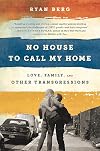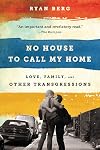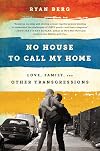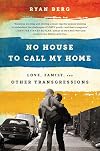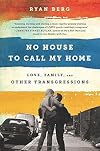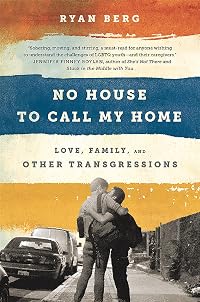
No House to Call My Home: Love, Family, and Other Transgressions
by Ryan Berg
On This Page
Description
"Underemployed and directionless, Ryan Berg took a job in a group home for disowned and homeless LGBTQ (lesbian, gay, bisexual, transgender and questioning) teenagers. His job was to help these teens discover their self worth, get them back on their feet, earn high school degrees, and find jobs. But he had no idea how difficult it would be, and the complexities that were involved with coaxing them away from dangerous sex work and cycles of drug and alcohol abuse, and helping them heal from show more years of abandonment and abuse. In No House to Call My Home, Ryan Berg tells profoundly moving, intimate, and raw stories from the frontlines of LGBTQ homelessness and foster care. In the United States, 43% of homeless youth were forced out by their parents because of their sexual orientation or gender identity. Berg faced young people who have battled extreme poverty, experienced unbalanced opportunities, structural racism, and homophobia. He found himself ill-equipped to help, in part because they are working within a system that paints in broad strokes, focused on warehousing young people, rather than helping them build healthy relationships with adults that could lead to a successful life once they age out of foster care. By digging deep and asking the hard questions, and by haltingly opening himself up to his charges, Berg gained their trust. Focusing on a handful of memorable characters and their entourage, he illustrates the key issues and recurring patterns in the suffering, psychology and recovery of these neglected teens. No House to Call My Home will provoke readers into thinking in new ways about how we define privilege, identity, love and family. Because beyond the tears and abuse, the bluster and bravado, what emerges here is a love song to that irrepressible life force of youth: hope. "-- show lessTags
Recommendations




























Member Reviews
No House to Call My Home: Love, Family, and Other Transgressions is not a happy book, but it is necessary. In it, Ryan Berg shines a light on the number one cause of homelessness among youth: being lesbian, gay, bisexual, transgender or genderqueer.
LGBTQ teens make up 40 percent of homeless youth, and Berg—who worked at two New York City agencies that provide support for homeless LGBTQ youth, and so has seen the reality first-hand—gives us the heart-breaking stories of individual teens, as well as the data on the subject. The simple fact is that, for all too many parents in all too many places, the first response to learning that their kid is gay or trans is to throw them out. Berg’s book puts faces to those kids, and offers a show more clarion call to action.
(Reviewed on Lit/Rant: www.litrant.tumblr.com) show less
LGBTQ teens make up 40 percent of homeless youth, and Berg—who worked at two New York City agencies that provide support for homeless LGBTQ youth, and so has seen the reality first-hand—gives us the heart-breaking stories of individual teens, as well as the data on the subject. The simple fact is that, for all too many parents in all too many places, the first response to learning that their kid is gay or trans is to throw them out. Berg’s book puts faces to those kids, and offers a show more clarion call to action.
(Reviewed on Lit/Rant: www.litrant.tumblr.com) show less
I recently binge watched America's ABC Family series The Fosters, a one-hour drama about a multi-ethnic family mix of foster and biological teenaged kids being raised by two moms. In one of the later seasons, a main character is remanded to a residential foster home and one of the teenage residents in the home is transgender. Though his story is told quite broadly over one or two episodes, it stuck with me, and so my interest was piqued when No House to Call My Home by Ryan Berg came up for review.
No House to Call My Home is a book that illustrates the struggles of Lesbian, Gay, Bisexual, Transgender and Questioning (LGBTQ) youth of colour in America's foster system. While the challenges for youth in foster care are numerous, the show more problems LGBTQ youth face are often compounded by their struggle with gender, sexual, racial and cultural identity. Berg states that 70% of LGBTQ youth in group homes reported experiencing violence based on their LGBTQ status, 100% reported verbal harassment, and 78% of youth were removed or ran away from placement because of hostility towards their LGBTQ status.
The stories in this book offer readers a glimpse into the lives of the LGBTQ youth of colour Berg worked with in two residential units serving the LGBTQ foster youth in New York City. Focusing on a handful of characters, Berg shares their uniformly harrowing stories, often involving histories of childhood physical and sexual abuse, neglect, poverty and victimisation. Now aged between 14 and 21 (21 being the age at which foster children are released from the system) Berg and his colleagues battle to help these youths manage a myriad of issues, including addictions to drugs and high risk behaviours, to improve their chances at living healthy and fulfilling lives.
The stories are affecting, the children's mixture of bravado, naivete, hurt and hope are difficult to read, but I think as a result I am better informed and more understanding of their circumstances. Sadly, most of the young people that we are introduced to in No House To Call Home will age out without the means, skills or opportunity to find stable housing or get a job with a livable wage.
No House to Call My Home is an accessible read for an audience curious about the issue of LGBTQ youth in foster care. I imagine it also would have value for social workers, school counselors, foster carers and LGBTQ youth advocates. show less
No House to Call My Home is a book that illustrates the struggles of Lesbian, Gay, Bisexual, Transgender and Questioning (LGBTQ) youth of colour in America's foster system. While the challenges for youth in foster care are numerous, the show more problems LGBTQ youth face are often compounded by their struggle with gender, sexual, racial and cultural identity. Berg states that 70% of LGBTQ youth in group homes reported experiencing violence based on their LGBTQ status, 100% reported verbal harassment, and 78% of youth were removed or ran away from placement because of hostility towards their LGBTQ status.
The stories in this book offer readers a glimpse into the lives of the LGBTQ youth of colour Berg worked with in two residential units serving the LGBTQ foster youth in New York City. Focusing on a handful of characters, Berg shares their uniformly harrowing stories, often involving histories of childhood physical and sexual abuse, neglect, poverty and victimisation. Now aged between 14 and 21 (21 being the age at which foster children are released from the system) Berg and his colleagues battle to help these youths manage a myriad of issues, including addictions to drugs and high risk behaviours, to improve their chances at living healthy and fulfilling lives.
The stories are affecting, the children's mixture of bravado, naivete, hurt and hope are difficult to read, but I think as a result I am better informed and more understanding of their circumstances. Sadly, most of the young people that we are introduced to in No House To Call Home will age out without the means, skills or opportunity to find stable housing or get a job with a livable wage.
No House to Call My Home is an accessible read for an audience curious about the issue of LGBTQ youth in foster care. I imagine it also would have value for social workers, school counselors, foster carers and LGBTQ youth advocates. show less
Ratings
Members
- Recently Added By
Lists

Youth: Sexuality & Gender
119 works; 1 member
Author Information
1 Work 79 Members
Awards and Honors
Awards
Notable Lists
Classifications
- Genres
- Sociology, Nonfiction, Sexuality and Gender Studies, General Nonfiction, Biography & Memoir, LGBTQ+
- DDC/MDS
- 362.7 — Society, government, & culture Social problems and social services Social Welfare Child welfare
- LCC
- HV1426 .B47 — Social sciences Social pathology. Social and public welfare. Criminology Social pathology. Social and public welfare. Protection, assistance and relief Special classes Young adults. Youth. Teenagers
- BISAC
Statistics
- Members
- 79
- Popularity
- 402,442
- Reviews
- 2
- Rating
- (3.90)
- Languages
- English
- Media
- Paper, Ebook
- ISBNs
- 4
- ASINs
- 2