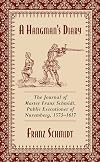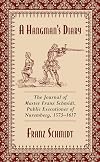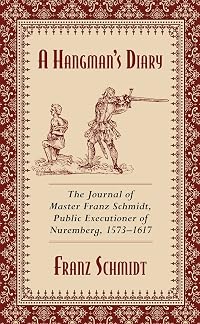
A Hangman's Diary: The Journal of Master Franz Schmidt, Public Executioner of Nuremberg, 1573-1617
by Franz Schmidt, Albrecht Keller (Editor)
On This Page
Description
From 1573 to 1617, Master Franz Schmidt was the executioner for the towns of Bamberg and Nuremberg. During that span, he personally executed more than 350 people while keeping a journal throughout his career. A Hangman's Diary is not only a collection of detailed writings by Schmidt about his work, but also an account of criminal procedure in Germany during the Middle Ages. With analysis and explanation, editor Albrecht Keller and translators C. Calvert and A. W. Gruner have put together a show more masterful tome that sets the scene of execution day and puts you in Master Franz Schmidt's shoes as he does his duty for his country. Originally published more than eighty years ago, A Hangman's Diary gives a year-by-year breakdown on all of Master Schmidt's executions, which include hangings, beheadings, and other methods of murder, as well as explanations of each crime and the reason for the punishment. An incredible classic, A Hangman's Diary is more than a history lesson; it shows the true anarchy that inhabited our world only a few hundred years ago. Skyhorse Publishing, as well as our Arcade imprint, are proud to publish a broad range of books for readers interested in history--books about World War II, the Third Reich, Hitler and his henchmen, the JFK assassination, conspiracies, the American Civil War, the American Revolution, gladiators, Vikings, ancient Rome, medieval times, the old West, and much more. While not every title we publish becomes a New York Times bestseller or a national bestseller, we are committed to books on subjects that are sometimes overlooked and to authors whose work might not otherwise find a home. show lessTags
Recommendations
































Member Reviews
An entry from Nuremberg hangman Franz Schmidt’s diary, for Friday, February 12th 1584:
“Five thieves who … had burgled and stolen. …the eldest were 22, 17, 16 and 15 years old; the youngest 13 years. All five hanged here at Nuremberg.”
It didn’t pay to be a juvenile delinquent, apparently.
The actual diary is about half the book; the rest is commentary by English translator C.V. Calvert and German legal scholar Albrecht Keller. Schmidt was unusual in keeping a record; Calvert reports most hangmen were illiterate. The original was lost but manuscript copies are known from several German libraries, indicating it must have been of sufficient interest for people to copy it out in longhand.
Nuremburg seems to have been pretty show more tolerant for the place and time; both Catholic and Lutheran chaplains are mentioned as ministering to the condemned and there are no witches burned (although a woman gets it for claiming to be a witch; it’s clear, though, that she’s punished for defrauding people of money rather than a pact with Satan). There’s a nod to justice for both the rich and poor: a couple of wealthy men are beheaded: a former town councilor, found guilty of embezzlement, and a burgher who killed a prostitute. There’s gender equality; women are hanged and beheaded for a variety of offenses, with infanticide punished by drowning in a sack. (Pretty frequently; in one case Schmidt intervenes to get the sentence commuted to a lesser punishment, beheading. As much as can be told from Schmidt’s accounts – he was responsible for administering justice, not for judgement – the women convicted of infanticide were mostly servants seduced by their masters, and the masters aren’t punished. But there’s one case of a man executed for raping a 14-year-old). It isn’t strictly a capital crime for a woman to be adulterous, promiscuous, or a prostitute, but several women are executed for having sex with both a father and a son. Some men are executed for sodomy, and one is burned – along with the cow – for bestiality. The most brutal execution method – breaking on the wheel – is used for habitual offenders; in one case Schmidt has to do his own brother-in-law this way, and is conscientious about it, taking 31 strokes.
The initial essay on justice in 16th century Germany, by Calvert, notes that there was no CSI Nuremberg and the only way to get a conviction was to catch the perpetrator in the act or get a confession; in that regard they had ways of making you talk – the rack, the thumbscrews, the boot, etc. If you managed to last through this, they pretty much had to let you go, although you might not be in very good shape. There were some lesser punishments – branding, loss of a hand, flogging out of town, the galleys (Nuremberg had a contract with Genoa to take galley slaves). Nuremberg is chided by an adjacent polity for being too lenient on criminals and the town fathers indignantly reply that they would rather let ten guilty go than punish one innocent.
No references or bibliography, although some relevant works are mentioned in the text. Contemporary woodcut illustrations. show less
“Five thieves who … had burgled and stolen. …the eldest were 22, 17, 16 and 15 years old; the youngest 13 years. All five hanged here at Nuremberg.”
It didn’t pay to be a juvenile delinquent, apparently.
The actual diary is about half the book; the rest is commentary by English translator C.V. Calvert and German legal scholar Albrecht Keller. Schmidt was unusual in keeping a record; Calvert reports most hangmen were illiterate. The original was lost but manuscript copies are known from several German libraries, indicating it must have been of sufficient interest for people to copy it out in longhand.
Nuremburg seems to have been pretty show more tolerant for the place and time; both Catholic and Lutheran chaplains are mentioned as ministering to the condemned and there are no witches burned (although a woman gets it for claiming to be a witch; it’s clear, though, that she’s punished for defrauding people of money rather than a pact with Satan). There’s a nod to justice for both the rich and poor: a couple of wealthy men are beheaded: a former town councilor, found guilty of embezzlement, and a burgher who killed a prostitute. There’s gender equality; women are hanged and beheaded for a variety of offenses, with infanticide punished by drowning in a sack. (Pretty frequently; in one case Schmidt intervenes to get the sentence commuted to a lesser punishment, beheading. As much as can be told from Schmidt’s accounts – he was responsible for administering justice, not for judgement – the women convicted of infanticide were mostly servants seduced by their masters, and the masters aren’t punished. But there’s one case of a man executed for raping a 14-year-old). It isn’t strictly a capital crime for a woman to be adulterous, promiscuous, or a prostitute, but several women are executed for having sex with both a father and a son. Some men are executed for sodomy, and one is burned – along with the cow – for bestiality. The most brutal execution method – breaking on the wheel – is used for habitual offenders; in one case Schmidt has to do his own brother-in-law this way, and is conscientious about it, taking 31 strokes.
The initial essay on justice in 16th century Germany, by Calvert, notes that there was no CSI Nuremberg and the only way to get a conviction was to catch the perpetrator in the act or get a confession; in that regard they had ways of making you talk – the rack, the thumbscrews, the boot, etc. If you managed to last through this, they pretty much had to let you go, although you might not be in very good shape. There were some lesser punishments – branding, loss of a hand, flogging out of town, the galleys (Nuremberg had a contract with Genoa to take galley slaves). Nuremberg is chided by an adjacent polity for being too lenient on criminals and the town fathers indignantly reply that they would rather let ten guilty go than punish one innocent.
No references or bibliography, although some relevant works are mentioned in the text. Contemporary woodcut illustrations. show less
Edited and with an Introduction by Albrecht Keller and an essay “A Brief Account of Criminal Procedure in Germany in the Middle Ages”, by C. V. Calvert
This is a diary of the executioner of the city of Nuremberg in Germany. It begins with an essay by C. V. Calvert followed by a brief introduction to the diary itself. If you’re interested in medieval justice, the essay is invaluable, explaining the various people who worked at the prison, what a cell looked like, the various punishments meted out and for what crimes. The language used is occasionally archaic, for example the translator uses ‘incendiary’ where we would be more familiar with the term ‘arsonist’. The introduction goes over some information about the city of show more Nuremberg and the text itself.
The journal is edited, with occasional notes in brackets explaining that information has been cut (generally items in lists, for example with thieves, where 2 or 3 thefts are given details and others left out for space). There are also some notes referring the reader to other passages (when someone is let off and is later executed or if two people are accused and executed on different days).
The diary entries alternate between terse single lines, “A thief hanged” and long passages giving tantalizing details of the crimes for which people were punished. The diary is a bit frustrating in that you’re never given motivations for the crimes, and in some places I dearly wanted to know more of what went on.
On the whole it was a quick, interesting read. show less
This is a diary of the executioner of the city of Nuremberg in Germany. It begins with an essay by C. V. Calvert followed by a brief introduction to the diary itself. If you’re interested in medieval justice, the essay is invaluable, explaining the various people who worked at the prison, what a cell looked like, the various punishments meted out and for what crimes. The language used is occasionally archaic, for example the translator uses ‘incendiary’ where we would be more familiar with the term ‘arsonist’. The introduction goes over some information about the city of show more Nuremberg and the text itself.
The journal is edited, with occasional notes in brackets explaining that information has been cut (generally items in lists, for example with thieves, where 2 or 3 thefts are given details and others left out for space). There are also some notes referring the reader to other passages (when someone is let off and is later executed or if two people are accused and executed on different days).
The diary entries alternate between terse single lines, “A thief hanged” and long passages giving tantalizing details of the crimes for which people were punished. The diary is a bit frustrating in that you’re never given motivations for the crimes, and in some places I dearly wanted to know more of what went on.
On the whole it was a quick, interesting read. show less
An interesting personal perspective of the executioner and his role in the late 16th century
There is nothing deep about the executioner Schmidt, as read from his diary. But it still puts what was perceived as high crime worthy of 16th Century capital punishment into perspective. A good book to draw from for the history reader or historical fiction writer.
There is nothing deep about the executioner Schmidt, as read from his diary. But it still puts what was perceived as high crime worthy of 16th Century capital punishment into perspective. A good book to draw from for the history reader or historical fiction writer.
The introduction provides the much needed background to make the terse journal entries meaningful. The rest requires a lot of imagination.
This is a diary of the executioner of Nuremberg from 1573 to 1617. Probably the most remarkable thing about this is the length of time Franz Schmidt served in that capacity. Schmidt was not a verbose fellow. His diary consists of little more than a name, and what action he performed, beheaded, branded, etc. He rarely offers any insight into the criminal and even less into his own feelings about what he was doing.
A fascinating look at criminal procedure and punishment in 16th century Germany.
Ratings
Members
- Recently Added By
Author Information
1 Work 83 Members
All Editions
Series
Belongs to Publisher Series
Common Knowledge
- Original title
- Herein All the Executions of Master Franz Schmidt Executioner in Nuremberg; which he carried out, at first for his Father in this place and elsewhere; those also when he was finally appointed by an Honourable Council to be executioner of the same Town; the number of persons, married or single, whom he executed; the name of every one; what each had done; and what was done to each, are diligently set forth. Likewise one may read of all ther bodily punishments, such as flogging, banishing from the Town, cutting off of fingers and ears, branding of cheeks, standing in the pillory, and many other matters. All to be read, diligently set forth. 1573.
- Original publication date
- 1801
- People/Characters
- Meister Franz Schmidt (1555-1634); Leonhardt Russ of Ceyern (thievery); Wolf Weber of Guntzendorff (thievery); Barthel Dochendte of Weisterfelss (murder); Gronla Weygla of Cleucam (murder); Barthel Meussel of Mehrenhüel (murder) (show all 174); Kloss Renckhart of Feylsdorf (murder); Wastel Pennas of Leuchtenberg (thievery); Jacob Nuss of Hallstatt (incendiary and murder); Hans Peyhel of Forchheim (murder); Nickel Schwager of Leybskrüen (murder); Hans Weber of Nuremberg (thievery); Nickelhauss Stüller of Aydtsfeld (murder); Apollonia Vöglin of Lehrberg (infanticide); Georg Reychl of Prüge (murder); Closs Hassn of Ewingen (murder); Hans Müllner (rape); Hans Kellner of Reuth (thievery); Haintz Grossn (thievery); Steffan Hötzelein (false accusation, rape, murder); Eberla Echhardt of Nuremberg (thievery); George Taucher of Eckelsheim (murder); Hans Büchner of Unterfarrenbach (thievery); George Gabler of Schönfeld (thievery); Michael Dieterich of Pernetswin (thievery); Margaret Dörfflenn of Ebermannsstatt (infanticide); Elizabeth Ernstin of Anspach (infanticide); Agnes Lengin of Amberg (infanticide); Ulrich Gerstenacker of Classberg (murder); Hans Horn of Korenberg (murder); Wolf Bauer of Rollhofen (murder); Margaret Böckin of Nuremberg (murder); Hans Müllner of Litzendorf (murder and necrophilia); Anna Strölin of Grefenberg (infanticide); Christoff Hauck (thievery); Henssla Humbsen of Lambretzhoffen (thievery); Merolta Herdegen of Schwabach (thievery); George Hiss of Sultzbach (thievery); George Schörpff of Ermb (bestiality); Michael Posselt of Sultzbach (bigamy); Catherine Bücklin of Burckenstatt (thievery); Ursula Becherin of Augsburg (incendiary); Anna Bischoffin of Augsburg (incendiary); George Götzn of Nuremberg (murder); Hans Rotter of Schmiedtfelt (thievery); Hans Weicker (swindling); Hans Popp of Nuremberg (thievery); Maria Kürschnerin of Nuremberg (thievery); Katherine Schwertzin of Weher (thievery); Hennsa of Geyselwind (thievery); Hennsa Pallauf of Hernda (thievery); Killian Wurmb of Virnspach (thievery); Hans Schober of Weher (thievery); Hennssla Klopffer of Reigelsdorff (thievery); Heinrich Heut of Buch (thievery and murder); Anna Peyelstainin of Nuremberg (adultery); Peter Köchl of Hirschbach (murder); Anna Freyin of Nuremberg (infanticide); Frederick Werner of Nuremberg (murder); Hans Meller of Gastenhoff (thievery, cheat, and bigamy); Hans Hoffmann of Obersdorff (thievery); Hans Weber of the New Town (thievery); Lienhardt Hagen of Teüsslen (thievery); Lienhardt Bardtmann of Aldorf (thievery); Peter Knaup of Gaslenhoff (thievery); Hans Krauss of Burckenstatt (thievery); Lienhardt Günther of Langenzenn (incendiary and blackmail); Gertrude Schmidtin of Fach (heresy and incest); Elizabeth Rössnerin of Leibgruen (murder); Margaret Brechtlin (poison); Christopher Schmiedt of Nuremberg (thievery); George Hörnlein of Bruck (murder); Jobst Knau of Bamberg (murder); George Mayer of Gostenhoff (murder); Hans Ramsperger of Nuremberg (treason); Hans Völokla of Onoltzbach (treason and murder); George Solen of Nuremberg (thievery); Franz Seuboldt of Strölnfels (murder); Gabriel Heroldt of Nuremberg (pimping); Hans Walter of Betzenstein (thievery); George Schweiger of Falckendorf (thievery); Margaret Schwamberger of Arletzhofen (infanticide); Frederick Stigler of Nuremberg (false accusation); Moses the Jew of Otenfoss (spying and thievery); Hans Gering of Stockig (thievery); Hans Fröschel of Nuremberg (thievery); Conrad Prückner of Schwernitz (murder); Matthew Lenger of Eulenburg (thievery); Wolf Lenckher of Nuremberg (thievery); Lienhardt Kiesswetter of Upper Rohrnstatt (thievery and murder); Stephen Rebweller of Maschstall (thievery); Bartholomew Matzeroth of Milan (thievery); Conrad con Reichensachsen of Hesse (murder); Gabriel Wolff (thievery and forgery); Hans Schatz (thievery); Christopher Mayer of Nuremberg (sodomy); Hans Weber of Nuremberg (sodomy); Fritz Wolffel of Greffenberg (thievery); George Haffner of Michelfeld (forgery); George Franck of Poppenreuth (thievery and murder); Ulrich Lösser of Eschenbach (incendiary); Hans Weckler of Möhrnstadt (thievery); Hans Sigert of Pollingen (murder); Hans Wolff Marti of Wehr (sodomy); George Praun of Windisch (thievery); Sebald Humpelmann of Offenhausen (poaching and murder); Hans Niclaus of Koburg (thievery); Hans Schmidt of Zerrndorf (thievery and murder); Hans Frauhammer of Schwatz, Switzerland (thievery); Veronic Köllin of Gold Kranch (infanticide); Carl Reichardt of Nuremberg (adultery and thievery); Lorentz Schober of Mienitz (thievery and murder); Elizabeth Aurholtin (swindling and fraud); Christopher Neyner of Bodenstein (thievery); Hans Kolben of Aylsdorf (murder, thievery, counterfeit); Andrew Stayber of Craffskoff (thievery); Hans Ammon (thievery); Lienhardt Schwartz of Paydersscholz (thievery); Peter Planck of Nuremberg (murder); Cuntz Stainla of Engelthal (murder); Veyt Willet of Güntersbuhl (swindling); George Mötzela (thievery); Lienhardt Gösswen (thievery); Lorentz Hirssberger of Burckstal (thievery and incendiary); Hermann Wölffel of Neunhof (murder and blackmail); Bastian Grüblof Gumpnhoffen (murder); Hans Taumb (pimping, blackmail, thievery); Lienhardt Leydtner of Rotenburg, Bavaria (thievery); Michael Vogl of Bamberg (thievery and murder); Hans Fischross fo Eckersmühl (thievery); Michael Dietmayr of Dippersdorf (murder); George Praun of Mannsfeld (thievery); Lienhardt Koppof Amburg (murder); Matthew Stertz of Grüntling (murder); Cuntz Neumer of Perngau (incendiary and thievery); Lienhardt Taller of Greussberg (murder); Peter Hoffmann of Bamberg (thievery); George Mayr of Lower Rissbach (thievery); Michael Seydel of Middle Erabach (murder); Cuntz Pütner of Upper Reith (thievery); Hans Drentz of Petzhoffn (thievery); Elizabeth Püffin (murder); Conrad Zwickelsperger of Nuremberg (attempted poison and adultery); Barbara Wagnerin of Nuremberg (attempted poison and adultery); Master Doctor Nicholas von Gilden (rape, thievery, treason); Dorothea Meulin of Fischstain (infanticide); Susannah Ritlin of Regenstauff (infanticide); Laurence Schropp of Liechtenau (thievery); Veit Fladen of Etzelsau (poaching and murder); Margaret Marranti (infanticide); Ulrich Bömer of Kruppach (thievery); Hans Fratzn of Franconia (thievery); Hans Schrenker of Drossendorf (thievery); Fritz Carel of Megelsdorf (thievery); Maria Cordula Hunnerin of Weidenberg (thievery); Philip Lohner of Hilperstein (adultery); Hans Wunderer of Immeldorf (poaching and murder); Heuckelsperder of Lantzhüt (thievery); Margaret Wagnerin of Feucht (thievery and blackmail); Michael Gemperlein of Micheldorf (murder); Andrew Feuerstein (rape); Matthew Werdtfritzn of Fürth (murder and thievery); Bartholomew Deigela of Nuremberg (thievery); George Mertz of Letten (thievery); George Prückner of Nuremberg (thievery); Anna Emblin of Amburg (infanticide); Elizabeth Birckelin of Hirschbach (attempted poison and thievery); Hans Brunnauer (adultery); Conrad Krafft of Eschenau (fraud); Michael Willet of Günterbühl (thievery and murder); Margaret Lindtney of Schnabelwedt (infanticide); Hans Raim of Elsheim (attempted murder); Mary Kürssheim (prostitution and thievery); Jerome Beyhlstein (pimping)
- Important places
- Rathaus, Nuremberg, Bavaria, Germany; Rabenstein, Nuremberg, Bavaria, Germany; Köpfleinsberg, Nuremberg, Bavaria, Germany; Hochgericht, Nuremberg, Bavaria, Germany; Nuremberg, Bavaria, Germany
- First words
- Between 1616-22 the Nuremberg Rathaus was, to a large extent, enlarged or rebuilt, and further important additions were made during the second half of the nineteenth century; but the dungeons that honeycombed the foundations ... (show all)of the ancient structure have survived almost unaltered.
- Quotations
- Father and son should have been treated as she was, and the panders also. In the other world I shall summon Emperor and King because justice has not been done. I, poor man, suffer though innocent. Farewell and good night. - J... (show all)erome Peyelstainin
God guard you; for dealing thus with me you will have to see a black devil one day. - Hans Meller
What belongs to the gallows cannot drown in water. - Proverb quoted by Franz Schmidt - Last words
- (Click to show. Warning: May contain spoilers.)Flogged out of town.
- Original language
- German
Classifications
- Genres
- Nonfiction, History, General Nonfiction, Biography & Memoir, Politics and Government
- DDC/MDS
- 364.6 — Society, government, & culture Social problems and social services Crime Punishment
- LCC
- HV8579 .S3513 — Social sciences Social pathology. Social and public welfare. Criminology Social pathology. Social and public welfare. Criminal justice administration Penology. Prisons. Corrections
- BISAC
Statistics
- Members
- 83
- Popularity
- 384,739
- Reviews
- 6
- Rating
- (3.71)
- Languages
- English, German
- Media
- Paper, Audiobook, Ebook
- ISBNs
- 4
- ASINs
- 3