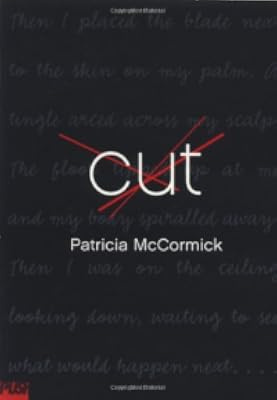
Cut
by Patricia McCormick
On This Page
Description
While confined to a mental hospital, thirteen-year-old Callie slowly comes to understand some of the reasons behind her self-mutilation, and gradually starts to get better.Tags
Recommendations




Member Recommendations

Member Reviews
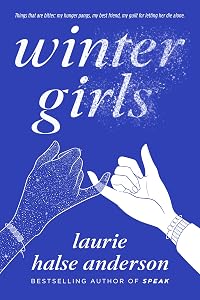
I didn't know what to expect going into this book. I had a brief encounter with the phenomenon of cutting in Laurie Halse Anderson's Wintergirls and I was surprised at the lack of compassion I felt then. I thought it was perfectly vile, selfish and fell under the blanket concept of "things that are done to get attention." I think the difference in perspective in the two books made all the difference for me. I did not like Lia in Wintergirls, and I just adored little Callie. Silly though it may seem, I was willing to try to understand Callie, because I felt she deserved it. Callie, however twisted it may seem, had a very sound reason for her self-inflected violence. It made perfect sense in her mind, even if it didn't to others. I cared show more so deeply for Callie that I was willing to set aside my prejudice and listen to her. Which is the very point of the story. I can admit now that McCormick's smack down smarted and made me feel a little ashamed. Kudos. I deserved it.
Callie's place within her family has taken on an almost wraith-like form. A little brother with chronic asthma, a very, very, very (add a few more verys) weak mother and a cowardly father make up what Callie knows as family. Her parents are so engrossed in their own self pity that they fail to notice that their daughter is fading, blending into the background so that maybe no one will notice that she carries a secret- she feels it is all her fault. Everything. And since she goes unnoticed, no one bothers to ask, so Callie never tells.
We all continually beat ourselves up over a certain amount of self made guilt that we harbor, believing that something is our fault, regardless of the truth. It would shock us to discover that were we to voice our account of our supposed wrongs, we would be the only one pointing the finger at ourselves. So much of what we perceive is imagined. I guess the balance lies in knowing when we've shouldered enough, and simply need to tell someone to relieve the pressure. For Callie, there was no one to listen, and the pressure grew until it was either explode or find an outlet that could release some steam. For her it was a simple cut, nothing major, just enough, to release the tension. My heart ached for her, not for what she was doing, but because she did what she did and no one so much as batted an eye.
This was such a tough story for me because, well, I'm a tough chick with the possibly equally self destructive ability of being able to tell the world to go to hell. I could never hurt me and I have a hard time understanding others who would willingly hurt themselves. I've felt helpless only a handful of times in my life. But I've always known what Callie did not, and that's if you scream loud enough, people are forced to listen. Callie didn't know that it was OK to scream because no one ever taught her to use her voice to defend herself and her own sanity. I blame her selfish, pathetic little snit of a mother who lacked the strength to care for both of her children at once and sacrificed the emotional health of one for the physical well being of another. To me that's almost a form of abuse.
I was grateful for the fairytale tie in that became the ending. Something good that came from outside Callie needed to happen. As great as it was that she made the breakthrough that she did, I would have felt a bit cheated if the story had ended with her still feeling detached from her family. show less
Callie's place within her family has taken on an almost wraith-like form. A little brother with chronic asthma, a very, very, very (add a few more verys) weak mother and a cowardly father make up what Callie knows as family. Her parents are so engrossed in their own self pity that they fail to notice that their daughter is fading, blending into the background so that maybe no one will notice that she carries a secret- she feels it is all her fault. Everything. And since she goes unnoticed, no one bothers to ask, so Callie never tells.
We all continually beat ourselves up over a certain amount of self made guilt that we harbor, believing that something is our fault, regardless of the truth. It would shock us to discover that were we to voice our account of our supposed wrongs, we would be the only one pointing the finger at ourselves. So much of what we perceive is imagined. I guess the balance lies in knowing when we've shouldered enough, and simply need to tell someone to relieve the pressure. For Callie, there was no one to listen, and the pressure grew until it was either explode or find an outlet that could release some steam. For her it was a simple cut, nothing major, just enough, to release the tension. My heart ached for her, not for what she was doing, but because she did what she did and no one so much as batted an eye.
This was such a tough story for me because, well, I'm a tough chick with the possibly equally self destructive ability of being able to tell the world to go to hell. I could never hurt me and I have a hard time understanding others who would willingly hurt themselves. I've felt helpless only a handful of times in my life. But I've always known what Callie did not, and that's if you scream loud enough, people are forced to listen. Callie didn't know that it was OK to scream because no one ever taught her to use her voice to defend herself and her own sanity. I blame her selfish, pathetic little snit of a mother who lacked the strength to care for both of her children at once and sacrificed the emotional health of one for the physical well being of another. To me that's almost a form of abuse.
I was grateful for the fairytale tie in that became the ending. Something good that came from outside Callie needed to happen. As great as it was that she made the breakthrough that she did, I would have felt a bit cheated if the story had ended with her still feeling detached from her family. show less
Callie is a patient at Sea Pines, an institution where they call all patients "guests" and all problems "issues." Her room mate, Sydney, is there for her drug issues - she's never tried a drug that she wasn't addicted to. Sydney has a nickname for everything. She calls Sea Pines "Sick Minds" and she calls Callie "S.T." - short for Silent Treatment. Callie hasn't said a word since she was admitted for cutting herself, despite the efforts of her therapist and members of her group. But she can only hold everything for so long, and a series of upsetting events leads to Callie opening up - and, just maybe, starting a road to recovery. McCormick's style is smooth and honest, as Callie addresses her therapist in her head, using a second-person show more voice that successfully moves the narrative forward without becoming melodramatic. This is a book that rings true and shows a real understanding for depression, addiction, and obsession. This story will move you. show less
I thought this book would be dark and grisly, since it's about a girl who cuts herself--and since there was some controversy about the book's subject matter. But I was immediately drawn in and thought the cutting was handled with sensitivity (and was not too gross). What surprised me is that, although the cutting is what landed Callie in residential treatment, her biggest problem is not talking. She's stuck in her misery, silent and alone, until she slowly works her way out.
The story opened my eyes a bit, as Callie's cutting was not the problem but a symptom of guilt and family dysfunction. I think this would be a good book for teenagers to read.
The story opened my eyes a bit, as Callie's cutting was not the problem but a symptom of guilt and family dysfunction. I think this would be a good book for teenagers to read.
I really enjoyed this book. Its short and too the point. What I like most about it, is it felt very real. Callie coming to terms with not only herself and her feelings, but also the struggle to open up and accept help is very relatable. This book remains one I pick up from time to time, just to give myself a shorter story to read.
Interesting use of sort-of second person…can’t quite decide if it’s true second, because it’s sort of direct address to someone other than the reader. We are instantly drawn into the story of the main character, a girl who cuts herself and has been sent to an institution for help but refuses to speak to anyone at first. I liked the slow reveal of information and found Callie’s progression believable and her experience compelling. I wasn’t quite sure there was enough power in the scene where she finally talks to her dad, though. It’s the moment where she tells him basically why she’s been hurting herself. He seems to get off a little too easy, but maybe that’s okay—it is really just the beginning of her healing show more process, not the end, so maybe understated is better. But I did feel slightly let down that there wasn’t a little bit more there. show less
I'm trying to formulate my thoughts.
I read this book all in one sitting. I expected to because it was short, but from the very beginning it sucked me in and I just did NOT want to put it down. When I was forced to for a few minutes, I was rather irritated.
I love how it's basically all addressed to the therapist lady person. That just makes it... I don't know, so much more interesting. Not that it wasn't interesting to begin with. Cutting is an issue that no one ever talks about, or treats with disgust as opposed to addicts or anorexics, who are deemed sick or troubled. This is even addressed in the book, when the other girls themselves are freaked out by cutting.
What's really striking is how realistic it all is, from Callie to Amanda show more and to everyone else as well. Perhaps my opinion is rather biased, or maybe I have more of a right than anyone else to attest to the realism of this little novel. Either way I guess I have something of a unique take on it.
I'm pleased with the ending. I was scared that it would be too happy or too magical, but instead ended with a little ray of hope in a still-dark world. A happy ending wouldn't have done justice to the real world Callies out there, but Patricia McCormick did a very good job of showing that just because there aren't perfect happily ever afters doesn't mean that there is no hope either. show less
I read this book all in one sitting. I expected to because it was short, but from the very beginning it sucked me in and I just did NOT want to put it down. When I was forced to for a few minutes, I was rather irritated.
I love how it's basically all addressed to the therapist lady person. That just makes it... I don't know, so much more interesting. Not that it wasn't interesting to begin with. Cutting is an issue that no one ever talks about, or treats with disgust as opposed to addicts or anorexics, who are deemed sick or troubled. This is even addressed in the book, when the other girls themselves are freaked out by cutting.
What's really striking is how realistic it all is, from Callie to Amanda show more and to everyone else as well. Perhaps my opinion is rather biased, or maybe I have more of a right than anyone else to attest to the realism of this little novel. Either way I guess I have something of a unique take on it.
I'm pleased with the ending. I was scared that it would be too happy or too magical, but instead ended with a little ray of hope in a still-dark world. A happy ending wouldn't have done justice to the real world Callies out there, but Patricia McCormick did a very good job of showing that just because there aren't perfect happily ever afters doesn't mean that there is no hope either. show less
Despite its predictable ending, Cut is engrossing and satisfying. The slow unfolding of Callie's story, from the revelations that she cuts herself and that she doesn't speak at all to Callie's realization of why she has these behavior issues, will keep the reader engaged.
Members
- Recently Added By
Lists

Bibliotherapy: Family and Personal Social Issues
174 works; 5 members

Books Read in 2014
2,344 works; 86 members

Banned Books Week 2014
268 works; 63 members

Books About Girls
219 works; 17 members

to get
244 works; 2 members

Books Tagged Abuse
152 works; 4 members

B-B to Get
131 works; 1 member
Author Information

9+ Works 11,815 Members
Patricia McCormick, a two-time National Book Award finalist, is the author of five critically acclaimed novels: Never Fall Down, a novel based on the true story of an 11-year-old boy who survived the Killing Fields of Cambodia by playing music; Purple Heart, a suspenseful psychological novel that explores the killing of a 10-year-old boy in Iraq; show more Sold, a deeply moving account of sexual trafficking; My Brother's Keeper, a realistic view of teenage substance abuse; and Cut, an intimate portrait of one girl's struggle with self-injury. McCormick grew up in central Pennsylvania. She worked as an assistant press secretary to the Governor of Pennsylvania from 1974-78, then went to the Columbia University Graduate School of Journalism. McCormick studied fiction writing at The New School in New York City. Never Fall Down was a finalist for the National Book Award in 2012 and was named a New York Times Notable Book for 2012. It was also named a Best Book of the Year by iTunes, The Huffington Post, School Library Journal and the Chicago Public Library. McCormick was named a New York Foundation on the Arts fellow in 2004 and a MacDowell fellow in 2009. She is also the winner of the 2009 German Peace Prize for Youth Literature. (Bowker Author Biography) show less
Awards and Honors
Awards
Distinctions
Notable Lists
Common Knowledge
- Original title
- Cut
- Original publication date
- 2000-10-31
- People/Characters
- Callie; Sam; Becca; Tara; Sydney; Debbie (show all 8); Tiffany; Ruby
- Important places
- Sea Pines (sick minds)
- Dedication
- For Meaghan
- First words
- You say it’s up to me to do the talking.
- Last words
- (Click to show. Warning: May contain spoilers.)And tell you everything.
- Publisher's editor
- Roxburgh, Stephen
- Blurbers
- Cormier, Robert; Homes, A.M.
Classifications
Statistics
- Members
- 3,069
- Popularity
- 5,774
- Reviews
- 135
- Rating
- (3.52)
- Languages
- English, Finnish, German, Swedish
- Media
- Paper, Audiobook, Ebook
- ISBNs
- 25
- ASINs
- 4