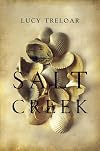
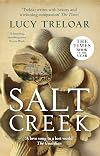
Salt Creek
by Lucy Treloar
On This Page
Description
Salt Creek, 1855, lies at the far reaches of the remote, beautiful and inhospitable coastal region, the Coorong, in the new province of South Australia. The area, just opened to graziers willing to chance their luck, becomes home to Stanton Finch and his large family, including fifteen-year-old Hester Finch. Once wealthy political activists, the Finch family has fallen on hard times. Cut adrift from the polite society they were raised to be part of, Hester and her siblings make connections show more where they can: with the few travellers that pass along the nearby stock route - among them a young artist, Charles - and the Ngarrindjeri people they have dispossessed. Over the years that pass, an Aboriginal boy, Tully, at first a friend, becomes part of the family. Stanton's attempts to tame the harsh landscape bring ruin to the Ngarrindjeri people's homes and livelihoods, and unleash a chain of events that will tear the family asunder. As Hester witnesses the destruction of the Ngarrindjeri's subtle culture and the ideals that her family once held so close, she begins to wonder what civilization is. Was it for this life and this world that she was educated? show lessTags
Recommendations




















Member Reviews
A very well-written compelling story about a family trying to make a living in Australia in the 1860s. The Finch family has little luck with various farming ventures. The story is narrated by Hester, the eldest daughter who is 15 at the beginning of the novel. Through her eyes, we see her mother's struggle with depression and pregnancy, and her father's zealous belief in the bible, and in bringing enlightenment to the Aboriginals -- largely by virtually adopting Tully, a young black boy. The novel explores themes of colonization, racial equality, family values and the role of women. It is the kind of story that will stay with me, and one that has me contemplating issues and perspectives days after I've read it.
Salt Creek by Lucy Treloar is a work of historical fiction. It is very well researched and gives the reader a clear picture on the treatment of the Australian indigenous people. During the 1830s when South Australia was established as a British province, the Colonists paid lip service to a commitment to protect and care for the rights and lands of the Indigenous Australians. In reality however, this commitment was mostly ignored. If the natives escaped genocide and forced removal, they often fell victim to disease, the fencing of lands, the protection of water rights and the steady erosion of their culture and language.
This book is the story of an English family’s attempts to establish a cattle farm in South Australia and the main show more character, Hester, paints a vivid picture of what life in this remote area was like as the book is based on her memories of that time. The family came to this area as the father, Stanton Finch, had fallen deep into debt due to his bad business decisions and he hoped to make good by working the land. The mother, Bridget, suffers from depression and her fear of the natives all-consuming. They meet a half English/half Aboriginal boy named Tully and welcome him into their home but learning the way of the English confuses Tully and he is torn between the Aboriginal way and the white way. The book goes on to show how the family’s fortunes undertook a downward spiral as their day to day life becomes more difficult.
Salt Creek is a debut novel and is beautifully written. My only problem is that the author obviously had done extensive research and wanted to cram in all the facts that she could which resulted in a rather uneven pace, too much detail and a lot of repetition. However both the characters of Hester and Tully kept me involved and eager to learn what was going to happen next. I believe that Salt Creek paints a very credible picture of what homesteading life was like and I was intrigued by this story. show less
This book is the story of an English family’s attempts to establish a cattle farm in South Australia and the main show more character, Hester, paints a vivid picture of what life in this remote area was like as the book is based on her memories of that time. The family came to this area as the father, Stanton Finch, had fallen deep into debt due to his bad business decisions and he hoped to make good by working the land. The mother, Bridget, suffers from depression and her fear of the natives all-consuming. They meet a half English/half Aboriginal boy named Tully and welcome him into their home but learning the way of the English confuses Tully and he is torn between the Aboriginal way and the white way. The book goes on to show how the family’s fortunes undertook a downward spiral as their day to day life becomes more difficult.
Salt Creek is a debut novel and is beautifully written. My only problem is that the author obviously had done extensive research and wanted to cram in all the facts that she could which resulted in a rather uneven pace, too much detail and a lot of repetition. However both the characters of Hester and Tully kept me involved and eager to learn what was going to happen next. I believe that Salt Creek paints a very credible picture of what homesteading life was like and I was intrigued by this story. show less
This was a wonderfully written and evocative book and goes a long way to capturing the human condition through its narrative and characterisations. Set in 1855, the Finch family leave the comforts of their city life and “good society” after falling on hard times and set off to the remote and beautiful Salt Creek.
Told through the eyes of Hester Finch, the eldest daughter and fifteen when the story starts, we see the family flung into an inhospitable coastal wildness inhabited by the Ngarrindjeri people. Her father Stanton Finch hopes for a change in his family’s fortunes by becoming a grazier.
The clash of cultures in this appears at first so supple when an Aboriginal boy, Tully, becomes a friend and part of the family. But as we show more slowly see the destruction not only of the Ngarrindjeri people’s land and the people themselves, we also see what might also be the destruction of the Finch’s family unit as each member deals with Stanton Finch’s unmovable belief that civilisation is best for the natives and in turn progress will return his family fortunes.
Watching her father trying to make right all that is wrong in the world, including his own fundamental flaws and her family and the Aboriginals flounder under his choices, causes Hester to question all she understands about her family, the Aboriginals, and herself.
This has a deceptive and slow build up to a very powerful story about love, loss and hope set during harsh times in a harsh society, told with both empathy and insight, which made it impossible for me to put down after I had read a few pages. show less
Told through the eyes of Hester Finch, the eldest daughter and fifteen when the story starts, we see the family flung into an inhospitable coastal wildness inhabited by the Ngarrindjeri people. Her father Stanton Finch hopes for a change in his family’s fortunes by becoming a grazier.
The clash of cultures in this appears at first so supple when an Aboriginal boy, Tully, becomes a friend and part of the family. But as we show more slowly see the destruction not only of the Ngarrindjeri people’s land and the people themselves, we also see what might also be the destruction of the Finch’s family unit as each member deals with Stanton Finch’s unmovable belief that civilisation is best for the natives and in turn progress will return his family fortunes.
Watching her father trying to make right all that is wrong in the world, including his own fundamental flaws and her family and the Aboriginals flounder under his choices, causes Hester to question all she understands about her family, the Aboriginals, and herself.
This has a deceptive and slow build up to a very powerful story about love, loss and hope set during harsh times in a harsh society, told with both empathy and insight, which made it impossible for me to put down after I had read a few pages. show less
4.5
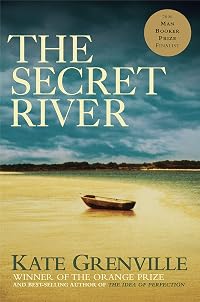
This is a rich, moving book, capturing the loneliness and struggle of the Australian 'frontier', and the horrors that people wrought while thinking they were doing the right thing. The set-up reminded me a lot of [b:The Secret River|347698|The Secret River|Kate Grenville|https://d.gr-assets.com/books/1388508143s/347698.jpg|1374275]: a family, down on their luck, move to a remote part of the colony to try to make a life, inevitably encroaching on the lives of the local Indigenous people. Treloar does as good a job as Grenville at capturing the inevitability of the destruction that colonisation brought, while humanising the destroyers (up to a point anyway). The characters are memorable and real, and the story deeply moving.
This is a rich, moving book, capturing the loneliness and struggle of the Australian 'frontier', and the horrors that people wrought while thinking they were doing the right thing. The set-up reminded me a lot of [b:The Secret River|347698|The Secret River|Kate Grenville|https://d.gr-assets.com/books/1388508143s/347698.jpg|1374275]: a family, down on their luck, move to a remote part of the colony to try to make a life, inevitably encroaching on the lives of the local Indigenous people. Treloar does as good a job as Grenville at capturing the inevitability of the destruction that colonisation brought, while humanising the destroyers (up to a point anyway). The characters are memorable and real, and the story deeply moving.
I borrowed this book on a recommendation from LT member, jeniwren, who I thought to be a pretty good judge of literature and who shared similar interests to me, but is a much more sophisticated reader. It turns out she was right! With the exception of a section about 3/4 of the way through which seemed to lose direction a little, I found this a thoroughly engaging and worthwhile read. There are many issues dealt with and yet I didn't feel significant areas were being glossed over. There's 19th century religiosity, white-indigenous relations on both a cultural level and a personal level, father-daughter relationships, families, risk-taking and loss, crime and punishment, health, sexuality, masculinity, and more! There's clearly been a show more lot of research behind the story so it has an evident ring of truth. show less
This month’s book gave our group plenty to talk about. Salt Creek, we decided, had many facets woven into its story and all of them demanded scrutiny by us.
The family dynamics of the Finches, although reflective of the times, found us frustrated and full of empathy for the women, who had been taken to what seemed like ‘the ends of the earth’, without their consent or approval.
If this wasn’t bad enough, they were also used and bullied by their father (and husband) until the whole family unit literally fell to pieces. Sad as these circumstances were, they make for a compelling read.
The racial and class distinctions of the time was a prominent theme throughout, but we all agreed there is a lot more going on in this novel. And show more although some of us found it a little slow in building, generally it was considered a forceful and convincing account of such conditions.
It was mentioned that Tully’s continued story would be interesting and the thought of a follow up novel was appealing. We found similarities between Salt Creek and The Poisonwood Bible by Barbara Kingsolver, which we read a few years back. A family desperately trying to function at a considered level of refinement under extreme and culturally diverse conditions eventually shows the cracks in the human capacity to survive.
Seeing where the strengths and weaknesses lie is always insightful and riveting for the perceptive reader … and something that we love discussing. A big tick from our group! show less
The family dynamics of the Finches, although reflective of the times, found us frustrated and full of empathy for the women, who had been taken to what seemed like ‘the ends of the earth’, without their consent or approval.
If this wasn’t bad enough, they were also used and bullied by their father (and husband) until the whole family unit literally fell to pieces. Sad as these circumstances were, they make for a compelling read.
The racial and class distinctions of the time was a prominent theme throughout, but we all agreed there is a lot more going on in this novel. And show more although some of us found it a little slow in building, generally it was considered a forceful and convincing account of such conditions.
It was mentioned that Tully’s continued story would be interesting and the thought of a follow up novel was appealing. We found similarities between Salt Creek and The Poisonwood Bible by Barbara Kingsolver, which we read a few years back. A family desperately trying to function at a considered level of refinement under extreme and culturally diverse conditions eventually shows the cracks in the human capacity to survive.
Seeing where the strengths and weaknesses lie is always insightful and riveting for the perceptive reader … and something that we love discussing. A big tick from our group! show less
Nothing cheerful here - historical terrible attitudes toward aboriginals by settlers, patriarchal dominance over the family, death in childbirth, death of children;snakebite, fevers, infection after lancing gums when teething, hardships of farming in a dry land. Structured with some sections written looking back with nostalgia made the narrative somewhat disjointed but it was certainly an evocative novel about the Corrong.
Members
- Recently Added By
Lists

International Dublin Literary Award Longlist 2017
147 works; 3 members

Dublin Literary Award Longlist 2017
147 works; 2 members

Walter Scott Prize Winners and Shortlist
66 works; 6 members
Author Information

5+ Works 270 Members
Lucy Treloar was born in Malaysia. She was educated in England, Sweden and Melbourne and is a graduate of the University of Melbourne and RMIT. She is an editor. Her work focuses on English language translations of a diverse range of materials. She writes short fiction. Her story Wrecking Ball was published in Best Australian Stories 2013. Her show more non-fiction has been published in a range of print media. Her first novel is Salt Creek. Her awards and recognitions include the 2011 Asialink Writer's Residency to Cambodia; the 2012 Writing Australia Unpublished Manuscript Award and a 2013 Varuna Publisher Fellowship for The Things We Tell Ourselves, and she was the winner of the 2014 Commonwealth Short Story Prize (Pacific) for The Dog and the Sea. The 2016 Indie Book Awards for Best Debut Fiction, and the 2016 Australian Book Industry Awards Matt Richell award for new writers went to Salt Creek. The 2016 Dobbie Literary award, for a first-time published female author, was also awarded to her for the novel Salt Creek. (Bowker Author Biography) show less
Some Editions
Awards and Honors
Awards
Distinctions
Common Knowledge
- Important places
- South Australia, Australia
- Dedication
- For David, Jack, Will, Catherine and James, and for Daddy (always missed) and Aileen, with love
- First words
- Mama often talked of this house when I was a child, and of its squirrels with particular fondness.
- Last words
- (Click to show. Warning: May contain spoilers.)Perhaps we will go to sea.
Classifications
Statistics
- Members
- 165
- Popularity
- 198,574
- Reviews
- 9
- Rating
- (4.19)
- Languages
- English
- Media
- Paper, Audiobook, Ebook
- ISBNs
- 20
- UPCs
- 1
- ASINs
- 4