On This Page
Description
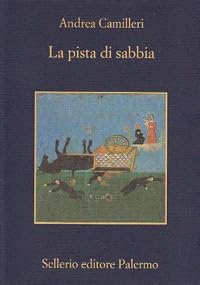
Inspector Salvatore Montalbano wakes from strange dreams to find a gruesomely bludgeoned horse carcass in front of his seaside home. When his men come to investigate, the carcass has disappeared, leaving only a trail in the sand. Then his home is ransacked, and the inspector is certain that the crimes are linked. As he negotiates both the glittering underworld of horseracing and the Mafia's connection to it, Montalbano is aided by his illiterate housekeeper, Adelina, and a Proustian memory show more of linguate fritte. Longtime fans and new readers alike will be charmed by Montalbano's blend of unorthodox methods, melancholy self-reflection, and love of good food. show lessTags
Recommendations











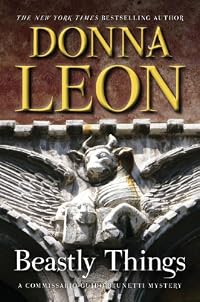
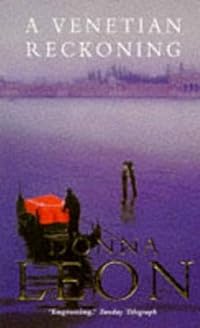


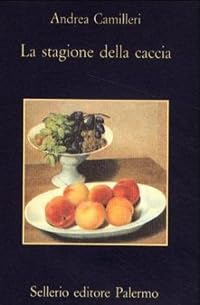

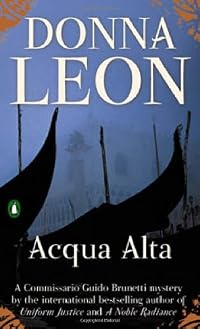
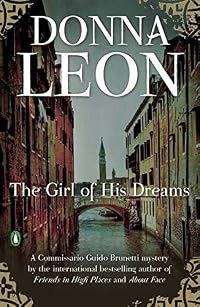
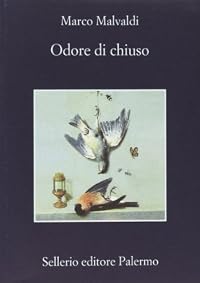





Member Recommendations
Member Reviews
Let me just say this: I love these books, I love the character of Montalbano and those of his quirky colleagues, and there will never be another series of novels like this one.
Montalbano's melancholic self reappears in this novel, number twelve in this most excellent and unique series of crime fiction, and oddly enough, it starts with a dream involving a very distorted Livia who turns into a sort of a horse. And even more oddly enough, when Montalbano wakes up, throws open the shutters and looks out the window onto the beach, there's a dead horse laying there. The horse had been brutally bludgeoned with an iron bar, and Montalbano determines that there were at least four culprits involved. He calls in his colleagues to take a look, and show more then City Hall to come and remove the carcass. But by the time the city people get there, the carcass has disappeared. It isn't long until a beautiful woman named Rachele Esterman comes to the station to file a report of a missing horse that had been in the Vigata stables of one Saverio Lo Duca, one of the richest men in Italy. The case is puzzling, but it's about to become even stranger, as Montalbano's home is broken into and ransacked. This case will send Montalbano into a surreal world of Italy's aging nobility, clandestine horse racing, a case involving the Mafia and even worse, the beautiful Rachele. And all the while, Montalbano is trying to get his relationship with Livia back on track, which at this point may be more difficult than solving this strange case.
Once again, Camilleri has given his readers a few hours of sheer reading delight, in which the old gang is still together, continuing to grow and change like people do in the real world. Montalbano is still concerned with getting older, especially now that Mimi Augello is sporting a new pair of glasses. We also get another insight into Montalbano's character with a lovely reflective set piece in which he remembers a fishing expedition with his uncle, and the unmatched taste of a fried sole. But he's still often amazed at the sheer absurdities of the system under which he lives and works, at television which conveys information "dressed up in details and circumstances that were either completely wrong, utterly false, or pure fantasy," and at the public for buying into it. Yet, this doesn't stop his appetite -- and although he manages to find some of the most unpalatable food in Sicily in this novel, what he gets from Enzo and Adelina more than make up for it. There are a few comical scenes, but as in the book just prior to this one, it seems that aside from the mystery at the heart of this book, Montalbano's more serious side is beginning to take center stage. And while sometimes the circumstances surrounding the crimes or their solutions might be a little murky or uneven, by book twelve everyone knows that you don't really read these books for the mystery elements -- they take on a life of their own. This book is no exception.
I can't end without a note about the translation by Stephen Sartarelli: I've said this before, but these books are so nicely rendered into English that sometimes I've forgotten that I'm reading a translation. I have appreciated the notes at the end of the books, which have been quite helpful and have helped to illuminate some situations in which an English translation may not have exactly fit. show less
Montalbano's melancholic self reappears in this novel, number twelve in this most excellent and unique series of crime fiction, and oddly enough, it starts with a dream involving a very distorted Livia who turns into a sort of a horse. And even more oddly enough, when Montalbano wakes up, throws open the shutters and looks out the window onto the beach, there's a dead horse laying there. The horse had been brutally bludgeoned with an iron bar, and Montalbano determines that there were at least four culprits involved. He calls in his colleagues to take a look, and show more then City Hall to come and remove the carcass. But by the time the city people get there, the carcass has disappeared. It isn't long until a beautiful woman named Rachele Esterman comes to the station to file a report of a missing horse that had been in the Vigata stables of one Saverio Lo Duca, one of the richest men in Italy. The case is puzzling, but it's about to become even stranger, as Montalbano's home is broken into and ransacked. This case will send Montalbano into a surreal world of Italy's aging nobility, clandestine horse racing, a case involving the Mafia and even worse, the beautiful Rachele. And all the while, Montalbano is trying to get his relationship with Livia back on track, which at this point may be more difficult than solving this strange case.
Once again, Camilleri has given his readers a few hours of sheer reading delight, in which the old gang is still together, continuing to grow and change like people do in the real world. Montalbano is still concerned with getting older, especially now that Mimi Augello is sporting a new pair of glasses. We also get another insight into Montalbano's character with a lovely reflective set piece in which he remembers a fishing expedition with his uncle, and the unmatched taste of a fried sole. But he's still often amazed at the sheer absurdities of the system under which he lives and works, at television which conveys information "dressed up in details and circumstances that were either completely wrong, utterly false, or pure fantasy," and at the public for buying into it. Yet, this doesn't stop his appetite -- and although he manages to find some of the most unpalatable food in Sicily in this novel, what he gets from Enzo and Adelina more than make up for it. There are a few comical scenes, but as in the book just prior to this one, it seems that aside from the mystery at the heart of this book, Montalbano's more serious side is beginning to take center stage. And while sometimes the circumstances surrounding the crimes or their solutions might be a little murky or uneven, by book twelve everyone knows that you don't really read these books for the mystery elements -- they take on a life of their own. This book is no exception.
I can't end without a note about the translation by Stephen Sartarelli: I've said this before, but these books are so nicely rendered into English that sometimes I've forgotten that I'm reading a translation. I have appreciated the notes at the end of the books, which have been quite helpful and have helped to illuminate some situations in which an English translation may not have exactly fit. show less
A classic Montalbano story, with all the essential ingredients: perfect Sicilian food, weather and scenery, organised crime, disorganised policemen, and slightly too many beautiful women trying to get into the Commissario's trousers. As usual, the dialogue is sharp and extremely funny, but there's always a darker undercurrent in the background as well.
This one starts out with Montalbano waking up from a nightmare to discover that someone really has beaten a horse to death on the beach outside his house during the night: unfortunately, the body vanishes whilst the cops are waiting for the espresso-maker to boil, leaving only a trail in the sand. There seems to be a connection with clandestine horse-racing organised by the mafia, but show more Montalbano also finds himself invited to a slightly surreal amateur race-meeting for amazzoni organised by an eccentric aristocrat. Camilleri (82 when this was published, but you wouldn't know it) is allowing Montalbano to start feeling his age a little (reading-glasses), and he also seems to be scattering plenty of allusions to Dante around, but I suspect that this is all part of the joke... show less
This one starts out with Montalbano waking up from a nightmare to discover that someone really has beaten a horse to death on the beach outside his house during the night: unfortunately, the body vanishes whilst the cops are waiting for the espresso-maker to boil, leaving only a trail in the sand. There seems to be a connection with clandestine horse-racing organised by the mafia, but show more Montalbano also finds himself invited to a slightly surreal amateur race-meeting for amazzoni organised by an eccentric aristocrat. Camilleri (82 when this was published, but you wouldn't know it) is allowing Montalbano to start feeling his age a little (reading-glasses), and he also seems to be scattering plenty of allusions to Dante around, but I suspect that this is all part of the joke... show less
Andrea Camilleri's series featuring Chief Inspector Salvo Montalbano is one of the best crime series out there; and his translator, Steven Sartarelli, a poet in his own right, is incredibly adept at translating from the Sicilian to English, giving us Montalbano's personality just as Camilleri intends it. In The Track of Sand, the twelfth in the series, Montalbano wakes up one morning to find a dead horse on the beach in front of his house. Worse, it is evident that it was been brutally clubbed repeatedly, escaped its captors in extremis and finally collapsed on the sand, able to go no further. How this happened and who did such a despicable thing leads him back to his old friend Ingrid, who has a friend, Rachele, visiting her, and yes, show more Rachele is a horsewoman and a fine one at that. And as always with Montalbano, one thing leads to another, both in terms of the crime and in his personal life....It's always a great day when a new Camilleri becomes available, and this book is no exception - well-drawn plot, fascinating characters and a flavour of Sicily that is simply unique. You don't really need to have read the earlier books in the series to enjoy this one, although doing so, of course, always enhances the enjoyment. Very highly recommended! show less
La vita se ne va
Bello tra i belli, perfetto e straziante, grottesco e surreale. Io mi perdo senza paura nelle descrizioni della natura, nei labirinti dell'anima di Salvù, nei dialoghi perfetti, nella poesia del suono musicale della parola. E' un tutt'uno senza confini il quotidiano vivere di Montalbano. Bellezza ed orrore, perfezione e discrasia, amore e distanza, violenza e gentilezza si rincorrono e si fondono. Non si lascia sfuggire nulla e di ogni istante sagoma un pezzo che diventerà parte del disegno finale. Ma il tempo passa e, come per ogni uomo, giungono implacabili piccoli segni del decadimento fisico. Imperlato di tristezza ma senza abbandonarvisi, restano piccole gemme di una vitalità sconvolgente da cogliere qua e là, show more maraviglioso Andrea Camilleri... show less
Bello tra i belli, perfetto e straziante, grottesco e surreale. Io mi perdo senza paura nelle descrizioni della natura, nei labirinti dell'anima di Salvù, nei dialoghi perfetti, nella poesia del suono musicale della parola. E' un tutt'uno senza confini il quotidiano vivere di Montalbano. Bellezza ed orrore, perfezione e discrasia, amore e distanza, violenza e gentilezza si rincorrono e si fondono. Non si lascia sfuggire nulla e di ogni istante sagoma un pezzo che diventerà parte del disegno finale. Ma il tempo passa e, come per ogni uomo, giungono implacabili piccoli segni del decadimento fisico. Imperlato di tristezza ma senza abbandonarvisi, restano piccole gemme di una vitalità sconvolgente da cogliere qua e là, show more maraviglioso Andrea Camilleri... show less
These are light but not cozy, intricate but not too convoluted, funny but not insulting. Salvo loves to eat and between Adelina his housekeeper and Enzo who runs the local trattoria, we are constantly being treated to gustatory temptations.
In this adventure, involving a dead horse, Salvo investigates (illegal) horse racing and its possible ties to the Mafia. He has his house ransacked, goes through tremendous angst over growing old and slowing down, and finds himself dallying with the sumptuous owner of the dead horse in an effort to prove himself still a good functioning Sicilian male. He has to determine if the horse (who disappeared after the body was discovered) is in fact the Senora's missing steed, and what if any relation show more the horse murder has to do with his house being tossed. And then he has to come to grips with his increasing need to wear reading glasses!!
The usual cast of characters is in evidence. By now after reading 10 of these, I feel the gang is like family. We know Mimi, and Catarello and Livia and Ingrid. In fact in this one, Ingrid plays a much larger role than the long-suffering Livia. show less
In this adventure, involving a dead horse, Salvo investigates (illegal) horse racing and its possible ties to the Mafia. He has his house ransacked, goes through tremendous angst over growing old and slowing down, and finds himself dallying with the sumptuous owner of the dead horse in an effort to prove himself still a good functioning Sicilian male. He has to determine if the horse (who disappeared after the body was discovered) is in fact the Senora's missing steed, and what if any relation show more the horse murder has to do with his house being tossed. And then he has to come to grips with his increasing need to wear reading glasses!!
The usual cast of characters is in evidence. By now after reading 10 of these, I feel the gang is like family. We know Mimi, and Catarello and Livia and Ingrid. In fact in this one, Ingrid plays a much larger role than the long-suffering Livia. show less
By the twelfth book in this series, there's really not much new to say. Each slim volume is a perfect example of the translator's art, and each gives the reader a slice of Sicily in all its beauty, its ugliness, its humor, its despair, and-- last but not least-- its glorious food.
Montalbano's methods may be unorthodox, but he's a master of piecing things together and of evading his nitwit superiors so he can get the job done. He's got the perfect team to work with, and if it ever get dull, everyone in the station can rely on Catarella to liven things up. We also get to watch the inspector making a purchase in a local bookstore, a scene which every book (and crime fiction) lover will enjoy reading.
A recurring theme in these Montalbano show more books is his hatred of aging. In previous books, his whining about his advancing years got on my nerves a bit, but his complaints have mellowed, and I endure them and smile as I would with a friend. In The Track of Sand, Montalbano is dead set against wearing glasses, and Camilleri describes his brush with a mesmerizing woman so beautifully and tenderly that I could actually understand why a man might sometimes think of being unfaithful.
Camilleri is a master of the concise mystery that packs a punch. Like all the others in this series, The Track of Sand is filled with humor, delicious food, wonderful characters, and an interesting investigation. (Although I knew where Montalbano should be looking before he did, I still enjoyed watching his progress.) Each book is a delectable slice of Sicily, and I savor them all. show less
Montalbano's methods may be unorthodox, but he's a master of piecing things together and of evading his nitwit superiors so he can get the job done. He's got the perfect team to work with, and if it ever get dull, everyone in the station can rely on Catarella to liven things up. We also get to watch the inspector making a purchase in a local bookstore, a scene which every book (and crime fiction) lover will enjoy reading.
A recurring theme in these Montalbano show more books is his hatred of aging. In previous books, his whining about his advancing years got on my nerves a bit, but his complaints have mellowed, and I endure them and smile as I would with a friend. In The Track of Sand, Montalbano is dead set against wearing glasses, and Camilleri describes his brush with a mesmerizing woman so beautifully and tenderly that I could actually understand why a man might sometimes think of being unfaithful.
Camilleri is a master of the concise mystery that packs a punch. Like all the others in this series, The Track of Sand is filled with humor, delicious food, wonderful characters, and an interesting investigation. (Although I knew where Montalbano should be looking before he did, I still enjoyed watching his progress.) Each book is a delectable slice of Sicily, and I savor them all. show less
A very quick outing with Salvo Montalbano and the gang as he works to discover who brutally killed a race horse and left it on the beach near his home. Some actual detecting, a lot of good food, and some beautiful women to complicate Salvo's already fraught relationship with the (un)fair Livia made this one a lot of fun.
Members
- Recently Added By
Lists

Books Read in 2016
4,666 works; 199 members

Italian Literature
556 works; 38 members
Author Information

451+ Works 41,801 Members
Andrea Camilleri lives in Italy. Andrea Camilleri was born in Porto Empedocle, Sicily on September 6, 1925. He began his studies at Faculty of Literature in 1944 but never finished. He started to publish poems and short stories. He studied stage and film direction at the Silvio D'Amico Academy of Dramatic Arts from 1948 to 1950 and soon began work show more as a director and screen writer. Andrea Camilleri worked on several TV productions such as Inspector Maigret wirh Gino Cervi. In 1971 he returned to the Academy of Dramatic Arts holding the chair of Movie Direction and keeping it for 20 years. In 1978 he wrote his first novel - The Way Things Go which was followed by A Thread of Smoke in 1980. In 1992 he published The Hunting Season which turned out to be a best seller. In 1994 Andrea Camilleri published the first in a long series of novels - The Shape of Water which features the character Inspector Montalbano - a ficticious Sicilian detective in the police force of Vigata, an imaginary Sicilian town. The TV adaption of this book took off in popularity and Andrea Camilleri's home town was renamed Porto Empedocle Vigata. In 1998 he won the Nino Mortoglio International Book Award. He received an honorary degree from the University of Pisa in 2005. Camilleri has worked as a television and theater director, as well as a screenwriter. In 1978 he wrote his first novel, Il Corso delle Cose. The Montalbano series, featuring the Sicilian detective Inspector Montalbano, is Camilleri's most famous work of fiction, and it has been adapted into a television series. Camilleri had written a few historical novels when, in 1994, he wrote The Shape of Water, the first book starring a Sicilian detective based in the fictional town of Vigata. Camilleri won the Nino Martoglio International Book Award in 1998. He is considered to be one of Italy's greatest contemporary writers. Andrea Camilleri passed away on July 17, 2019 at the age of 93. (Bowker Author Biography) show less
Some Editions
Series

Belongs to Publisher Series
La memoria [Sellerio] (717)
El balancí [Edicions 62] (631)
Work Relationships
Is contained in
Common Knowledge
- Canonical title
- The Track of Sand
- Original title
- La pista di sabbia
- Original publication date
- 2007-06-07
- People/Characters
- Inspector Montalbano; Fazio; Gallo; Galluzzo
- Important places*
- Vigàta, Sicilië, Italië
- First words
- He opened his eyes and immediately closed them again.
- Last words
- (Click to show. Warning: May contain spoilers.)‘Let’s go and see what Adelina has prepared for us,’ he said.
- Blurbers
- Donna Leon
- Original language
- Italian
*Some information comes from Common Knowledge in other languages. Click "Edit" for more information.
Classifications
- Genres
- Fiction and Literature, Mystery
- DDC/MDS
- 853.914 — Literature & rhetoric Italian, Romanian & related literatures Italian fiction 1900- 20th Century 1945-1999
- LCC
- PQ4863 .A3894 .P57 — Language and Literature French, Italian, Spanish and Portuguese literatures Italian literature Individual authors, 1961-2000
- BISAC
Statistics
- Members
- 982
- Popularity
- 26,602
- Reviews
- 36
- Rating
- (3.57)
- Languages
- 10 — Catalan, Chinese, Dutch, English, French, German, Galician, Italian, Polish, Spanish
- Media
- Paper, Audiobook, Ebook
- ISBNs
- 45
- ASINs
- 14