
On This Page
Description
After receiving a call from a trusted source claiming to have vital information to the United States, journalist Mikael Blomkvist turns to hacker Lisbeth for help.Tags
Recommendations






















Member Reviews
I went into reading this book with the thought that it has a snowballs chance in hell to be as good as Stieg Larsson's books. I mean they are something of the best I have ever read when it comes to Swedish books (Actually when I think about it that doesn't say that much since every damn person in Sweden seems to think that they are the new Stieg Larsson or Liza Marklund or whatever). What I want to say is that even though I have been looking forward to reading the book have I also had back in my mind some doubts about the book. It feels a bit like Stieg Larsson father and brother just want more cash and voilà let's find an author to write a fourth novel so we can bath in money. So I'm glad that I just borrowed the book from the library show more and not bought it so now they didn't get that much money from me reading the book.
I found it the first 150-200 pages just OK. Honestly, I thought it was much easier to read than the trilogy, less intrigue, and more action. And, I can say that about the book now that I have finished it. It felt much more action-filled than the trilogy and with less graphic violence (which isn't that bad). Now it's been a couple of years since I read the trilogy, but I doubt it took me two days to read a book as it did with this one. And, even though math and hacking aren't my things did this book feel when it came to the case less complicated, but it was still a good book. I was a bit annoyed about the incompetence of the Swedish police and some other character in the book. But I liked finding out more about Lisbeth Salander and stuff I had forgotten came back while I read the book. And, the ending was good. Not a cliffhanger, but more an opportunity for a sequel. I think the turning point in the book for me was when Lisbeth got more involved in the story. That's when I felt that this is a book that is hard to put down.
I liked the book, I can't deny it. I had a smile on my face at the ending and I enjoyed the story. It was much more of a fast read than the original books, but frankly, that doesn't bother me much. It was a worthy sequel and I hope to read more books by David Lagercrantz.
4.5 stars show less
I found it the first 150-200 pages just OK. Honestly, I thought it was much easier to read than the trilogy, less intrigue, and more action. And, I can say that about the book now that I have finished it. It felt much more action-filled than the trilogy and with less graphic violence (which isn't that bad). Now it's been a couple of years since I read the trilogy, but I doubt it took me two days to read a book as it did with this one. And, even though math and hacking aren't my things did this book feel when it came to the case less complicated, but it was still a good book. I was a bit annoyed about the incompetence of the Swedish police and some other character in the book. But I liked finding out more about Lisbeth Salander and stuff I had forgotten came back while I read the book. And, the ending was good. Not a cliffhanger, but more an opportunity for a sequel. I think the turning point in the book for me was when Lisbeth got more involved in the story. That's when I felt that this is a book that is hard to put down.
I liked the book, I can't deny it. I had a smile on my face at the ending and I enjoyed the story. It was much more of a fast read than the original books, but frankly, that doesn't bother me much. It was a worthy sequel and I hope to read more books by David Lagercrantz.
4.5 stars show less
I loved the late Stieg Larsson's "Millennium" series. Lisbeth Salander, "the girl with the dragon tattoo", is one of the most original and fascinating characters I've read in years. As mixed as my feelings are about new authors continuing a popular series after the death of the creator, I had no second thoughts about snapping this volume up. Here, Lisbeth Salander must contend against a secretive and powerful agency which turns out to be headed by her viciously sadistic sister, Camilla. As it happens, Mikael Blomkvist becomes embroiled in the same set of circumstances, and even though the fast-paced and tautly satisfying story is only partly concluded by the book's end, the most satisfying part is the rapprochement between him and show more Lisbeth Salander. David Lagercrantz quite nicely continues the style and characterization of Stieg Larsson's books, and I look forward to his next book in this series. show less
I wasn't expecting The Girl in the Spider's Web to be as good as Larsson's original Girl With the Dragon Tattoo, but it is worse than just bad. The book flies in the face of everything the original series was. The subtlety, the atmosphere, the mystery of the trilogy are gone. Instead, the reader is given what is supposed to be a fast-paced thriller, but it's far from thrilling. The author, Legercrantz, seems to think that using info dumps in conversations makes them better somehow, when in fact it's just an info dump that also ruins the conversation and characterization.
I found myself talking back to the book repeatedly.
Book: Lisbeth's former guardian and probably closest friend Holger Palmgren tells Blomkvist, "I'm reluctant to try to show more play the shrink with Lisbeth . . . "
Me: Then don't!!!
I could go on and on, but I won't. Suffice to say, the author acts like he has to tell the whole backstory in info dumps, but he doesn't since the only people who will read his book are those who have read the original trilogy . . . and they should spare themselves the torment.
To be fair, I still have about 80 pages left to read, but there's no way for this novel to redeem itself. If anything, the novel could only get worse if it has a cliffhanger ending. show less
I found myself talking back to the book repeatedly.
Book: Lisbeth's former guardian and probably closest friend Holger Palmgren tells Blomkvist, "I'm reluctant to try to show more play the shrink with Lisbeth . . . "
Me: Then don't!!!
I could go on and on, but I won't. Suffice to say, the author acts like he has to tell the whole backstory in info dumps, but he doesn't since the only people who will read his book are those who have read the original trilogy . . . and they should spare themselves the torment.
To be fair, I still have about 80 pages left to read, but there's no way for this novel to redeem itself. If anything, the novel could only get worse if it has a cliffhanger ending. show less
The estates of Ian Fleming, Robert Parker and Agatha Christie have allowed other authors to continue series about iconic characters, so it doesn't come as a surprise that one of literature's most interesting female characters, Lisbeth Salander, has found a new home with David Lagercrantz. The new book brings back Lisbeth and Mikael Blomkvist, the heroes of the original Stieg Larsson trilogy, and takes us into the world of government surveillance of businesses and individuals. And takes place a few years after the events that happened in “The Girl in the Hornet's Nest”.
We've always known that Lisbeth was a genius hacker. In Spider's Web , we meet a group of warring hackers as she guides Hacker Republic, a group of “good” show more hackers. They hack the NSA, supposedly impossible to do (not counting the numerous movies and books that always seem to use this plot). Unfortunately, their work is often presented in baffling tech-talk. The author uses the first half of the book to construct a multifaceted story centering on the theft of artificial intelligence research from Frans Balder, a brilliant Swedish scientist and his autistic son. The theft draws the attention of some National Security Agency analysts who suspect the involvement of a sophisticated gang of black hat hackers who also deal in blackmail, bribery and murder.
Readers should know ahead of time that there's not enough of Lisbeth in this book. In the first half of the novel Salander's presence is rarely felt. I found the huge cast of characters to be almost impossible to keep track of. The various characters enjoy lecturing us on black holes, prime-number factorization and self-teaching algorithms. I'm not an idiot but those conversations were completely over my head. I did enjoy the last half of the book much more, where we get more Lisbeth. No doubt there's more to come from Lagercrantz. Near novel's end, Lisbeth receives a text that says, "Until next time." I'm glad to know that, because Lisbeth is a character that just too good to lose forever. show less
We've always known that Lisbeth was a genius hacker. In Spider's Web , we meet a group of warring hackers as she guides Hacker Republic, a group of “good” show more hackers. They hack the NSA, supposedly impossible to do (not counting the numerous movies and books that always seem to use this plot). Unfortunately, their work is often presented in baffling tech-talk. The author uses the first half of the book to construct a multifaceted story centering on the theft of artificial intelligence research from Frans Balder, a brilliant Swedish scientist and his autistic son. The theft draws the attention of some National Security Agency analysts who suspect the involvement of a sophisticated gang of black hat hackers who also deal in blackmail, bribery and murder.
Readers should know ahead of time that there's not enough of Lisbeth in this book. In the first half of the novel Salander's presence is rarely felt. I found the huge cast of characters to be almost impossible to keep track of. The various characters enjoy lecturing us on black holes, prime-number factorization and self-teaching algorithms. I'm not an idiot but those conversations were completely over my head. I did enjoy the last half of the book much more, where we get more Lisbeth. No doubt there's more to come from Lagercrantz. Near novel's end, Lisbeth receives a text that says, "Until next time." I'm glad to know that, because Lisbeth is a character that just too good to lose forever. show less
This is a continuation of the Millenium series (initial series by Stieg Larsson).
Lisbeth is perhaps getting a little long in the tooth to be called a girl, but no matter: she still has a young person’s aching desire to right the wrongs of the world. There are plenty of them, no doubt, but Swedish journalist/biographer Lagercrantz gives this the timeliest of spins by centering evil on the National Security Agency and its villainous operatives (“Ingram usually had a malicious grin on his face when he stuck a knife in someone’s back”), who dig illicit sex and snappy repartee and all the usual things that bad guys enjoy. The NSA and its explosive chief data cowboy make perfect foils, as it happens, for Lisbeth and her cohort of show more hacking pals, bearing names like Trinity, Plague, and Bob the Dog. Lagercrantz follows the Larsson formula: take a more-or-less ordinary event, in this case a brittle battle over custody rights, and wrap it into a larger crime that the smaller one masks. It’s not as if he doesn’t skip a beat in doing so, but mostly he captures Larsson’s patented tone, a blend of journalistic matter-of-factness and world-weariness. If the bad guys are sometimes cardboard cutouts, Lisbeth is fully rounded in her fury—as one of them cries, “What kind of freak are you?” No ordinary one, as Larsson well established and Lagercrantz reinforces. Larsson’s journalist hero/alter ego Mikael Blomkvist returns as well, bound in events while trying to do his work in the face of disappearing print, focus groups, and consultants—the latter a force for evil as formidable as the spooks back at Fort Meade. “It was no bloody market analysis that had created the magazine,” he fumes. “It was passion and fire.” Passion and fire, check: there are plenty of both here and plenty of loose character-development ends to pick up in another sequel.
Fast-moving, credible, and intelligently told. Larsson fans won’t be disappointed. show less
Lisbeth is perhaps getting a little long in the tooth to be called a girl, but no matter: she still has a young person’s aching desire to right the wrongs of the world. There are plenty of them, no doubt, but Swedish journalist/biographer Lagercrantz gives this the timeliest of spins by centering evil on the National Security Agency and its villainous operatives (“Ingram usually had a malicious grin on his face when he stuck a knife in someone’s back”), who dig illicit sex and snappy repartee and all the usual things that bad guys enjoy. The NSA and its explosive chief data cowboy make perfect foils, as it happens, for Lisbeth and her cohort of show more hacking pals, bearing names like Trinity, Plague, and Bob the Dog. Lagercrantz follows the Larsson formula: take a more-or-less ordinary event, in this case a brittle battle over custody rights, and wrap it into a larger crime that the smaller one masks. It’s not as if he doesn’t skip a beat in doing so, but mostly he captures Larsson’s patented tone, a blend of journalistic matter-of-factness and world-weariness. If the bad guys are sometimes cardboard cutouts, Lisbeth is fully rounded in her fury—as one of them cries, “What kind of freak are you?” No ordinary one, as Larsson well established and Lagercrantz reinforces. Larsson’s journalist hero/alter ego Mikael Blomkvist returns as well, bound in events while trying to do his work in the face of disappearing print, focus groups, and consultants—the latter a force for evil as formidable as the spooks back at Fort Meade. “It was no bloody market analysis that had created the magazine,” he fumes. “It was passion and fire.” Passion and fire, check: there are plenty of both here and plenty of loose character-development ends to pick up in another sequel.
Fast-moving, credible, and intelligently told. Larsson fans won’t be disappointed. show less
Written March 29, 2016
When I first demolished the Millennium Trilogy by Stieg Larsson, I felt almost empty. In a way, I was glad that the relationship between Salander and Blomkvist wasn't neatly wrapped up in a bow, but at the same time, it was a hanging thread. I was even more disheartened to learn that Larsson had died and there would not be a fourth book, especially when I learned that he originally intended to write a 10-book series. But, that is life.
Then the controversy came out about a possible book 4. Larsson's long-time partner was not the executor of the estate and even though she knew his wishes, she had no control. Instead, it was Larsson's father and brother that decided to employ another writer to continue on with the show more series. I swore up and down that I would not read another novel in the Millennium Series because it would be a different author. And then The Girl in the Spiders Web was released. And I went back and forth. I refuse to spend the money for this book, but there was a chance my stepmother would buy it and maybe I would consider reading it. And then I became an Overdrive user and today was finally my day. I was next in line. The book is now staring at me from my tablet's screen. At this point, I will begin the binge. It is 397 pages. If it is a somewhat interesting book, I will be done this time tomorrow. If it is an amazing book, you'll hear from me tonight. If it is a horrible book, well, I am given 14 days to finish it.
As I am about to embark on this journey, I need to remind myself that the writer is not Larsson. The characters are not Larsson's anymore. I must keep an open mind. Here goes nothing.
----------------
Written April 10, 2016
First and foremost, a book I thought I could read in a couple of days took me almost two weeks to read. And it wasn't that I couldn't read the book, it was honestly that I found myself getting annoyed with the novel. Honestly, the main reason I finished the book when I did was because it was about to expire on my OverDrive account.
So, what did I think about The Girl in the Spider's Web? I'm going to start with what I liked, and then give my true thoughts. If it was a stand alone novel not based on any current literary characters from another author, I think I would have enjoyed it fully. There were parts of it that reminded me of certain Dan Brown novels (Deception Point and Digital Fortress), and I enjoy the mystery and I enjoy the technical aspect, but that wasn't what I was looking for when I chose to read this novel.
I should point out that at the same time I was listening to the first three novels through AudioBooks. I found this helpful because I had made a few mistakes on notes I had written down to remember. So I was definitely comparing the two authors as I read this "fourth" novel. There were parts of the novel that were predictable, there were parts of the novel that were interesting, but overall, I didn't love or even like the book. I was more interested in seeing how Lagecrantz was going to handle my beloved characters.
And that was actually his first mistake. He begins the novel by giving a preface "Continuing Characters from the Millennium Series." And his treatment of women in the first section is exactly what Larsson used to be against.
Lisbeth Salander, an exceptionally talented hacker with tattoos, piercings, and a troubled past.
Lisbeth's description is just one of many women who barely get one line. Considering the first three novels were Lisbeth heavy, with the third novel really being her story, that description of her is disgraceful. Male characters, such as Teleborian, who we barely get a mention of had a longer description that Lisbeth.
Story lines from the last novel were completely left out. Mikael's relationship with Figueroa and how it impacted his relationship with Berger, as well as his relationship with Harriet Vanger, who it is mentioned that has issues with Millennium. Those were just the continuity issues I had with the novel.
Now, for my true issue with the novel. Through various articles read regarding Steig Larsson, facts published about him, and throughout his own novels, it is apparent that social issues were a driving force in his works. The Girl Who Kicked the Hornet's Nest constantly makes reference to "violence against women" and "violation of rights". And while Larsson could go into multiple pages worth of historical descriptions of different governmental agencies and Sweden's role in the Cold War, he also gave numerous pages about the social atrocities he believed Swedish citizens suffered from.
Lagecrantz, in my opinion, focused so much on the technical and making sure that he understood the different IT terminology that he lost the reader. I will admit, when it came time for an in-depth technological explanation, I barely glanced at it and skimmed right over the information. Where Lagecrantz dropped the ball was throughout this novel, the subject of Autism was brought up frequently. As a current topic in the world's view, he could have handled this subject much differently. He could have discussed how people with Autism are treated today versus in the past. There was a children's mental health hospital, that he skimmed over, even though the conditions were atrocious. If he truly wanted to continue the works of Larsson, that is what he would have focused on, instead of technology that according to this timeline, shouldn't have even been invented yet.
Overall, I was not impressed with The Girl in the Spider's Web, although I will probably read the next 2 installments just to get my Lisbeth and Mikael fix. 2 stars and that is being generous. show less
When I first demolished the Millennium Trilogy by Stieg Larsson, I felt almost empty. In a way, I was glad that the relationship between Salander and Blomkvist wasn't neatly wrapped up in a bow, but at the same time, it was a hanging thread. I was even more disheartened to learn that Larsson had died and there would not be a fourth book, especially when I learned that he originally intended to write a 10-book series. But, that is life.
Then the controversy came out about a possible book 4. Larsson's long-time partner was not the executor of the estate and even though she knew his wishes, she had no control. Instead, it was Larsson's father and brother that decided to employ another writer to continue on with the show more series. I swore up and down that I would not read another novel in the Millennium Series because it would be a different author. And then The Girl in the Spiders Web was released. And I went back and forth. I refuse to spend the money for this book, but there was a chance my stepmother would buy it and maybe I would consider reading it. And then I became an Overdrive user and today was finally my day. I was next in line. The book is now staring at me from my tablet's screen. At this point, I will begin the binge. It is 397 pages. If it is a somewhat interesting book, I will be done this time tomorrow. If it is an amazing book, you'll hear from me tonight. If it is a horrible book, well, I am given 14 days to finish it.
As I am about to embark on this journey, I need to remind myself that the writer is not Larsson. The characters are not Larsson's anymore. I must keep an open mind. Here goes nothing.
----------------
Written April 10, 2016
First and foremost, a book I thought I could read in a couple of days took me almost two weeks to read. And it wasn't that I couldn't read the book, it was honestly that I found myself getting annoyed with the novel. Honestly, the main reason I finished the book when I did was because it was about to expire on my OverDrive account.
So, what did I think about The Girl in the Spider's Web? I'm going to start with what I liked, and then give my true thoughts. If it was a stand alone novel not based on any current literary characters from another author, I think I would have enjoyed it fully. There were parts of it that reminded me of certain Dan Brown novels (Deception Point and Digital Fortress), and I enjoy the mystery and I enjoy the technical aspect, but that wasn't what I was looking for when I chose to read this novel.
I should point out that at the same time I was listening to the first three novels through AudioBooks. I found this helpful because I had made a few mistakes on notes I had written down to remember. So I was definitely comparing the two authors as I read this "fourth" novel. There were parts of the novel that were predictable, there were parts of the novel that were interesting, but overall, I didn't love or even like the book. I was more interested in seeing how Lagecrantz was going to handle my beloved characters.
And that was actually his first mistake. He begins the novel by giving a preface "Continuing Characters from the Millennium Series." And his treatment of women in the first section is exactly what Larsson used to be against.
Lisbeth Salander, an exceptionally talented hacker with tattoos, piercings, and a troubled past.
Lisbeth's description is just one of many women who barely get one line. Considering the first three novels were Lisbeth heavy, with the third novel really being her story, that description of her is disgraceful. Male characters, such as Teleborian, who we barely get a mention of had a longer description that Lisbeth.
Story lines from the last novel were completely left out. Mikael's relationship with Figueroa and how it impacted his relationship with Berger, as well as his relationship with Harriet Vanger, who it is mentioned that has issues with Millennium. Those were just the continuity issues I had with the novel.
Now, for my true issue with the novel. Through various articles read regarding Steig Larsson, facts published about him, and throughout his own novels, it is apparent that social issues were a driving force in his works. The Girl Who Kicked the Hornet's Nest constantly makes reference to "violence against women" and "violation of rights". And while Larsson could go into multiple pages worth of historical descriptions of different governmental agencies and Sweden's role in the Cold War, he also gave numerous pages about the social atrocities he believed Swedish citizens suffered from.
Lagecrantz, in my opinion, focused so much on the technical and making sure that he understood the different IT terminology that he lost the reader. I will admit, when it came time for an in-depth technological explanation, I barely glanced at it and skimmed right over the information. Where Lagecrantz dropped the ball was throughout this novel, the subject of Autism was brought up frequently. As a current topic in the world's view, he could have handled this subject much differently. He could have discussed how people with Autism are treated today versus in the past. There was a children's mental health hospital, that he skimmed over, even though the conditions were atrocious. If he truly wanted to continue the works of Larsson, that is what he would have focused on, instead of technology that according to this timeline, shouldn't have even been invented yet.
Overall, I was not impressed with The Girl in the Spider's Web, although I will probably read the next 2 installments just to get my Lisbeth and Mikael fix. 2 stars and that is being generous. show less
To be honest, I wouldn’t have thought Stieg Larsson’s Millennium trilogy needed sequels, although apparently he’d intended to write more than the three books which appeared posthumously under his name. I’m not sure why Lagercrantz was chosen to continue the series, given his most popular book previously was a biography of footballer Zlatan Ibrahimović. Something to do with Larsson’s Swedish publisher, I think.
I admit I read this in English rather than Swedish, and the translator, although Swedish-born, has lived most of their life in the UK, worked in law, and is not a professional translator. But they’re a friend of the English-language publisher of the Millennium trilogy. And, to be fair, they do a better job than the show more rush-job translation of the Larsson novels.
The Girl in the Spider’s Web was also made into a movie. I tried to watch it but gave up as it featured too much squeam for me, despite supposedly being a thriller. Comparing its synopsis with that of the novel reveals significant differences.
I’m not sure the plot makes much sense when summarised. Someone hacks the NSA– oh wait, that was Lisbet Salander, and she did it to prove she could. It turns out the NSA has been stealing software from companies, passing it to a Silicon Valley firm, which has then been selling it on to Russian and mobsters (more or less the same thing these days). Salander knew this and was looking for evidence. A Swedish programming genius realised the same (his ground-breaking gaming engine was hacked and sold to a competitor), went to work for the culprits, found the evidence he needed, returned to Sweden, and is now in hiding. But is then murdered. Blomqvist and Salander get involved and between them discover Salander’s twin sister is behind it all (not a spoiler).
It’s all very improbable, the characters are all geniuses or world-famous in their field, including Blomqvist, of course, who is some sort of global superstar journalist, and Salander’s hacker skills are so mad the “originality” and “creativity” of her code just wows everyone who reads it. (Hello? She provided the source code? I don’t think so.)
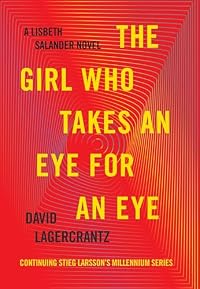
On the plus-side, the novel fits in well with the original trilogy. The (translated) prose is of a similar quality, and the story slots well into the mythology. There are a further two books by Lagercrantz, The Girl Who Takes an Eye for an Eye and The Girl Who Lived Twice. The series has now been picked up by Karin Smirnoff, who will write another trilogy, beginning with The Girl in the Eagle’s Talons (and I’ve already seen hardbacks of Havsörnens skrik here in Sweden).
Oh, and the movie… According to Wikipedia, it’s about the theft of a program which can “access the world’s nuclear codes”. There is zero mention of this in the novel - it’s about corporate espionage perpetrated by bad actors in the NSA. And Salander’s drop-dead gorgeous twin sister, who’s now running daddy’s international criminal cartel.
And yes, I bought the next book. In my defence, it was on offer and very cheap. show less
I admit I read this in English rather than Swedish, and the translator, although Swedish-born, has lived most of their life in the UK, worked in law, and is not a professional translator. But they’re a friend of the English-language publisher of the Millennium trilogy. And, to be fair, they do a better job than the show more rush-job translation of the Larsson novels.
The Girl in the Spider’s Web was also made into a movie. I tried to watch it but gave up as it featured too much squeam for me, despite supposedly being a thriller. Comparing its synopsis with that of the novel reveals significant differences.
I’m not sure the plot makes much sense when summarised. Someone hacks the NSA– oh wait, that was Lisbet Salander, and she did it to prove she could. It turns out the NSA has been stealing software from companies, passing it to a Silicon Valley firm, which has then been selling it on to Russian and mobsters (more or less the same thing these days). Salander knew this and was looking for evidence. A Swedish programming genius realised the same (his ground-breaking gaming engine was hacked and sold to a competitor), went to work for the culprits, found the evidence he needed, returned to Sweden, and is now in hiding. But is then murdered. Blomqvist and Salander get involved and between them discover Salander’s twin sister is behind it all (not a spoiler).
It’s all very improbable, the characters are all geniuses or world-famous in their field, including Blomqvist, of course, who is some sort of global superstar journalist, and Salander’s hacker skills are so mad the “originality” and “creativity” of her code just wows everyone who reads it. (Hello? She provided the source code? I don’t think so.)
On the plus-side, the novel fits in well with the original trilogy. The (translated) prose is of a similar quality, and the story slots well into the mythology. There are a further two books by Lagercrantz, The Girl Who Takes an Eye for an Eye and The Girl Who Lived Twice. The series has now been picked up by Karin Smirnoff, who will write another trilogy, beginning with The Girl in the Eagle’s Talons (and I’ve already seen hardbacks of Havsörnens skrik here in Sweden).
Oh, and the movie… According to Wikipedia, it’s about the theft of a program which can “access the world’s nuclear codes”. There is zero mention of this in the novel - it’s about corporate espionage perpetrated by bad actors in the NSA. And Salander’s drop-dead gorgeous twin sister, who’s now running daddy’s international criminal cartel.
And yes, I bought the next book. In my defence, it was on offer and very cheap. show less
Members
- Recently Added By
Lists

Scandinavian Crime Fiction
224 works; 37 members

Top 100 to Read before you Die
109 works; 7 members

Top Five Books of 2015
811 works; 240 members

Books Read in 2016
4,666 works; 199 members

PS: 43 Books to Read Before They're Movies
18 works; 5 members

Books Read in 2018
4,360 works; 110 members

Animals in the Title
498 works; 11 members
Books - Larsson, Stieg and others: Millennium
8 works; 1 member
Author Information

31 Works 11,944 Members
David Lagercrantz was born on September 4, 1962 in Solna Municipality, Sweden. He was a crime reporter for Expressen, a national daily paper, where he covered some major crime stories including an infamous triple murder in the cemetery in the northern Swedish town of Amsele in 1988. His first book, Ultimate High, was published in 1997. His other show more works include A Swedish Genius, The Sky over Everest, Fall of Man in Wilmslow, and I am Zlatan Ibrahimovic. A Swedish Genius provided inspiration for the critically acclaimed documentary film Patent 986. In 2013, Lagercrantz was selected to write a new instalment in Stieg Larsson's Millennium series. The Girl in the Spider's Web was published in 2015. It was followed by The Girl Who Takes an Eye for an Eye, published in 2017. (Bowker Author Biography) show less
All Editions
Some Editions
Awards and Honors
Series

Belongs to Publisher Series
Columna (1051)
Work Relationships
Is contained in
Has the adaptation
Common Knowledge
- Canonical title
- The Girl in the Spider's Web
- Original title
- Det som inte dödar oss
- Original publication date
- 2015 (original Swedish) (original Swedish); 2015 (English: Goulding) (English: Goulding)
- People/Characters
- Mikael Blomkvist (journalist at Millennium magazine); Lisbeth Salander (hacker); August Balder (son of prof Balder); Frans Balder (professor); Holger Palmgren; Erika Berger (editor in chief of Millennium magazine) (show all 15); Edwin Needham; Jan Bublanski (police detective inspector); Gabriella Grane (Sä | po employee); Alona Casales; Charles Edelman; Sonja Modig (police officer); Jurij Bogdanov; Jan Holtser; Kira
- Important places
- Stockholm, Sweden; Fort Meade, Maryland, USA; Sandham, Sweden
- Related movies
- The Girl in the Spider's Web (2018 | IMDb)
- First words
- This story begins with a dream, and not a particularly spectacular one at that.
- Last words
- (Click to show. Warning: May contain spoilers.)A star fell outside in the night sky.
- Original language
- Swedish
Classifications
Statistics
- Members
- 6,110
- Popularity
- 2,047
- Reviews
- 219
- Rating
- (3.64)
- Languages
- 20 — Catalan, Czech, Danish, Dutch, English, Estonian, Finnish, French, German, Hungarian, Italian, Norwegian (Bokmål), Polish, Portuguese, Romanian, Slovenian, Spanish, Swedish, Turkish, Chinese, traditional
- Media
- Paper, Audiobook, Ebook
- ISBNs
- 121
- UPCs
- 2
- ASINs
- 25