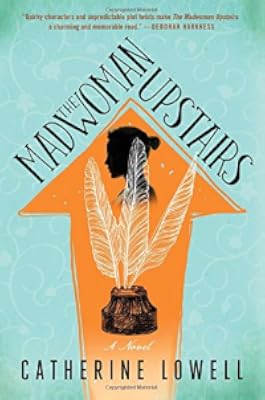
The Madwoman Upstairs
by Catherine Lowell
On This Page
Description
Fiction. Literature. In Catherine Lowell's smart and original debut novel, the only remaining descendant of the Brontë family embarks on a modern-day literary scavenger hunt to find the family's long-rumored secret estate, using only the clues her eccentric father left behind and the Brontës' own novels.Samantha Whipple is used to stirring up speculation wherever she goes. Since her father's untimely death, she is the presumed heir to a long-rumored trove of diaries, paintings, letters, show more and early novel drafts passed down from the Brontë family—a hidden fortune never revealed to anyone outside the family but endlessly speculated on by Brontë scholars and fanatics. Samantha, however, has never seen this alleged estate, and for all she knows, it's just as fictional as Jane Eyre or Wuthering Heights. Yet everything changes when Samantha enrolls at Oxford University and long-lost objects from the past begin rematerializing in her life. Her father's distinctive copy of Jane Eyre, which should have perished in the fire that claimed his life, mysteriously appears on Samantha's bed. Annotated in her father's handwriting, the book is the first of many clues in an elaborate scavenger hunt derived from the world's greatest literature. With the help of a handsome but inscrutable professor, Samantha must plunge into a vast literary mystery and an untold family legacy, one that can only be solved by decoding the clues hidden within the Brontës' own writing.For readers who devoured The Weird Sisters and Special Topics in Calamity Physics, The Madwoman Upstairs is a suspenseful, exhilarating debut by an exciting new talent who offers a moving exploration of what it means when the greatest truth is, in fact, fiction. show lessTags
Recommendations



Member Reviews
Disclaimer: Wuthering Heights and Jane Eyre are among my two favorite books of all time. (I know it is cliched but I don’t care.) So, when reading a book that happens to discuss both at length as well as the authors behind them, I *may* be a little biased.
Now that is out of the way, I will say I adored The Madwoman Upstairs and not just because it is about a Brontë ancestor. There is so much literary goodness wrapped up in a wild suspenseful mystery that it is all sorts of awesome. The atmosphere befits any discussion of the Brontë family, as nothing says creepy quite like the moors and Old School in Oxford, while the various characters, particularly Samantha, hit upon the full range of human emotion and experience. It makes for a show more great read.
Samantha is plain funny. She is outspoken in a world of very proper Brits and confounded by their rituals as only an American can be. She has strong opinions and, while hesitant to share them aloud, does not hesitate in thinking them for the benefit of the reader. When she does share them with others, the reactions she receives and her own reaction to others’ reactions are priceless. It makes for some great reading.
The mystery, while thrilling and fun, is less the main point of The Madwoman Upstairs and more a delightful side note as it pushes Samantha towards the true climax of her story. The scavenger hunt is a subtle one; often Samantha does not realize she is on the hunt for the next clue until she stumbles across it. The clues are also not ordinary clues in that regards. There is no note stating a riddle she must solve. Instead, the clues come in the form of answers to questions Samantha does not even know she is asking. For some, this lack of a “real” scavenger hunt may be anticlimactic, but I personally feel it is in keeping with the spirit of the book.
While the synopsis touts the mystery of the Brontë family legacy as the driving force of the novel, I respectfully disagree. What The Madwoman Upstairs is at heart is an introduction to the very same course of study to which Samantha devotes herself in the book. Samantha, along with other characters, spend most of the novel critiquing each of the Brontë books, discussing their flaws, symbolism, themes, and so forth. It is this type of discussion which will delight any Brontë fan. It is also the type of literary discussion you do not see outside of a classroom, and yet there it is for all to enjoy. For Brontë fans, you will indeed enjoy it because what Samantha and her professor discuss helps you see these books in an entirely different light.
Of equal interest is the literary theories in general about which Samantha argues with her professor. Some of these conversations are hardcore, drawing on ideas about reading and authorial intent that you just do not see in modern fiction. Some of them are downright intense, touching upon ideas about reading that I have never considered, let alone talked about with others since I left high school English class. This makes these conversations that much more fascinating. It also makes me want to rethink my entire idea of critical reading, which is a fantastic thing for a reader to discover. I love books that push my levels of understanding and force me to review my own stance as a reader. This filled that niche quite nicely.
In the end, be forewarned that while The Madwoman Upstairs does contain a mystery that Samantha must solve, I loved it more because of its literary discussions than because of the mystery. The mystery was a nice add-on but not what got me excited to read it virtually nonstop. Then again, I did preface this review with the warning that I may have a bit of a bias in favor towards The Madwoman Upstairs. show less
Now that is out of the way, I will say I adored The Madwoman Upstairs and not just because it is about a Brontë ancestor. There is so much literary goodness wrapped up in a wild suspenseful mystery that it is all sorts of awesome. The atmosphere befits any discussion of the Brontë family, as nothing says creepy quite like the moors and Old School in Oxford, while the various characters, particularly Samantha, hit upon the full range of human emotion and experience. It makes for a show more great read.
Samantha is plain funny. She is outspoken in a world of very proper Brits and confounded by their rituals as only an American can be. She has strong opinions and, while hesitant to share them aloud, does not hesitate in thinking them for the benefit of the reader. When she does share them with others, the reactions she receives and her own reaction to others’ reactions are priceless. It makes for some great reading.
The mystery, while thrilling and fun, is less the main point of The Madwoman Upstairs and more a delightful side note as it pushes Samantha towards the true climax of her story. The scavenger hunt is a subtle one; often Samantha does not realize she is on the hunt for the next clue until she stumbles across it. The clues are also not ordinary clues in that regards. There is no note stating a riddle she must solve. Instead, the clues come in the form of answers to questions Samantha does not even know she is asking. For some, this lack of a “real” scavenger hunt may be anticlimactic, but I personally feel it is in keeping with the spirit of the book.
While the synopsis touts the mystery of the Brontë family legacy as the driving force of the novel, I respectfully disagree. What The Madwoman Upstairs is at heart is an introduction to the very same course of study to which Samantha devotes herself in the book. Samantha, along with other characters, spend most of the novel critiquing each of the Brontë books, discussing their flaws, symbolism, themes, and so forth. It is this type of discussion which will delight any Brontë fan. It is also the type of literary discussion you do not see outside of a classroom, and yet there it is for all to enjoy. For Brontë fans, you will indeed enjoy it because what Samantha and her professor discuss helps you see these books in an entirely different light.
Of equal interest is the literary theories in general about which Samantha argues with her professor. Some of these conversations are hardcore, drawing on ideas about reading and authorial intent that you just do not see in modern fiction. Some of them are downright intense, touching upon ideas about reading that I have never considered, let alone talked about with others since I left high school English class. This makes these conversations that much more fascinating. It also makes me want to rethink my entire idea of critical reading, which is a fantastic thing for a reader to discover. I love books that push my levels of understanding and force me to review my own stance as a reader. This filled that niche quite nicely.
In the end, be forewarned that while The Madwoman Upstairs does contain a mystery that Samantha must solve, I loved it more because of its literary discussions than because of the mystery. The mystery was a nice add-on but not what got me excited to read it virtually nonstop. Then again, I did preface this review with the warning that I may have a bit of a bias in favor towards The Madwoman Upstairs. show less
The Madwoman Upstairs by Catherine Lowell is an exploration of the Brontë family from the viewpoint of their last remaining descendant, Samantha, who has no love for the tragic siblings regardless of the fact that she is supposedly the heir to a secret trove of Brontë treasures. Even though she has just arrived at (the fictional) Old College, Oxford, to study English literature, she refuses to read the Brontës or any classic authors. Her tutor, however, wants her to expand her knowledge and analytical skills and so they begin a course of study that may eventually reveal Sam's inheritance from her famous ancestors.
First let me tell you what this is not. It is not a modern retelling of any of the Brontë stories. It is not a sequel. It show more does not use any of the historical characters in a fictional way, other than Samantha's suppositions about some of what could have happened between them that was not recorded. I know I actively avoid some of these kinds of books and so do some of you so I wanted to put this out there. What you do get in this novel is a presentation of the Brontës' lives, their works, and the possible ways to analyze both. You also get a lot of history, a trip to Haworth Parsonage, and a lovely experience with the decrepit tower room that Sam is supposed to live in.
Sam is probably one of the most perplexing and sometimes maddening narrators that I have ever encountered. She blurts out responses to reasonable questions that are strange, rude, and almost entirely out of place. She makes terrible decisions even for a first year college student and she is a horrible judge of character. Whether these things are a consequence of being homeschooled by her author father or are just in her nature is left to the reader to decide. However, despite Sam's attempts at making me dislike this book, I stayed up until 5am finishing it and am recommending it to all of you!
http://webereading.com/2016/03/new-release-madwoman-upstairs.html show less
First let me tell you what this is not. It is not a modern retelling of any of the Brontë stories. It is not a sequel. It show more does not use any of the historical characters in a fictional way, other than Samantha's suppositions about some of what could have happened between them that was not recorded. I know I actively avoid some of these kinds of books and so do some of you so I wanted to put this out there. What you do get in this novel is a presentation of the Brontës' lives, their works, and the possible ways to analyze both. You also get a lot of history, a trip to Haworth Parsonage, and a lovely experience with the decrepit tower room that Sam is supposed to live in.
Sam is probably one of the most perplexing and sometimes maddening narrators that I have ever encountered. She blurts out responses to reasonable questions that are strange, rude, and almost entirely out of place. She makes terrible decisions even for a first year college student and she is a horrible judge of character. Whether these things are a consequence of being homeschooled by her author father or are just in her nature is left to the reader to decide. However, despite Sam's attempts at making me dislike this book, I stayed up until 5am finishing it and am recommending it to all of you!
http://webereading.com/2016/03/new-release-madwoman-upstairs.html show less
Samantha Whipple is decidedly NOT your average American undergrad come to study literature in the hallowed halls of Oxford University. She would like to be. She settles without complaint into a creepy dorm room in a gothic tower. She tries not to be distracted in her coursework with the dishy Professor James Orville. But this is all a ruse. She can't run forever from her identity as the sole descendant of the famed Bronte literary family, reputed to have inherited lost diaries, letters and heirlooms from her now deceased father. Soon tattered, marked-up copies of the Brontes' works arrive at her doorstep. How did they get there? WHo put them there?
The author was done a disservice when her publisher billed Samantha's ensuing adventures show more as a literary scavenger hunt based on clues by her eccentric dad. People who are drawn to the book based upon this description will be disappointed. The 'hunt' is not actually the primary focus of the book. However, lovers of literary theory and criticism will love this book. There is serious examination of the roles authors (with their biographical backgrounds) and their readers bring to a work of fiction. And there is romance! The verbal sparring between Samantha and Orville is sophisticated, witty and filled with sexual tension. A solid grounding in the varied works of all the Brontes is not necessary, but certainly heightens the enjoyment.
Once I came to terms that this was not the book I'd expected, I became far more enamored with the book it actually was. show less
The author was done a disservice when her publisher billed Samantha's ensuing adventures show more as a literary scavenger hunt based on clues by her eccentric dad. People who are drawn to the book based upon this description will be disappointed. The 'hunt' is not actually the primary focus of the book. However, lovers of literary theory and criticism will love this book. There is serious examination of the roles authors (with their biographical backgrounds) and their readers bring to a work of fiction. And there is romance! The verbal sparring between Samantha and Orville is sophisticated, witty and filled with sexual tension. A solid grounding in the varied works of all the Brontes is not necessary, but certainly heightens the enjoyment.
Once I came to terms that this was not the book I'd expected, I became far more enamored with the book it actually was. show less
[The Madwoman Upstairs] by Catherine Lowell 3.75
The last descendant of the the famous Brontë family is hounded by the press, who think that there is a vast hidden treasure trove of artifacts and manuscripts that Samantha Whipple is hiding from the world. Samantha wants to be left alone to pursue her academics at Oxford University. And deal with the death of her eccentric, loving father. Then "an old novel, annotated inner father's handwriting" shows up at her doorstep. "As more and more bizarre clues arrive, Samantha soon realizes that her father has left her an elaborate scavenger hunt using the world's greatest literature."
Samantha is a prickly, precocious character, who grew on me throughout the book. The start is a little too cold, show more a little too academic, but it soon works its way to a wonderful blend of storyline and literary criticism and theory. I loved all the references to my favorites by the Brontës, as well as insight into their pasts. I have read very little about their private lives. There are discussion of Frederick Douglas' work, Henry James, and so many other great authors. And I love the writing: "To no one's surprise, governesses ended up comprising a large potion of lunatic asylum residents. Certainly Henry James had known this when he wrote the [The Turn of the Screw]; certainly Charlotte Brontë knew this when she wrote [Jane Eyre]. There was a very thin line between a governess and madness, so much so that the thing being "governed" often became madness itself. The majority of governesses were left to die alone, go insane, or else write books about the happy ending they never had." (82) Tongue in cheek, witty, thought-provoking and fun, with just a little romance. Recommended. show less
The last descendant of the the famous Brontë family is hounded by the press, who think that there is a vast hidden treasure trove of artifacts and manuscripts that Samantha Whipple is hiding from the world. Samantha wants to be left alone to pursue her academics at Oxford University. And deal with the death of her eccentric, loving father. Then "an old novel, annotated inner father's handwriting" shows up at her doorstep. "As more and more bizarre clues arrive, Samantha soon realizes that her father has left her an elaborate scavenger hunt using the world's greatest literature."
Samantha is a prickly, precocious character, who grew on me throughout the book. The start is a little too cold, show more a little too academic, but it soon works its way to a wonderful blend of storyline and literary criticism and theory. I loved all the references to my favorites by the Brontës, as well as insight into their pasts. I have read very little about their private lives. There are discussion of Frederick Douglas' work, Henry James, and so many other great authors. And I love the writing: "To no one's surprise, governesses ended up comprising a large potion of lunatic asylum residents. Certainly Henry James had known this when he wrote the [The Turn of the Screw]; certainly Charlotte Brontë knew this when she wrote [Jane Eyre]. There was a very thin line between a governess and madness, so much so that the thing being "governed" often became madness itself. The majority of governesses were left to die alone, go insane, or else write books about the happy ending they never had." (82) Tongue in cheek, witty, thought-provoking and fun, with just a little romance. Recommended. show less
It's been a long, long time since I loved reading a book as much as I did this one. I had to slow myself down because while the plot was engrossing and I wanted to skip ahead to find out the conclusions to the mysteries and Samantha's story, I also appreciated how smart the writing was. Witty banter (perhaps my favorite part about the main character, who's not afraid to dish out her quick and intelligent snark to her professors), discussions on the nature of literary analysis, and engagement with the Bronte novels and lives - this is a quick read, but also one that is thoughtful and engages the reader's mind. Its nods to classic novels (especially "Rebecca" and, of course, "Jane Eyre" and the rest of the Bronte canon) play with readers' show more expectations and understanding of the main character as she deals with grief, family and relationship drama, and her first year of college. Can we trust Samantha Whipple as a narrator as she navigates contemporary life with all the pathos of a gothic heroine? This novel is both modern and rooted in the nineteenth-century Romantic, a combination that Catherine Lowell is able to pull off to great effect. show less
The Madwoman Upstairs follows Samantha Whipple, the (fictional) last descendant of the Brontës as she attends Oxford and tries to sort out both the emotional and actual legacy left her by her recently deceased father. I loved this novel. It's part literary mystery (was Sam's dad hiding Brontë treasures from the world?), part character study, and part romance (the romance, which I won't identify here because it's treated as a bit of a reveal (though I spotted the characters' attraction immediately), was just lovely. A really nice illustration of two people "fitting" each other). It read quickly but still had substance, and the literary discussions of the Brontës was fun. (At first I thought this was a little overdone, but then I show more settled into and decided it was just right.) This is a perfect example of what I'm looking for when I read literary fiction. Recommended. show less
I haven’t hated a book as much as I hated this one in a long while. It was a bit of self-punishment to complete it. It was so contrived, with an awkward, overly clever simile or metaphor inserted every other sentence. None of the characters ever felt more than, well, characters. The plot was full of holes. The big reveal was anticlimactic at best.
At one point Samantha refers to The Tenant of Wildfell Hall as “not a tale to get lost in. This was a story that reminded you, page after page, that it had been written. You could not help but be aware that there had been an author.” An apt description of this book as well.
At one point Samantha refers to The Tenant of Wildfell Hall as “not a tale to get lost in. This was a story that reminded you, page after page, that it had been written. You could not help but be aware that there had been an author.” An apt description of this book as well.
Members
- Recently Added By
Published Reviews
ThingScore 75
"This is an entertaining and ultimately sweet story, but it’s best if you don’t think about it too hard."
added by ablachly
Even without its attraction for Brontë-philes, however, this is an enjoyable academic romp that successfully combines romance and intrigue, one that benefits from never taking itself too seriously.
added by ablachly
Lists

Recommend the 20 best books you've read in the last five years
2,168 works; 601 members

Books Read in 2017
4,249 works; 129 members

Fiction Based on Lives of Historical Women
17 works; 1 member
Author Information
3 Works 609 Members
Awards and Honors
Awards
Distinctions
Common Knowledge
- Canonical title
- The Madwoman Upstairs
- Dedication
- To my beautiful parents
- First words
- The night I arrived at Oxford, I learned that my dorm room was built in 1361 and had originally been used to quarantine victims of the plague.
- Last words
- (Click to show. Warning: May contain spoilers.)But on this point, I think I have said sufficient.
- Original language
- English
- Canonical DDC/MDS
- 813.6
- Canonical LCC
- PS3612.O887
Classifications
Statistics
- Members
- 605
- Popularity
- 48,407
- Reviews
- 45
- Rating
- (3.61)
- Languages
- English, German
- Media
- Paper, Audiobook, Ebook
- ISBNs
- 21
- ASINs
- 5