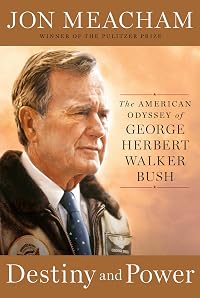
Destiny and Power The American Odyssey of George Herbert Walker Bush
by Jon Meacham
On This Page
Description
#1 NEW YORK TIMES BESTSELLER • In this brilliant biography, Pulitzer Prize–winning author Jon Meacham chronicles the life of George Herbert Walker Bush.NAMED ONE OF THE TEN BEST BOOKS OF THE YEAR BY THE WASHINGTON POST AND ONE OF THE BEST BOOKS OF THE YEAR BY The New York Times Book Review • Time • NPR • St. Louis Post-Dispatch
Drawing on President Bush’s personal diaries, on the diaries of his wife, Barbara, and on extraordinary access to the forty-first president and his show more family, Meacham paints an intimate and surprising portrait of an intensely private man who led the nation through tumultuous times. From the Oval Office to Camp David, from his study in the private quarters of the White House to Air Force One, from the fall of the Berlin Wall to the first Gulf War to the end of Communism, Destiny and Power charts the thoughts, decisions, and emotions of a modern president who may have been the last of his kind. This is the human story of a man who was, like the nation he led, at once noble and flawed.
His was one of the great American lives. Born into a loving, privileged, and competitive family, Bush joined the navy on his eighteenth birthday and at age twenty was shot down on a combat mission over the Pacific. He married young, started a family, and resisted pressure to go to Wall Street, striking out for the adventurous world of Texas oil. Over the course of three decades, Bush would rise from the chairmanship of his county Republican Party to serve as congressman, ambassador to the United Nations, head of the Republican National Committee, envoy to China, director of Central Intelligence, vice president under Ronald Reagan, and, finally, president of the United States. In retirement he became the first president since John Adams to see his son win the ultimate prize in American politics.
With access not only to the Bush diaries but, through extensive interviews, to the former president himself, Meacham presents Bush’s candid assessments of many of the critical figures of the age, ranging from Richard Nixon to Nancy Reagan; Mao to Mikhail Gorbachev; Dick Cheney to Donald Rumsfeld; Henry Kissinger to Bill Clinton. Here is high politics as it really is but as we rarely see it.
From the Pacific to the presidency, Destiny and Power charts the vicissitudes of the life of this quietly compelling American original. Meacham sheds new light on the rise of the right wing in the Republican Party, a shift that signaled the beginning of the end of the center in American politics. Destiny and Power is an affecting portrait of a man who, driven by destiny and by duty, forever sought, ultimately, to put the country first.
Praise for Destiny and Power
“Should be required reading—if not for every presidential candidate, then for every president-elect.”—The Washington Post
“Reflects the qualities of both subject and biographer: judicious, balanced, deliberative, with a deep appreciation of history and the personalities who shape it.”—The New York Times Book Review
“A fascinating biography of the forty-first president.”—The Dallas Morning News. show less
Tags
Recommendations

Member Reviews
To many, he’s the hero behind the first Gulf War. To some, he’s the one who let the US economy slow. To others, he guided the world from the Cold War into a more stable future. To others, he fell short of Reagan’s ideals. Like any impactful president, he consisted of many things to many people. Along with John Adams, he remains one of two presidents ever to have their sons someday succeed them. Meacham, one of America’s great political biographers, here details George HW Bush’s life and remains both sympathetic, independent, and critical throughout the account.
Meacham was granted access to Bush’s diaries that chronicled the heights of his power. He also interviewed numerous members of Bush’s inner circle, along with show more “Number 41” himself. Meacham also tries to pry behind the scenes of Number 41’s mindset when the son “Number 43” came to power and faced crises. Bush’s youth and development are also amply described here along with details from his marriage to Barbara, who contributed to the research effort.
The resulting portrait reveals a complex, competitive man who was described as “good” and “decent” by opponents and fans alike. His service in the US Navy during World War II (for which he volunteered and postponed a time at Yale) defined the trajectory of his life. He aimed to serve his country, free of any fixed ideology, and that became his full-time job for the second-half of his life.
Throughout, Bush made compromises that kept him short of being ideal. He opposed the Civil Rights Act of 1964 to win a campaign. He flip-flopped on abortion and supply-side economics to become a part of Reagan’s ticket in 1980. Then there was Iran-Contra. He also entered an unfocused drift on the domestic front after the first Persian Gulf War. Meacham does not skip over these and suggests ways that Bush could have improved. However, from reading this book, I get the impression that Bush would wholeheartedly agree with Meacham on most of this critique.
This book will remain the definitive writing on George HW Bush’s life for some time. The quality of historiography and the artful prose make it hard to surpass. Discussion of Bush’s legacy – positive and negative – will continue, and this work provides many conversation starters about that. The inside access that the Bush family gave to Meacham will make this book not only seminal but also a future primary source for future biographers. (Number 43’s biography of Number 41 must also be consulted as a primary source, too.)
Most living Americans might read Destiny and Power as a way to remember their personal histories. It certainly brought back many memories for me. It reminded me of my conservative youth and my ideological shift during Number 43’s presidency. Through reading, I was able to attain a more comprehensive, three-dimensional view of Number 41, independent of the passions of the time (and the passions of my family). Meacham reflects on where America has been recently and where we can go, and for era of 1964-2008, much of that was wrapped up in the service of Number 41 George HW Bush. show less
Meacham was granted access to Bush’s diaries that chronicled the heights of his power. He also interviewed numerous members of Bush’s inner circle, along with show more “Number 41” himself. Meacham also tries to pry behind the scenes of Number 41’s mindset when the son “Number 43” came to power and faced crises. Bush’s youth and development are also amply described here along with details from his marriage to Barbara, who contributed to the research effort.
The resulting portrait reveals a complex, competitive man who was described as “good” and “decent” by opponents and fans alike. His service in the US Navy during World War II (for which he volunteered and postponed a time at Yale) defined the trajectory of his life. He aimed to serve his country, free of any fixed ideology, and that became his full-time job for the second-half of his life.
Throughout, Bush made compromises that kept him short of being ideal. He opposed the Civil Rights Act of 1964 to win a campaign. He flip-flopped on abortion and supply-side economics to become a part of Reagan’s ticket in 1980. Then there was Iran-Contra. He also entered an unfocused drift on the domestic front after the first Persian Gulf War. Meacham does not skip over these and suggests ways that Bush could have improved. However, from reading this book, I get the impression that Bush would wholeheartedly agree with Meacham on most of this critique.
This book will remain the definitive writing on George HW Bush’s life for some time. The quality of historiography and the artful prose make it hard to surpass. Discussion of Bush’s legacy – positive and negative – will continue, and this work provides many conversation starters about that. The inside access that the Bush family gave to Meacham will make this book not only seminal but also a future primary source for future biographers. (Number 43’s biography of Number 41 must also be consulted as a primary source, too.)
Most living Americans might read Destiny and Power as a way to remember their personal histories. It certainly brought back many memories for me. It reminded me of my conservative youth and my ideological shift during Number 43’s presidency. Through reading, I was able to attain a more comprehensive, three-dimensional view of Number 41, independent of the passions of the time (and the passions of my family). Meacham reflects on where America has been recently and where we can go, and for era of 1964-2008, much of that was wrapped up in the service of Number 41 George HW Bush. show less
Destiny and Power: The American Odyssey of George Herbert Walker Bush,
Jon Meacham, author; Paul Michael, narrator
It is obvious from the start of the book that Jon Meacham has respect and genuine affection for George Herbert Walker Bush. That is not a good reason to dislike or fail to appreciate the excellent job he did of defining Bush 41’s, life, unless you are an ideologue who cannot accept any positive presentation of a member of the Republican Party. For me, the book was well researched, informative and interesting. Although it is quite long, and sometimes repetitive, I found it to be a steady paced commentary on the life of the 41st President of the United States, with the information presented taken largely from the his diaries show more and the diaries of the First Lady. Bush is a man who represents the past, a time of far better manners and decorum both in and out of the White House. That is a fact that I believe cannot be disputed. The narrator did a fine job modulating his voice so that even though it could have been slow going to read such a tome, it was always engaging.
Raised with old-fashioned values and a code of ethics largely no longer in existence, he is the last of a dying breed. He was taught to respect women and to care about those less fortunate than he. He was taught to “always do the right thing”. He was taught to honor and love his country and those were the same values he and his wife of more than 70 years, Barbara Pierce, tried to inculcate into their own children. Bush fell in love with Barbara while still in his teens and they married before he finished his term of duty during WWII when he was 20 and she, only 19.
Bush enlisted in 1943, at age 18, after graduating high school. He believed it was the honorable thing to do, to serve his country, and he found it hard to reconcile the fact that the President following him into the Oval Office had actually actively avoided the draft and service to his country. However, Bill Clinton was only the first of those to follow who saw no need to give to their country but rather to have their country give to them, which was quite a contrast to the request of former Democrat and President, John F. Kennedy, who requested that we “ask not what your country can do for you, but what you can do for your country!” The times have definitely changed in today’s America.
I am not sure if he has been given the credit that is due him by his adversaries. He was criticized for not doing enough on the domestic front, yet he passed the American Disabilities Act, improved the Clean Air Bill and approved the Fair Housing Act. He also ushered in the end of the Cold War and successfully liberated Kuwait when it was invaded by Iraq. He has been unfairly maligned because he raised taxes, breaking his promise when he said “read my lips”. However, the deficit could not be curbed in any other way, and he chose to do what was best for the country, not himself or his future in politics. Also, one must not forget that both houses of Congress were controlled by the Democrats, at that time, so he had little choice to do otherwise. He could possibly fight them and shut down the government, or he could compromise. Always the gentleman, he chose to compromise and put the needs of America first.
As the ultimate gentleman, he resisted going negative when campaigning, even though it meant he would lose. In his heart and mind, he always hoped and thought he would win, believing in the integrity of the electorate, sadly, a mistake, because they believed the lies that the biased media disseminated. During his run for reelection in 1992, the press coverage of Bush was 96% negative, proving that the fourth estate, once the watchdog, was now dead, or at the very least, under-performing. The media prejudice has since been proven, but the practice has continued. Shortly after he lost, his approval rating rose 15 points because they stopped hammering him and/or his associates with false accusations and innuendo.
Bush was a man uniquely qualified to serve as Chief Executive. His past experience was broad and prepared him well. He was Republican Party chairman in Texas, and the Chairman of the Republican National Committee, he was a member of the House of Representatives, he was US Ambassador to the United Nations, he was the U.S. Envoy to China, he was director of the CIA, and he was Vice President before being elected to the highest office in the land. He served only one term, losing to a younger, more charismatic candidate, a man he eventually grew to like and respect, but a man who disappointed him because of his behavior and draft dodging. Still, Bush believed that Clinton’s private life should not be politicized and publicized as it was with the Lewinsky scandal. He knew that the President had important business to conduct and saw first hand that Europe was shocked by what they believed was the unnecessary attention given to the scandal. He understood the stress caused by the vitriol of the press when it was unleashed, but perhaps not the actual transgression. In the face of adversity, Bush always turned his attention to the future, not the past.
To put it succinctly, this is a good book about a good man that was written by a good author! Meacham has presented an even handed picture of a man who put service to his country before service to himself, a man even held in high esteem by Barack Obama, a progressive Democrat, who honored him with the Presidential Medal of Freedom and praised the man and his service in the highest terms, noting his “humility and decency, and his seven decades of devotion to the United States. show less
Jon Meacham, author; Paul Michael, narrator
It is obvious from the start of the book that Jon Meacham has respect and genuine affection for George Herbert Walker Bush. That is not a good reason to dislike or fail to appreciate the excellent job he did of defining Bush 41’s, life, unless you are an ideologue who cannot accept any positive presentation of a member of the Republican Party. For me, the book was well researched, informative and interesting. Although it is quite long, and sometimes repetitive, I found it to be a steady paced commentary on the life of the 41st President of the United States, with the information presented taken largely from the his diaries show more and the diaries of the First Lady. Bush is a man who represents the past, a time of far better manners and decorum both in and out of the White House. That is a fact that I believe cannot be disputed. The narrator did a fine job modulating his voice so that even though it could have been slow going to read such a tome, it was always engaging.
Raised with old-fashioned values and a code of ethics largely no longer in existence, he is the last of a dying breed. He was taught to respect women and to care about those less fortunate than he. He was taught to “always do the right thing”. He was taught to honor and love his country and those were the same values he and his wife of more than 70 years, Barbara Pierce, tried to inculcate into their own children. Bush fell in love with Barbara while still in his teens and they married before he finished his term of duty during WWII when he was 20 and she, only 19.
Bush enlisted in 1943, at age 18, after graduating high school. He believed it was the honorable thing to do, to serve his country, and he found it hard to reconcile the fact that the President following him into the Oval Office had actually actively avoided the draft and service to his country. However, Bill Clinton was only the first of those to follow who saw no need to give to their country but rather to have their country give to them, which was quite a contrast to the request of former Democrat and President, John F. Kennedy, who requested that we “ask not what your country can do for you, but what you can do for your country!” The times have definitely changed in today’s America.
I am not sure if he has been given the credit that is due him by his adversaries. He was criticized for not doing enough on the domestic front, yet he passed the American Disabilities Act, improved the Clean Air Bill and approved the Fair Housing Act. He also ushered in the end of the Cold War and successfully liberated Kuwait when it was invaded by Iraq. He has been unfairly maligned because he raised taxes, breaking his promise when he said “read my lips”. However, the deficit could not be curbed in any other way, and he chose to do what was best for the country, not himself or his future in politics. Also, one must not forget that both houses of Congress were controlled by the Democrats, at that time, so he had little choice to do otherwise. He could possibly fight them and shut down the government, or he could compromise. Always the gentleman, he chose to compromise and put the needs of America first.
As the ultimate gentleman, he resisted going negative when campaigning, even though it meant he would lose. In his heart and mind, he always hoped and thought he would win, believing in the integrity of the electorate, sadly, a mistake, because they believed the lies that the biased media disseminated. During his run for reelection in 1992, the press coverage of Bush was 96% negative, proving that the fourth estate, once the watchdog, was now dead, or at the very least, under-performing. The media prejudice has since been proven, but the practice has continued. Shortly after he lost, his approval rating rose 15 points because they stopped hammering him and/or his associates with false accusations and innuendo.
Bush was a man uniquely qualified to serve as Chief Executive. His past experience was broad and prepared him well. He was Republican Party chairman in Texas, and the Chairman of the Republican National Committee, he was a member of the House of Representatives, he was US Ambassador to the United Nations, he was the U.S. Envoy to China, he was director of the CIA, and he was Vice President before being elected to the highest office in the land. He served only one term, losing to a younger, more charismatic candidate, a man he eventually grew to like and respect, but a man who disappointed him because of his behavior and draft dodging. Still, Bush believed that Clinton’s private life should not be politicized and publicized as it was with the Lewinsky scandal. He knew that the President had important business to conduct and saw first hand that Europe was shocked by what they believed was the unnecessary attention given to the scandal. He understood the stress caused by the vitriol of the press when it was unleashed, but perhaps not the actual transgression. In the face of adversity, Bush always turned his attention to the future, not the past.
To put it succinctly, this is a good book about a good man that was written by a good author! Meacham has presented an even handed picture of a man who put service to his country before service to himself, a man even held in high esteem by Barack Obama, a progressive Democrat, who honored him with the Presidential Medal of Freedom and praised the man and his service in the highest terms, noting his “humility and decency, and his seven decades of devotion to the United States. show less
POLITICAL BIOGRAPHY
Jon Meacham
Destiny and Power: The American Odyssey of George Herbert Walker Bush
Random House
Ebook, 978-0-81299-820-7 (also available in hardcover, large print paperback, as an audio book, and on Audible), 864 pgs., $17.99
November 10, 2015
When George Herbert Walker Bush was five years old his school report cards included the category “Claims More Than His Fair Share of Time and Attention in Class.” His parents didn’t worry about this category. Bush’s nickname was “Have-Half” because he split everything he had with friends. Eighty-five years later he is much the same.
Destiny and Power: The American Odyssey of George Herbert Walker Bush is Jon Meacham’s account of the life of the forty-first president, show more “a child of one generation’s ruling class, the head of another’s, and the father of yet a third.” Meacham presents Bush as a man of humility and compassion as well as ambitious and deeply competitive, a believer in compromise, diplomacy, and the power of personal relationships.
A well-balanced account, Destiny and Power progresses briskly and never belabors a point. Meacham provides insightful analysis of family dynamics in Bush’s formative years, a recitation of the facts liberally leavened with anecdotes, and a good mix of formal and candid photos. Meacham had access to Bush’s diaries that he spoke into a hand-held recorder which provides a sense of immediacy—Bush’s thoughts in real time.
Meacham is fond of his subject and writes thrillingly of the “dazzling, epochal news” of the fall of the Berlin wall and chillingly of Iraq’s invasion of Kuwait. Bush’s diary allows us to watch his thinking develop as he struggles toward “This will not stand.” But Meacham doesn’t mince words regarding controversies such as Iran-Contra, deemed “unworthy of [Bush’s] essential character.”
Meacham reinforces the point throughout the book that “with Bush one got both hardball and high-mindedness, with the former being played in order to give him the power to put the latter into action.” However, Meacham doesn’t address the damage done to American political discourse resulting in polarization. Bush’s personal story is the larger story of how the Republican Party moved to the right in Texas and nationally.
Meacham explores the relationship between Bush and George W.’s presidency, including personal correspondence between them as George W. prepares to invade Iraq, as well as what Bush thought of “axis of evil” rhetoric and his estimation of Dick Cheney’s vice presidency. Bush “returned on several occasions to the subject of Dick Cheney, whom he believed . . . had his own empire there.” Cheney, upon reading the transcript, smiled and said, “Fascinating.”
Bush’s legendary life is conveyed with profound details such as telling his diary on the eve of Operation Desert Storm, “The face of war looks at me,” and Gorbachev’s gift to Bush Christmas morning, 1991, when he called “to announce the end of the experiment in Communism born in the Bolshevik Revolution of 1917.” Meacham humanizes that legendary life with charming details: Bush’s “Merry Christmas” socks, his staff stocking hotel rooms with pork rinds and Dr. Pepper, and the occasional shower with Millie, the springer spaniel.
Bush may be, as Meacham says, “the last gentleman” who used “privilege to build, not to consume or to coast.” If so, the nation will be poorer for it.
Originally published in Lone Star Literary Life. show less
Jon Meacham
Destiny and Power: The American Odyssey of George Herbert Walker Bush
Random House
Ebook, 978-0-81299-820-7 (also available in hardcover, large print paperback, as an audio book, and on Audible), 864 pgs., $17.99
November 10, 2015
When George Herbert Walker Bush was five years old his school report cards included the category “Claims More Than His Fair Share of Time and Attention in Class.” His parents didn’t worry about this category. Bush’s nickname was “Have-Half” because he split everything he had with friends. Eighty-five years later he is much the same.
Destiny and Power: The American Odyssey of George Herbert Walker Bush is Jon Meacham’s account of the life of the forty-first president, show more “a child of one generation’s ruling class, the head of another’s, and the father of yet a third.” Meacham presents Bush as a man of humility and compassion as well as ambitious and deeply competitive, a believer in compromise, diplomacy, and the power of personal relationships.
A well-balanced account, Destiny and Power progresses briskly and never belabors a point. Meacham provides insightful analysis of family dynamics in Bush’s formative years, a recitation of the facts liberally leavened with anecdotes, and a good mix of formal and candid photos. Meacham had access to Bush’s diaries that he spoke into a hand-held recorder which provides a sense of immediacy—Bush’s thoughts in real time.
Meacham is fond of his subject and writes thrillingly of the “dazzling, epochal news” of the fall of the Berlin wall and chillingly of Iraq’s invasion of Kuwait. Bush’s diary allows us to watch his thinking develop as he struggles toward “This will not stand.” But Meacham doesn’t mince words regarding controversies such as Iran-Contra, deemed “unworthy of [Bush’s] essential character.”
Meacham reinforces the point throughout the book that “with Bush one got both hardball and high-mindedness, with the former being played in order to give him the power to put the latter into action.” However, Meacham doesn’t address the damage done to American political discourse resulting in polarization. Bush’s personal story is the larger story of how the Republican Party moved to the right in Texas and nationally.
Meacham explores the relationship between Bush and George W.’s presidency, including personal correspondence between them as George W. prepares to invade Iraq, as well as what Bush thought of “axis of evil” rhetoric and his estimation of Dick Cheney’s vice presidency. Bush “returned on several occasions to the subject of Dick Cheney, whom he believed . . . had his own empire there.” Cheney, upon reading the transcript, smiled and said, “Fascinating.”
Bush’s legendary life is conveyed with profound details such as telling his diary on the eve of Operation Desert Storm, “The face of war looks at me,” and Gorbachev’s gift to Bush Christmas morning, 1991, when he called “to announce the end of the experiment in Communism born in the Bolshevik Revolution of 1917.” Meacham humanizes that legendary life with charming details: Bush’s “Merry Christmas” socks, his staff stocking hotel rooms with pork rinds and Dr. Pepper, and the occasional shower with Millie, the springer spaniel.
Bush may be, as Meacham says, “the last gentleman” who used “privilege to build, not to consume or to coast.” If so, the nation will be poorer for it.
Originally published in Lone Star Literary Life. show less
Jon Meacham is a good biographer. I have enjoyed his books. This one on George H. W. Bush does not disappoint. It is an intimate, thorough, and engaging book, covering his genealogy, his early life, his war exploits, his business life, and his political life. Nowhere does it skimp and nowhere does it really disappoint. It is a decent recapitulation of Bush's time in politics and the personalities he came into contact with, as well as a very good narrative history of his time as president, 1989 to 1993, when he presided over the end of the Cold War with the Soviet Union. Bush was no rock-ribbed conservative like Reagan or Gingrich, and Meacham shows this well.
But, this is where Meacham's own politics and his sympathies with his subject show more come in. Meacham is good on Jefferson and Jackson, but his more recent political actions and behaviors are decidedly left-liberal. He was caught writing speeches for Biden and then commenting on them as an historian and commentator. His anti-conservative biases show through. For instance, Newt Gingrich is depicted as a Machiavellian, knuckle-dragging bogeyman to Bush, not a principled politician with valid ideals. Meacham, for instance, (pp. 390-391, and passim) lauds Jim Wright, a Texas Democrat who was corrupt as all get out and lost his position due to this corruption, in contradistinction to Newt Gingrich. Things like this are just silly.
And the poor Bushes. How they could go from disliking Hillary to actually voting for her in 2016 (after this book was written) is beyond me. I mean, I get you don't like Trump. But you abstain instead of voting for a Democrat if you are a real Republican. Meacham and the cohorts who know laud George H. W. Bush (and his sons) in the post-Trump era were the same ones who lambasted them as Republicans in their useful political life. I don't get that. show less
But, this is where Meacham's own politics and his sympathies with his subject show more come in. Meacham is good on Jefferson and Jackson, but his more recent political actions and behaviors are decidedly left-liberal. He was caught writing speeches for Biden and then commenting on them as an historian and commentator. His anti-conservative biases show through. For instance, Newt Gingrich is depicted as a Machiavellian, knuckle-dragging bogeyman to Bush, not a principled politician with valid ideals. Meacham, for instance, (pp. 390-391, and passim) lauds Jim Wright, a Texas Democrat who was corrupt as all get out and lost his position due to this corruption, in contradistinction to Newt Gingrich. Things like this are just silly.
And the poor Bushes. How they could go from disliking Hillary to actually voting for her in 2016 (after this book was written) is beyond me. I mean, I get you don't like Trump. But you abstain instead of voting for a Democrat if you are a real Republican. Meacham and the cohorts who know laud George H. W. Bush (and his sons) in the post-Trump era were the same ones who lambasted them as Republicans in their useful political life. I don't get that. show less
Jon Meacham was granted extraordinary access to Mr. Bush, his diaries, his family, and those with whom he worked during his long career. He gives us a very human portrait of an ambitious man who felt duty-bound to serve others. We Bush as a child briefly, then as an oil man, Congressman, ambassador to China, chairman of the Republican Party, CIA director, Vice President under Ronald Reagan, and the President whose popularity reached astonishing highs after the Gulf War, but fell so dramatically that he soundly lost his reelection bid, and as a retired elder statesman, whose sons follow in his footsteps.
I am a fairly liberal-leaning Democrat, and have always viewed George H. W. Bush as the finest Republican politician of my lifetime. show more Destiny and Power solidified his place in my mind, and made me appreciate President Bush even more. He exemplified honor, dignity, and decency in a quiet and understated way.
An excellent book about a truly exceptional man. show less
I am a fairly liberal-leaning Democrat, and have always viewed George H. W. Bush as the finest Republican politician of my lifetime. show more Destiny and Power solidified his place in my mind, and made me appreciate President Bush even more. He exemplified honor, dignity, and decency in a quiet and understated way.
An excellent book about a truly exceptional man. show less
I find Meacham's presidential bios very interesting and very readable. He seems to focus on just the right level of detail and analysis on all the major points in his subject's life. I enjoyed this book very much, and came away from the book liking Bush '41 more than going in. Though I never voted for any of the Bushes I felt a lot of respect for Bush '41. I thought he elevated the office in a way that many of his contemporaries did not match. He was truly a gentleman President (ala FDR) and enhanced the office of the Presidency in the eyes of world leaders as well.
Here are a few things that surprised me and/or that I feel are worth noting, in no particular order. The Bushes, early on, lost a three year old daughter, Robin, to leukemia. show more Bush mentions her many, many times throughout the entire book. Heart-wrenching. It is no surprise that he is an emotional guy. The word "cry" is mentioned a lot, but Bush 41 was tough when he had to be. There exists throughout the 600 pages evidence of a very strong, very loving, emotional bond within the family for one another. Barbara is mentioned often, particularly her view on things, while Laura is mentioned rarely, though affectionately and respectfully. While Meacham, in the epilogue, summarizes that Bush made a number of shifts in issue positions, largely for political reasons, I felt these were out-weighed by the number of occasions where he chose "to do the right thing" knowing he would pay a stiff penalty, e.g, raising taxes following "read my lips".
Bush showed strong patriotic fervor for his country in enlisting fresh out of high school (soon after Pearl harbor) and is thought to be the youngest navy pilot at that time. Though his plane was badly crippled from anti-aircraft flak he flew on and dropped his bomb load on target before parachuting. Lots of detail here on his relationship with the Reagans, one that built slowly and was cherished eventually by both men - though apparently not with Nancy R. Bush had a rather varied career pre-presidency that included not only the CIA but also the RNC. I forgot that he was very close to the White House in the latter assignment during the Watergate days.
I was surprised how tired Bush was from the job "only" 2 1/2 years into it; this was following victory in the first Iraq War, but apparently these post-victory crashes are par for the course. I'm sure in the days ahead I will think of a dozen other tidbits that I enjoyed and wish that I had included here, but bottomline - Highly Recommended. show less
Here are a few things that surprised me and/or that I feel are worth noting, in no particular order. The Bushes, early on, lost a three year old daughter, Robin, to leukemia. show more Bush mentions her many, many times throughout the entire book. Heart-wrenching. It is no surprise that he is an emotional guy. The word "cry" is mentioned a lot, but Bush 41 was tough when he had to be. There exists throughout the 600 pages evidence of a very strong, very loving, emotional bond within the family for one another. Barbara is mentioned often, particularly her view on things, while Laura is mentioned rarely, though affectionately and respectfully. While Meacham, in the epilogue, summarizes that Bush made a number of shifts in issue positions, largely for political reasons, I felt these were out-weighed by the number of occasions where he chose "to do the right thing" knowing he would pay a stiff penalty, e.g, raising taxes following "read my lips".
Bush showed strong patriotic fervor for his country in enlisting fresh out of high school (soon after Pearl harbor) and is thought to be the youngest navy pilot at that time. Though his plane was badly crippled from anti-aircraft flak he flew on and dropped his bomb load on target before parachuting. Lots of detail here on his relationship with the Reagans, one that built slowly and was cherished eventually by both men - though apparently not with Nancy R. Bush had a rather varied career pre-presidency that included not only the CIA but also the RNC. I forgot that he was very close to the White House in the latter assignment during the Watergate days.
I was surprised how tired Bush was from the job "only" 2 1/2 years into it; this was following victory in the first Iraq War, but apparently these post-victory crashes are par for the course. I'm sure in the days ahead I will think of a dozen other tidbits that I enjoyed and wish that I had included here, but bottomline - Highly Recommended. show less
I think the best part of this book is in explaining why the 41st president of the United States struggled to understand a changing world that shook so many of his core beliefs. The most commonly mentioned source in the text is Bush's diary. While it is very revealing, it also is one dimensional. I also felt there could be more context to better explain Bush's choices and actions.
Members
- Recently Added By
Lists

The Presidents
42 works; 2 members

Best Biographies of U.S. Presidents
61 works; 6 members
Biographies of American Presidents
39 works; 4 members
Author Information

35+ Works 15,268 Members
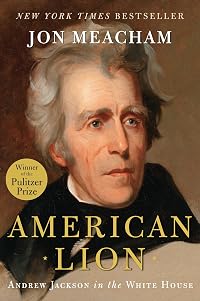
Jon Meacham was born in Chattanooga, Tennessee on May 20, 1969. He received a degree in English literature at the University of the South. He joined Newsweek as a writer in 1995. Three years later, at the age of 29, he was promoted to managing editor, supervising coverage of politics, international affairs, and breaking news. In 2006, he was show more promoted to editor at Newsweek. He is currently an executive editor at Random House. He won the Pulitzer Prize for American Lion: Andrew Jackson in the White House in 2009. His other works include Franklin and Winston: An Intimate Portrait of an Epic Friendship, American Gospel: God, the Founding Fathers, and the Making of a Nation. In 2001, he edited Voices in Our Blood: America's Best on the Civil Rights Movement. In 2013 his title Thomas Jefferson: The Art of Power made The New York Times Best Seller List. In 2015 Meacham's title Destiny and Power: The American Odyssey of George Herbert Walker Bush made The New York Times Best Seller List. His most recent book is entitled The Soul of America: The Battle for our Better Angels (2018). show less
Awards and Honors
Awards
Distinctions
Common Knowledge
- Canonical title
- Destiny and Power The American Odyssey of George Herbert Walker Bush
- People/Characters
- George H. W. Bush
- Blurbers
- McCullough, David; Goodwin, Doris Kearns; Isaacson, Walter; Brokaw, Tom; Beschloss, Michael
- Original language
- English
Classifications
- Genres
- Biography & Memoir, History, Nonfiction, General Nonfiction
- DDC/MDS
- 973.928092 — History & geography History of North America United States 1901- Cold War, Vietnam War, Digital Age (1953-2001) George H.W. Bush (1989-1993) Fall of the Berlin Wall, Gulf War, German Reunification Biography
- LCC
- E882 .M43 — History of the United States United States Later twentieth century, 1961-2000 George H.W. Bush's administration, 1989-1993
- BISAC
Statistics
- Members
- 1,023
- Popularity
- 25,397
- Reviews
- 16
- Rating
- (4.19)
- Languages
- English
- Media
- Paper, Audiobook, Ebook
- ISBNs
- 13
- ASINs
- 2