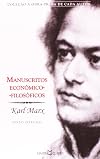
Economic and Philosophic Manuscripts of 1844
by Karl Marx, Frederick Engels
On This Page
Description
In the Economic and Philosophic Manuscripts of 1844 Marx explains how, under capitalism, people rely on labor to live. In the past people could rely on Nature itself for their natural needs; in modern society, if one wants to eat, one must work: it is only through money that one may survive. Thus, man becomes a slave to his wages. It is only through his work that he can find enough money to continue to live; but he doesn't simply live, he actually only survives, as a worker. Labor is only show more used to create more wealth, instead of achieving the fulfillment of human nature. Wilder Publications is a green publisher. All of our books are printed to order. This reduces waste and helps us keep prices low while greatly reducing our impact on the environment. show lessTags
Recommendations







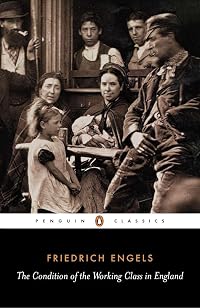
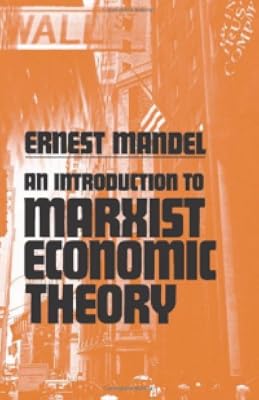


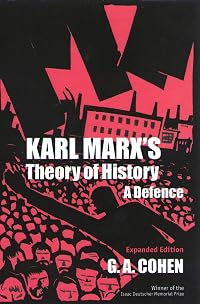
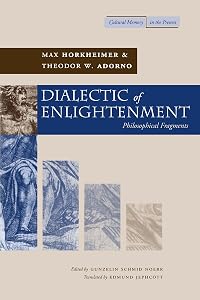
Member Reviews
Much quoting of Smith, Ricardo and Say, but then seems to re-arrange them into his own outlook that ignores the fundamental unit of decision making: the human individual. Later, we see he believes this is oK, because each individual within the species does not, by themselves, matter. It is clear to see how the shift of the times toward mechanization made the human labor seem almost worthless. (But, in retrospect, we know it is possible for individuals to create their own value-add to their own human capital.) The last third discusses Hegel's abstraction of logic involving spirit and state. This relates to Marx's doctrine of communism and atheism, both being the ultimate of human realization. This work explains the basis of communism, show more ties it to other economic ideas, and shows how the times produced an ideology as much as the converse. A final part that I must refute -- Marx blames the capitalist marketers for keeping the labor class poor by continually expanding the range of products and thus their range of "need." He assumes that (a) they are unable to save instead and that (b) everything produced becomes a legitimate necessity. show less
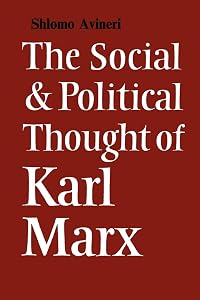
Taking the Economic-Philosophical MSS (1844) (but not published until 1931-2), the Holy Family (1845), the Theses on Feuerbach (1845) and the German Ideology (1845-6) as a whole, one can say that they combine a fully developed philosophy of history with a rudimentary sociology -- the latter for the most part derived from the French Encyclopaedists and their nineteenth-century successors: the Saint-Simonians and the other schools of French socialism.
What Marx obtained from Hegel on philosophy of history was the notion that history is a progressive self-creation of man, a process whose motor is practical social activity -- i.e., in the last resort, human labor. Man produces both himself and his world, and he does so through practical show more activity which modifies his own nature, at the same time that it transforms external nature. Thus, however scientific and empirical in intention and its methodical treatment of problems, Marx’s sociology rests ultimately upon a view of human nature which is philosophical. The Marxian critique of society is motivated by society’s failure to realize man’s potentialities.
As laid out in the Manuscripts, the motor of this development is labor, which so far from being merely an economic category is the “existential activity” of man, his “free conscious activity,” and his principal means of developing all the potentialities of his “universal nature.” Now man cannot develop fully unless he is free, but this must not be done at the expense of others, as in classical Antiquity where work was performed by slaves. Freedom, to be genuine, must be universal, hence the individual is free only if all other men are free and able to develop as “universal beings.” Only when this condition has been attained will the existence of individual men realize the potentialities inherent in the species.
Man is truly himself insofar as he is able to recognize himself in the man-made universe which surrounds him. The failure to attain this self-realization is defined as alienation (once more a concept Marx derived from Hegel, who in turn had borrowed it from Rousseau), and the ultimate goal of the historical process which “realizes” all the potentialities of man’s nature is described as the overcoming of alienation. There are two comments to be made on this: first, the notion of such a consummation is metaphysical, and indeed ultimately religious: it represents the utopian element in Marxist thought, transmitted to him both via Hegel’s philosophy of reason and Feuerbach’s conception of human nature. Secondly, it evidently forms the counterpart of the Marxian “union of theory and practice.” The latter is required to bring about that total revolution in human affairs which philosophy by itself cannot provide, because being an intellectual activity in a world not really ruled by the intellect, it must of necessity come to terms with reality as it is.
For Marx, political economy, though ostensibly concerned with abstractions such as capital, labor, or land, has for its real (though unacknowledged) subject the relationship of man to the man-made world of objects within which he moves and which reflects his essence as a generic being. It is the nature of man to surround himself with a man-made universe. In so doing he loses himself. This loss can become so extreme as to involve the annihilation of the creator, i.e., the worker loses reality to the point of starving to death. The individual becomes estranged from his own creation. Political economy, far from clarifying this state of affairs, obscures it by treating capital, labor etc., as independent realities, instead of recognizing them as manifestations of human activity. The alienation of man from his own product involves his estrangement from other men. In this resides the germ of class division. Private property in the means of production, and class rule by a propertied and privileged minority, are historically connected; they represent two sides of the same coin. Private property subordinates the producer to the non-producer (and incidentally turns women into the slave of man). Communism, by simultaneously abolishing class rule and human exploitation, thus appears as the “positive transcendence of private property and of human self-alienation.” Communism represents not a mere ideal, but an actual process inherent in the nature of things. Private property -- as a form of self-alienation -- produces communism as its necessary antithesis. Its supersession therefore signifies the ending of social conflict and the restoration of man’s harmony with his own nature. A society in which men are no longer estranged from themselves is also the first that can be described as truly human. [1961] show less
What Marx obtained from Hegel on philosophy of history was the notion that history is a progressive self-creation of man, a process whose motor is practical social activity -- i.e., in the last resort, human labor. Man produces both himself and his world, and he does so through practical show more activity which modifies his own nature, at the same time that it transforms external nature. Thus, however scientific and empirical in intention and its methodical treatment of problems, Marx’s sociology rests ultimately upon a view of human nature which is philosophical. The Marxian critique of society is motivated by society’s failure to realize man’s potentialities.
As laid out in the Manuscripts, the motor of this development is labor, which so far from being merely an economic category is the “existential activity” of man, his “free conscious activity,” and his principal means of developing all the potentialities of his “universal nature.” Now man cannot develop fully unless he is free, but this must not be done at the expense of others, as in classical Antiquity where work was performed by slaves. Freedom, to be genuine, must be universal, hence the individual is free only if all other men are free and able to develop as “universal beings.” Only when this condition has been attained will the existence of individual men realize the potentialities inherent in the species.
Man is truly himself insofar as he is able to recognize himself in the man-made universe which surrounds him. The failure to attain this self-realization is defined as alienation (once more a concept Marx derived from Hegel, who in turn had borrowed it from Rousseau), and the ultimate goal of the historical process which “realizes” all the potentialities of man’s nature is described as the overcoming of alienation. There are two comments to be made on this: first, the notion of such a consummation is metaphysical, and indeed ultimately religious: it represents the utopian element in Marxist thought, transmitted to him both via Hegel’s philosophy of reason and Feuerbach’s conception of human nature. Secondly, it evidently forms the counterpart of the Marxian “union of theory and practice.” The latter is required to bring about that total revolution in human affairs which philosophy by itself cannot provide, because being an intellectual activity in a world not really ruled by the intellect, it must of necessity come to terms with reality as it is.
For Marx, political economy, though ostensibly concerned with abstractions such as capital, labor, or land, has for its real (though unacknowledged) subject the relationship of man to the man-made world of objects within which he moves and which reflects his essence as a generic being. It is the nature of man to surround himself with a man-made universe. In so doing he loses himself. This loss can become so extreme as to involve the annihilation of the creator, i.e., the worker loses reality to the point of starving to death. The individual becomes estranged from his own creation. Political economy, far from clarifying this state of affairs, obscures it by treating capital, labor etc., as independent realities, instead of recognizing them as manifestations of human activity. The alienation of man from his own product involves his estrangement from other men. In this resides the germ of class division. Private property in the means of production, and class rule by a propertied and privileged minority, are historically connected; they represent two sides of the same coin. Private property subordinates the producer to the non-producer (and incidentally turns women into the slave of man). Communism, by simultaneously abolishing class rule and human exploitation, thus appears as the “positive transcendence of private property and of human self-alienation.” Communism represents not a mere ideal, but an actual process inherent in the nature of things. Private property -- as a form of self-alienation -- produces communism as its necessary antithesis. Its supersession therefore signifies the ending of social conflict and the restoration of man’s harmony with his own nature. A society in which men are no longer estranged from themselves is also the first that can be described as truly human. [1961] show less
One of the most important works in Western thought.
Volume da Série: Os Pensadores
Publicados apenas após sua morte, os Manuscritos foram escritos em 1844, quando Marx tinha apenas 26 anos e antes do seu célebre encontro com Engels. Os Manuscritos econômico-filosóficos ou Manuscritos de Paris apresentam a planta fundamental do pensamento de Marx: a concentração de sua filosofia na crítica da economia nacional de Adam Smith, J.B. Say e David Ricardo. Na obra, Marx expõe a discrepância entre moral e economia, denunciando a radicalidade da exploração do homem pela empresa capitalista. Enquanto a reprodução do capital é o único objetivo da produção, o trabalhador ganha apenas para sustentar suas necessidades mais vitais, ou seja, para não morrer e poder continuar produzindo.O fundamento da teoria do show more mais-valor, desenvolvida mais tarde em O Capital, já é antecipado nos Manuscritos. O estranhamento do mesmo trabalhador, fazedor de um produto que não lhe pertence, também é esboçado.Aqui, Marx dá sinais de sua passagem do idealismo hegeliano ao materialismo dialético e declara a necessidade de 'uma ação comunista efetiva' a fim de superar a propriedade privada show less
May 13, 2021Portuguese (Portugal)
Contém os textos: "Para a crítica da economia política"; "Teses contra Feuerbach"; "Manuscritos econômico-filosóficos"
Mar 21, 2022Portuguese (Brazil)
Members
- Recently Added By
Lists

Books Referenced by Izetbegovic's Islam Between East and West
233 works; 2 members
Author Information

1,864+ Works 54,892 Members
Karl Heinrich Marx, one of the fathers of communism, was born on May 5, 1818 in Trier, Germany. He was educated at a variety of German colleges, including the University of Jena. He was an editor of socialist periodicals and a key figure in the Working Man's Association. Marx co-wrote his best-known work, "The Communist Manifesto" (1848), with his show more friend, Friedrich Engels. Marx's most important work, however, may be "Das Kapital" (1867), an analysis of the economics of capitalism. He died on March 14, 1883 in London, England. (Bowker Author Biography) show less
79+ Works 2,804 Members
Awards and Honors
Series
Belongs to Publisher Series
Work Relationships
Common Knowledge
- Canonical title*
- The Economic and Philosophic Manuscripts of 1844
- Original title
- Ökonomisch-philosophische Manuskripte Geschrieben von April bis August 1844 - Nach der Handschrift
- Original publication date
- 1844
*Some information comes from Common Knowledge in other languages. Click "Edit" for more information.
Classifications
- Genres
- Economics, Philosophy, Nonfiction, Politics and Government, General Nonfiction
- DDC/MDS
- 335.41 — Society, government, & culture Economics Socialism and related systems Marxian systems Philosophic foundations, economic concepts, aims
- LCC
- HX39.5 .A224 — Social sciences Socialism. Communism. Anarchism Socialism. Communism. Anarchism
- BISAC
Statistics
- Members
- 726
- Popularity
- 39,113
- Reviews
- 10
- Rating
- (4.00)
- Languages
- 17 — Catalan, Czech, Danish, Dutch, English, Finnish, French, German, Hungarian, Italian, Japanese, Portuguese (Portugal), Russian, Slovenian, Spanish, Swedish, Turkish
- Media
- Paper, Ebook
- ISBNs
- 57
- ASINs
- 30