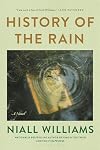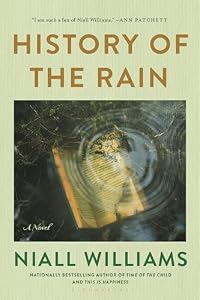
History of the Rain
by Niall Williams
On This Page
Description
We are our stories. We tell them to stay alive or keep alive those who only live now in the telling. In Faha, County Clare, everyone is a long Bedbound in her attic room beneath the falling rain, Plain Ruth Swain is in search of her father. To find him Ruthie must first trace the jutting jaw lines, narrow faces and gleamy skin of the Swains from the restless Reverend Swain, her great-grandfather, to her father, Virgil - via pole-vaulting, leaping salmon, poetry and the three thousand, nine show more hundred and fifty eight books piled high beneath the two skylights in her room. show lessTags
Recommendations

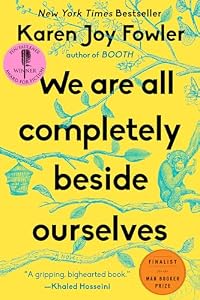
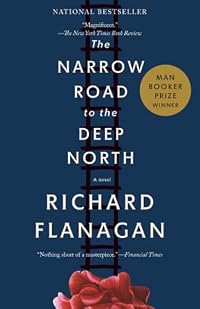
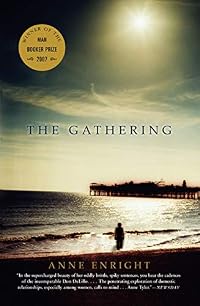

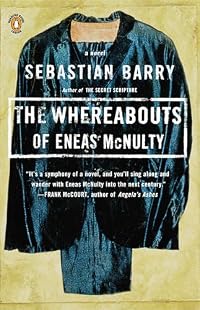








Member Recommendations
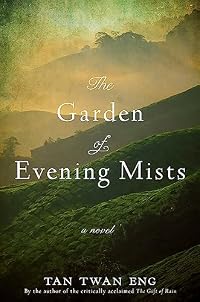
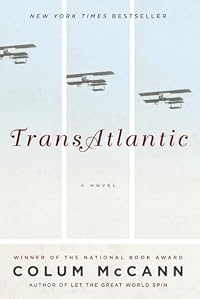
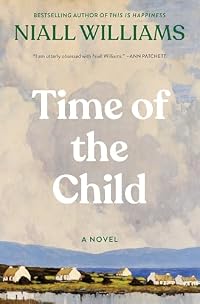
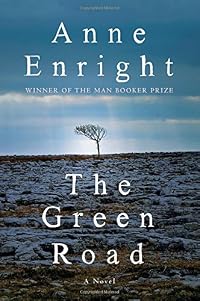
tangledthread there is something about the feel of these two books that remind me of one another.
Member Reviews
The Swain family is plagued with the Impossible Standard. Ruth Swain is ill and bedridden on the family farm in Clare amid the thousands of books her father collected. Her grandfather Swain, an Englishman, emigrated to Ireland when he was given a property by a family in Meath for a heroic act in World War I which he turns into a fine estate big house to show his father he can reach the Impossible Standard, but his father refuses even to visit. (Ireland not being a venue where the Impossible Standard can be met.) And so the grandfather begins to fish and writes a book on the salmon of Ireland as the estate molders into ruin. Ruth's father is brought up in genteel decay, reading and fishing with his father, then goes off to sea, returns show more and lands in Clare where he meets and falls in love with Ruth's mother. They have twins after many childless years, but one twin, the boy, eventually is lost. The father writes poetry and does his best to farm. (I'm not really spoiling, it is clear from early on that something Terrible happened). In the book Ruth never gets out of bed but is writing the story of the family. She refers frequently to the books in her father's library, likes to use capitals to highlight Important Matters. The story skates the thin line between humor and tragedy and never falters -- and with so many loving descriptions, dialogue and humorous (or sad) anecdotes about the people of the village of Faha. Delicious prose throughout.
As one who loves and plays Irish music, I've thought often about what makes Irish culture so unique because it IS unique, somehow embracing both the individual and the community, each needing the other to exist. At any Irish music gathering one can go from breathtaking complexity to heart-rending simplicity to uproarious laughter in seconds. There is never any relinquishing of what matters most: the wonder of being alive. Irish poetry, music, song, dance and literature all celebrate this fact, often, and paradoxically by honoring and remembering those who have died. Certainly [History of the Rain] fits this model. I cannot do the book justice, so I'll stop right here. ***** show less
As one who loves and plays Irish music, I've thought often about what makes Irish culture so unique because it IS unique, somehow embracing both the individual and the community, each needing the other to exist. At any Irish music gathering one can go from breathtaking complexity to heart-rending simplicity to uproarious laughter in seconds. There is never any relinquishing of what matters most: the wonder of being alive. Irish poetry, music, song, dance and literature all celebrate this fact, often, and paradoxically by honoring and remembering those who have died. Certainly [History of the Rain] fits this model. I cannot do the book justice, so I'll stop right here. ***** show less
Because here is what I know: the rain becomes the river that goes to the sea and becomes the rain that becomes the river. Each book is the sum of all the others the writer has read.
Ruth Swain is a bookish young woman who lives in the tiny attic of her parents' house in Faha, County Clare, Ireland. She is disabled by a serious chronic illness, so she is largely confined to her bed, surrounded by a large collection of books from her father's library, and her visitors are limited to her teacher, a young man who is smitten with her, and the remaining members of her family.
Ruth narrates her father's story, in an effort to understand and appreciate him, and in order to do so she must go back in time to learn more about the Swains, how their show more beliefs, eccentricities and personal tragedies have shaped the lives of her great-grandfather, grandfather and father, and in doing so how it has molded her own outlook on life.
The novel is filled with numerous literary references and allegories, and is written in a 19th century style in keeping with Ruth's primary influences, most notably Charles Dickens and Robert Louis Stevenson. She paints an ethereal portrait of County Clare and her family, particularly her father Abraham and her twin brother Aengus, with a lightly humorous touch that belies and alleviates the tragedy and heartache that afflicts the Swains, and her own self depreciating tendencies are in keeping with the Impossible Standard that prevents any of the Swains from achieving true happiness or personal satisfaction.
History of the Rain is an elegiac work about family, an appreciation of literature and poetry, and the way in which one's imagination can be used to influence the art of storytelling, which can be a useful tool to provide healing and closure in the face of personal tragedy. This book is certainly worthy of inclusion in this year's Booker Prize longlist, and I wouldn't be surprised if it made the shortlist as well. show less
Ruth Swain is a bookish young woman who lives in the tiny attic of her parents' house in Faha, County Clare, Ireland. She is disabled by a serious chronic illness, so she is largely confined to her bed, surrounded by a large collection of books from her father's library, and her visitors are limited to her teacher, a young man who is smitten with her, and the remaining members of her family.
Ruth narrates her father's story, in an effort to understand and appreciate him, and in order to do so she must go back in time to learn more about the Swains, how their show more beliefs, eccentricities and personal tragedies have shaped the lives of her great-grandfather, grandfather and father, and in doing so how it has molded her own outlook on life.
The novel is filled with numerous literary references and allegories, and is written in a 19th century style in keeping with Ruth's primary influences, most notably Charles Dickens and Robert Louis Stevenson. She paints an ethereal portrait of County Clare and her family, particularly her father Abraham and her twin brother Aengus, with a lightly humorous touch that belies and alleviates the tragedy and heartache that afflicts the Swains, and her own self depreciating tendencies are in keeping with the Impossible Standard that prevents any of the Swains from achieving true happiness or personal satisfaction.
History of the Rain is an elegiac work about family, an appreciation of literature and poetry, and the way in which one's imagination can be used to influence the art of storytelling, which can be a useful tool to provide healing and closure in the face of personal tragedy. This book is certainly worthy of inclusion in this year's Booker Prize longlist, and I wouldn't be surprised if it made the shortlist as well. show less
We are our stories. We tell them to stay alive or keep alive those who only live now in the telling. That's how it seems to me, being alive for a little while, the teller and the told.
In Faha everyone is a long story.
Howl? Sog. Rain.
Overwrought narrative, plentiful literary references, the human comedy of a rose-tinted poor rural Ireland, but unalloyed reading pleasure if you are able to go with the flow and unselfconsciously cry through the last part of the book.
And so, contrary to my normal fashion, I come to the first of Williams’ Faha novels. This is narrated by Ruth Swain from her sickbed near the present (published 2014), recounting a breathless narrative family history (the same style as Williams’ later books) that flows show more melodiously ever onwards, down to the Shannon and out into the Atlantic.
And although the prose is shining, the story is tragic and slowly you blubber, if you are so inclined. show less
In Faha everyone is a long story.
Howl? Sog. Rain.
Overwrought narrative, plentiful literary references, the human comedy of a rose-tinted poor rural Ireland, but unalloyed reading pleasure if you are able to go with the flow and unselfconsciously cry through the last part of the book.
And so, contrary to my normal fashion, I come to the first of Williams’ Faha novels. This is narrated by Ruth Swain from her sickbed near the present (published 2014), recounting a breathless narrative family history (the same style as Williams’ later books) that flows show more melodiously ever onwards, down to the Shannon and out into the Atlantic.
And although the prose is shining, the story is tragic and slowly you blubber, if you are so inclined. show less
Ruthie Swain's poet-father died recently, and she seeks to rekindle his memory through rereading his entire personal library. She ends up retelling his life and her grandfather's life through this meandering yet meaningful tale of rural County Clare, Ireland. It concludes with deeply emotional moments all the way through the last chapter. I was moved to tears at multiple points, telling my wife, "I hate novels that make me cry because I love novels that make me cry!" That about sums up my experience of History of the Rain.
Because the entire book's events are so interdependent on each other, it's hard to describe a plot starter without ruining the entire book. Ruthie's family experiences a lot of lows - a lot of Irish rain - but finds show more strength in being lifted by its rivers. The tough spots are wedded to the high spots in an inexplicable, ironic unity that only stories can convey. And stories, especially when told in such a masterful way, can heal our own personal hurts and longings. Niall Williams' books seem to do that to me.
I notice his books follow a pattern: The first half is filled with seemingly random minutiae that don't entirely grip the reader. He doesn't have plots that grab one from page one. But the second half of each novel weaves them together into deep pathos that move me internally. If you are willing to be patient and want to feel something at the end of a work, his books are for you.
I'd definitely recommend spending some time in his works. With good reason, his books have been finalists for many literary prizes. He spins yarn masterfully to pull the longings of the human heart - our existence - into the universe's deeper meaning. show less
Because the entire book's events are so interdependent on each other, it's hard to describe a plot starter without ruining the entire book. Ruthie's family experiences a lot of lows - a lot of Irish rain - but finds show more strength in being lifted by its rivers. The tough spots are wedded to the high spots in an inexplicable, ironic unity that only stories can convey. And stories, especially when told in such a masterful way, can heal our own personal hurts and longings. Niall Williams' books seem to do that to me.
I notice his books follow a pattern: The first half is filled with seemingly random minutiae that don't entirely grip the reader. He doesn't have plots that grab one from page one. But the second half of each novel weaves them together into deep pathos that move me internally. If you are willing to be patient and want to feel something at the end of a work, his books are for you.
I'd definitely recommend spending some time in his works. With good reason, his books have been finalists for many literary prizes. He spins yarn masterfully to pull the longings of the human heart - our existence - into the universe's deeper meaning. show less
Oh I didn't want this one to end! It is the 4th N. Williams book i have read in as many months and I am smitten. This one is a love letter to literature and poetry and to family. It is especially trying to figure out the father in the story, who he is and where he comes from with his family layers. It takes place in RAINY western Ireland and the writing is superb, playful, funny, fun, clever and most importantly it is heartfelt. The content is very bookish. It is also at times "meta" with the author/narrator talking directly to the reader. I like this when it happens and when it is done so well.
.
Hide and seek - and salve
This is a novel for those who love to lose themselves and find others between pages whose scent whispers as much as the words. Who want to understand those they’ve loved and lost - through their stories and the ones they tell about them. Who want the company of a bibliophile with a poetic turn of phrase and dash of sharp wit.
“We are our stories. We tell them to stay alive or keep alive those who only live now in the telling.”
This is akin to the recurring theme of words as “rescue teams” in one of my favourite books, Stefansson’s Heaven and Hell (see my review HERE).
Image: Sole:Soul (book as mirror) by Kasper Lorene (Source.)
Narrator and subject
The book tells of three generations of a family in show more rural west Ireland.
“This, Dear Reader, is a river narrative. My chosen style is The Meander.”
It’s steeped in literature, poetry, water, salmon fishing, mortality, mythology, and empty hope. 19-year old Ruth Swain is trying to understand her father, Virgil, through his personal library of 3,958 books (“burned and drowned but undestroyed”), just as he had tried to understand his own father through a shared love of the river. She constantly likens people in her family or village to characters from the classics, and specifies the exact edition her father has, and often, what it smells of. Most of the aromas are literal (“fire and rain”), but some are metaphorical (“with a faint sulphuric whiff of nationalism trapped within the pages”).
It reveals at least as much about Ruth, “the teller and the told”, as those she writes about.
I immediately thought of Cassandra Mortmain, the narrator of I Capture the Castle, though this is a more literary and adult novel. Both are excitable bookish teens, with an eccentric family (including a father who’s a writer), struggling in greatly reduced circumstances. But Ruth is bedbound with an unspecified blood disorder, like a character from, or author of, one of her favourite 19th century novels. When you tune out her penchant for initial caps to indicate Important Things, she's fun, gossipy, insightful, and has a knowledge of literature far exceeding mine. There’s also a smattering of local history, geography, meteorology, and plenty about the mythology and biology of salmon.
There is an old-fashioned other-worldliness to Ruth, so her occasional mentions of things like the Euro, internet, and Aldi jar a little.
Image: Fishing for salmon in the River Shannon (Source.)
Confluence
“I am the child of two languages and two religions, and the most male female and oldest young person to boot.”
Ruth’s mother is a MacCarroll, a family who’ve lived in Faha, County Clare for generations. On her father’s side, her great grandfather was an English vicar whose son came to Ireland to escape the “Impossible Standard” of the Swains, which so often leads to “caustic disappointment”.
“MacCarrolls were always into the stories. But first the stories were inside them.”
“The Swain are the written, the MacCarroll the oral. Ours is a history of tongue marrying paper.”
Water
Ireland is renowned for its elegiac mist and mesmeric rain, and like many Irish authors, Williams emotes via dampness and drenching:
“The rain that pretends it’s not rain, the rain that crosses the Atlantic and comes for its holidays, rain that laughs at the word summer… hoots at what pours, streams, teems, lashes, pelts and buckets down.”
The book’s title (from a poem Ruth’s father writes) is specific. But although rain sets the mood and feeds the river, it’s the river which is far more significant: both giver and thief. And its destination marked and moulded Virgil in his years as a sailor, for which he took, of course, Moby Dick.
Image: Two rivers meet (the Drava and Danube, Croatia) (Source.)
Death and/of hope
“You think you won’t survive it… Why is the world continuing?”
“Grief doesn’t know we invented time. Grief has its own tide and comes and goes in waves.”
There are several tragic and premature deaths, and Ruth’s condition makes her very conscious of her own mortality. Her narration is invariably jaunty, with an occasional dash of satire or cynicism. But in 300+ pages, she lets slip some very negative thoughts about hope - that I tend to agree with:
“It’s hard to live on hope.”
“The more you hope the more you hurt.”
“Hope, you see, takes a long time to die.”
“Hope may or may not be a Thing with Feathers. But it’s definitely a Thing with Claws.”
Quotes
Weather and salmon quotes
• “I am up in the rain here and watching it weep down the skylight.”
• “The fields are wrapped in soft grey tissues of weather.”
• “The sky is huge and jellyfish-grey and there’s no light in it at all. There’s just this watery expanse leaking drops.”
• “It was one of those perfectly still mist-laid mornings, the fields wearing that silver drapery in imitation of Heaven.”
“It’s this warm pink insinuation into the air. It’s lovely and gentle and penetrating and smells of the supernatural.” [Cooked salmon]
Books and reading quotes
• “I love the feel of a book. I love the touch and smell and sound of the pages. I love the handling. A book is a sensual thing… The books were worn in a way they can only get work by hands and eyes and minds; these were the literal original Facebooks.”
• “Pages are thinned down to a fineness that feels holy somehow so that even turning them is kind of sanctifying.” [Bibles]
• “It gets fatter with reading, which it should, because in a way the more you read it the bigger your own experience of the world gets, the fatter your soul.”
• “It’s like there was a current or a pulse on the page and when his eyes connected to it he just made this low thrum.”
• “I didn’t want to be a writer, I wanted to be a reader, which is more rare.”
Family narrative quotes
• “In families it’s hard to see the story. If you’re in it the Plot Points aren’t clearly marked.”
• “We wanted the world to have a plot… Things were consequent only in the sense that they followed… We were becoming a story… But where was the meaning?”
• “Nothing in your own family is unusual.” [Not even your father reading William Blake to the cattle.]
• “Dad moved in [to his new wife and her mother’s home] with the baffled shyness of a character just arriving in a story already underway.”
Poetry quotes
• “A poem is the most impossible thing… its own guarantee of failure.”
• “Poetry is basically where seeing meets sound.”
• “Transcendence is the business of poets.”
Hardship quotes
• “What Time sometimes does to hardship, turn it into fairy tale.”
• “Three muck fields where our cows paddle in the memory of actual grass.”
“Our cattle were unique in being able to eat grass and get thinner. They added to this a propensity for drowning.”
• “I was feeling that kind of weakness you feel where you imagine there must be a valve open somewhere inside you. Somewhere you’re leaking away.”
• “Our house, home to too many metaphors.”
Read, read, read
Ruth’s strongest exhortation is to read. Her favourites include Dickens, RL Stevenson, Emily Dickinson, and especially WB Yeats. She suggests picking a Yeats poem at random. My choice isn’t random; it’s well-known, but it speaks to me and ties in with the idea that hope is a risk:
And if you’ve not read Stefansson’s stunning three-parter (NOT a trilogy), that I mentioned at the start, my exhortation to you is to rectify that (no spoilers):
• Overview
• Part 1, Heaven and Hell
• Part 2, The Sorrow of Angels
• Part 3, The Heart of Man show less
Hide and seek - and salve
This is a novel for those who love to lose themselves and find others between pages whose scent whispers as much as the words. Who want to understand those they’ve loved and lost - through their stories and the ones they tell about them. Who want the company of a bibliophile with a poetic turn of phrase and dash of sharp wit.
“We are our stories. We tell them to stay alive or keep alive those who only live now in the telling.”
This is akin to the recurring theme of words as “rescue teams” in one of my favourite books, Stefansson’s Heaven and Hell (see my review HERE).
Image: Sole:Soul (book as mirror) by Kasper Lorene (Source.)
Narrator and subject
The book tells of three generations of a family in show more rural west Ireland.
“This, Dear Reader, is a river narrative. My chosen style is The Meander.”
It’s steeped in literature, poetry, water, salmon fishing, mortality, mythology, and empty hope. 19-year old Ruth Swain is trying to understand her father, Virgil, through his personal library of 3,958 books (“burned and drowned but undestroyed”), just as he had tried to understand his own father through a shared love of the river. She constantly likens people in her family or village to characters from the classics, and specifies the exact edition her father has, and often, what it smells of. Most of the aromas are literal (“fire and rain”), but some are metaphorical (“with a faint sulphuric whiff of nationalism trapped within the pages”).
It reveals at least as much about Ruth, “the teller and the told”, as those she writes about.
I immediately thought of Cassandra Mortmain, the narrator of I Capture the Castle, though this is a more literary and adult novel. Both are excitable bookish teens, with an eccentric family (including a father who’s a writer), struggling in greatly reduced circumstances. But Ruth is bedbound with an unspecified blood disorder, like a character from, or author of, one of her favourite 19th century novels. When you tune out her penchant for initial caps to indicate Important Things, she's fun, gossipy, insightful, and has a knowledge of literature far exceeding mine. There’s also a smattering of local history, geography, meteorology, and plenty about the mythology and biology of salmon.
There is an old-fashioned other-worldliness to Ruth, so her occasional mentions of things like the Euro, internet, and Aldi jar a little.
Image: Fishing for salmon in the River Shannon (Source.)
Confluence
“I am the child of two languages and two religions, and the most male female and oldest young person to boot.”
Ruth’s mother is a MacCarroll, a family who’ve lived in Faha, County Clare for generations. On her father’s side, her great grandfather was an English vicar whose son came to Ireland to escape the “Impossible Standard” of the Swains, which so often leads to “caustic disappointment”.
“MacCarrolls were always into the stories. But first the stories were inside them.”
“The Swain are the written, the MacCarroll the oral. Ours is a history of tongue marrying paper.”
Water
Ireland is renowned for its elegiac mist and mesmeric rain, and like many Irish authors, Williams emotes via dampness and drenching:
“The rain that pretends it’s not rain, the rain that crosses the Atlantic and comes for its holidays, rain that laughs at the word summer… hoots at what pours, streams, teems, lashes, pelts and buckets down.”
The book’s title (from a poem Ruth’s father writes) is specific. But although rain sets the mood and feeds the river, it’s the river which is far more significant: both giver and thief. And its destination marked and moulded Virgil in his years as a sailor, for which he took, of course, Moby Dick.
Image: Two rivers meet (the Drava and Danube, Croatia) (Source.)
Death and/of hope
“You think you won’t survive it… Why is the world continuing?”
“Grief doesn’t know we invented time. Grief has its own tide and comes and goes in waves.”
There are several tragic and premature deaths, and Ruth’s condition makes her very conscious of her own mortality. Her narration is invariably jaunty, with an occasional dash of satire or cynicism. But in 300+ pages, she lets slip some very negative thoughts about hope - that I tend to agree with:
“It’s hard to live on hope.”
“The more you hope the more you hurt.”
“Hope, you see, takes a long time to die.”
“Hope may or may not be a Thing with Feathers. But it’s definitely a Thing with Claws.”
Quotes
Weather and salmon quotes
• “I am up in the rain here and watching it weep down the skylight.”
• “The fields are wrapped in soft grey tissues of weather.”
• “The sky is huge and jellyfish-grey and there’s no light in it at all. There’s just this watery expanse leaking drops.”
• “It was one of those perfectly still mist-laid mornings, the fields wearing that silver drapery in imitation of Heaven.”
“It’s this warm pink insinuation into the air. It’s lovely and gentle and penetrating and smells of the supernatural.” [Cooked salmon]
Books and reading quotes
• “I love the feel of a book. I love the touch and smell and sound of the pages. I love the handling. A book is a sensual thing… The books were worn in a way they can only get work by hands and eyes and minds; these were the literal original Facebooks.”
• “Pages are thinned down to a fineness that feels holy somehow so that even turning them is kind of sanctifying.” [Bibles]
• “It gets fatter with reading, which it should, because in a way the more you read it the bigger your own experience of the world gets, the fatter your soul.”
• “It’s like there was a current or a pulse on the page and when his eyes connected to it he just made this low thrum.”
• “I didn’t want to be a writer, I wanted to be a reader, which is more rare.”
Family narrative quotes
• “In families it’s hard to see the story. If you’re in it the Plot Points aren’t clearly marked.”
• “We wanted the world to have a plot… Things were consequent only in the sense that they followed… We were becoming a story… But where was the meaning?”
• “Nothing in your own family is unusual.” [Not even your father reading William Blake to the cattle.]
• “Dad moved in [to his new wife and her mother’s home] with the baffled shyness of a character just arriving in a story already underway.”
Poetry quotes
• “A poem is the most impossible thing… its own guarantee of failure.”
• “Poetry is basically where seeing meets sound.”
• “Transcendence is the business of poets.”
Hardship quotes
• “What Time sometimes does to hardship, turn it into fairy tale.”
• “Three muck fields where our cows paddle in the memory of actual grass.”
“Our cattle were unique in being able to eat grass and get thinner. They added to this a propensity for drowning.”
• “I was feeling that kind of weakness you feel where you imagine there must be a valve open somewhere inside you. Somewhere you’re leaking away.”
• “Our house, home to too many metaphors.”
Read, read, read
Ruth’s strongest exhortation is to read. Her favourites include Dickens, RL Stevenson, Emily Dickinson, and especially WB Yeats. She suggests picking a Yeats poem at random. My choice isn’t random; it’s well-known, but it speaks to me and ties in with the idea that hope is a risk:
Aede Wishes for The Cloths of Heaven
Had I the heaven's embroidered cloths,
Enwrought with golden and silver light,
The blue and the dim and the dark cloths
Of night and light and the half-light;
I would spread the cloths under your feet:
But I, being poor, have only my dreams;
I have spread my dreams under your feet;
Tread softly because you tread on my dreams.
- WB Yeats
And if you’ve not read Stefansson’s stunning three-parter (NOT a trilogy), that I mentioned at the start, my exhortation to you is to rectify that (no spoilers):
• Overview
• Part 1, Heaven and Hell
• Part 2, The Sorrow of Angels
• Part 3, The Heart of Man show less
Ruth Swain is a one-of-a-kind narrator who had to leave university because of her "bad blood" that keeps her confined to her small upstairs bedroom with a huge "boat" bed made by her father that is surrounded by his thousands of books that she is obsessively reading and quoting from throughout the novel. It is a celebration of the written word and Irish family life told with humor and emotion. Don't expect a linear story but do expect to fall in love with Ruth's eccentric voice and her whimsical storytelling. “We tell stories. We tell stories to pass the time, to leave the world for a while, or go more deeply into it. We tell stories to heal the pain of living.”
There is a lot of pain in this book. Ireland and the Swain family has show more experienced more than its share of Troubles. Ruth overcomes the pain in her life through words. She reads and writes and weaves the stories of her family and being Irish into a wonderful tribute to ordinary life seen through the eyes of the freshness of youth and longing for times past while anticipating what lies ahead. There are so many lyrical quotes that my book has notes and underlinings galore, something I don't ordinarily do when I'm reading. The River Shannon and the ever-present rain add to the mood: "Days like today the whole house is in the river. The fields are wrapped in soft grey tissues of weather. You can't see anything but you can hear the water flowing and flowing as if the whole country is washing away out past us… It started raining here in the sixteenth century and it hasn't stopped." (40, 41)
This is my first book by Niall Williams. He writes in the voice of a young woman so well that I want to read more of his work to see if he can amaze me again. I love it when I discover a "new" author. I forgot to mention that this book was longlisted for the 2014 Booker Prize. I am shocked that it didn't even make the short list as it certainly made my short list of 5-star books. show less
There is a lot of pain in this book. Ireland and the Swain family has show more experienced more than its share of Troubles. Ruth overcomes the pain in her life through words. She reads and writes and weaves the stories of her family and being Irish into a wonderful tribute to ordinary life seen through the eyes of the freshness of youth and longing for times past while anticipating what lies ahead. There are so many lyrical quotes that my book has notes and underlinings galore, something I don't ordinarily do when I'm reading. The River Shannon and the ever-present rain add to the mood: "Days like today the whole house is in the river. The fields are wrapped in soft grey tissues of weather. You can't see anything but you can hear the water flowing and flowing as if the whole country is washing away out past us… It started raining here in the sixteenth century and it hasn't stopped." (40, 41)
This is my first book by Niall Williams. He writes in the voice of a young woman so well that I want to read more of his work to see if he can amaze me again. I love it when I discover a "new" author. I forgot to mention that this book was longlisted for the 2014 Booker Prize. I am shocked that it didn't even make the short list as it certainly made my short list of 5-star books. show less
Members
- Recently Added By
Published Reviews
ThingScore 50
Williams's rendering of the desolation of grief is affecting, as is the sympathy he evokes for the spirited Ruth's plight. Yet he can't seem to resist cliche and sentimentality, leaving the waterlogged reader longing for dry land.
added by ozzer
Lists

Recommend the 20 best books you've read in the last five years
2,167 works; 601 members

Man Booker Prize Longlist 2014
13 works; 9 members

Best Contemporary Literary Fiction (Around the Last 30 Years)
388 works; 124 members

Best 21st Century Books (So Far)
670 works; 86 members
Booker Prize
491 works; 62 members

Top Five Books of 2014
1,064 works; 397 members

Five star books
1,755 works; 107 members

Books Read in 2015
3,298 works; 129 members

Books With Water Words in the Title
186 works; 12 members

Books Read in 2024
4,623 works; 126 members
Talk Discussions
Past Discussions
2014 Booker Prize longlist: History of the Rain in Booker Prize (October 2015)
Author Information

21+ Works 4,860 Members
Author and playwright Niall Williams was born in Dublin in 1958. He received a Master's degree in Modern American Literature from University College Dublin, where he also studied English and French literature. In 1980, he moved to New York and worked as a copywriter for Avon Books. In 1985, he moved back to Ireland to become a full-time writer. show more His first four books were co-written with his wife and deal with their life together in Kiltumper, Ireland. On his own, he has written three plays and five novels. His first novel, Four Letters of Love, became an international bestseller. (Bowker Author Biography) show less
Some Editions
Awards and Honors
Awards
Common Knowledge
- Canonical title
- History of the Rain
- Original title
- History of the Rain
- Original publication date
- 2014
- People/Characters
- Virgil Swain; Mary MacCarroll Swain; Ruth Swain; Aeney Swain; Vincent Cunningham; Mrs Quinty
- Important places
- Faha, County Cork, Ireland
- Epigraph
- Everything is on its way to the river
Ted Hughes - Dedication
- For Chris, in the rain
- First words
- The longer my father lived in this world the more he knew there was another to come.
- Quotations
- We are our stories.
We tell stories to heal the pain of living. - Last words
- (Click to show. Warning: May contain spoilers.)and I Ruth Swain will know that love is real and forgiveness complete because, at last, unimaginably, implausibly, impossibly, the rain will have stopped.
Classifications
Statistics
- Members
- 730
- Popularity
- 38,491
- Reviews
- 37
- Rating
- (4.16)
- Languages
- English, German, Italian, Spanish
- Media
- Paper, Audiobook, Ebook
- ISBNs
- 22
- ASINs
- 7