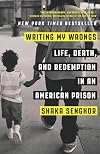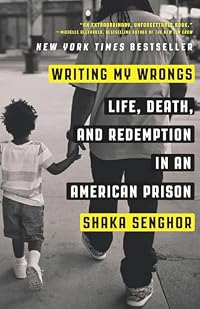
Writing My Wrongs: Life, Death, and Redemption in an American Prison
by Shaka Senghor
On This Page
Description
NEW YORK TIMES BESTSELLER • An “extraordinary, unforgettable” (Michelle Alexander, author of The New Jim Crow) memoir of redemption and second chances amidst America’s mass incarceration epidemic, from a member of Oprah’s SuperSoul 100Shaka Senghor was raised in a middle-class neighborhood on Detroit’s east side during the height of the 1980s crack epidemic. An honor roll student and a natural leader, he dreamed of becoming a doctor—but at age eleven, his parents’ marriage show more began to unravel, and beatings from his mother worsened, which sent him on a downward spiral. He ran away from home, turned to drug dealing to survive, and ended up in prison for murder at the age of nineteen, full of anger and despair.
Writing My Wrongs is the story of what came next. During his nineteen-year incarceration, seven of which were spent in solitary confinement, Senghor discovered literature, meditation, self-examination, and the kindness of others—tools he used to confront the demons of his past, forgive the people who hurt him, and begin atoning for the wrongs he had committed. Upon his release at age thirty-eight, Senghor became an activist and mentor to young men and women facing circumstances like his. His work in the community and the courage to share his story led him to fellowships at the MIT Media Lab and the Kellogg Foundation and invitations to speak at events like TED and the Aspen Ideas Festival.
In equal turns, Writing My Wrongs is a page-turning portrait of life in the shadow of poverty, violence, and fear; an unforgettable story of redemption; and a compelling witness to our country’s need for rethinking its approach to crime, prison, and the men and women sent there. show less
Tags
Recommendations





















Member Reviews
I listened to this on audio, read by Shaka himself. While the writing was, at times, a bit wobbly with an over-reliance on creative writing class similes, Shaka's voice is powerful, and his story even more so. He details his coming of age in Detroit, how he became entangled in the drug trade and violence of the 1980s, and how he killed a man and went to prison for it, serving 19 years, seven of them in solitary confinement.
He writes about his anger, first at other people and the system, and then at himself (but also at the system which is certainly justified). He is clear-eyed and honest about his culpability, but the portrait of the prison system that he experienced is grim and horrifying. Ultimately, while Shaka's story is one of show more redemption, second chances, and making good, what will probably stay with me most after reading this memoir is the anger and frustration I feel at a society that fails under-privileged children on so many levels and then tosses them away like so much trash when they become adults.
4 sad and angry stars show less
He writes about his anger, first at other people and the system, and then at himself (but also at the system which is certainly justified). He is clear-eyed and honest about his culpability, but the portrait of the prison system that he experienced is grim and horrifying. Ultimately, while Shaka's story is one of show more redemption, second chances, and making good, what will probably stay with me most after reading this memoir is the anger and frustration I feel at a society that fails under-privileged children on so many levels and then tosses them away like so much trash when they become adults.
4 sad and angry stars show less
Shaka Sengor was guilty. He killed a man in cold blood during a dispute over a drugs. He was convicted of murder in the second degree and went to prison for fifteen to fourty years. For much of his sentence he was not a model inmate. He had a botched escape attempt under his belt. He spent time in solitary (the hole) for assaulting prison guards. But during his nineteen years in prison he was transformed through reading, spiritual practice, and ultimately by writing his wrongs: practicing the cathartic self reflection of journaling, writing fiction and letters.
27297084Despite Sengor's guilt, don't think for a moment that he wasn't a victim. Writing My Wrongs: Life, Death, and Redemption in an American Prison tells the story of his show more childhood, his experience of abuse, and his broken home, and how he was seduced into the drug trade. It also tells the story of the anger and fear he felt when he was shot as a seventeen year old and the lack of compassion he experienced from physicians and law enforcement. The experience made him afraid and angry enough to carry a gun. At nineteen, he killed a man aduring a drug transaction (Senghor was a crack dealer).
The injustice Senghor faced inside Michigan's prisons is harrowing. He was the victim of systemic injustice and racism from prison guards. He witnessed the horrows of prison rape. He participated in violence. He experienced the psychological wounding of four-and-a-half years in solitary confinement after he assaulted a guard (his confrontation with the guard was a n0-win-situation).
Ultimately this book is a story of hope. Senghor comes to own his past, and the things he did wrong. He doesn't make excuses for himself, but sets out to make amends through writing, community activism and mentoring youth. He finds love with an ctivist he begins a correspondence with. His transformation began mid-way through his prison sentence when the godmother of his victim wrote to him asking the why question. Senghor wrote back his regret and she forgave him. That began a correspondence (described in the prologue and afterword of this book). That set the stage for Senghor to grow and change.
I like memoirs and this is a good one. It is a compelling story. I recommend the book, but issues caution to readers which would be disturbed by violence (and language). Some of the events described are ugly: rape, feces fights, violence, abject racism. This may be difficult for some readers to take. Other books, such as Michelle Alexander,s The New Jim Crow or Bryan Stevenson's Just Mercy tell the tale of of our broken legal system. This is an insider's experience. I give this book four stars.
Note: I received this book from Blogging for Books in exchange for my honest review. show less
27297084Despite Sengor's guilt, don't think for a moment that he wasn't a victim. Writing My Wrongs: Life, Death, and Redemption in an American Prison tells the story of his show more childhood, his experience of abuse, and his broken home, and how he was seduced into the drug trade. It also tells the story of the anger and fear he felt when he was shot as a seventeen year old and the lack of compassion he experienced from physicians and law enforcement. The experience made him afraid and angry enough to carry a gun. At nineteen, he killed a man aduring a drug transaction (Senghor was a crack dealer).
The injustice Senghor faced inside Michigan's prisons is harrowing. He was the victim of systemic injustice and racism from prison guards. He witnessed the horrows of prison rape. He participated in violence. He experienced the psychological wounding of four-and-a-half years in solitary confinement after he assaulted a guard (his confrontation with the guard was a n0-win-situation).
Ultimately this book is a story of hope. Senghor comes to own his past, and the things he did wrong. He doesn't make excuses for himself, but sets out to make amends through writing, community activism and mentoring youth. He finds love with an ctivist he begins a correspondence with. His transformation began mid-way through his prison sentence when the godmother of his victim wrote to him asking the why question. Senghor wrote back his regret and she forgave him. That began a correspondence (described in the prologue and afterword of this book). That set the stage for Senghor to grow and change.
I like memoirs and this is a good one. It is a compelling story. I recommend the book, but issues caution to readers which would be disturbed by violence (and language). Some of the events described are ugly: rape, feces fights, violence, abject racism. This may be difficult for some readers to take. Other books, such as Michelle Alexander,s The New Jim Crow or Bryan Stevenson's Just Mercy tell the tale of of our broken legal system. This is an insider's experience. I give this book four stars.
Note: I received this book from Blogging for Books in exchange for my honest review. show less
I find it hard to imagine what life might have been like if I had been born in one of several hardship areas in the world, whether it be living under the Taliban in Afghanistan, under ISIS in Syria, or in one of the poor inner-city neighborhoods like in Newark, Camden, or Chicago in the U.S. Even though I have read magazine and newspaper stories about life in inner-city ghettos of today, with their failed schools, excessive high school drop-out rates, fatherless families, widespread drug use, high crime and murder rates, poverty, disproportionate incarceration of young black men, etc., I truly don't believe I can fully understand what it must be like, trying to break the bonds of poverty while living in that environment.
One way to show more appreciate it (if that's the right word) is by reading Shake Senghor's recent memoir, "Writing My Wrongs". In his book, he discusses his troubled youth in Detroit, his becoming a drug peddler, being shot as a teenager, his two decade imprisonment for 2nd degree murder, and his ultimate transition to a writer, counselor for troubled youth, and a family man after his release from prison. His story was one of changing from a bright young student to a homeless 14 year old, then living in the streets and supporting himself by selling drugs. He starting carrying a gun for protection, and soon after used it during a confrontation and killed a man. After being convicted of 2nd degree murder, he spent almost 20 years in prison, seven years of which was in solitary confinement. Hardly a model prisoner initially, he ultimately learned to control his temper and street-tough ways, in part through reading books from the prison library. Following his parole, he became a speaker, a counsellor, a writer, a family man, and a useful member of society.
The story is told in a now-and-then manner, alternating between the present and his past life. While some writers and editors seem to like that style, I favor a more ordered and chronological presentation, but that's just personal preference. Even though there's some time adjustments to make while reading, it's not a serious distraction to the story. "Writing My Wrongs" is a story of one man’s redemption, and it's a moving story.
show less
One way to show more appreciate it (if that's the right word) is by reading Shake Senghor's recent memoir, "Writing My Wrongs". In his book, he discusses his troubled youth in Detroit, his becoming a drug peddler, being shot as a teenager, his two decade imprisonment for 2nd degree murder, and his ultimate transition to a writer, counselor for troubled youth, and a family man after his release from prison. His story was one of changing from a bright young student to a homeless 14 year old, then living in the streets and supporting himself by selling drugs. He starting carrying a gun for protection, and soon after used it during a confrontation and killed a man. After being convicted of 2nd degree murder, he spent almost 20 years in prison, seven years of which was in solitary confinement. Hardly a model prisoner initially, he ultimately learned to control his temper and street-tough ways, in part through reading books from the prison library. Following his parole, he became a speaker, a counsellor, a writer, a family man, and a useful member of society.
The story is told in a now-and-then manner, alternating between the present and his past life. While some writers and editors seem to like that style, I favor a more ordered and chronological presentation, but that's just personal preference. Even though there's some time adjustments to make while reading, it's not a serious distraction to the story. "Writing My Wrongs" is a story of one man’s redemption, and it's a moving story.
show less
Memoirs are always a tricky type of book to review. I want to be clear that my review is strictly on this book, and is no reflection on the author personally.
The author's story is heartbreaking, though, sadly, not unique. It's a reflection of our society, our priorities, and our broken 'justice' system. If someone had stepped in early, when this young man's life was first derailed, and all the signs were there, then perhaps his life would have turned out much differently.
Overall, the writing is fine, though not as engaging as I'd have liked. I didn't get a good sense of emotion and detail. For instance, the author spent several years in prison isolation, but he makes little mention of what that experience did to him psychologically. show more While he does mention a few other inmates who go crazy and/or attempt suicide, he doesn't elaborate at all on his personal experience. Long-term isolation is equated to torture, and can cause permanent psychological damage, so I'd have liked to really understand how he felt during this time.
My major issue was with the structure of the book. It's told in back-and-forth time, in two concurrent timelines. One timeline starts with him in prison, and goes through until present day. The other starts when he was a child, and runs to the time he went to prison. These two timelines are alternated, with dates at the start of sections. I could see no reason for this structure, and in fact found this technique made it more difficult to understand the trajectory of his story. I'd have preferred this told in sequential order, so that readers could get a clear sense of his downward spiral, and then his own redemption.
What this book shines in, without the author necessarily trying to give this message, is that prison doesn't work. Senghor did not find redemption because of prison, but in spite of it.
Shaka Senghor is certainly an inspiring man with an important story to share.
*I received a copy from the publisher, via Blogging For Books, in exchange for my honest review.* show less
The author's story is heartbreaking, though, sadly, not unique. It's a reflection of our society, our priorities, and our broken 'justice' system. If someone had stepped in early, when this young man's life was first derailed, and all the signs were there, then perhaps his life would have turned out much differently.
Overall, the writing is fine, though not as engaging as I'd have liked. I didn't get a good sense of emotion and detail. For instance, the author spent several years in prison isolation, but he makes little mention of what that experience did to him psychologically. show more While he does mention a few other inmates who go crazy and/or attempt suicide, he doesn't elaborate at all on his personal experience. Long-term isolation is equated to torture, and can cause permanent psychological damage, so I'd have liked to really understand how he felt during this time.
My major issue was with the structure of the book. It's told in back-and-forth time, in two concurrent timelines. One timeline starts with him in prison, and goes through until present day. The other starts when he was a child, and runs to the time he went to prison. These two timelines are alternated, with dates at the start of sections. I could see no reason for this structure, and in fact found this technique made it more difficult to understand the trajectory of his story. I'd have preferred this told in sequential order, so that readers could get a clear sense of his downward spiral, and then his own redemption.
What this book shines in, without the author necessarily trying to give this message, is that prison doesn't work. Senghor did not find redemption because of prison, but in spite of it.
Shaka Senghor is certainly an inspiring man with an important story to share.
*I received a copy from the publisher, via Blogging For Books, in exchange for my honest review.* show less
A wonderful and inspiring read about what it takes to pick yourself back up and make a difference. Convicted of murder at the age of nineteen, Shaka realized that he would be facing nearly two decades behind bars. He wouldn't get to raise either of his kids, and he knew that he was straining his relationship with his family. How had it gone downhill so fast? Shaka examines his life up until the moment he fired his gun and analyzes what he was going through, what he could have done, and how it set him up for life in prison. His prison experiences are harrowing to say the least. The rape, shankings, emotional abuse, and degradation sound almost unbearable, but after many years and a lot of soul searching, Shaka was able to think show more positively about his life and future and tried to help others locked up with him to do the same by being a mentor and leader. After his release, Shaka remained true to his word and set out to make a difference to those living in the slums of Detroit. He's an empowering speaker, dedicated father, and proof that we all have the power to turn our lives around. An emotional and necessary read!
I received this book for free from Blogging for Books in return for my honest, unbiased opinion. show less
I received this book for free from Blogging for Books in return for my honest, unbiased opinion. show less
This is an interesting book with a solid storyline. The author is believable, honest and very detailed. It's a story I could not connect with, though I welcomed seeing a candid view into what life can be for some of the youth in our communities. His background, crimes, and path to redemption at the end are covered well. It might even make a good movie, but it's not a book I could easily recommend to any of my friends. I appreciate his candor and his writing is solid.
In this candid, emotional, and thought-provoking memoir, Shaka Senghor tells his story about his childhood, family life, imprisonment, and finally his redemption. His writing is insightful, thought-provoking, and offers encouragement and hope to those who find themselves imprisoned. Highly recommended.
Members
- Recently Added By
Author Information
4+ Works 259 Members
Shaka Senghor was raised in a middle class family in Detroit, Michigan. He ran away from his abusive home life at age 14 and got into drugs. In 1991 he shot and killed a man. He spent 19 years in prison. He discovered redemption and responsibility through literature, his own writing, and the kindness of others. In 2010 he was released from prison. show more He has worked as former Director's Fellow at the MIT Media Lab and the founder of The Atonement Project. Currently he serves as the Director of Strategy and Innovation with #cut50. He is the author of six books including the bestseller, Writing My Wrongs: Life, Death, and Redemption in an American Prison. (Bowker Author Biography) show less
Classifications
- Genres
- Nonfiction, Biography & Memoir, General Nonfiction, Politics and Government
- DDC/MDS
- 365.6092 — Society, Government, and Culture Social problems and social services Punishment Inmates History, geographic treatment, biography Biography
- LCC
- HV9468 .S46 .S46 — Social sciences Social pathology. Social and public welfare. Criminology Social pathology. Social and public welfare. Criminal justice administration Penology. Prisons. Corrections By region or country
- BISAC
Statistics
- Members
- 217
- Popularity
- 149,865
- Reviews
- 7
- Rating
- (4.24)
- Languages
- English
- Media
- Paper, Audiobook, Ebook
- ISBNs
- 6
- ASINs
- 3