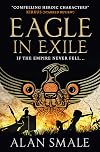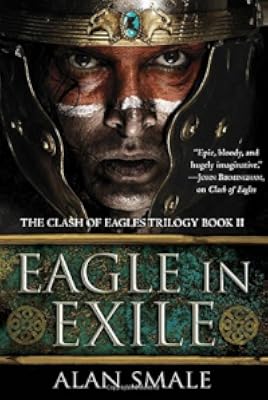
On This Page
Description
"Perfect for fans of Bernard Cornwell, Steve Berry, Naomi Novik, and Harry Turtledove, Alan Smale's gripping alternate history series imagines a world in which the Roman Empire has survived long enough to invade North America in 1218. Now the stunning story carries hero Gaius Marcellinus deeper into the culture of an extraordinary people--whose humanity, bravery, love, and ingenuity forever change his life and destiny. In A.D. 1218, Praetor Gaius Marcellinus is ordered to conquer North show more America and turning it into a Roman province. But outside the walls of the great city of Cahokia, his legion is destroyed outright; Marcellinus is the only one spared. In the months and years that follow, Marcellinus comes to see North America as his home and the Cahokians as his kin. He vows to defend these proud people from any threat, Roman or native. After successfully repelling an invasion by the fearsome Iroqua tribes, Marcellinus realizes that a weak and fractured North America won't stand a chance against the returning Roman army. Worse, rival factions from within threaten to tear Cahokia apart just when it needs to be most united and strong. Marcellinus is determined to save the civilization that has come to mean more to him than the empire he once served. But to survive the swords of Roma, he first must avert another Iroqua attack and bring the Cahokia together. Only with the hearts and souls of a nation at his back can Marcellinus hope to know triumph. Advance praise for Eagle in Exile "[Eagle in Exile] has the pace and scope of a Michener or Uris epic. Smale's action scenes slash across page after page, intense and bloody. Grab your dagger and sword, for the battle continues."--Kirkus Reviews (starred review) Praise for Alan Smale's Clash of Eagles "Epic, bloody, and hugely imaginative."--John Birmingham, author of the Dave vs. the Monsters series "Epic in its sweep, exciting in its narrative, and eyeball-kick-sharp in its details."--Nancy Kress, Nebula and Hugo award-winning author of Beggars in Spain "Authoritatively researched and compellingly told, Clash of Eagles is a modern masterpiece of what-if speculation."--Stephen Baxter, Philip K. Dick Award-winning author of The Time Ships "Alan Smale has done remarkable work with the world-building in Clash of Eagles. Yet what follows is more than a standard clash-of-cultures yarn, for there are other forces in play in this alternate North America. Can the determination and ingenuity of one man change the fate of a continent? I'm eager to find out."--Harry Turtledove, New York Times bestselling author of How Few Remain "Just when it seems there is nothing new in [alternate] history comes this debut."--Library Journal (starred review) "Intriguingly original."--Kirkus Reviews"-- "The follow-up novel to Clash of Eagles. In the two years since losing his legion on the banks of the mighty Mizipi River, Gaius has integrated himself into Cahokian society, made friends among his former adversaries, and thwarted two invasions by their longtime foe, the Iroqua. But with a Roman invasion looming on the horizon and a coup brewing in Cahokia, Gaius and company find themselves fighting one battle after another, all while trying to unite the peoples of North America to stand against Roma. Can one man sway the fate of a continent?"-- show lessTags
Recommendations







Member Reviews
Whee! This is a well thought-out alternate history, and very fun to read. Smale’s managed not only to realistically, sympathetically recreate a Native culture and to portray the impacts Roman contact could have on one (literacy! infantry! saunas!), but he also tackles big issues like ethics, racism, sexism, colonialism, and autonomy and does them well. And it’s pretty fast-paced too, for a book that spans years! With some very excellent battle scenes, a good bit of travel narrative, and a balanced romance.
Also the Cahokians have an air combat division, which sort of makes everything better, even if I have to wonder if they actually did.
7/10
Also the Cahokians have an air combat division, which sort of makes everything better, even if I have to wonder if they actually did.
7/10
Originally posted on Tales to Tide You Over
Eagle in Exile is a continuation of the alternate history begun with Clash of Eagles and upholds the anthropological approach of the first book. I’m undecided about the actual beginning because it reads more as a way to remind us of the first book through summary and get us back into the world. The indecision comes because it’s effective in that purpose despite being one step distant from the narrative. That I recognized both main and secondary characters as they appeared speaks to the strength of the first book as well, and to the many narratives brought to life within it. The interwoven narratives of the characters and their conflicting points of view that made the first book so memorable show more soon take over the second, rapidly leaving the distance of the first few pages behind.
As with Clash of Eagles, this story revolves around Gaius Marcellinus, a Roman military leader who is captured by an early American civilization of which little has survived to modern day beyond extensive mound structures hinting at a sophistication once believed absent from the North American tribes. While much of their culture is therefore speculative, Smale once again builds both viable city-state and tribal cultures with some aspects in common with European nations but drawn from Native American cultures or his own extrapolation. Smale also includes a glossary of references he used to create his fictional version of the peoples he describes.
Cahokia is not a simple analog of either group, but has elements that build from its social and physical structures. This is a major strength to the series and ties strongly to the other strength in recognizing how the continent was not populated by a single people, or even a closely related one but rather numerous tribes each with their own distinct culture from the Iroqua to the mound builders to the plains tribes to the far distant People of the Sun and more. He tackles the questions of cultural continuation, contamination, and survival through the introduction of one out-of-place element–Gaius.
Gaius is a man between worlds caught in a battle of loyalty, love, and survival. The land of his birth lays firm claims, and yet so does this land of his rebirth, a process bathed in the blood of his soldiers, but also of the many natives they slaughtered while carrying out their mission to find gold for their emperor.
He is a man raised both to war and to Roman superiority whose desperate search for a way to prove himself useful, and therefore worth keeping alive, makes him question everything he’s ever known. He learns the value of peace, both in saving lives and in encouraging prosperity, but neither his adopted people nor his Roman fellows share in this vision. It’s easy for them to see ulterior motives in his actions, while this failure to understand makes him, and all who support him, vulnerable. It says a lot for the man that Gaius attempts to help everyone without going against either loyalty no matter how things might appear and despite resistance on every side. He has become a man of the people, all the people, and seeks a better path so they can all thrive.
Yes, he’s gone native as the Romans accuse, but not so far as to work against Rome, nor so far as to fail to recognize the potential value of peace over war. Still, the steps he takes to achieve that aim are ones sure to set Rome against him while they do not endear him to his adopted people either. He knows Rome will only negotiate with a force of equal strength. If the Roman army can take what it needs, it will do so. Gaius sees only one path to prevent this, a way setting him against both history and tradition in the new world.
It’s the last that forms the heart of this novel. Gaius risks everything to convince Cahokia and the other neighboring cities and tribes to form a cohesive whole. Only together can they hope to stand against the Roman might. This may sound simple, but it’s far from it as few of those in power are willing to listen, and those that do soon find their own troubles to face. The different groups have a long history of battle and loss to revenge. Despite all of that, Gaius is not alone. Between the friends he’s made among the Cahokians, and some surprise additions, he sets out to change a world that shouldn’t have to change and yet is destined for elimination if he cannot bring them to see the need.
This is another epic tale focused firmly on cultural conflict and negotiation, but don’t think it’s a bunch of people sitting around talking. There’s little chance for that, and even when negotiations are sought, they come with brutal rituals to prove Gaius has the strength to speak.
Peace might be Gaius’s goal, but there are many battles to be fought and much to uncover on the path to this aim. Even so, right when you, and Gaius, think you know the whole of it, there is more going on than it appears.
Eagle in Exile offers a complex, complicated, alternate history with a strong cultural foundation that is well worth the read.
P.S. I received this title from the publisher through NetGalley in return for an honest review. show less
Eagle in Exile is a continuation of the alternate history begun with Clash of Eagles and upholds the anthropological approach of the first book. I’m undecided about the actual beginning because it reads more as a way to remind us of the first book through summary and get us back into the world. The indecision comes because it’s effective in that purpose despite being one step distant from the narrative. That I recognized both main and secondary characters as they appeared speaks to the strength of the first book as well, and to the many narratives brought to life within it. The interwoven narratives of the characters and their conflicting points of view that made the first book so memorable show more soon take over the second, rapidly leaving the distance of the first few pages behind.
As with Clash of Eagles, this story revolves around Gaius Marcellinus, a Roman military leader who is captured by an early American civilization of which little has survived to modern day beyond extensive mound structures hinting at a sophistication once believed absent from the North American tribes. While much of their culture is therefore speculative, Smale once again builds both viable city-state and tribal cultures with some aspects in common with European nations but drawn from Native American cultures or his own extrapolation. Smale also includes a glossary of references he used to create his fictional version of the peoples he describes.
Cahokia is not a simple analog of either group, but has elements that build from its social and physical structures. This is a major strength to the series and ties strongly to the other strength in recognizing how the continent was not populated by a single people, or even a closely related one but rather numerous tribes each with their own distinct culture from the Iroqua to the mound builders to the plains tribes to the far distant People of the Sun and more. He tackles the questions of cultural continuation, contamination, and survival through the introduction of one out-of-place element–Gaius.
Gaius is a man between worlds caught in a battle of loyalty, love, and survival. The land of his birth lays firm claims, and yet so does this land of his rebirth, a process bathed in the blood of his soldiers, but also of the many natives they slaughtered while carrying out their mission to find gold for their emperor.
He is a man raised both to war and to Roman superiority whose desperate search for a way to prove himself useful, and therefore worth keeping alive, makes him question everything he’s ever known. He learns the value of peace, both in saving lives and in encouraging prosperity, but neither his adopted people nor his Roman fellows share in this vision. It’s easy for them to see ulterior motives in his actions, while this failure to understand makes him, and all who support him, vulnerable. It says a lot for the man that Gaius attempts to help everyone without going against either loyalty no matter how things might appear and despite resistance on every side. He has become a man of the people, all the people, and seeks a better path so they can all thrive.
Yes, he’s gone native as the Romans accuse, but not so far as to work against Rome, nor so far as to fail to recognize the potential value of peace over war. Still, the steps he takes to achieve that aim are ones sure to set Rome against him while they do not endear him to his adopted people either. He knows Rome will only negotiate with a force of equal strength. If the Roman army can take what it needs, it will do so. Gaius sees only one path to prevent this, a way setting him against both history and tradition in the new world.
It’s the last that forms the heart of this novel. Gaius risks everything to convince Cahokia and the other neighboring cities and tribes to form a cohesive whole. Only together can they hope to stand against the Roman might. This may sound simple, but it’s far from it as few of those in power are willing to listen, and those that do soon find their own troubles to face. The different groups have a long history of battle and loss to revenge. Despite all of that, Gaius is not alone. Between the friends he’s made among the Cahokians, and some surprise additions, he sets out to change a world that shouldn’t have to change and yet is destined for elimination if he cannot bring them to see the need.
This is another epic tale focused firmly on cultural conflict and negotiation, but don’t think it’s a bunch of people sitting around talking. There’s little chance for that, and even when negotiations are sought, they come with brutal rituals to prove Gaius has the strength to speak.
Peace might be Gaius’s goal, but there are many battles to be fought and much to uncover on the path to this aim. Even so, right when you, and Gaius, think you know the whole of it, there is more going on than it appears.
Eagle in Exile offers a complex, complicated, alternate history with a strong cultural foundation that is well worth the read.
P.S. I received this title from the publisher through NetGalley in return for an honest review. show less
While "Eagle In Exile" probably gives enough context at the beginning of the novel to work as a standalone, as the second book in a trilogy, I'd strongly recommend starting with "Clash of Eagles" first. EiE continues the story of Gaius Marcellinus and his clash between two worlds: the Roman and the Cahokian civilization he's come to love. While "Clash" dealt more with the "fish out of water" phenomenon of being thrust into a new culture, "Exile" delves into more thoughtful territory of the consequences of the ripples Gaius has had on the Cahokian civilization since his arrival. One thing I appreciate is the realism of the conflict: Gaius comes to love Cahokia and its people, but never goes the "Dances with Wolves"/"Avatar" route of show more completely shunning his roots, preferring instead to remain a go-between in brokering a peace in the seemingly inevitable Rome/Cahokia conflict. His attempts to bring Roman technology and ideas to Cahokia in the name of improving their lives do have consequences that linger. The focus on cultures in conflict, negotiation, politics, and the effect of technology all are treated thoughtfully in a way many stories in this vein aren't. It's a complex alternate history with rich worldbuilding and politics, and well worth a read. The one thing I did find missing thus far was the usual devastating cross-cultural effects of disease, and I'd be interested to see if that features in book 3. show less
My complaints about the second book in Smale’s Clash of Eagles trilogy are nearly identical to those
of the first: implausible warrior babes, a curious lack of disease exchanges between Old and New Worlds, and loose enough speculation to be questionable alternate history.
In this volume, Smale does tell us the deviation point of Roman history that produced this world where Rome stomps across Eurasia in the 13th century: Septimus Severus’ son Geta kills his brother Caracalla thus stabilizing the Empire. (Smale doesn’t explain how this work exactly. The higher taxes and extended citizenship of Caracalla avoided?)
I have some trouble believing, in a world of such a vigorous Roman Empire, Islam would have come into existence, but it show more seems to.
That’s the bad.
The strengths are similar to the first. Characterizations of cultures and individuals are realistic, particularly the creation of a surrogate family for Roman protagonist Marcellinus with the warrior woman Sintikala and her daughter Kimimela.
As you would hope with the second volume, Smale opens his book up in every sense. Marcellinus gets involved in inter-tribal diplomacy and coups in Cahokia. The plot moves to places south and west of Cahokia (modern day St. Louis) including a buffalo hunt on the Great Plains.
And Romans familiar and unfamiliar make their appearance way sooner than expected. The main suspense of the novel is just how Marcellinus is going to keep all those oaths he made to his new Cahokian friends and his fellow Romans.
And, as you might in an alternate history of the 13th century, there is a force to be reckoned with out of the Asian steppes.
So, reservations aside, I’m still interested in how all this is going to work out and am eager for the story’s conclusion. show less
of the first: implausible warrior babes, a curious lack of disease exchanges between Old and New Worlds, and loose enough speculation to be questionable alternate history.
In this volume, Smale does tell us the deviation point of Roman history that produced this world where Rome stomps across Eurasia in the 13th century: Septimus Severus’ son Geta kills his brother Caracalla thus stabilizing the Empire. (Smale doesn’t explain how this work exactly. The higher taxes and extended citizenship of Caracalla avoided?)
I have some trouble believing, in a world of such a vigorous Roman Empire, Islam would have come into existence, but it show more seems to.
That’s the bad.
The strengths are similar to the first. Characterizations of cultures and individuals are realistic, particularly the creation of a surrogate family for Roman protagonist Marcellinus with the warrior woman Sintikala and her daughter Kimimela.
As you would hope with the second volume, Smale opens his book up in every sense. Marcellinus gets involved in inter-tribal diplomacy and coups in Cahokia. The plot moves to places south and west of Cahokia (modern day St. Louis) including a buffalo hunt on the Great Plains.
And Romans familiar and unfamiliar make their appearance way sooner than expected. The main suspense of the novel is just how Marcellinus is going to keep all those oaths he made to his new Cahokian friends and his fellow Romans.
And, as you might in an alternate history of the 13th century, there is a force to be reckoned with out of the Asian steppes.
So, reservations aside, I’m still interested in how all this is going to work out and am eager for the story’s conclusion. show less
If you like alternate history, The Clash of Eagles Trilogy is for you. In Smale’s series, the Roman Empire never fell. It is the 13th century AD, and a Roman legion (the Fighting XXXIIIrd) is dispatched to newly discovered North America. The conquest goes well, until the Legion encounters the Cahokian civilization – the Mound Builders – of the Mississippi Valley. For one thing, the Cahokians have gliders. If you’ve ever wondered what tactics a legion would use against air attack, Smale has the answer.
The story is told from the point of view of the Roman praetor, unlike the multiple points of view used by Harry Turtledove, for example. I like that technique, but Smale’s approach works well here. You will be alternately show more befuddled and enlightened along with Marcellinus.
The Late Late Roman Empire depicted here is a logical extrapolation from what really happened.
Smale has appendices and a bibliography that helps to separate fact from fiction, and will leaving you knowing more about the real history of North America.
Clash of Eagles is the first book, and that is where you should start. Eagle in Exile continues Marcellinus’s adventures as he gets to know other cultures of North America (Nova Hesperia), starting with the Iroquois.
Smale works for NASA, and is a real rocket scientist. show less
The story is told from the point of view of the Roman praetor, unlike the multiple points of view used by Harry Turtledove, for example. I like that technique, but Smale’s approach works well here. You will be alternately show more befuddled and enlightened along with Marcellinus.
The Late Late Roman Empire depicted here is a logical extrapolation from what really happened.
Smale has appendices and a bibliography that helps to separate fact from fiction, and will leaving you knowing more about the real history of North America.
Clash of Eagles is the first book, and that is where you should start. Eagle in Exile continues Marcellinus’s adventures as he gets to know other cultures of North America (Nova Hesperia), starting with the Iroquois.
Smale works for NASA, and is a real rocket scientist. show less
Did Not Finish-40 percent.
I started reading this series because a friend recommended it to me. But he kind of lost interest in it and so did I. I just think that there were way too many things going on in this book for it to really hit the same way as book #1. We have Gaius trying to help the Cahokians after they lose in a battle that leaves their numbers decimated and many of the survivors devastated. He's blamed for the loss so goes from being someone who many saw as leading the Cahokians to something better, to something worse. I just got really bored by this one because it just has Gaius going on and on again about how he will keep everyone safe no matter what. It just started to read as repetitive. The flow was pretty bad too. I show more think the first book really sets things up nicely and you can see why Gaius comes to respect and depend on the people who killed his soldiers and took him captive. This really reads as a filler book.
I may come back to re-visit this in the future, but for now, this is a DNF. show less
I started reading this series because a friend recommended it to me. But he kind of lost interest in it and so did I. I just think that there were way too many things going on in this book for it to really hit the same way as book #1. We have Gaius trying to help the Cahokians after they lose in a battle that leaves their numbers decimated and many of the survivors devastated. He's blamed for the loss so goes from being someone who many saw as leading the Cahokians to something better, to something worse. I just got really bored by this one because it just has Gaius going on and on again about how he will keep everyone safe no matter what. It just started to read as repetitive. The flow was pretty bad too. I show more think the first book really sets things up nicely and you can see why Gaius comes to respect and depend on the people who killed his soldiers and took him captive. This really reads as a filler book.
I may come back to re-visit this in the future, but for now, this is a DNF. show less
Ratings
Members
- Recently Added By
Lists

2016 Science Fiction and Fantasy Books I'm Looking Forward To.
54 works; 6 members

mom
729 works; 1 member
Author Information

18+ Works 564 Members
Awards and Honors
Distinctions
Series

Common Knowledge
- Canonical title
- Eagle in Exile
- Original publication date
- 2016
Classifications
Statistics
- Members
- 111
- Popularity
- 293,935
- Reviews
- 6
- Rating
- (3.93)
- Languages
- English
- Media
- Paper, Audiobook, Ebook
- ISBNs
- 7
- ASINs
- 2