On This Page
Description
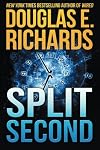
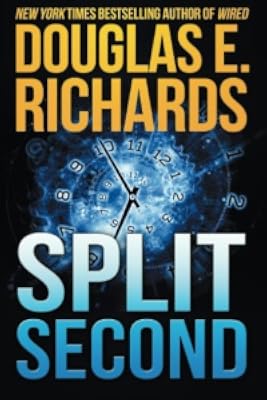
"Nathan Wexler is a brilliant physicist who thinks he's found a way to send matter a split second back into the past. But before he can confirm his findings, he and his wife-to-be, Jenna Morrison, find themselves in a battle for their very lives. Because while time travel to an instant earlier seems useless, Jenna comes to learn that no capability in history has ever been more profound or far-reaching" -- back cover.Tags
Recommendations










Member Reviews
Einstein had a Theory but not the Time
Nathan Wexler is a physics mastermind, on parallel with Newton, Einstein and Faraday. He's just completed a unique mathematical proof that will change the course of humankind.
Jenna Morrison is a top-notch geneticist who happens to be madly in love with Wexler. Although incredibly bright herself, she feels as if she pales in comparison to the light of Wexler's genius.
Wexler and Morrison receive a mysterious phone call after he published an outline of his theory on the internet. Approached by what they think is a very aggressive potential investor, they soon find themselves kidnapped.
In the ensuing struggles, Jenna manages to escape but witnesses Wexler's brutal assassination. Heartbroken, and show more determined to get to the bottom of the cesspool of criminals after her, Jenna hires ex-military P.I. Mike Blake.
The reminder of the book is an astonishing look at a new way to perceive space time and how Governments and people without ethics would handle this new technology.
It is also a hold your breath, close your eyes, muffle the shrieks and try not to allow your dinner to come back up most tension filled story I've read in ages. Douglas Richards knows his science but, man, can he write a thriller! show less
Nathan Wexler is a physics mastermind, on parallel with Newton, Einstein and Faraday. He's just completed a unique mathematical proof that will change the course of humankind.
Jenna Morrison is a top-notch geneticist who happens to be madly in love with Wexler. Although incredibly bright herself, she feels as if she pales in comparison to the light of Wexler's genius.
Wexler and Morrison receive a mysterious phone call after he published an outline of his theory on the internet. Approached by what they think is a very aggressive potential investor, they soon find themselves kidnapped.
In the ensuing struggles, Jenna manages to escape but witnesses Wexler's brutal assassination. Heartbroken, and show more determined to get to the bottom of the cesspool of criminals after her, Jenna hires ex-military P.I. Mike Blake.
The reminder of the book is an astonishing look at a new way to perceive space time and how Governments and people without ethics would handle this new technology.
It is also a hold your breath, close your eyes, muffle the shrieks and try not to allow your dinner to come back up most tension filled story I've read in ages. Douglas Richards knows his science but, man, can he write a thriller! show less
A Thought-Provoking, Well-Constructed Technothriller
Split Second is a tense, fast-paced technothriller involving a capability that in the context of all the books and movies about time travel sounds rather mundane – the ability to move an object a mere split second into the past. I mean, what injustice could you right, what fortune could you win in a split second? None. But mundane it is not, as author Douglas Richards takes the science behind time travel, extends it in fictional but believable ways, and ends up with a story that’s not only adrenaline-charged, but also thought-provoking.
The pace is excellent, with ambushes following chases following gun battles following double-crosses. There are a number of twists in the story, show more some quite surprising, others a bit more predictable. But overall, they are more than adequate to keep the reader on their mental toes. The characters are likeable, but like most thrillers, a bit stereotypical, e.g., the computer specialist who can hack into anything but who can create encryption so secure that no one else can break it. They are also quite intelligent, which may partially explain why they talk the way they do, e.g., “… you haven’t given me any reason to doubt its veracity. You said you confiscated the cell phones of two men.” Even so, the dialog is too stiff and feels less than realistic in places.
When no one’s life is in peril, the story turns to the science behind time travel. And lest you think that would be dry and boring, it’s not. As one of the characters says, “Time is a nightmare. No subject is so utterly intuitive, and also counter-intuitive, at the same time.” Richards hits the highlights of theories about time travel to reveal how mind-boggling and disaster-prone it might be. I greatly enjoyed this part of the story. My only quibble is a small one – some of that dialog is protracted and the book might have been better served by working more of this scientific context into the plot. The same could be said about the hero’s view of the lack of consistency in politician’s support for the fight on terrorism. It was long-winded enough it began to feel preachy, rather than just a look into the attitudes of our protagonist.
Overall, Split Second is a superior technothriller with excellent action and mind-bending science. In my view, that’s an unbeatable combination. show less
Split Second is a tense, fast-paced technothriller involving a capability that in the context of all the books and movies about time travel sounds rather mundane – the ability to move an object a mere split second into the past. I mean, what injustice could you right, what fortune could you win in a split second? None. But mundane it is not, as author Douglas Richards takes the science behind time travel, extends it in fictional but believable ways, and ends up with a story that’s not only adrenaline-charged, but also thought-provoking.
The pace is excellent, with ambushes following chases following gun battles following double-crosses. There are a number of twists in the story, show more some quite surprising, others a bit more predictable. But overall, they are more than adequate to keep the reader on their mental toes. The characters are likeable, but like most thrillers, a bit stereotypical, e.g., the computer specialist who can hack into anything but who can create encryption so secure that no one else can break it. They are also quite intelligent, which may partially explain why they talk the way they do, e.g., “… you haven’t given me any reason to doubt its veracity. You said you confiscated the cell phones of two men.” Even so, the dialog is too stiff and feels less than realistic in places.
When no one’s life is in peril, the story turns to the science behind time travel. And lest you think that would be dry and boring, it’s not. As one of the characters says, “Time is a nightmare. No subject is so utterly intuitive, and also counter-intuitive, at the same time.” Richards hits the highlights of theories about time travel to reveal how mind-boggling and disaster-prone it might be. I greatly enjoyed this part of the story. My only quibble is a small one – some of that dialog is protracted and the book might have been better served by working more of this scientific context into the plot. The same could be said about the hero’s view of the lack of consistency in politician’s support for the fight on terrorism. It was long-winded enough it began to feel preachy, rather than just a look into the attitudes of our protagonist.
Overall, Split Second is a superior technothriller with excellent action and mind-bending science. In my view, that’s an unbeatable combination. show less
This book was just dreadful. It's billed as science fiction, but I can't see how. The story focuses on the work of a brilliant physicist who discovers how to travel back in time, but just a fraction of a second. However, the bulk of the book, and the focus of the story, is on a top secret government agency that splits into two factions, both eager to get their hands on this discovery at any cost.
The main character is an ex-special ops expert turned private Investigator (really... yuck!) hired by the physicist's fiancee. He is a walking cliche and the dialog between the characters is terrible. The story was uninteresting, and it took over 20 chapters before any real discussion of the science behind the discovery took place.
This isn't show more science fiction. This is one of those "one man against an army... and the army doesn't stand a chance" type books. Stay away unless you enjoy that sort of thing. show less
The main character is an ex-special ops expert turned private Investigator (really... yuck!) hired by the physicist's fiancee. He is a walking cliche and the dialog between the characters is terrible. The story was uninteresting, and it took over 20 chapters before any real discussion of the science behind the discovery took place.
This isn't show more science fiction. This is one of those "one man against an army... and the army doesn't stand a chance" type books. Stay away unless you enjoy that sort of thing. show less
This was an interesting take on time travel mechanics that opened up some interesting ideas and ethical dilemmas. However, the book itself was rather annoying in that there were at least 3 or 4 instances where a character delivers a monologue (either internally or externally) that rails against "terrorists" in a very general sense, yet simultaneously referring to genocide of entire races of "terrorists" and "barbarians" and "Islamic extremists".
Ok, I get it, Mr. Author - you've got an axe to grind, and lumping all Muslims under the overarching umbrella of "terrorists" (whether those same Muslims are, in fact, terrorists or even extremists, while excluding all other types of terrorists) makes for some easy shorthand messages to show more like-minded people in your audience. Unfortunately, this passive yet blatant racism is enough to dissuade me from continuing this series. That's a pity, as I was rather intrigued by the time travel ideas.
Audiobook notes - Narrator Kevin Pariseau did a good job, handling voices and pronunciations just fine. show less
Ok, I get it, Mr. Author - you've got an axe to grind, and lumping all Muslims under the overarching umbrella of "terrorists" (whether those same Muslims are, in fact, terrorists or even extremists, while excluding all other types of terrorists) makes for some easy shorthand messages to show more like-minded people in your audience. Unfortunately, this passive yet blatant racism is enough to dissuade me from continuing this series. That's a pity, as I was rather intrigued by the time travel ideas.
Audiobook notes - Narrator Kevin Pariseau did a good job, handling voices and pronunciations just fine. show less
Quick take: Good story; not so good writing.
The story: Brilliant young physicist Nathan Wexler—perhaps the Steven Hawking of his generation—has derived from pure mathematics a principle that could have an astounding effect on humanity. Before his friend Dan Walsh, a physicist at UCLA, can confirm his findings, Nathan and his fiancee Jenna Morrison are kidnapped by a black ops crew. On their way up Mount Palomar in the back of an 18-wheeler, they are intercepted by another black ops crew. A fierce gun battle ensues; in the heat of the fray, Jenna manages to escape. She then enlists the aid of private investigator Aaron Blake; the two of them, along with Dan Walsh, set out to find out what Nathan discovered, why it was so important, show more who kidnapped Nathan and Jenna, and who attacked their kidnappers.
Split Second is a science-fiction book. It contains discussion of pretty serious physics and mathematics—all verifiable—and lengthy speculation about the nature of time. The fictional science requires a lot of mind-bending, and I had trouble understanding some of the physics and its relationship to the second law of thermodynamics.
The writing: “Easy reading is damn hard writing,” said Nathaniel Hawthorne. I like my reading easy, which means that the writing has to be good. I don’t suffer bad writing well. I mentally correct errors as I go along—adding and subtracting commas, relocating misplaced modifiers, inverting incorrectly subordinated phrases, and relieving participles of their dangle. If I wind up doing too much of that, I begin to feel like I’m doing the author’s work for him, and I’ll abandon the book.
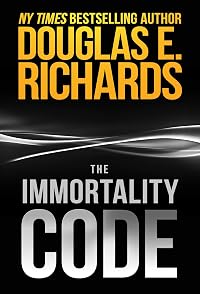
I bought Split Second from an Amazon selection of Kindle offerings. It was not a 99-cent or buck-99 bargain, no. The price for Split Second was $6.99. The cover touted the author as a “NY TIMES BESTSELLER.” I checked, and he was. His book Wired was number 13 on the list during the week of November 6, 2011. So I clicked Buy now with 1-Click and settled down for some easy reading, completely unprepared for the first sentence; to wit:
Jenna Morrison kissed her sister, Amber, goodbye, ignoring the shrieks of tiny Sophia, who was swaddled so completely in a baby blanket that her actual presence could not be confirmed by eye, as though she had fallen into a cottony-soft, mint-green black hole.
“Holy Bulwer-Lytton, Batman,” I muttered to myself. If this was the opening sentence, what were the rest of them going to be like? That first sentence was, in fact, a bellwether of worse things to come. But I soldiered on, moving commas around, pairing modifiers with their proper modificands, etc., until I reached Chapter 5 (page 25), at which point I was about to chuck the whole thing.
And then I said no. Having never seen so many errors in a published book before, I decided to make use of the Kindle note feature and catalog each and every goof I found. I went back to page 1 and read with purpose. By the time I reached page 83, about a quarter of the way through the book, I’d cataloged 42 errors—one every other page—and decided that that was enough to satisfy my curiosity.
The frequency of errors did decrease after that point, so I carried on and finished the book. The story, the plot, the pacing, the tension, and what have you, were adequate to keep me interested. Although there were fewer errors in the latter part of the book, there still were enough to keep me on my toes, and a couple of the misplaced modifiers or choices of language made me laugh right out loud.
The loud, grating buzz of the alarm clock near Jenna Morrison’s head finally managed to awaken her from what had been the most profoundly deep sleep of her life, after more than a minute of trying.
Everyone in all four central buildings was vaporized instantly, save for a doctor named Susan Schlesinger who had just left the island, deciding to listen to the advice of a man who had threatened to kill her repeatedly, but whose decency somehow still managed to shine through.
And my favorite:
When they arrived, he produced a bottle of expensive red wine and two elegant, oversized crystal glass goblets, and filled them up with a sparkle in his eye.
Enough of that. My point here was not to run the author down but to reflect my astonishment at the kind of writing I found in this book. Good storylines and plots are hard to come by, but poor writing can always be improved. Take a couple of creative writing classes and practice getting all the words and punctuation marks in their proper order. Find a couple of trusted readers and listen to what they say. Join a critique group and pay attention to the advice of fellow writers. Hire an editor.
If you want to read Split Second and find out what Nathan Wexler invented, why it was important, and who the bad guys were, I won’t tell you not to. But now you know what else you’re likely to encounter along the way. show less
The story: Brilliant young physicist Nathan Wexler—perhaps the Steven Hawking of his generation—has derived from pure mathematics a principle that could have an astounding effect on humanity. Before his friend Dan Walsh, a physicist at UCLA, can confirm his findings, Nathan and his fiancee Jenna Morrison are kidnapped by a black ops crew. On their way up Mount Palomar in the back of an 18-wheeler, they are intercepted by another black ops crew. A fierce gun battle ensues; in the heat of the fray, Jenna manages to escape. She then enlists the aid of private investigator Aaron Blake; the two of them, along with Dan Walsh, set out to find out what Nathan discovered, why it was so important, show more who kidnapped Nathan and Jenna, and who attacked their kidnappers.
Split Second is a science-fiction book. It contains discussion of pretty serious physics and mathematics—all verifiable—and lengthy speculation about the nature of time. The fictional science requires a lot of mind-bending, and I had trouble understanding some of the physics and its relationship to the second law of thermodynamics.
The writing: “Easy reading is damn hard writing,” said Nathaniel Hawthorne. I like my reading easy, which means that the writing has to be good. I don’t suffer bad writing well. I mentally correct errors as I go along—adding and subtracting commas, relocating misplaced modifiers, inverting incorrectly subordinated phrases, and relieving participles of their dangle. If I wind up doing too much of that, I begin to feel like I’m doing the author’s work for him, and I’ll abandon the book.
I bought Split Second from an Amazon selection of Kindle offerings. It was not a 99-cent or buck-99 bargain, no. The price for Split Second was $6.99. The cover touted the author as a “NY TIMES BESTSELLER.” I checked, and he was. His book Wired was number 13 on the list during the week of November 6, 2011. So I clicked Buy now with 1-Click and settled down for some easy reading, completely unprepared for the first sentence; to wit:
Jenna Morrison kissed her sister, Amber, goodbye, ignoring the shrieks of tiny Sophia, who was swaddled so completely in a baby blanket that her actual presence could not be confirmed by eye, as though she had fallen into a cottony-soft, mint-green black hole.
“Holy Bulwer-Lytton, Batman,” I muttered to myself. If this was the opening sentence, what were the rest of them going to be like? That first sentence was, in fact, a bellwether of worse things to come. But I soldiered on, moving commas around, pairing modifiers with their proper modificands, etc., until I reached Chapter 5 (page 25), at which point I was about to chuck the whole thing.
And then I said no. Having never seen so many errors in a published book before, I decided to make use of the Kindle note feature and catalog each and every goof I found. I went back to page 1 and read with purpose. By the time I reached page 83, about a quarter of the way through the book, I’d cataloged 42 errors—one every other page—and decided that that was enough to satisfy my curiosity.
The frequency of errors did decrease after that point, so I carried on and finished the book. The story, the plot, the pacing, the tension, and what have you, were adequate to keep me interested. Although there were fewer errors in the latter part of the book, there still were enough to keep me on my toes, and a couple of the misplaced modifiers or choices of language made me laugh right out loud.
The loud, grating buzz of the alarm clock near Jenna Morrison’s head finally managed to awaken her from what had been the most profoundly deep sleep of her life, after more than a minute of trying.
Everyone in all four central buildings was vaporized instantly, save for a doctor named Susan Schlesinger who had just left the island, deciding to listen to the advice of a man who had threatened to kill her repeatedly, but whose decency somehow still managed to shine through.
And my favorite:
When they arrived, he produced a bottle of expensive red wine and two elegant, oversized crystal glass goblets, and filled them up with a sparkle in his eye.
Enough of that. My point here was not to run the author down but to reflect my astonishment at the kind of writing I found in this book. Good storylines and plots are hard to come by, but poor writing can always be improved. Take a couple of creative writing classes and practice getting all the words and punctuation marks in their proper order. Find a couple of trusted readers and listen to what they say. Join a critique group and pay attention to the advice of fellow writers. Hire an editor.
If you want to read Split Second and find out what Nathan Wexler invented, why it was important, and who the bad guys were, I won’t tell you not to. But now you know what else you’re likely to encounter along the way. show less
Split Second
This was not a bad novel but at times spent too much time on the character’s thoughts which made the story drag some. Specifically Aaron the Private Investigator. There was quite a long rant on how “Americans” don’t appreciate the model in Afghanistan from his view as a former military man. I thought this leaning toward the political and excessive.
Jeanna. I liked her character though the display of hate and vitriol to those she thought had murdered her husband was a bit over the top as well. In some respects it was like reading an old Mickey Spillane novel!
Jenna’s sister who has a baby at the start of the first chapter pretty much disappears for the rest of the story.
I liked the aspects of time travel, other show more universe energy and the theory behind it. The author made it quite plausible, and he gets an A for research.
The conflict between Cargill and Edgar Knight was especially interesting and what each would go through to stop the other was quite exciting and actually made the novel for me.
Recommended. show less
This was not a bad novel but at times spent too much time on the character’s thoughts which made the story drag some. Specifically Aaron the Private Investigator. There was quite a long rant on how “Americans” don’t appreciate the model in Afghanistan from his view as a former military man. I thought this leaning toward the political and excessive.
Jeanna. I liked her character though the display of hate and vitriol to those she thought had murdered her husband was a bit over the top as well. In some respects it was like reading an old Mickey Spillane novel!
Jenna’s sister who has a baby at the start of the first chapter pretty much disappears for the rest of the story.
I liked the aspects of time travel, other show more universe energy and the theory behind it. The author made it quite plausible, and he gets an A for research.
The conflict between Cargill and Edgar Knight was especially interesting and what each would go through to stop the other was quite exciting and actually made the novel for me.
Recommended. show less
Time travel has been the subject of many books but it's usually months or years back in time. Ever wondered what could happen if we can go back a half second in time? Some very interesting concepts about time and space written in layman's language and woven into a masterful story. Great holiday reading that doesn't dumb you down.
Members
- Recently Added By
Author Information

44 Works 2,567 Members
Douglas E. Richards is the New York Times and USA Today Bestselling author of Wired, its sequel Amped, The Cure, Mind's Eye, Quantum Lens and six other middle grade adventures. He incorporates action, suspense, and science into his novels. He earned a BS in microbiology from Ohio State university, a master's degree in genetic engineering from the show more University of Wisconsin and an MBA from the University of Chicago. He put all that knowledge to work as a biotech executive. He soon began writing science fiction. In recognition of his work, Douglas was selected to be a "special guest" at San Diego Comic-Con International, along with such icons as Stan Lee and Ray Bradbury. He has written numerous feature articles for the award-winning magazine, National Geographic KIDS. His title Split Second made the Self-Published Best Seller List in 2017. (Bowker Author Biography) show less

Douglas E. Richards is a LibraryThing Author, an author who lists their personal library on LibraryThing.
Series

Classifications
Statistics
- Members
- 258
- Popularity
- 126,194
- Reviews
- 15
- Rating
- (3.59)
- Languages
- English
- Media
- Paper, Audiobook, Ebook
- ISBNs
- 2
- ASINs
- 3