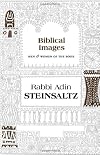
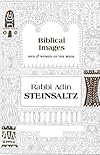
Biblical Images
by Adin Steinsaltz
On This Page
Description
A world-famous rabbi and teacher offers subtle, penetrating, psychological portraits of 25 significant men and women of the Old Testament.Tags
Recommendations




















Member Reviews
This book is part of Maggid Books’ project beginning in 2011 to publish seven popular books by Rabbi Adin Steinsaltz. The seven will be followed by new editions of more than twenty other works by this rabbi, including several previously unpublished volumes. Rabbi Steinsaltz is the well-known and highly acclaimed translator of the Talmud into Modern Hebrew with many scholarly notes explaining the text, the ideas behind the discussions, the history of the times and personalities, as well as much more relevant information.
This book introduces readers to twenty-five biblical personalities, thirteen men and twelve women, including well-known figures such as Eve, Sarah, Rebecca, Abraham, and Joseph, as well as little-known personalities show more who should be known better, such as Michal, Jehu, Athaliah, and Josiah, all of whom made significant impacts upon world history. He devotes about eight pages to each person.
He tells readers that they should not expect an idealized portrayal because the “Scriptural style is almost always objective… The great men and women who serve as examples and models for all generations are not described only in terms of glowing admiration. Their failings, failures, and difficulties are described.” He warns that the behavior of the Israelite ancestors shouldn’t always be copied.
He states that he intends to “fill in some of the outlines in the picture (of these biblical figures), to clarify certain things hinted in the Scriptures.” He says that no “biblical story is complete without these additional strata of content.” These imaginative additions are interesting, but readers need to beware to differentiate the additions from what is in the Torah text. Unfortunately, Rabbi Steinsaltz does not always say what the imaginative additions are.
Yet the additions and interpretations are interesting. For example, he sees Eve as a “precursor or women in general.” An analysis of her behavior, he says, helps readers understand women and their relationship to men. He focuses on a Midrash that the original divine creation was a single being with male and female connected back to back. He concludes from this that “Male and female are essentially part of one being.” He shows how. This midrashic allegory is not only not in the Torah, but the Midrash apparently derived it from the pagan philosopher Plato’s Symposium, without attribution.
Interestingly, he states that Abraham was not the founder of monotheism; people knew the concept of one God before him. Even during his lifetime the Torah reports that Melchizedek was a priest to the one God. Abraham’s contribution “was simply (that he was) the first person in a long time to relate seriously to an old religious outlook which was primary and genuine.” Steinsaltz discusses how the “graven image” developed from monotheism. He admits that the polytheists had many sophisticated thinkers. He recognizes that the “vivid legend of the story of the young Abraham smashing the idols…is not accepted by serious scholars.”
In summary, Rabbi Steinsaltz gives readers an interesting brief portrayal of a couple of dozen male and female biblical figures and supplements these portrayals with thought provoking ideas. show less
This book introduces readers to twenty-five biblical personalities, thirteen men and twelve women, including well-known figures such as Eve, Sarah, Rebecca, Abraham, and Joseph, as well as little-known personalities show more who should be known better, such as Michal, Jehu, Athaliah, and Josiah, all of whom made significant impacts upon world history. He devotes about eight pages to each person.
He tells readers that they should not expect an idealized portrayal because the “Scriptural style is almost always objective… The great men and women who serve as examples and models for all generations are not described only in terms of glowing admiration. Their failings, failures, and difficulties are described.” He warns that the behavior of the Israelite ancestors shouldn’t always be copied.
He states that he intends to “fill in some of the outlines in the picture (of these biblical figures), to clarify certain things hinted in the Scriptures.” He says that no “biblical story is complete without these additional strata of content.” These imaginative additions are interesting, but readers need to beware to differentiate the additions from what is in the Torah text. Unfortunately, Rabbi Steinsaltz does not always say what the imaginative additions are.
Yet the additions and interpretations are interesting. For example, he sees Eve as a “precursor or women in general.” An analysis of her behavior, he says, helps readers understand women and their relationship to men. He focuses on a Midrash that the original divine creation was a single being with male and female connected back to back. He concludes from this that “Male and female are essentially part of one being.” He shows how. This midrashic allegory is not only not in the Torah, but the Midrash apparently derived it from the pagan philosopher Plato’s Symposium, without attribution.
Interestingly, he states that Abraham was not the founder of monotheism; people knew the concept of one God before him. Even during his lifetime the Torah reports that Melchizedek was a priest to the one God. Abraham’s contribution “was simply (that he was) the first person in a long time to relate seriously to an old religious outlook which was primary and genuine.” Steinsaltz discusses how the “graven image” developed from monotheism. He admits that the polytheists had many sophisticated thinkers. He recognizes that the “vivid legend of the story of the young Abraham smashing the idols…is not accepted by serious scholars.”
In summary, Rabbi Steinsaltz gives readers an interesting brief portrayal of a couple of dozen male and female biblical figures and supplements these portrayals with thought provoking ideas. show less
Some quotes:
Eve: "The idea of creation as separation recurs both in the scriptures themselves and, afterward, throughout Jewish literature. [p. 5]
"In effect, every wedding is a return to the primordial state of Adam and Eve." [p. 7]
"The story of the theophany at Sinai, which in its inward form, describing the 'creation' of Israel, recapitulates the story of Adam's creation, is nonetheless essentially a reversal of the expulsion from Eden. [p. 7]
"The incident of the Tree of Knowledge turns, after all, partly on the arousal of curiosity. [p. 8]
Samuel: quoting Psalm 99:6, "a statement that has led the sages to conclude that Samuel was equal in eminence to Moses and Aaron." [p.127]
Saul: "With penetrating psychological insight, the sages show more have noted, concerning Saul's straightforward character, that he who is merciful to the cruel will end up being cruel to the merciful. [p 141]
Comparing Saul and David: In a sense, [Saul's] failure is teh failure of the better man, the failure of one chosen for a task that did not need a better man, only a wiser and more capable one." [p. 143]
Ezra: "By setting their seals to what was called the amana, the 'covenant,' they pledged themselves to the first written constitution in history, the beginning of the modern concept of law as a mutual agreement among free men. [p. 211] show less
Eve: "The idea of creation as separation recurs both in the scriptures themselves and, afterward, throughout Jewish literature. [p. 5]
"In effect, every wedding is a return to the primordial state of Adam and Eve." [p. 7]
"The story of the theophany at Sinai, which in its inward form, describing the 'creation' of Israel, recapitulates the story of Adam's creation, is nonetheless essentially a reversal of the expulsion from Eden. [p. 7]
"The incident of the Tree of Knowledge turns, after all, partly on the arousal of curiosity. [p. 8]
Samuel: quoting Psalm 99:6, "a statement that has led the sages to conclude that Samuel was equal in eminence to Moses and Aaron." [p.127]
Saul: "With penetrating psychological insight, the sages show more have noted, concerning Saul's straightforward character, that he who is merciful to the cruel will end up being cruel to the merciful. [p 141]
Comparing Saul and David: In a sense, [Saul's] failure is teh failure of the better man, the failure of one chosen for a task that did not need a better man, only a wiser and more capable one." [p. 143]
Ezra: "By setting their seals to what was called the amana, the 'covenant,' they pledged themselves to the first written constitution in history, the beginning of the modern concept of law as a mutual agreement among free men. [p. 211] show less
Ratings
Members
- Recently Added By
Author Information

354 Works 6,954 Members
Rabbi Adin Steinsaltz is the editor and translator of Random House's twenty-two-volume edition of the Talmud. He is also the author of many volumes on Jewish thought and practice and has been a resident scholar at both Yale University and the Institute for Advanced Study. In 1988 he was invited to open a Judaic studies center in Moscow, the first show more such institution in the former Soviet Union in sixty years. Rabbi Steinsaltz lives in Israel. (Bowker Author Biography) show less
Classifications
- Genres
- Religion & Spirituality, Nonfiction, Biography & Memoir
- DDC/MDS
- 221.9 — Religion The Bible Old Testament (Tanakh) Geography, history, chronology, persons of Old Testament lands in Old Testament times
- LCC
- BS571 .S82 — Philosophy, Psychology and Religion The Bible The Bible Works about the Bible Men, women, and children of the Bible
- BISAC
Statistics
- Members
- 112
- Popularity
- 288,909
- Reviews
- 2
- Rating
- (4.00)
- Languages
- English
- Media
- Paper, Ebook
- ISBNs
- 5
- ASINs
- 1